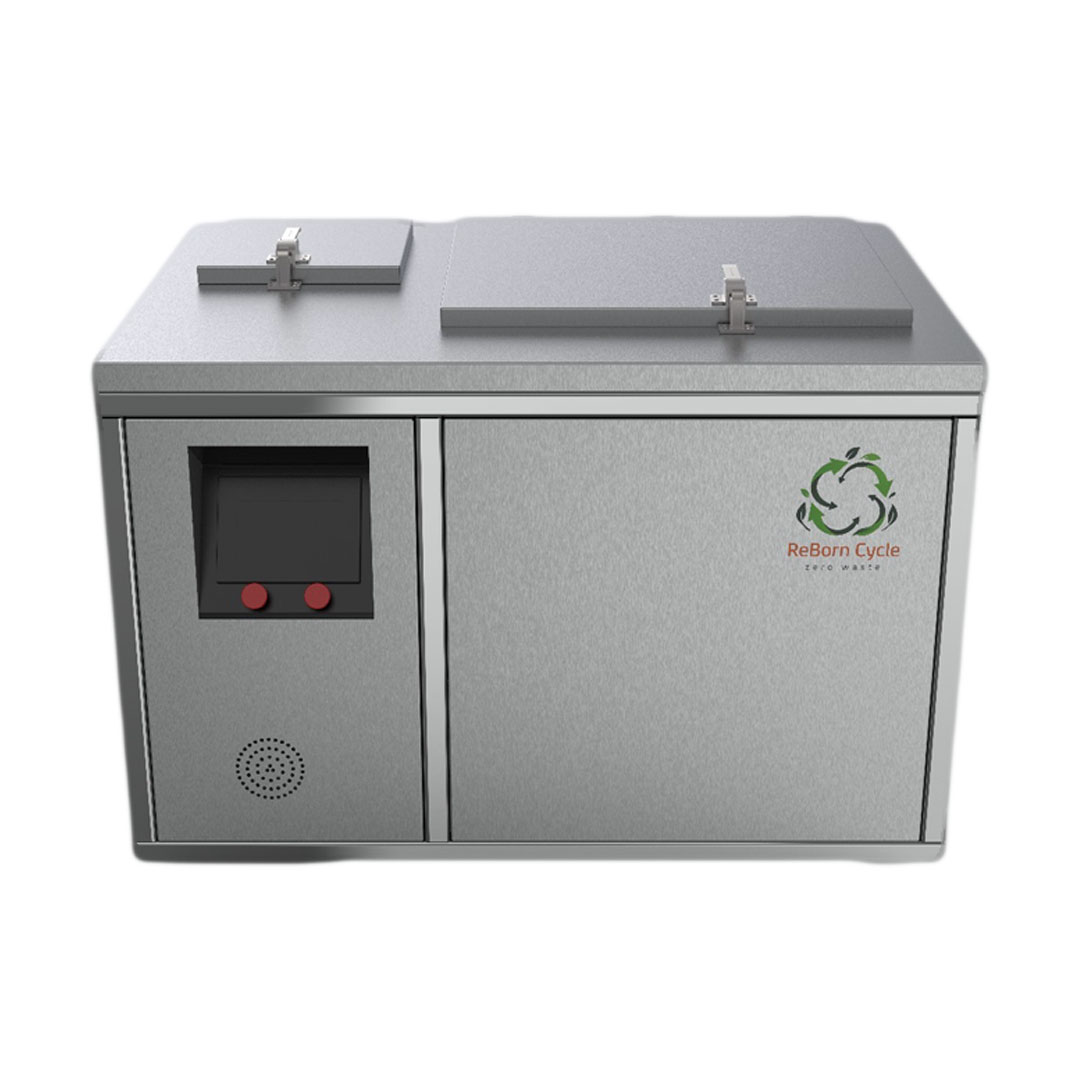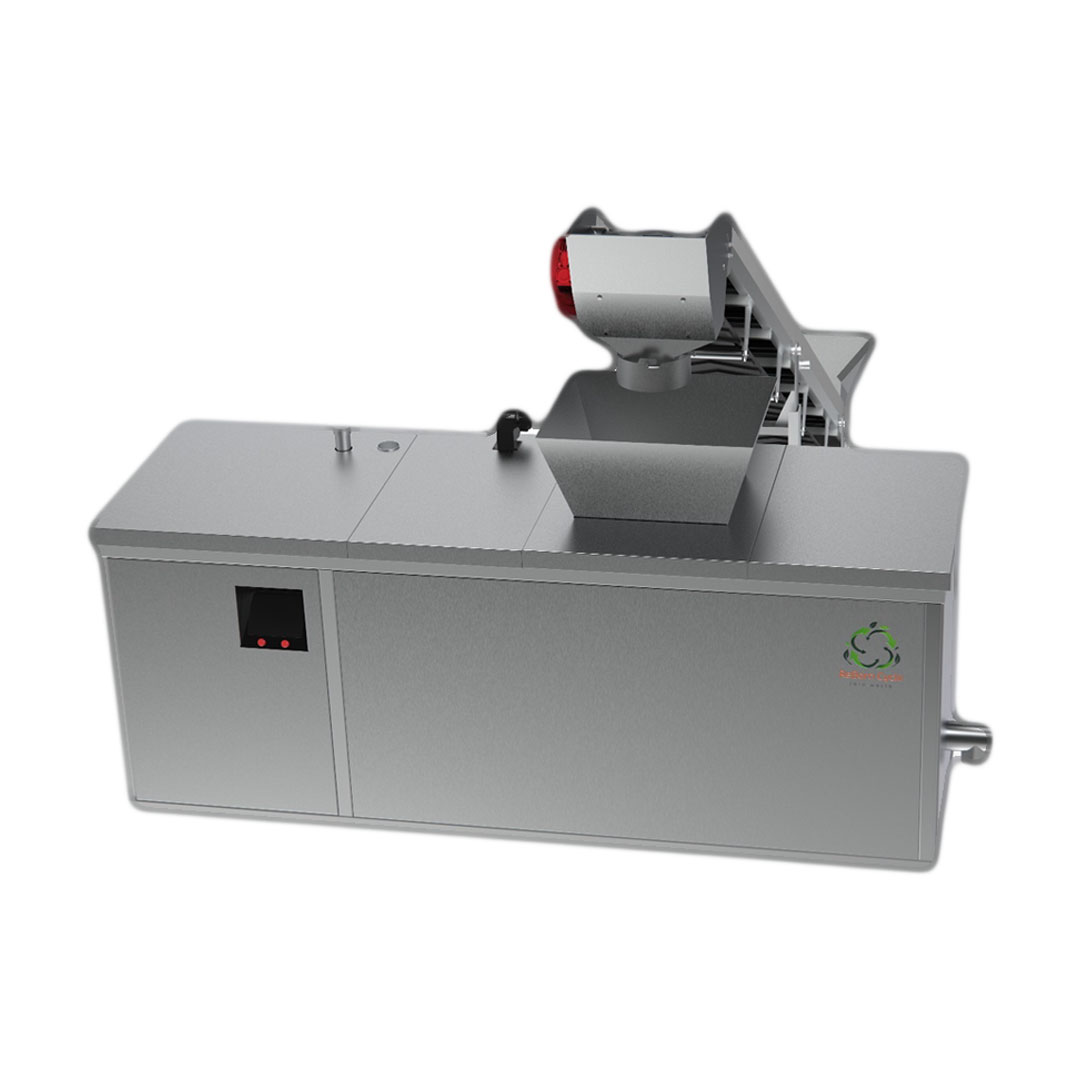


A closed composting system treats organic waste in a vessel with controlled temperature, aeration and mixing. It limits odor and weather effects; kitchen waste often reaches a stabilized output in 24–48 hours.
A closed composting system is aerobic composting in a vessel that separates organic waste from weather, pests and neighbours. Temperature, oxygen and mixing stay under control. With balanced moisture, kitchen waste completes a cycle in 24–48 hours; fatty or irregular feeding can take 48–72 hours. The output is stabilized pre-compost. Maturity needs a few weeks of curing.
The split for a facility manager is the vessel boundary, not a different biology. A windrow, a static aerated pile, a closed bin and a closed machine all aim at aerobic decomposition. Oxygen, odor, footprint and weather decide the path. This piece compares the four by time and by site: when a hotel, hospital or factory needs a machine, and when a municipality with land can keep a windrow. Machine internals are covered in how an industrial compost machine works.
How Does a Closed Composting System Differ from a Windrow?
Closed composting is aerobic breakdown inside a container that keeps organic waste out of rain, wind and flies. The container may be a stainless steel machine body, an insulated reactor or a lidded bin. The mass is not spread on open ground.
On an open windrow the waste lies in long rows and is turned on a set interval, so oxygen depends on turning and rainfall. A static aerated pile gets air from below and stays open. A closed bin is small; mixing is often manual, and odor escapes whenever the lid opens.
An industrial closed machine holds the process in the narrowest band of the four. The thermophilic target is 55–65 °C, and kitchen-waste moisture stays near 50–60 percent. On site surveys we often see hotel and hospital kitchens holding a full bin outdoors for a day or two. The first job of a closed system is to end that wait.
Which Composting System Fits Which Site?
The right system follows daily kilograms, the land you have, and the distance to neighbours. Times in the table run to a stabilized material. Mature compost still needs a rest on every method.
| System | Enclosure | Time to stabilized output | Footprint | Weather effect | Typical user |
|---|---|---|---|---|---|
| Open windrow | None, open row | About 8–16 weeks | Large pad | High | Municipality with land |
| Static aerated pile | Open top, air below | About 4–8 weeks | Medium pad | Medium | Park and site green waste |
| Closed bin | Lidded small volume | About 6–12 weeks | Little space | Low to medium | Garden, small kitchen |
| Closed machine | Controlled reactor | 24–48 hours, then curing | Machine room | Low | Hotel, hospital, factory |
The table is not a catalogue. The same kitchen waste speeds up on a summer windrow and nearly stalls in winter. Inside a closed machine, feeding rhythm and moisture matter more than outdoor temperature. A yard of branches and leaves is not the same row as a hotel kitchen in a basement.
How Long Until the Output Is Stabilized?
A time comparison is honest only when stabilized output means the same thing. On a windrow that is the week when the material is no longer recognizable and the heat starts to fall. What leaves a closed machine is hygienized pre-compost. Neither is raw waste, and neither is finished compost for every use.
The bars show approximate field ranges, relative to the slowest method, not a laboratory measurement. The closed-machine bar is short because the active cycle is counted in hours. Curing weeks are not included.
Warning: A 24–48 hour cycle is not mature compost. Machine output is stabilized pre-compost. Plan a few weeks of curing for full maturity. Fatty or irregular feeding can push the cycle to 48–72 hours or more.
What the machine is for on a site is separate from the time chart. That discussion sits in what a compost machine is for.
How Are Oxygen, Odor, Weather and Footprint Handled?
Low oxygen brings odor and neighbour complaints, and an open city pad becomes hard to keep. A closed system shrinks the volume. It is not a filter by itself.
Pore oxygen should stay above 5 percent. Turning supplies it on a windrow; rain-packed material may still go short. In a closed machine, airflow and mixing are set together. Several days above 55 °C lowers pathogen and weed-seed risk. How an airless process changes odor is set out in the difference between aerobic and anaerobic composting.
A windrow needs a turning aisle, leachate control and distance from neighbours. A closed machine fits in a room, with space kept for feeding, discharge and a short cure. Field measures are in how to control odor in organic waste.
Tip: In winter an open pile slows below about 10 °C. A closed heated machine can hold 55–65 °C inside if feeding and aeration continue. Let frozen waste approach room temperature before feeding.
Who Should Choose a Closed Machine?
A closed machine makes sense where waste leaves every day and there is no open pad. Hotels, hospitals, factory kitchens and canteens sit here: neighbours are close, odor tolerance is low, and there is no yard for a windrow.
Capacity follows weighed daily kilograms. About 100 kg/day points to the RBN-C100 Compost Machine, about 500 kg/day to the RBN-C500 Compost Machine, and about 1,000 kg/day to the RBN-C1000 Compost Machine. Leave margin for uneven days and foreign matter. A hospital kitchen measured at 80–120 kg/day is an example of the 100 kg/day class, not a fixed occupancy rule.
A municipality with land can windrow branches, leaves and park waste. Food waste collected in a dense district pushes odor and leachate toward a closed or covered line. Mixing both streams on one pad changes the time and the complaints. Separate the waste first, then choose the vessel.
How Does ReBorn Cycle Run a Closed System on Site?
A closed system is not finished when the body is in the room. A survey records daily kilograms, moisture, fat, foreign matter, room size, drainage and feeding rhythm. Without those figures a 24–48 hour cycle is an empty expectation.
ReBorn Cycle machines are closed on-site systems with controlled temperature, aeration and mixing, built domestically. Placement, commissioning and operator training are part of the install. The operator removes foreign matter, adds a bulking agent on very wet days and sets the output aside to cure. Food waste often has a C/N near 15–20:1. If the target is 25–30:1, a small dose of dry leaves, straw or sawdust goes in on a wet day.
Capacity and line design are settled through waste analysis and process consulting. Commissioning, faults and spare parts continue under technical support. Uneven feeding in the first weeks lengthens the cycle. We show that at the machine during training.
Frequently asked questions
Does a closed composting system make the same material as a windrow?
Both compost aerobically, but time and control differ. With balanced moisture the machine gives stabilized pre-compost in 24–48 hours. A windrow often reaches that point in about 8–16 weeks. Neither should go into every soil use without a few weeks of curing. End use decides maturity, not the cycle clock.
Does a closed machine remove odor completely?
No. A closed body carries less odor into the room and the street, but an airless, very wet or fatty feed still smells inside. Oxygen should stay above 5 percent, and the lid and seals need to stay sound. Waste left overnight in an open bin smells in the corridor even when the machine runs well. Check the feeding habit first.
Is compost mature after 24–48 hours?
No. That span is the active cycle inside the machine for kitchen waste at balanced moisture. The material that comes out is hygienized pre-compost. Full maturity needs a few weeks of curing. Mature material smells like soil and sits near ambient temperature. Fatty waste can take 48–72 hours in the machine.
Must a municipality with land install a closed machine?
Not every municipality has to. Branches, leaves and park waste can be windrowed on wide land. Food waste in a dense district is easier on a closed line because of odor, leachate and time. Decide by waste type and distance to neighbours.
Does a closed composting system work in winter?
Yes. An open windrow slows below about 10 °C as microbial activity drops. A closed heated machine can hold 55–65 °C inside if feeding and aeration continue. Frozen waste upsets moisture. Bring it toward room temperature and weigh it as part of the winter routine.
A Measurable Basis for a Closed System
A closed composting system is a controlled reactor that separates waste from weather, flies and neighbours. A windrow, a static aerated pile and a closed bin run the same biology on more land and over more time. Choose by the gap between a 24–48 hour cycle and a pile that takes months, and by the land you have.
Weigh the waste for seven to fourteen days first. Daily kilograms, fat and foreign matter stop you from forcing a hotel kitchen and park waste onto the same line. Plan the output as pre-compost and reserve a separate area for curing. Do not put uncured material straight onto seedling soil.
Once the weighed waste and the room are clear, capacity leaves the realm of guesswork. On a free site survey the team records kilograms, moisture, drainage and feeding rhythm on the spot. That record answers machine or windrow before a brochure does. Use the site survey appointment form to book it.