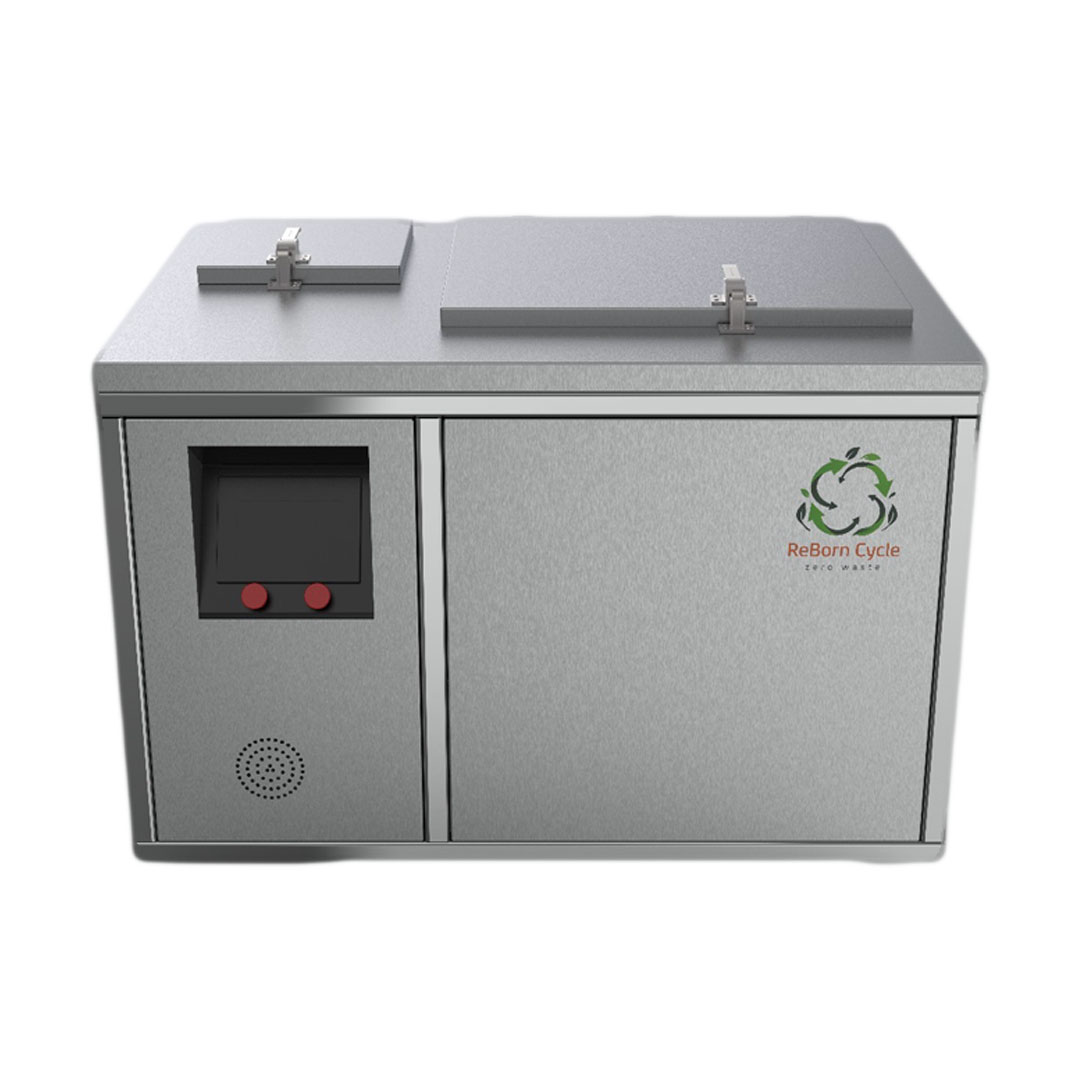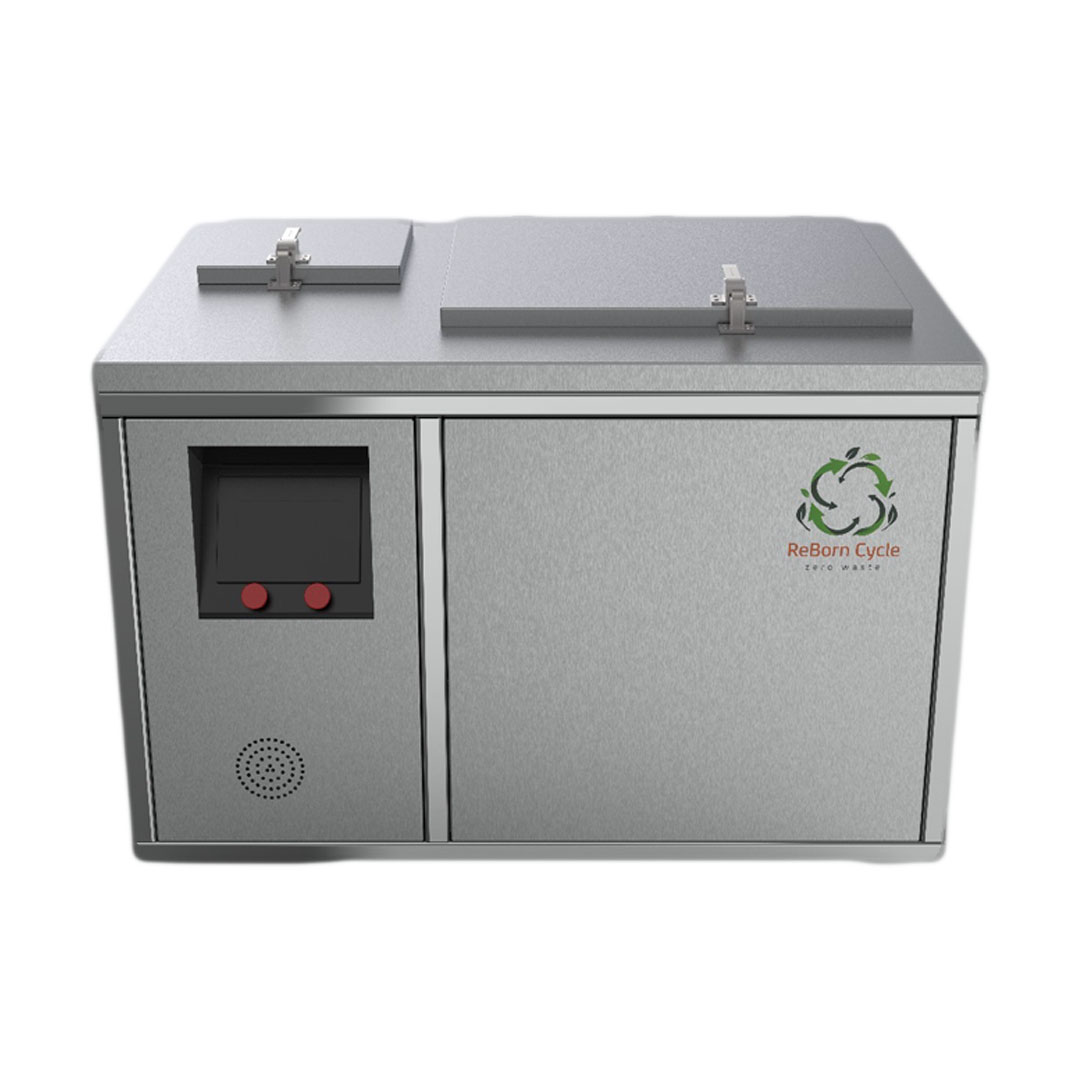


An industrial compost machine turns organic waste into a stable material on site, cutting haul trips, odour exposure, and reporting gaps while supporting logistics, hygiene, and sustainability goals from one point.
Main advantages of a compost machine include converting organic waste on site in a closed 24–48 hour process into volume-reduced, hygienised material, reducing collection runs and waiting time, keeping odour and contamination risk under control, and producing measurable data for zero-waste and ESG reporting. Actual savings vary by facility.
In hotels, hospitals, and production kitchens, organic waste still often moves from bin to truck. An on-site compost machine shortens that chain; logistics, hygiene, and reporting should be weighed together. This article compares hauling with on-site processing using concrete criteria and example scenarios (without stating fixed savings as facts). For payback detail, see the guide on compost machine return on investment.
What Does On-Site Processing Gain Over Hauling?
Storing organic waste outside raises odour and leachate risk as temperature and moisture rise. A closed, heated, mixed industrial compost machine pulls waste into the process instead of leaving it in open containers; typical kitchen flows produce a stabilised pre-compost output within 24–48 hours. Volume usually drops noticeably depending on input, which simplifies storage and collection planning.
The clearest gain in site surveys is shorter waiting time: full bins force staff to find temporary storage; with a machine the flow stays continuous. If output can be used on gardens, greenhouses, or parks, material stays on the property; otherwise a smaller, more uniform by-product is hauled. Mixing and aeration inside the vessel avoid the uneven heat pockets seen in open piles.
- Less temporary storage and a tidier back-of-house area
- Hygiene management via controlled temperature (thermophilic phase 55–65 °C)
- Option to use output on-site or nearby landscaping
How Does a Compost Machine Cut Logistics Cost?
Haul cost is not only the per-tonne fee; container count, trip frequency, staff time, and emergency pick-ups matter too. On-site processing reduces volume before the truck, so fill days lengthen or smaller equipment may suffice. In an example scenario (assumption): 150 kg/day organic waste and collection dropping from three times to once per week could be modelled as roughly 25–35% lower annual haul spend; your real share depends on distance and contract terms.
Build the case with daily kg, peak-day share, and current contract lines. Read how haul line items break down in how organic waste logistics cost can fall, and test figures in the ROI calculator with your own data. For mid-size sites, the RBN-C100 Compost Machine fits around 100 kg/day; central kitchens and large hotels often align with the RBN-C500 Compost Machine capacity band.

Tip: Keep a one-week weighing log first so kg/day data backs every advantage discussion.
What Are the Control and Hygiene Advantages?
Open storage lets greasy layers, compacted pulp, or plastic mixes raise odour and insect activity. In a closed machine, moisture, temperature, and mixing are managed together; fatty inputs may need 48–72 hours but the process stays controlled. Operators maintain feeding rhythm and foreign-matter separation through training, which gives a predictable routine near HACCP-sensitive kitchen zones.
Odour control is operational necessity for corridors and parking, not a slogan. If moisture is high, adding carbon amendment and adjusting feed frequency lowers smell; logging moisture and temperature speeds those decisions. Combined with hygiene protocol, on-site processing offers the advantage of keeping waste away from guest areas.
- Input control Separate plastic and metal before feeding.
- Process monitoring Record temperature and moisture.
- Output handling Plan curing or appropriate storage.
How Does It Support Zero Waste and ESG Reporting?
Many facilities must separately collect and record biodegradable waste. An on-site compost machine generates recovery rate and processed kg data in the same building; the share sent off-site falls. That adds concrete rows when auditors ask what happened and where material went.
Hotel groups increasingly tie organic waste to carbon footprint in ESG reports. Each haul trip means fuel and emissions; fewer trips after volume reduction can show improvement as trend and kg data rather than a fixed percentage claim. See on-site processing for zero-waste certification and whether composting lowers carbon emissions for deeper angles.
Showing processed kg and fewer trips on the same slide as the investment case often speeds management decisions.
How Do Hauling and On-Site Processing Compare?
There is no single winner; volume, distance, land, and regulation must be read together. Still, for many enclosed kitchens, an on-site machine is a sensible step before heavy reliance on hauling when kg output is high and steady.
| Criterion | Off-site hauling | On-site compost machine |
|---|---|---|
| Waiting / odour | Builds in container, seasonal risk | Closed process, controlled ventilation |
| Logistics | Trip and contract dependent | Trip frequency and volume usually fall |
| Data / reporting | Gaps beyond invoice and weighbridge | Processed kg and output records |
| Material value | Often plain waste | Pre-compost potential for grounds |
| Investment | Low fixed, variable haul | Machine plus operation; long-term balance |
Municipal collection can coexist; the machine often acts as a buffer in high-rise, high-output kitchens.
ReBorn Cycle On-Site Support for Machine Advantages
ReBorn Cycle builds closed in-vessel compost machines with domestic engineering; surveys measure daily kg, waste profile, and install space. The consulting team sizes capacity and feeding rhythm; commissioning includes operator training so hygiene steps are clear. After-sales technical support shortens response when parameters drift or faults appear.
Pairing organic waste management in hotels and restaurants with machine feeding plans makes logistics gains visible from the first month. Sites that habitually weigh waste turn advantages into dashboard lines, not debate.
Warning: Bar widths are qualitative examples; use your own weighing and contract data for formal savings claims.
Frequently asked questions
Does a compost machine eliminate hauling completely?
Usually not. Most sites still use external logistics for curing surplus, occasional bulky waste, or spares; still, processing the main food stream on site sharply cuts trip count and container stress.
How soon do advantages show up?
Hygiene and space benefits appear in the commissioning week. Logistics improvements become readable within a few months when weighed against prior logs and invoices; exact timing depends on kg, season, and contract.
Do advantages matter for a small restaurant?
If daily kg is low, haul contracts may stay cheap; odour, space, and record needs can still justify compact units. A one-week kg log shows whether a machine truly pays back.
Can output always be used as fertiliser?
Machine output is stabilised pre-compost; many landscaping uses need a few weeks of curing. Check your quality steps and local rules for the intended use.
Does electricity erase the advantages?
Energy cost exists and varies by capacity. Viewed together with haul savings, processed kg, and output value, most example scenarios still favour on-site processing; see the electricity consumption guide for detail.
Which records strengthen reporting advantages?
Daily feed kg, weekly output kg, trip count, and container fill days are enough to start. Zero-waste audits and ESG decks can reuse the same tables for recovery rate.
Measuring Compost Machine Advantages on Site
In short, a compost machine simplifies logistics by cutting volume before haul, strengthens hygiene through a closed process, and delivers measurable kg data for zero waste and ESG. Compare with your own weighing and contracts instead of fixed percentage claims so assumptions never mix with real outcomes.
Start with daily organic kg, note peak days, and list haul line items. Then match capacity, install space, and feeding rhythm to the machine, build payback with your assumptions, and keep at least one quarter of data for comparison.
Book a free site survey or use consulting to turn kg/day and logistics figures into a scenario model for your facility.