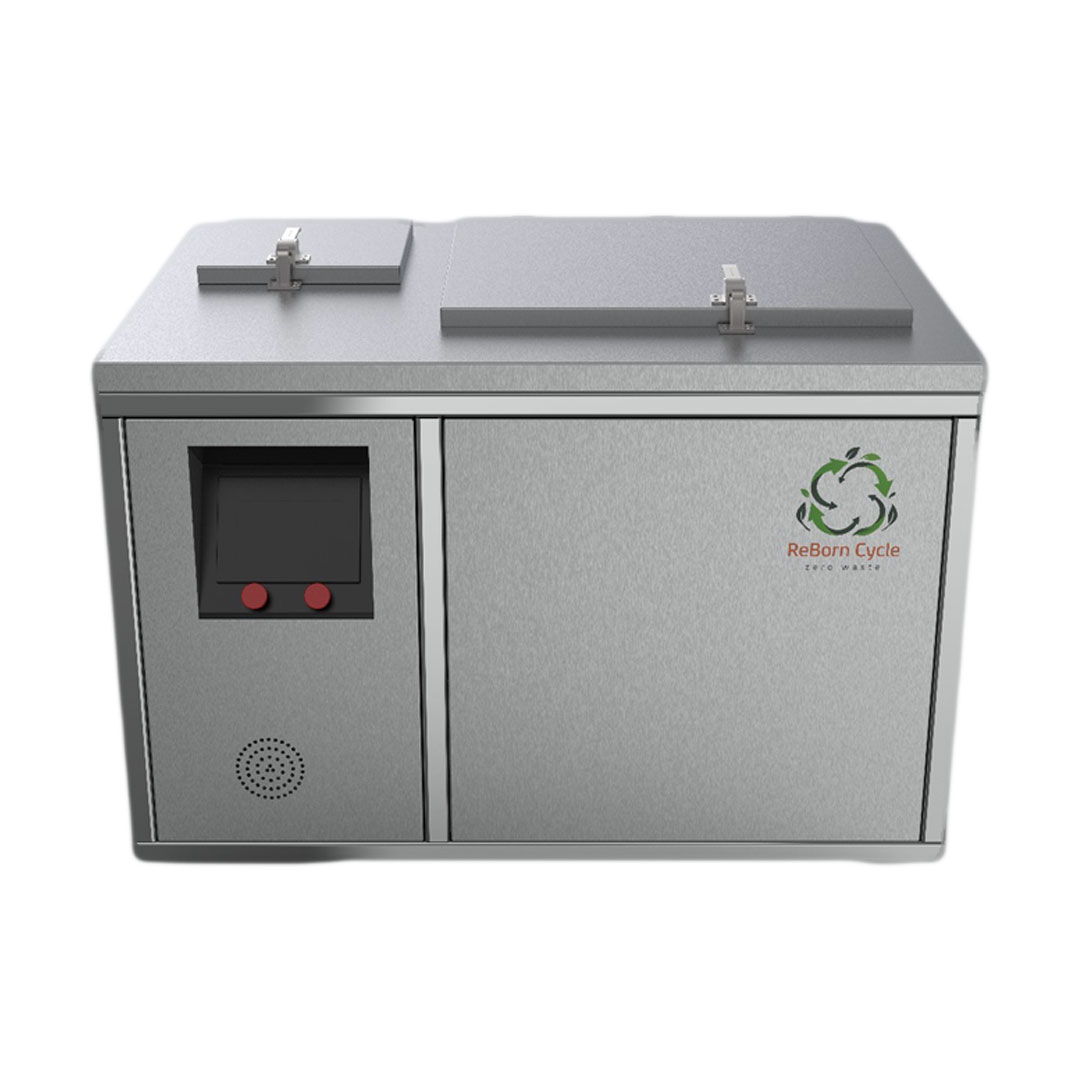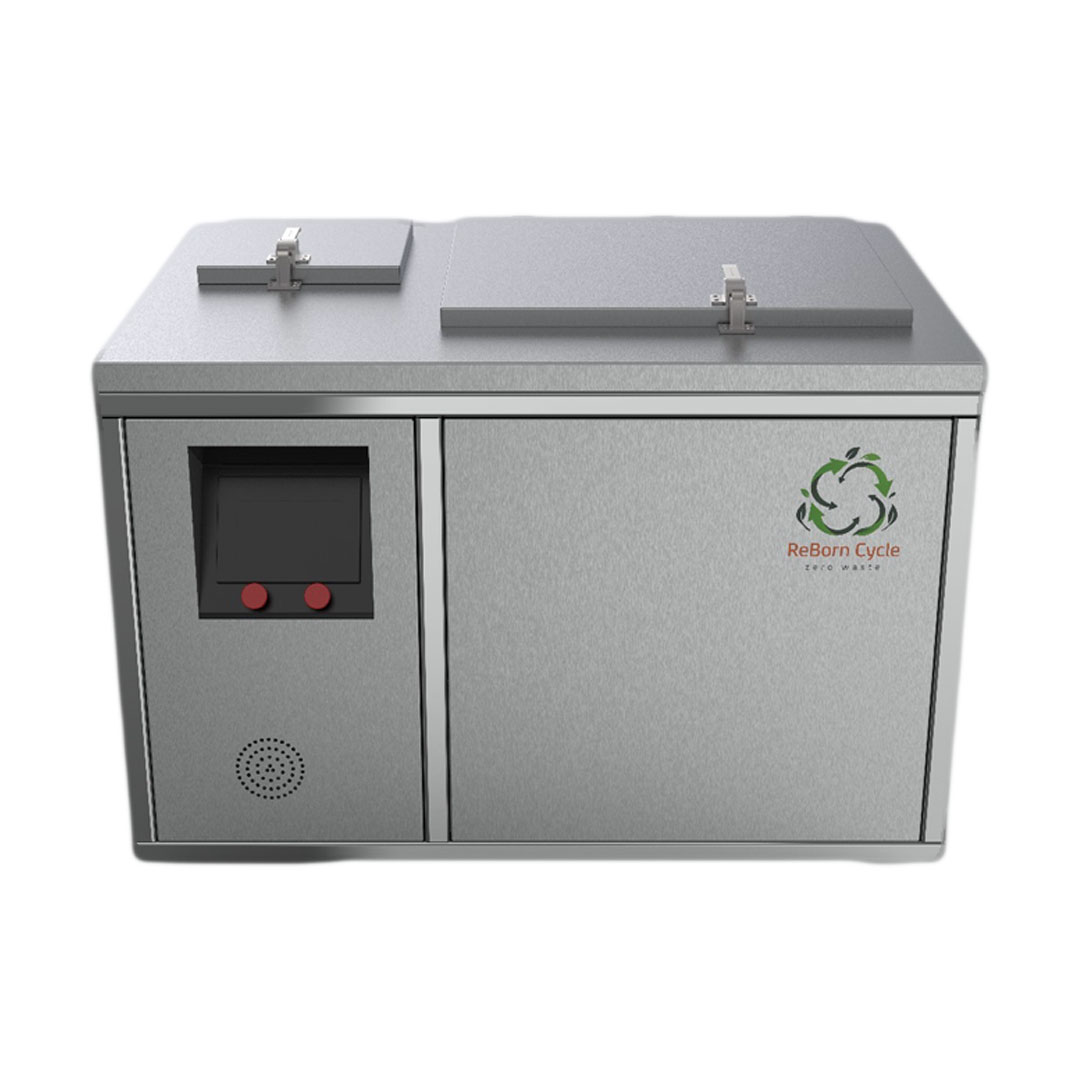


A compost fertilizer machine is an industrial in-vessel unit that turns organic waste into stabilized soil amendment, not a chemical NPK plant. The product is compost material for fields, greenhouses and landscape.
A compost fertilizer machine is an industrial in-vessel composter that converts food and similar organic waste into hygienized compost material in about 24–48 hours inside a closed, heated, aerated vessel. The search phrase usually describes on-site recovery of organic soil amendment, not a chemical fertilizer or NPK pellet line.
Facility managers and agronomists use the same words for different equipment. Compost fertilizer machine in practice means a closed industrial compost machine whose output is used as organic soil conditioner in fields, greenhouses or parks. This article clarifies the product, how it differs from mineral fertilizer, quality checks and capacity choice.
Is a Compost Fertilizer Machine a Chemical Plant?
In supplier searches, compost fertilizer machines and chemical fertilizer lines often appear together. Chemical plants focus on formulation and rapid nutrient delivery. A compost fertilizer machine relies on biological breakdown of carbon and organics; the discharge is not a bag of mineral fertilizer.
ReBorn Cycle units typically handle canteen and kitchen organics. In-vessel moisture is held around 50–60%, thermophilic targets are 55–65 °C, and mixing sustains oxygen. A normal cycle is 24–48 hours, longer for fatty or irregular feeding. The material is stabilized, low-odour hygienized pre-compost; weeks of curing in a separate area are recommended before many soil uses.
Engineers should discuss moisture, odour, C/N and application rate instead of inventing NPK labels on day one. Recording output through quality control keeps contracts and internal ESG reporting coherent.
How Does Compost Output Compare with Mineral Fertilizer and Manure?
Soil programs constantly weigh three sources: compost, mineral fertilizer and livestock manure. Compost builds structure and water retention rather than a sharp nutrient spike. Mineral products deliver selected elements quickly. Raw manure can be rich but carries pathogen, odour and weed-seed risk and usually needs its own stabilization.
| Source | Main role | Risk / note |
|---|---|---|
| Machine compost (cured) | Structure, water hold, biological activity | Over-fresh use may tie nitrogen briefly |
| Mineral fertilizer | Fast nutrients (e.g. N, P, K products) | Leaching, salt build-up; little organic matter |
| Uncured farm manure | Nutrients and organics | Pathogens, odour, weed seeds; distance rules |
In greenhouse and landscape jobs, machine output is usually a complementary organic input; it does not have to replace an entire mineral program. Decisions belong to soil tests and end use. Compost’s core job is organic matter and structure, independent of the mineral plan.
Where Is Compost Fertilizer Machine Output Used?
On site surveys the first question is often «where will the material go?». Discharge fits growing media blends, park renovation, campus landscape or contracted soil conditioner sales, but curing time depends on the use. Greenhouses want lower moisture and stable C/N; landscape can tolerate slightly fresher material if dosing is conservative.
Daily kg and waste character must be measured before you promise a use case. Hotel kitchens and park trimmings need different carbon support. See compost in greenhouses and output use guidance for worked scenarios.
Some municipalities trial compost for soil rehabilitation in pilot zones; local product rules still apply. Machine discharge is a controlled organic input, not an off-the-shelf chemical bag.
Why Does Output Still Need a Curing Phase?
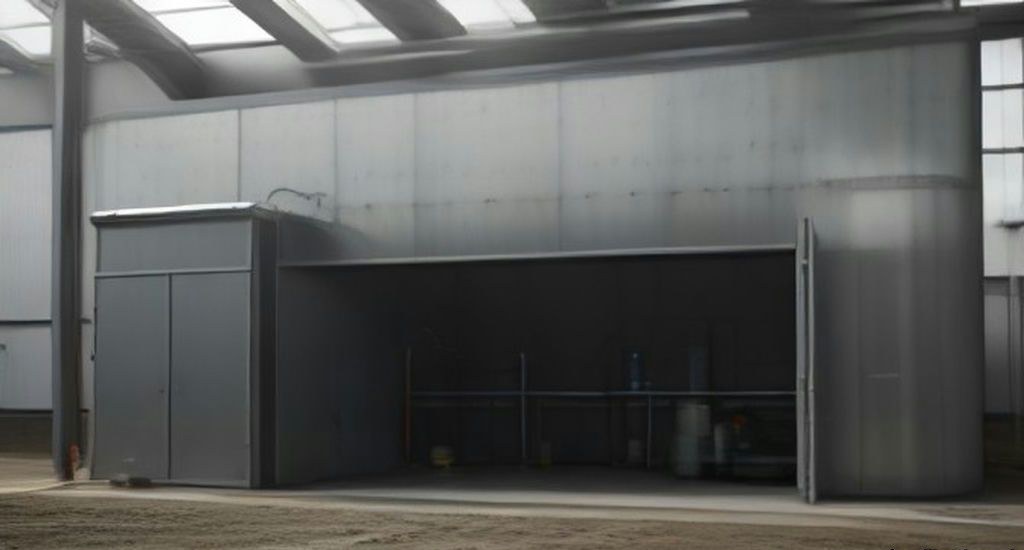
Short in-vessel time means material is often pre-compost: hot inside, cooling toward ambient outside. Curing bays target 45–55% moisture, with turning or static piles over weeks until stable. Mature compost typically shows C/N below about 20 and an earthy smell.
- At discharge Log moisture and temperature; steam or pink zones may need blending or drying.
- Curing area Hold material for weeks; prevent puddles in rain.
- Before use Check moisture and odour; add lab tests where greenhouse risk is high.
These steps align expectations with real timelines. Staff training through operator training should include curing records, not only loading the vessel.
Tip: Do not apply under-cured material to dense planting; brief nitrogen tie-up can yellow leaves. Start with landscape bands or low-risk beds.
How Does ReBorn Cycle Set Up a Compost Fertilizer Line?
ReBorn Cycle lines start with waste profile and daily kg. Under consulting we map moisture, fat and contaminants, then size RBN-C250 Compost Machine or RBN-C500 Compost Machine. Mid-size hotel campuses and regional kitchens often land in the 250–500 kg/day class.
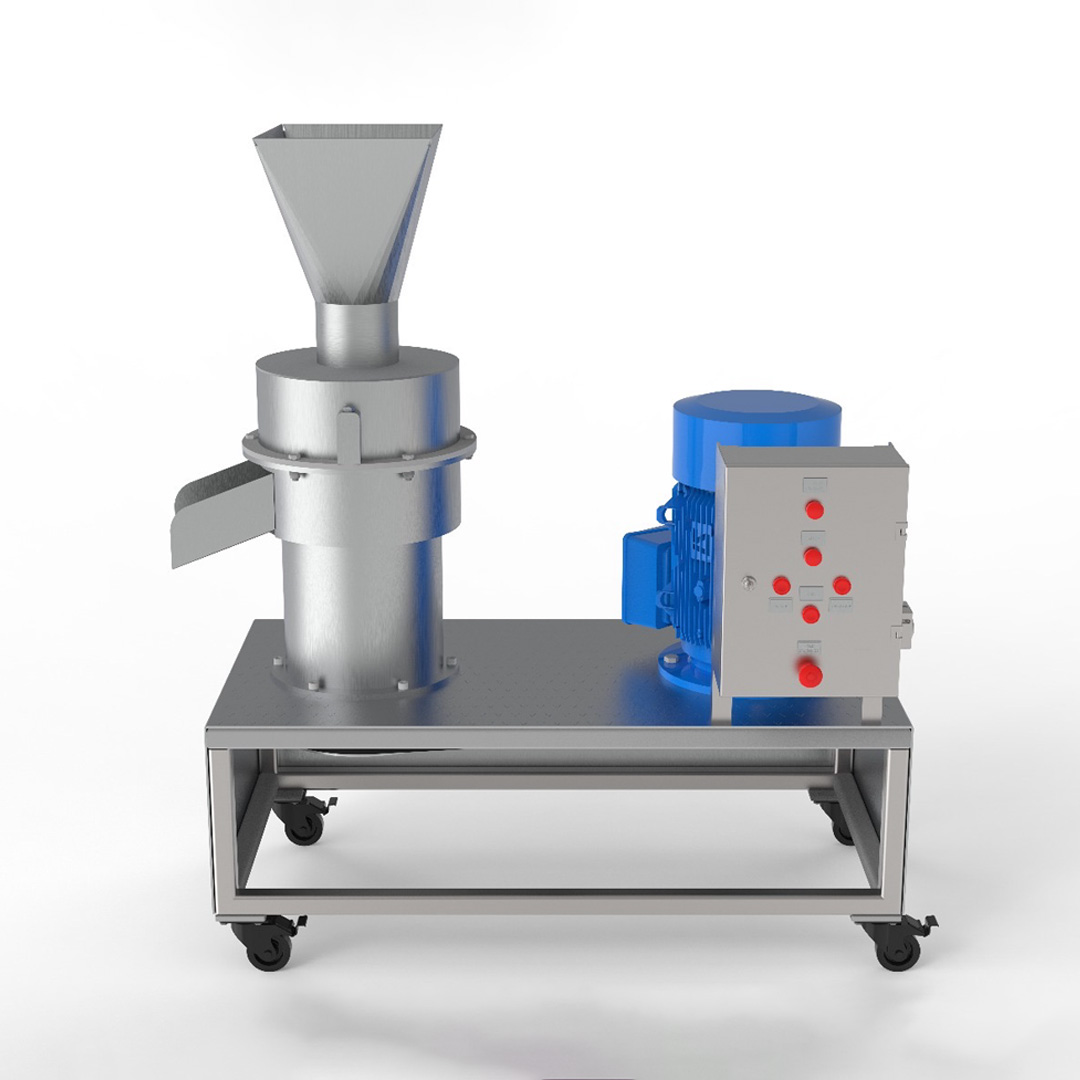
Installation covers floor load, drainage, airflow and service access. Commissioning trains feeding rhythm, carbon supplements and alarm limits. Where transport and dosing matter, a Pellet Machine at the end homogenizes discharge; it is still organic compost, not chemical granulation.
Domestic manufacturing and after-sales support affect uptime. The purpose is safe on-site conversion to stable organic input; see what a compost machine does for the core role. Do not lock capacity before survey data.
Warning: Clinical waste, metal, plastic and glass do not enter the compost path. Contamination directly affects quality and whether soil use is acceptable.
How Do You Size a Compost Fertilizer Machine?
Size on daily organic kg and peak-day margin, not on «how much fertilizer we need». Recommending a model without weighing waste is a common mistake. Many sites keep 15–25% headroom above measured daily average; events consume that buffer.
Single units suit mid-size sites; municipalities and central kitchens plan multiple vessels and curing footprint. If output stays on-site for landscape, storage volume matters as much as rated capacity. Use the capacity selector to narrow models, then confirm on survey.
Include electricity, staffing and curing space in the business case. Buying only for «fertilizer» when waste is low leaves the vessel under-filled and inefficient. Waste first, machine second; soil program integration comes after stable output.
Frequently asked questions
Does a compost fertilizer machine produce NPK?
No. Discharge is organic compost material; it does not carry a fixed NPK claim. Nutrient content follows feedstock. Use it for structure and biology; plan mineral nutrition separately.
Can I spread machine output on fields immediately?
Many programs cure for weeks first. Discharge is hygienized pre-compost; full maturity needs cooling and stable moisture. Greenhouses and sensitive crops need tests before use.
Is a compost fertilizer machine the same as a feed machine?
No. Compost equipment targets soil amendment; feed machines target animal feed material under separate rules. One device does not deliver both products by default.
Does pelletizing turn compost into chemical fertilizer?
No. Pelletizing eases handling and dosing only. The product remains an organic compost derivative. Moisture and die setup drive pellet quality.
Which wastes suit a compost fertilizer machine?
Mostly kitchen and canteen organics with carbon support when needed. Plastic, glass, metal and clinical waste are rejected. Fatty streams need longer cycles and careful mixing.
How does the machine control odour?
A closed vessel, balanced moisture and regular feeding limit odour versus open piles. Wet, irregular input increases risk. Operators should log loads and alarms.
Compost Fertilizer Machines and Soil Programs
Searching for a compost fertilizer machine usually means on-site organic input and logistics control, not a chemical factory. Curing discharge, logging moisture and odour, and dosing conservatively makes greenhouse and landscape use safer and easier to defend in contracts.
Tie capacity and curing space to measured waste. Skip headroom or storage and the vessel runs empty or output piles up on site. You need not drop mineral programs entirely; planning compost as complementary structure and water-holding input is sound engineering.
Do not lock a model before waste profile, target use and pellet needs are clear. Start with real kg and contamination on site via a free survey appointment, then shape capacity and curing layout through consulting with our team.