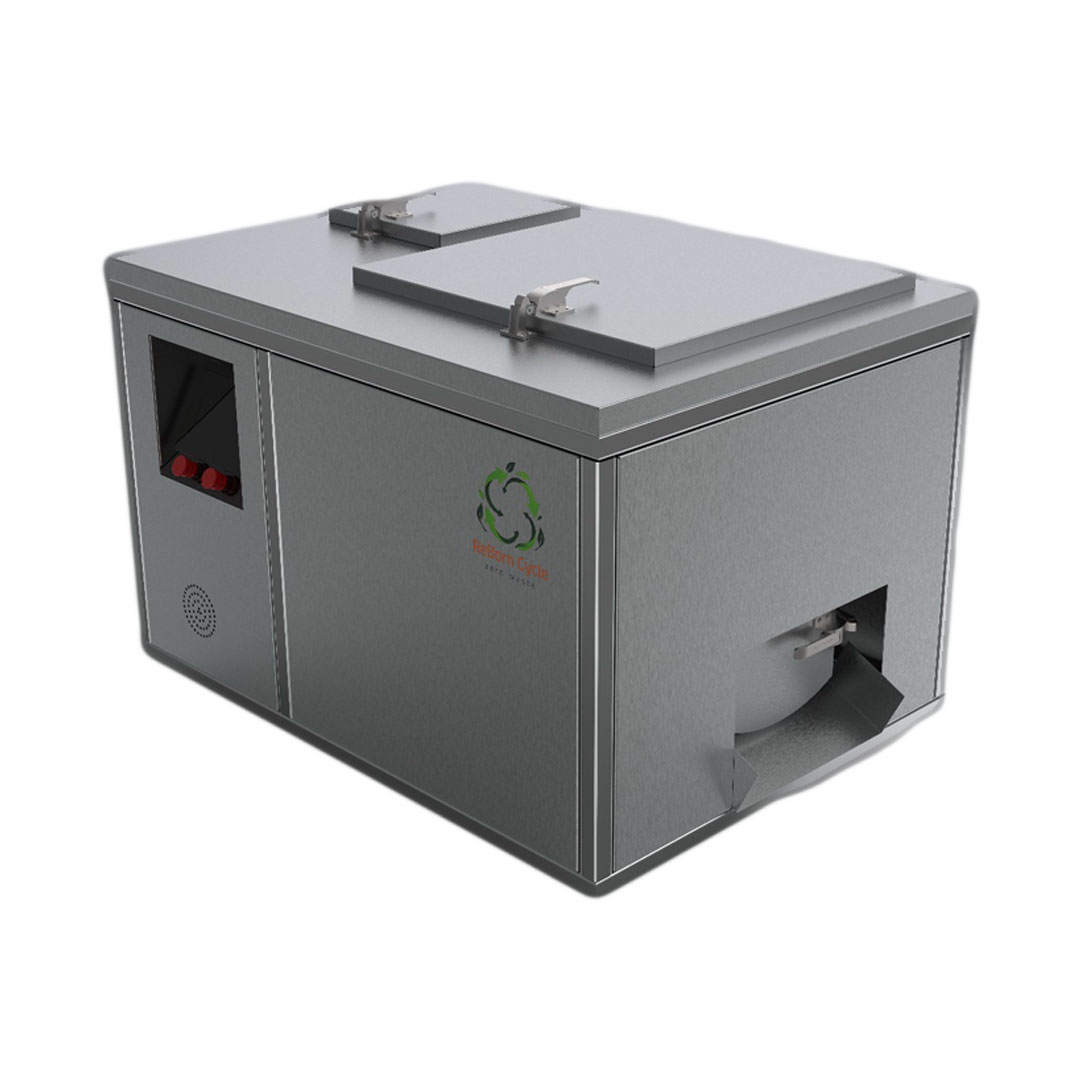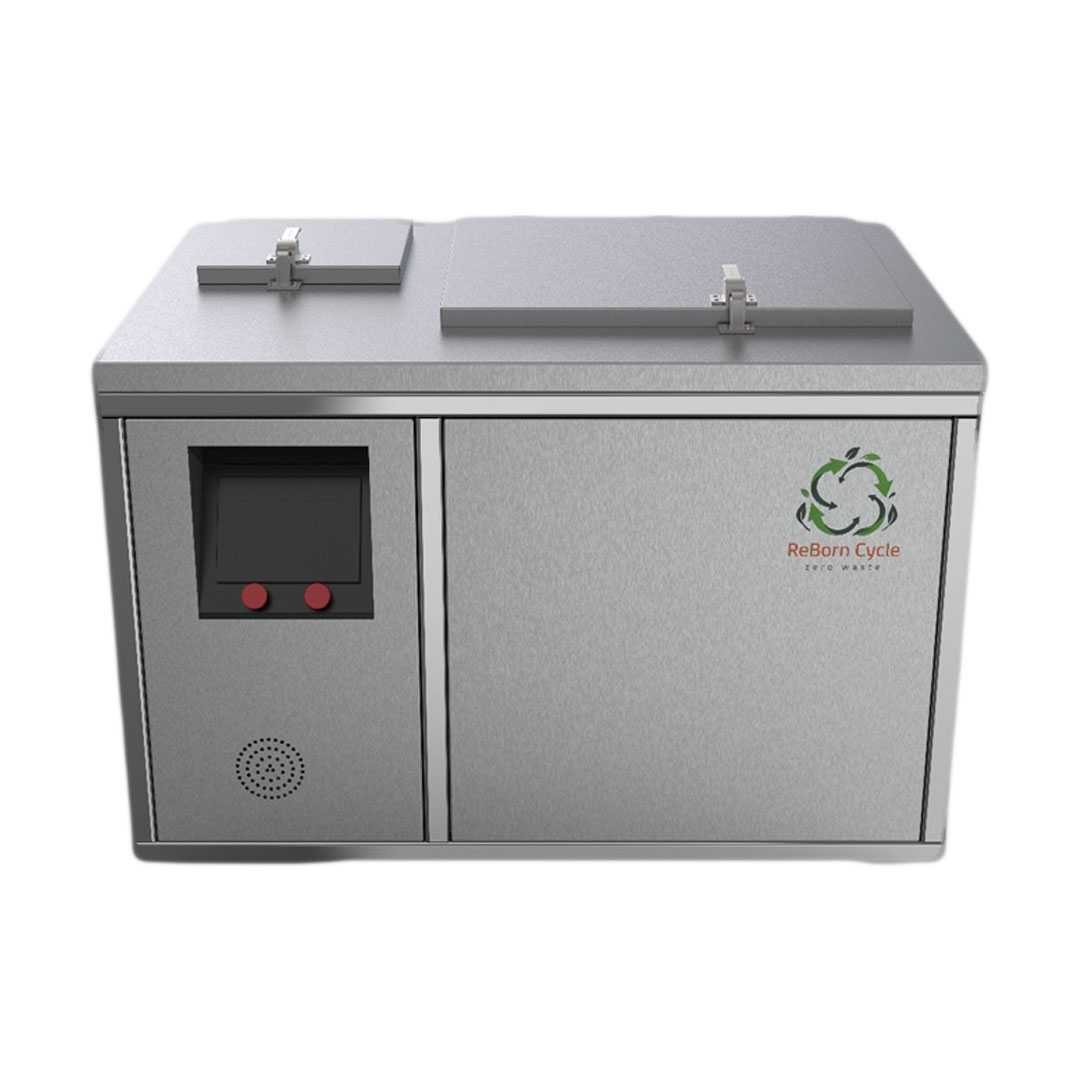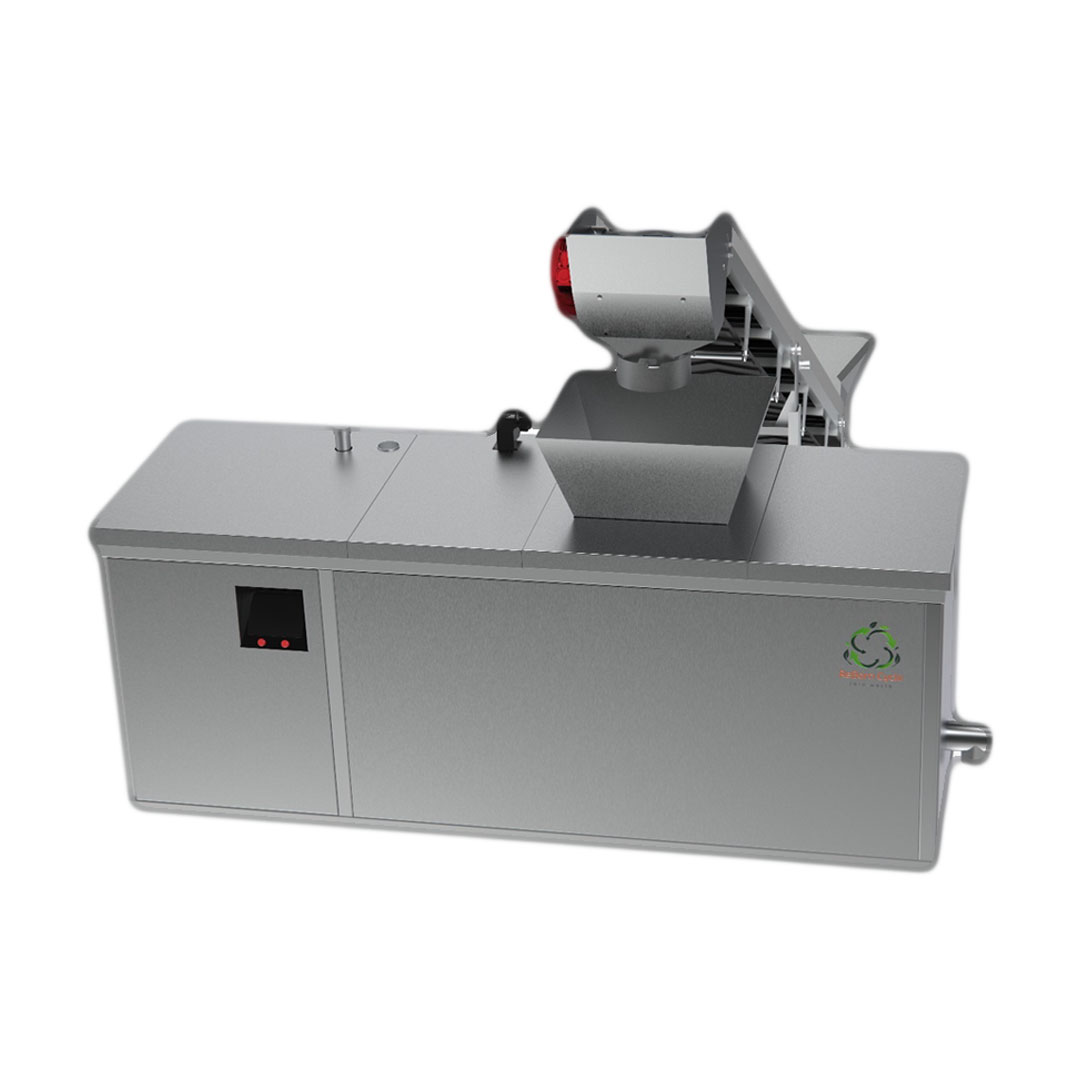
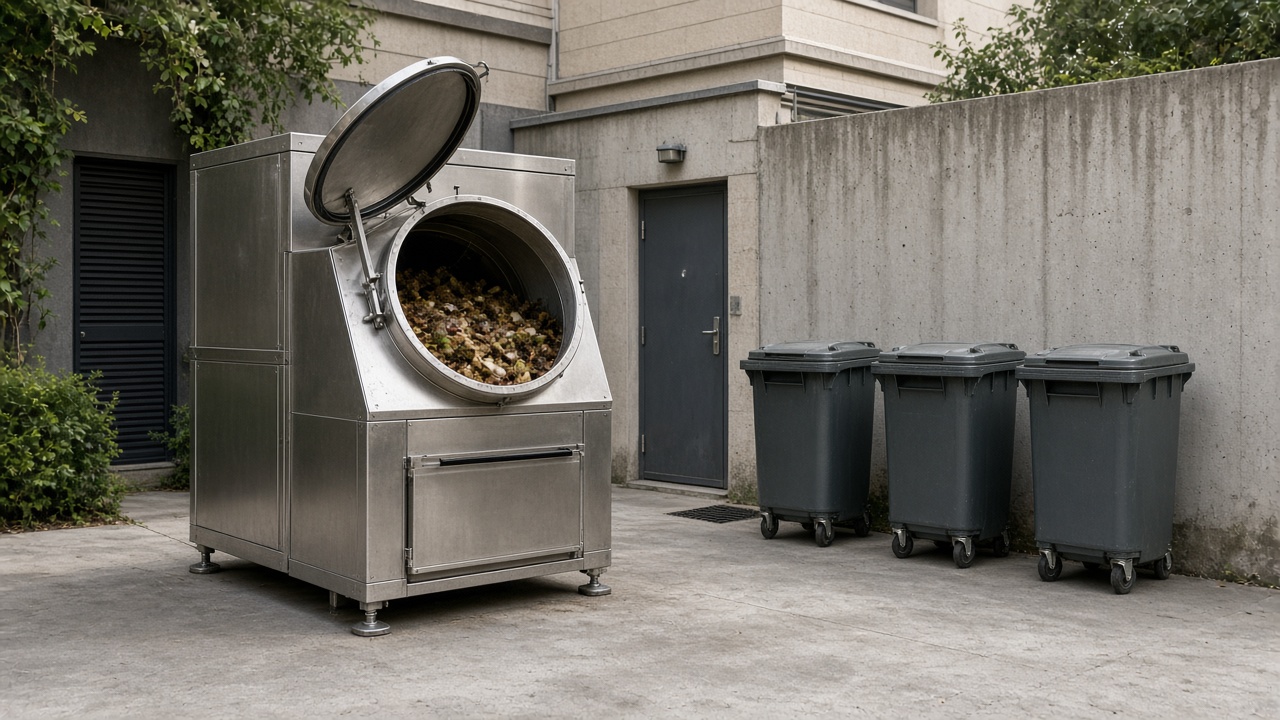
A compost machine processes food and other organic waste in a closed vessel with controlled heat, aeration and mixing, sharply reducing waste volume and turning it into a stable compost material on site.
A compost machine is equipment that processes food scraps and other organic waste in a closed vessel with controlled heat, aeration and mixing, turning it into a stable, hygienized compost material right where the waste is generated. Depending on the input, it cuts waste volume by up to 80–90%, reduces odor and hauling, and supports zero waste goals.
Whether it is a hotel, hospital, school, shopping mall or food plant, organic waste is generated every day, starts to smell quickly and costs money to haul away. In this article you will learn what a compost machine actually does, which businesses need one, the benefits for volume, logistics, odor and compliance, how it compares with open windrow composting and which capacities match which types of operations. The examples come from situations we regularly encounter during site surveys.
How Does a Compost Machine Work?
A compost machine accelerates aerobic decomposition, which takes months in nature, under controlled conditions inside a closed vessel. Heating, aeration and mixing work together to maintain the temperature, oxygen and moisture balance that microorganisms need. A typical cycle consists of the following steps.
- Sorting and feeding Foreign materials such as plastic, glass and metal are removed and the organic waste is loaded; at large volumes it is pre-shredded.
- Heating and thermophilic phase The vessel heats up and the material reaches 55–65 °C, which hygienizes it.
- Aeration and mixing Mixing paddles turn the material regularly while fans supply oxygen and remove excess moisture.
- Discharge Kitchen waste with balanced moisture is typically discharged as a stable pre-compost material after 24–48 hours.
- Curing Depending on the intended use, the output rests for a few weeks and becomes mature compost.
We cover everything from sensors to the control panel in our article on how an industrial compost machine works.
What Does a Compost Machine Do?
The core job of a compost machine is to turn organic waste from a problem into a manageable material at the point where it is generated. These are the benefits businesses ask about most during our site surveys:
- Volume and mass reduction: Water evaporates and organic matter breaks down; depending on the input, volume can drop by up to 80–90%.
- Less logistics: Waste containers fill up more slowly, so collection runs and storage space shrink.
- Odor and hygiene control: Instead of rotting in an open container, waste is processed in a closed vessel, lowering the risk of pests and leachate.
- Zero waste compliance: Turkey's Zero Waste Regulation requires separate collection of biodegradable waste in many facility types, and on-site processing is a practical outlet for that stream.
- Climate impact: Waste that decomposes without oxygen in a landfill produces methane; according to IPCC AR6, methane's 100-year warming effect is about 27–30 times that of carbon dioxide.
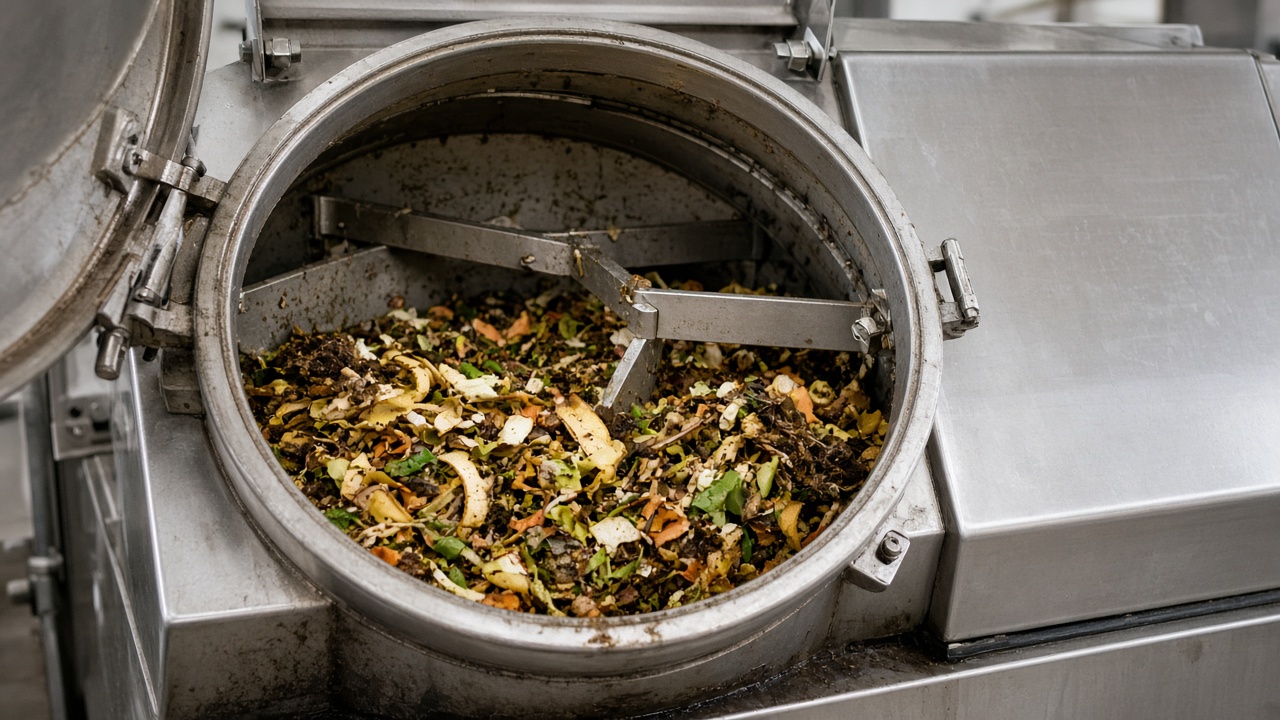
The resulting material can be used as a soil amendment in landscaping, gardens or agriculture.
Which Businesses Need a Compost Machine?
Any operation that regularly generates more than a few dozen kilograms of organic waste per day can benefit from a compost machine: restaurants and hotels, hospital and school cafeterias, mall food courts, central kitchens, food manufacturers and municipalities. The right model is chosen based on the average daily waste quantity.
| Model | Daily capacity | Typical operation |
|---|---|---|
| RBN-C25 | 25 kg/day | Restaurant, café, boutique hotel |
| RBN-C50 | 50 kg/day | Hotel, school, mid-size kitchen |
| RBN-C100 | 100 kg/day | Hospital, mall, mid-size facility |
| RBN-C250 | 250 kg/day | Large hotel, production plant, campus |
| RBN-C500 | 500 kg/day | Central kitchen, municipality, corporate site |
| RBN-C1000 | 1,000 kg/day | Large hospitality and industry |
| RBN-C2500 | 2,500 kg/day | Municipality, food production |
| RBN-C5000 – C20000 | 5,000–20,000 kg/day | Regional waste center, metropolitan municipality |
For example, the RBN-C50 Compost Machine is a common starting point for a mid-size hotel, the RBN-C250 Compost Machine for a large hotel or campus, and the RBN-C1000 Compost Machine for industrial sites.
Tip: Check capacity not only against the average but also against peak days during high season and events.
Compost Machine or Open Windrow Composting?
Open windrow composting is the classic method in which waste is piled in long rows outdoors and turned periodically. It suits central facilities with plenty of land, but closed machines have the edge for operations that treat waste where it is generated, have limited space or sit close to residential areas.
| Criterion | Closed compost machine | Open windrow |
|---|---|---|
| Space required | Compact, enclosed unit | Large open area |
| Weather | Process independent of the weather | Rain and cold slow the process down |
| Duration | 24–48 hours in the machine, then curing | Usually months |
| Odor and pests | Controlled in a closed vessel | Open surface, hard to manage |
| Meat and greasy waste | Can be processed under controlled conditions | High odor and pest risk |
| Location | Where the waste is generated | Usually at a central facility |
In practice the two methods can complement each other: the machine handles rapid decomposition and hygienization, while curing takes place in an open or roofed area.
What Comes Out of a Compost Machine?
The output is a pre-compost or compost material that has passed through thermophilic conditions, lost much of its volume and been stabilized and hygienized. It is dark and crumbly and smells far less than raw waste. The properties of fully mature compost are reached after a curing period of a few weeks, depending on the intended use.
Once cured, the material can be used as a soil amendment in landscaping and parks, gardens, tree planting or agriculture. At larger facilities, drying and pelletizing lines can turn it into a product that is easier to store and transport.
Warning: Do not apply fresh machine output directly to sensitive plants or potting soil. Immature compost can damage roots and temporarily tie up nitrogen in the soil; if you plan to sell or distribute the product in Turkey, also check the quality criteria of the Compost Communique, or the applicable local rules elsewhere.
How a Compost Machine Project with ReBorn Cycle Works
ReBorn Cycle compost machines are closed systems, engineered and manufactured in Turkey, in which temperature, aeration and mixing are controlled. A project usually starts with a site survey: waste type, daily quantity, peak days, installation space and power supply are assessed on site.
The success factor we see most often in our installations is the kitchen team adopting the sorting and feeding routine. That is why we provide operator training after installation and follow the process through after-sales service. Energy is a major operating cost item, so see our article on how much electricity a compost machine uses, and for investment items read our guide to what determines compost machine prices.
For large volumes, line equipment such as a shredder, conveyor belt, tunnel kiln and pellet machine can turn the machine into a complete organic waste processing line.
Frequently asked questions
How long does a compost machine take to make compost?
Kitchen waste with balanced moisture typically becomes a stable pre-compost material in a compost machine within 24–48 hours. Fatty or irregular feeding can extend this beyond 48–72 hours. For applications that require fully mature compost, an additional curing period of a few weeks is recommended.
Does a compost machine smell?
A properly fed and maintained closed compost machine produces far less odor than waste sitting in an open container, because the waste is processed in a sealed vessel with controlled aeration. The odor problems we encounter in the field usually stem from overly wet feed, foreign materials or loading above capacity.
What can you put in a compost machine?
Cooked and raw food scraps, fruit and vegetable waste, bread, coffee grounds and tea leaves can go into a compost machine. Meat and greasy waste can be processed in controlled proportions. Plastic, glass, metal, packaging, batteries and chemicals must never go in, as they disrupt the process and can damage the equipment.
Does a compost machine use electricity?
Yes, a compost machine uses electricity for heating, mixing and aeration. Consumption varies with capacity, waste moisture, ambient temperature and operating pattern. A realistic figure should therefore be calculated during a site survey based on the actual waste profile; relying on a generic number can be misleading.
What is the difference between a home and an industrial compost machine?
Home units are designed for a few kilograms of waste per day, and some of them only dry and grind the waste. Industrial compost machines handle anywhere from tens of kilograms to many tons per day with continuous feeding, running true thermophilic composting with controlled heat, aeration and mixing.
Is a compost machine required for zero waste certification in Turkey?
Turkey's Zero Waste Regulation requires separate collection of biodegradable waste, but it does not mandate a specific machine. Handing separately collected organic waste to a licensed company or processing it on site with a compost machine are both options. Check the current regulation and local authorities for implementation details.
Let us work out which capacity fits your operation; contact us for a site survey and capacity recommendation.