Aerobic composting uses oxygen, heats up to 55–65 °C and is fast and low-odor; anaerobic decomposition works without oxygen, is slow and produces methane. Controlled in sealed tanks, it yields biogas.
The key difference between aerobic and anaerobic composting is oxygen. In aerobic composting, microorganisms use oxygen, the material heats up to 55–65 °C and waste quickly turns into stable, low-odor compost. Anaerobic decomposition happens without oxygen; it is slower and cooler and generates methane and foul odors. Controlled anaerobic digestion in sealed tanks is used to produce biogas.
There are two basic biological routes for treating organic waste: decomposition with oxygen (aerobic) and without it (anaerobic). The choice directly shapes odor, processing time, greenhouse gas emissions and the type of investment. In this article you will learn how both processes work, see a side-by-side comparison table, understand the climate impact of methane, and get practical criteria for choosing between a biogas plant and an enclosed aerobic compost machine. New to the topic? Start with what compost is and how it forms.
How Do Aerobic and Anaerobic Processes Work?
Aerobic composting is the breakdown of organic matter by oxygen-breathing bacteria, actinomycetes and fungi. The microbes use carbon as an energy source, releasing mainly carbon dioxide, water vapor and heat. That heat drives the material into the 55–65 °C thermophilic phase, which reduces pathogens.
Anaerobic decomposition takes place without oxygen. Different groups of microorganisms first convert organic matter into organic acids and then into methane and carbon dioxide. This route releases far less heat, so self-heating is limited and decomposition is slow.
The same waste can go down either path; what decides it is the oxygen available. A compacted, overly wet or unturned compost pile becomes anaerobic whether anyone wants it or not. That is why aerobic systems aim to keep more than 5 % oxygen in the pore spaces and moisture at 50–60 %.
Key Differences Between Aerobic and Anaerobic Composting
| Criterion | Aerobic composting | Anaerobic decomposition / digestion |
|---|---|---|
| Oxygen | Required, above 5 % | Absent |
| Temperature | 55–65 °C thermophilic phase | Low on its own; heated and controlled in biogas digesters |
| Time | 24–48 hours in an in-vessel machine + a few weeks of curing; weeks to months in open piles | Months in uncontrolled piles; typically a few weeks in a biogas digester |
| Odor | Earthy smell when run correctly | Risk of hydrogen sulfide, ammonia and sour odors |
| Gas output | Mainly CO2 and water vapor | Methane and CO2 (biogas or landfill gas) |
| Main product | Compost (soil conditioner) | Biogas and digestate (needs further treatment) |
| Investment type | On-site, modular machines | Large-scale plant with gas line and storage |
The most important row is gas output. In the aerobic process, carbon returns to the air largely as CO2; in the anaerobic process, part of it becomes methane. Captured, methane is an energy source; escaped, it is a potent greenhouse gas.
Why Is Aerobic Composting Faster and Less Smelly?
Oxygen-based respiration releases much more energy from the same amount of organic matter than oxygen-free processes. Microbes multiply faster, temperature climbs and decomposition speeds up. The high temperature of the thermophilic phase also reduces pathogens and weed seeds.
The odor difference is chemistry too. When oxygen runs short, sulfur compounds turn into hydrogen sulfide, nitrogen into ammonia and carbon into volatile fatty acids, producing the typical rotten-egg and sour smell. In an aerobic environment these intermediates are oxidized into odorless compounds.
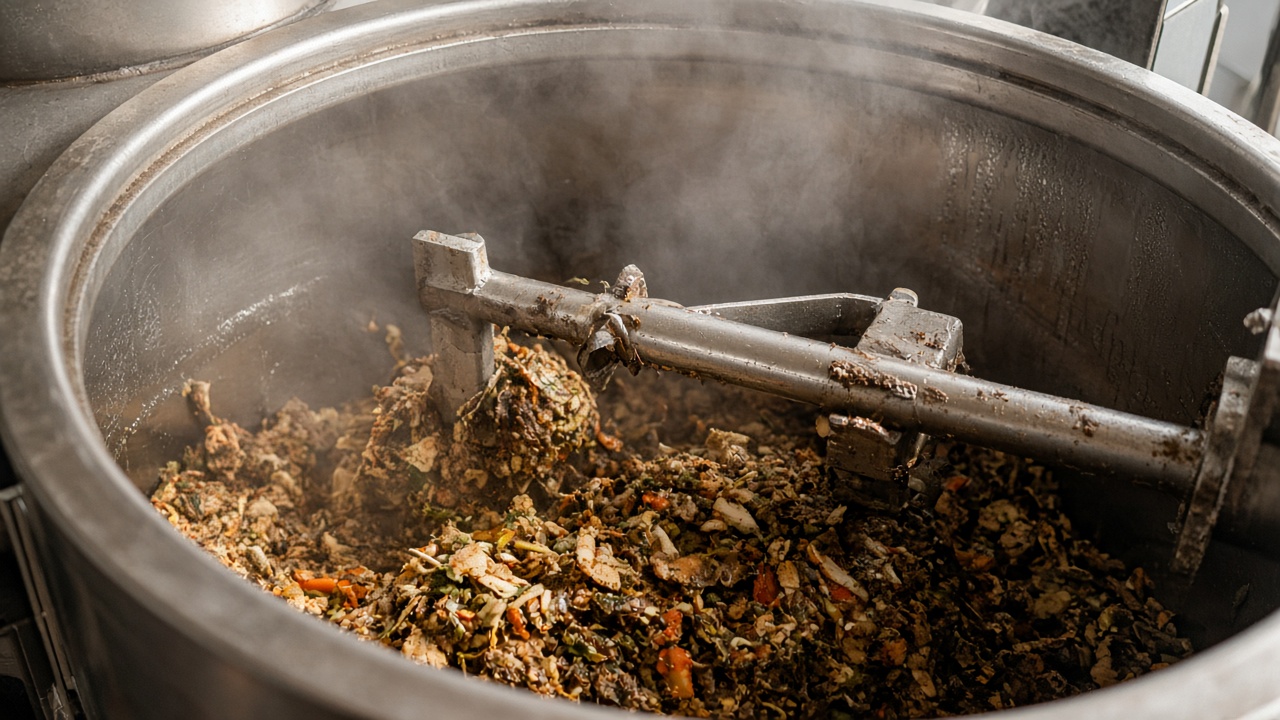
In our site surveys, most odor complaints are not caused by the waste itself but by oxygen-starved zones: closed bins left standing too long, overly wet food waste or piles that are never turned. For practical fixes, see our guide on controlling odor from organic waste.
Tip: Feed food waste into the machine the same day whenever possible. Waste that sits in a closed bin for long starts producing anaerobic odors before it ever reaches the machine.
Does Anaerobic Decomposition Produce Methane?
Yes. Without oxygen, part of the organic matter is converted into methane. According to the US Environmental Protection Agency (EPA), landfill gas is roughly 50 % methane and 50 % carbon dioxide. This is exactly what happens when organic waste is sent to landfill.
According to IPCC AR6, the 100-year global warming potential (GWP-100) of methane is 29.8 for fossil methane and 27.0 for non-fossil (biogenic) methane. In other words, one ton of methane has about the same warming effect over 100 years as 27–30 tons of CO2.
Warning: Biogas plants deliberately produce, capture and use methane for energy. In uncontrolled anaerobic decomposition, methane escapes to the atmosphere, which is why leaving organic waste in open piles or landfills is one of the worst options for the climate.
Biogas Plant or Enclosed Aerobic Compost Machine?
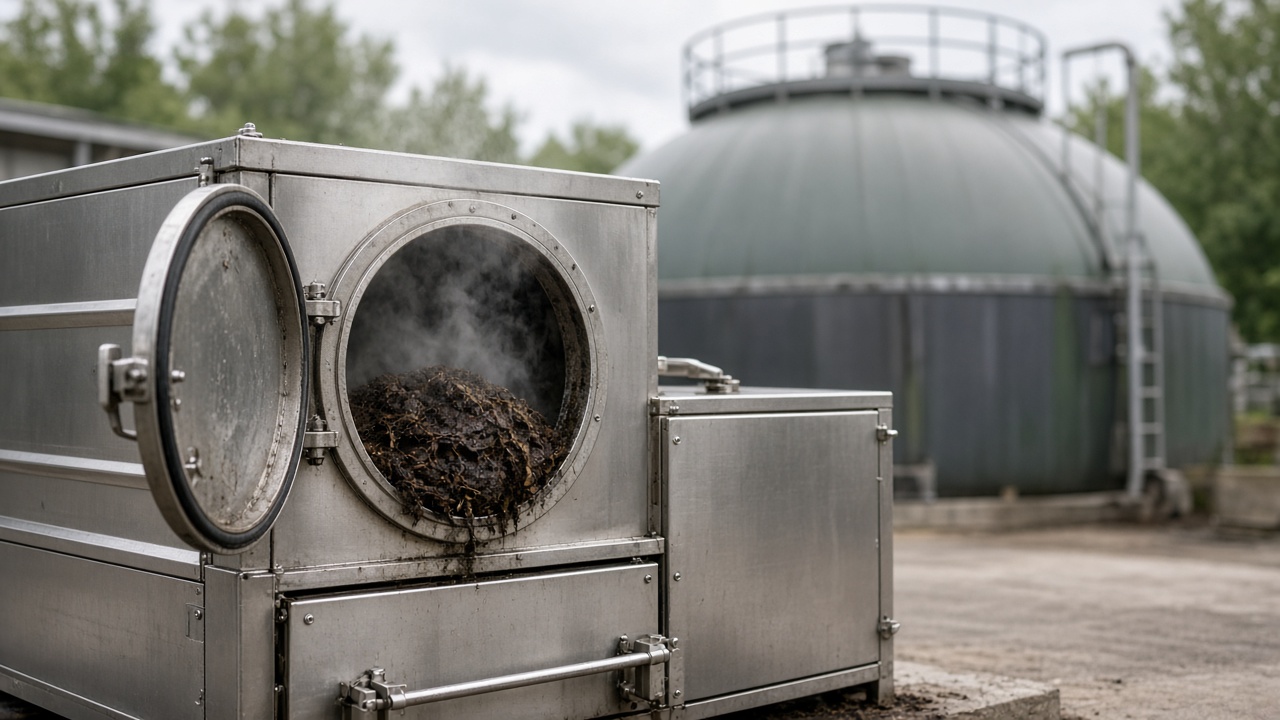
The two technologies are not rivals; they serve different scales and goals. Anaerobic digestion (biogas) makes sense for municipal, agricultural and food industry sites with a large, continuous waste stream and the infrastructure to turn gas into electricity or heat. Such plants require gas storage, safety systems and separate treatment of the digestate.
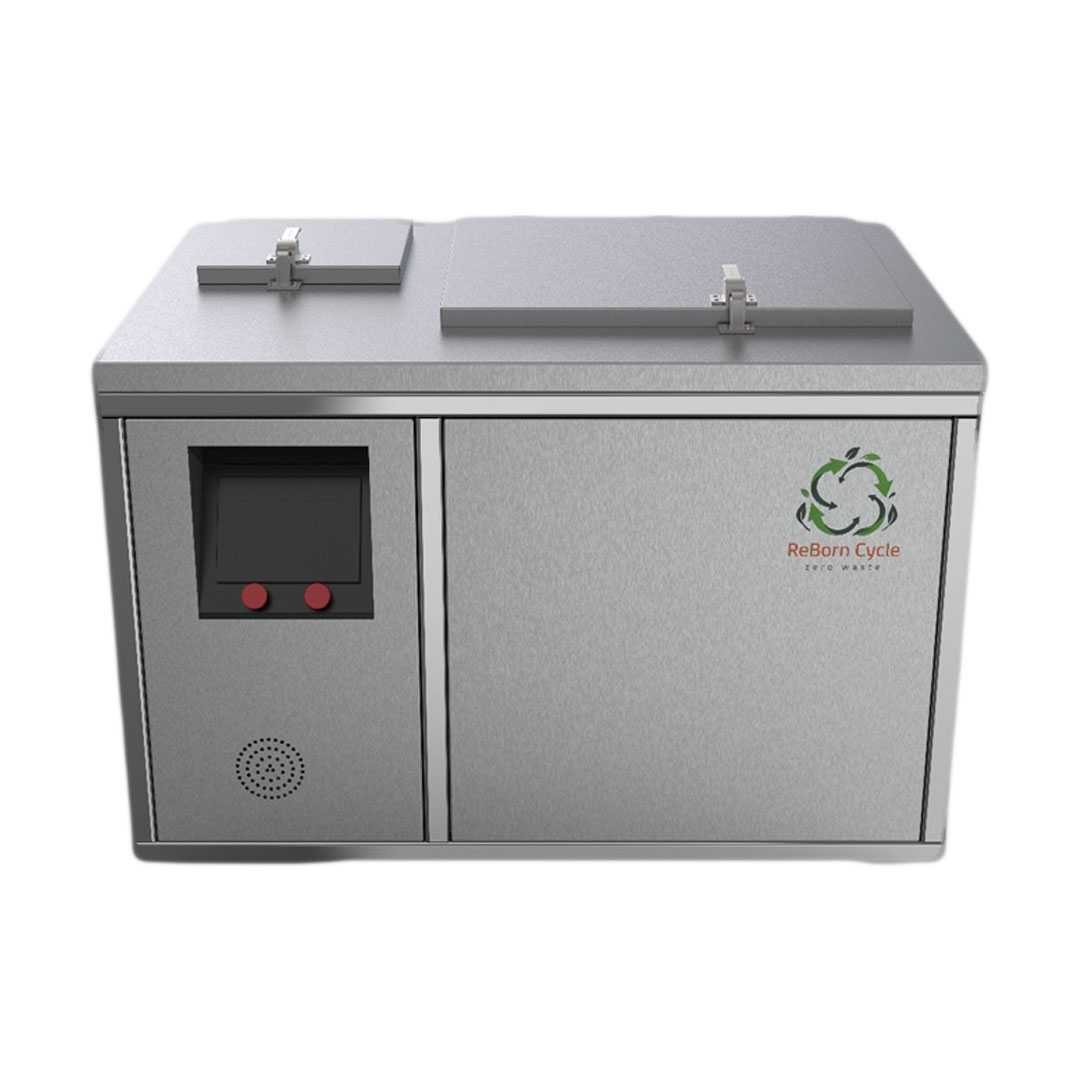
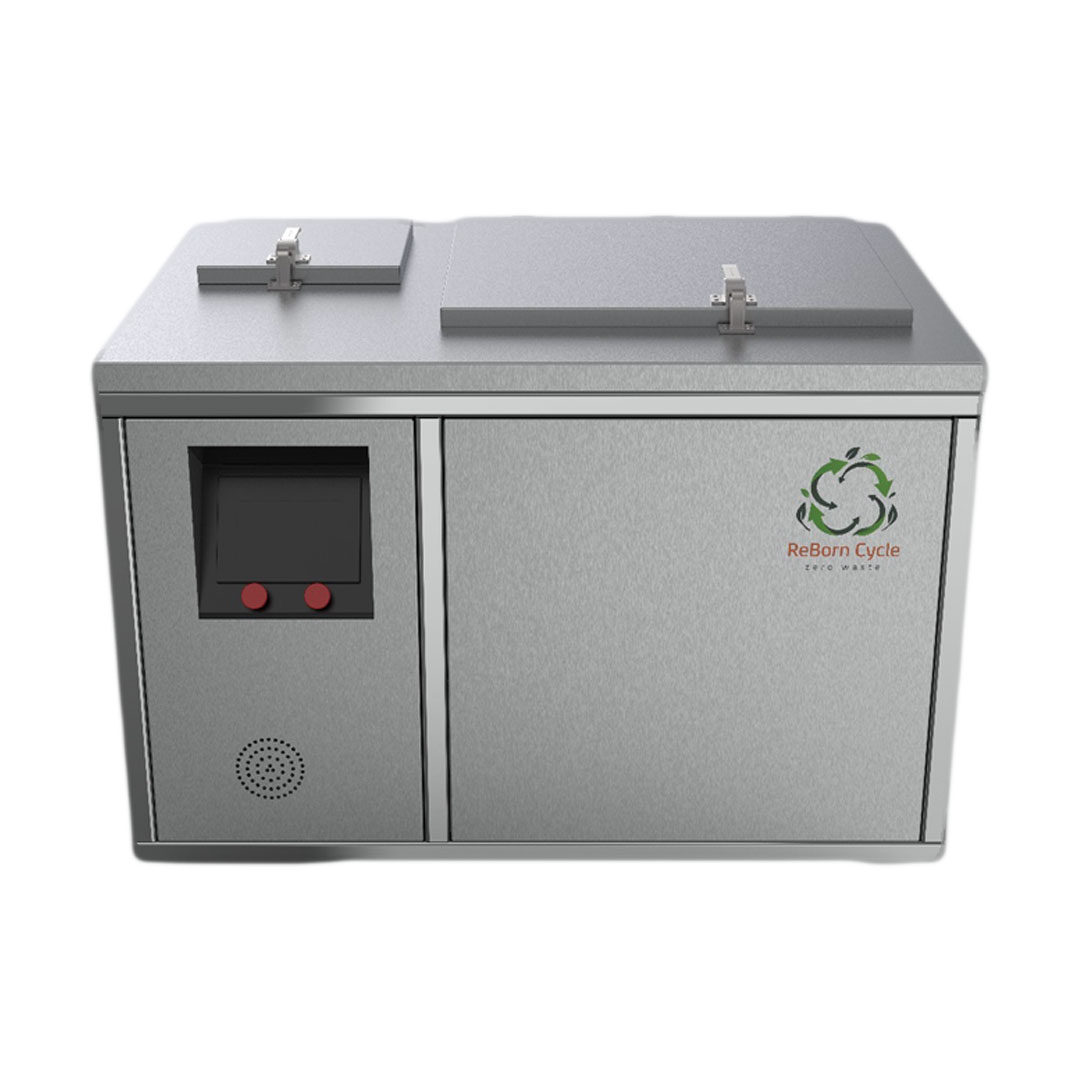
Enclosed (in-vessel) aerobic compost machines are built for hotels, hospitals, campuses, canteens and mid-size producers that need to treat waste where it is generated. No gas management is needed, the output is a direct compost feedstock and waste hauling is reduced.
- If daily waste ranges from a few hundred kilograms to a few tons and you want an on-site solution, an enclosed aerobic machine is the natural fit.
- With very high volumes, an energy recovery target and gas infrastructure, a biogas plant may be worth evaluating.
- In both cases, do not decide before measuring the waste profile, moisture and contaminant share.
How Do ReBorn Cycle Machines Keep Conditions Aerobic?
ReBorn Cycle compost machines are enclosed, heated, aerated and mixed systems. The goal is to keep the material in the thermophilic range without letting anaerobic pockets form. For example, the RBN-C250 Compost Machine handles 250 kg/day for large hotels and campuses, while the RBN-C500 Compost Machine handles 500 kg/day for central kitchens and municipalities.
- Feeding Source-separated organic waste is loaded with attention to moisture balance.
- Mixing The mixing arm prevents compaction and brings oxygen to the whole mass.
- Aeration Controlled airflow renews oxygen and removes excess moisture and gases.
- Temperature control Heating plus biological heat keeps the material in the thermophilic range.
- Discharge and curing After a typical 24–48 hour cycle for kitchen waste, the stabilized pre-compost is cured for a few weeks depending on its use.
For details on temperature, moisture and feeding settings, see our article on compost machine process parameters.
Frequently asked questions
Is aerobic or anaerobic composting better?
It depends on the goal. For fast, low-odor compost production on site, the aerobic process is the right choice; for energy recovery from very large volumes, controlled anaerobic digestion in a biogas plant may be preferred. Uncontrolled anaerobic decomposition is never desirable because of odor and methane emissions.
Why does compost smell bad?
The most common reason compost smells bad is a lack of oxygen. Excess moisture, compaction or insufficient turning make the material anaerobic, producing smelly gases such as hydrogen sulfide and ammonia. Turning more often, adding dry carbon-rich material and bringing moisture back to 50–60 % usually solves the problem.
How long does anaerobic composting take?
In uncontrolled anaerobic piles, decomposition can take months, and the result is often a smelly, unstable material. Controlled digestion in biogas plants typically runs with a retention time of a few weeks, but the digestate may need further treatment or composting before it is applied to soil.
What temperature should aerobic compost reach?
Aerobic compost should reach 55–65 °C in the thermophilic phase. For pathogen reduction, the material should stay at 55 °C or above for several days. Because very high temperatures can also suppress beneficial microbes, temperature is kept in check with aeration and mixing.
Does a compost machine produce methane?
A properly operated enclosed aerobic compost machine is not designed to produce methane. Continuous mixing and aeration keep oxygen above 5 %, which largely prevents methane-producing microorganisms from becoming active. The gas output is mainly carbon dioxide and water vapor.
Is the output of a biogas plant compost?
No, not directly. The solid-liquid residue from a biogas plant is called digestate; it is rich in nutrients but often needs further treatment for stabilization and hygiene. Many plants dewater the digestate, compost it aerobically and only then apply it to soil.
Let us assess together whether an enclosed aerobic machine or a different solution suits your waste. Share your daily waste volume and our team will get in touch for a site survey and capacity recommendation.