The C/N ratio in composting is the ratio of carbon to nitrogen in the material. The ideal starting value is 25–30:1; too low causes ammonia odor, too high slows decomposition, and mature compost drops below 20:1.
The C/N ratio in composting is the ratio of carbon to nitrogen by mass in the material being composted. Microorganisms use carbon for energy and nitrogen for growth. The ideal starting ratio is 25–30:1, with 20–40:1 still workable. Too low causes ammonia odor, too high slows decomposition; mature compost falls below 20:1.
Whether compost heats up quickly, stays odor-free and becomes a quality product depends largely on one balance: carbon versus nitrogen. In this article you will learn what the C/N ratio means, why 25–30:1 is considered ideal, a C/N table of common materials, a step-by-step mix calculation and the warning signs of an unbalanced ratio. If you are new to the topic, start with what compost is.
What Does the C/N Ratio Mean?
The C/N ratio is calculated by dividing the mass of carbon (C) in a material by the mass of nitrogen (N). In a mix with a C/N ratio of 30:1, there are 30 units of carbon for every unit of nitrogen.
For composting microorganisms, carbon is the energy source, while nitrogen is needed to build proteins and new cells. Microbes burn a large share of the carbon they consume as CO2 through respiration and build only part of it into their own biomass. That is why they need far more carbon than nitrogen.
The C/N ratio changes during the process. As carbon leaves as CO2, the ratio falls: a mix that starts at 25–30:1 usually ends below 20:1 once mature. So the C/N ratio is part of both the feeding recipe and the maturity assessment. For measurement methods, see our article on compost quality control.
What Is the Ideal C/N Ratio for Compost?
Most references, including the Cornell Waste Management Institute, consider 25–30:1 the optimum for a starting mix. Composting also works within 20–40:1, but the closer you get to either end, the higher the risk of odor or a sluggish process.
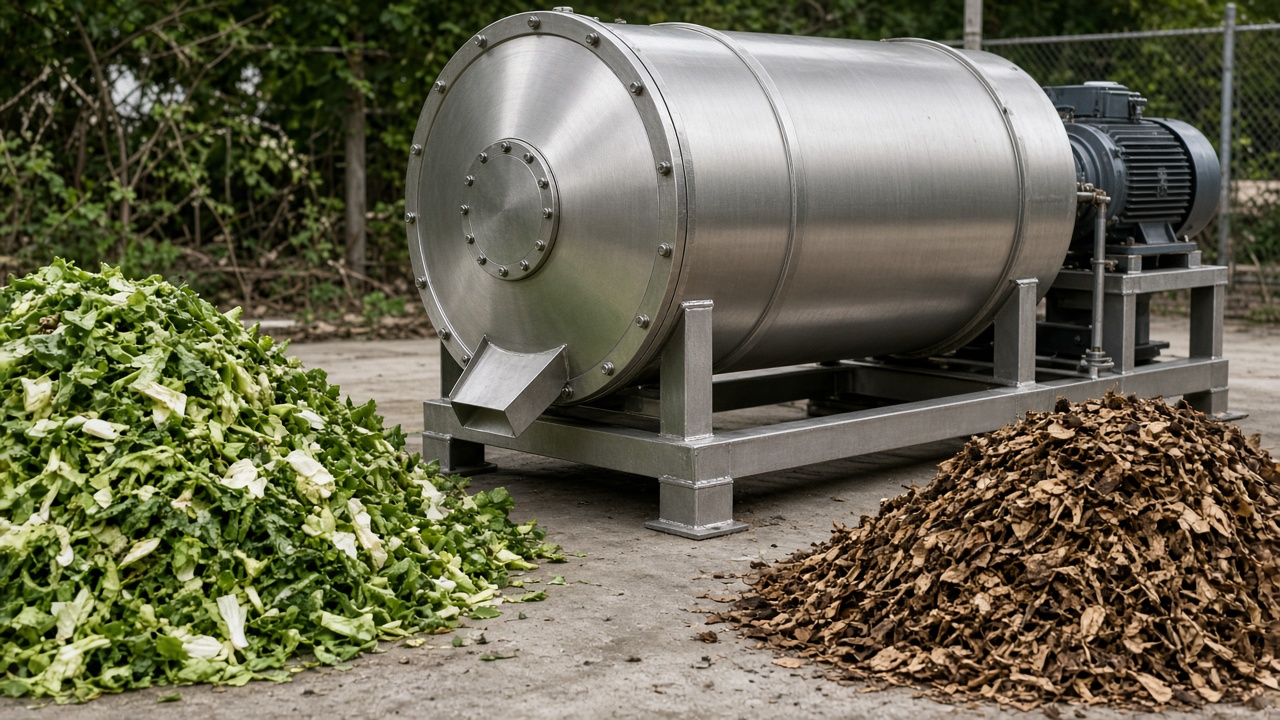
No common waste hits this target on its own. Green materials such as food waste, fruit and vegetable scraps and grass clippings sit below it, while brown materials such as dry leaves and sawdust sit above. The chart compares typical values with the target; sawdust, at 200–500:1, is far off the scale and is not shown.
The takeaway is simple: nitrogen-rich greens must be balanced with carbon-rich browns.
C/N Ratio Table for Common Compost Materials
| Material | Typical C/N | Role |
|---|---|---|
| Food waste | 15–20:1 | Nitrogen source, usually very wet |
| Fruit and vegetable waste | 15–25:1 | Nitrogen source, high moisture |
| Grass clippings | 15–25:1 | Nitrogen source, compacts easily |
| Dry leaves | 40–80:1 | Carbon source, adds structure and porosity |
| Sawdust | 200–500:1 | Strong carbon source, small amounts suffice |
Values are given as ranges; the actual ratio varies with the source, season and freshness of the material. For larger projects, laboratory analysis gives the most reliable numbers.
Tip: Part of the carbon in sawdust and wood chips is locked in lignin and breaks down slowly. So even if a woody mix calculates to 30:1 on paper, it may run somewhat slower in practice.
How Do You Calculate the C/N Ratio of a Compost Mix?
The C/N ratio of a mix is not the average of the individual ratios; it is total carbon divided by total nitrogen. Do the calculation on a dry-matter basis, because most of the weight of wet materials such as food waste is water.
- Find the dry matter Convert each material's wet weight to dry weight using its moisture content.
- Calculate carbon and nitrogen Multiply the dry weight by the material's carbon and nitrogen percentages.
- Add up Sum carbon and nitrogen separately across all materials.
- Divide Divide total carbon by total nitrogen and compare the result with the 25–30:1 target.
Example (illustrative values): Mix 100 kg of dry food waste containing 51 % carbon and 3.0 % nitrogen (C/N 17:1) with 100 kg of dry leaves containing 48 % carbon and 0.8 % nitrogen (C/N 60:1). Total carbon is 51 + 48 = 99 kg and total nitrogen is 3.0 + 0.8 = 3.8 kg, so the mix is about 26:1. Raise the food waste to 200 kg and the ratio drops to 150 / 6.8 ≈ 22:1. Cornell's online C/N calculator does this automatically, including moisture.
What Are the Signs of a Wrong C/N Ratio?
When the C/N balance is off, compost usually tells you through odor and temperature. In our field work, the most common case is a low C/N ratio caused by processing kitchen waste without adding a carbon source.
Ratio too low (below about 20:1)
- A strong ammonia smell develops and nitrogen is lost as gas.
- The mass becomes wet, sticky and compacted, raising the risk of anaerobic zones.
- The nutrient value of the compost drops because nitrogen escapes to the air.
Ratio too high (above about 40:1)
- Temperature does not rise enough or drops off early.
- Decomposition slows and coarse, fibrous pieces persist.
- If the immature product is applied to soil, microbes may tie up soil nitrogen.
Warning: Odor and temperature problems are not always caused by C/N; moisture and aeration produce the same symptoms. Check moisture first, and see our guide on setting compost moisture and temperature.
How Do ReBorn Cycle Machines Manage the C/N Balance?
Waste from hotels, hospitals and canteens is mostly food and fruit and vegetable scraps, so the starting C/N ratio is often below target and moisture is high. In ReBorn Cycle enclosed compost machines, this balance is managed with a simple feeding recipe set up during installation.
- Site survey and waste profile: The waste type, daily volume and moisture are assessed, and the recipe is built around them.
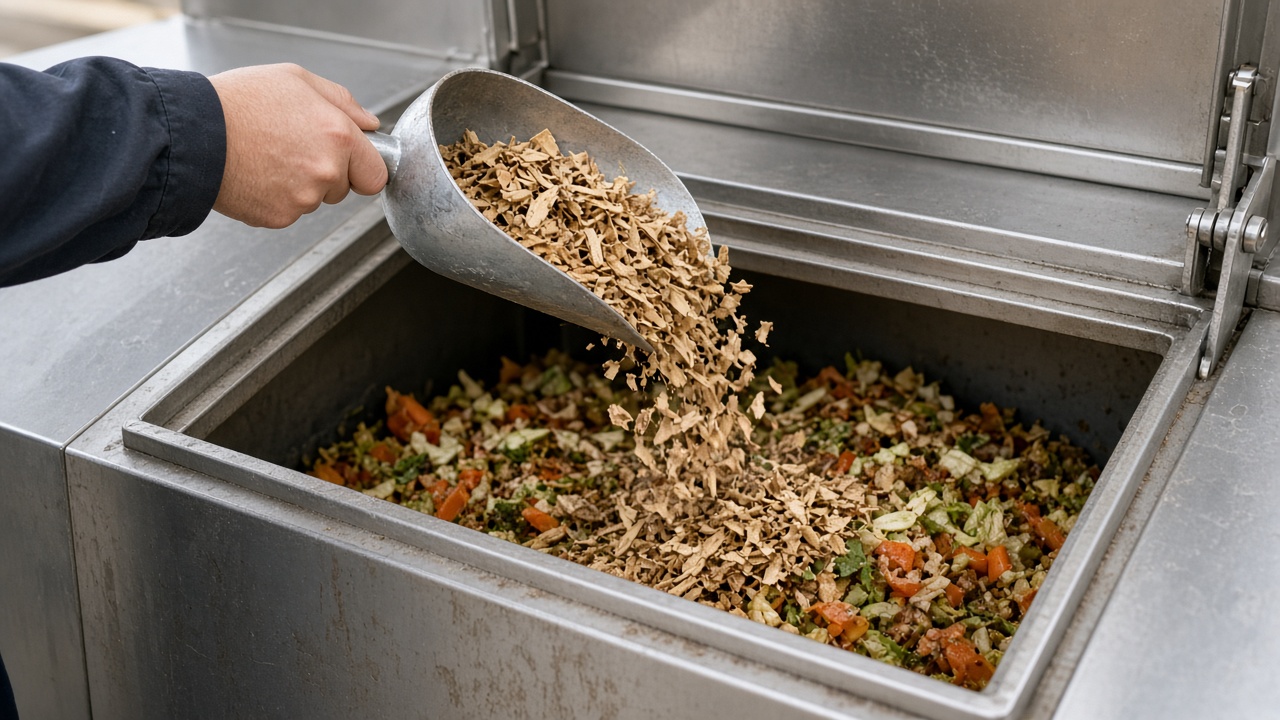
- Carbon source: Dry material such as sawdust, wood chips or dry leaves is added in measured amounts, balancing both the C/N ratio and moisture.
- Mixing and aeration: The machine mixes the material evenly so carbon and nitrogen are distributed through the whole mass.
- Operator training: The team learns how to adjust the recipe based on odor and temperature signals.
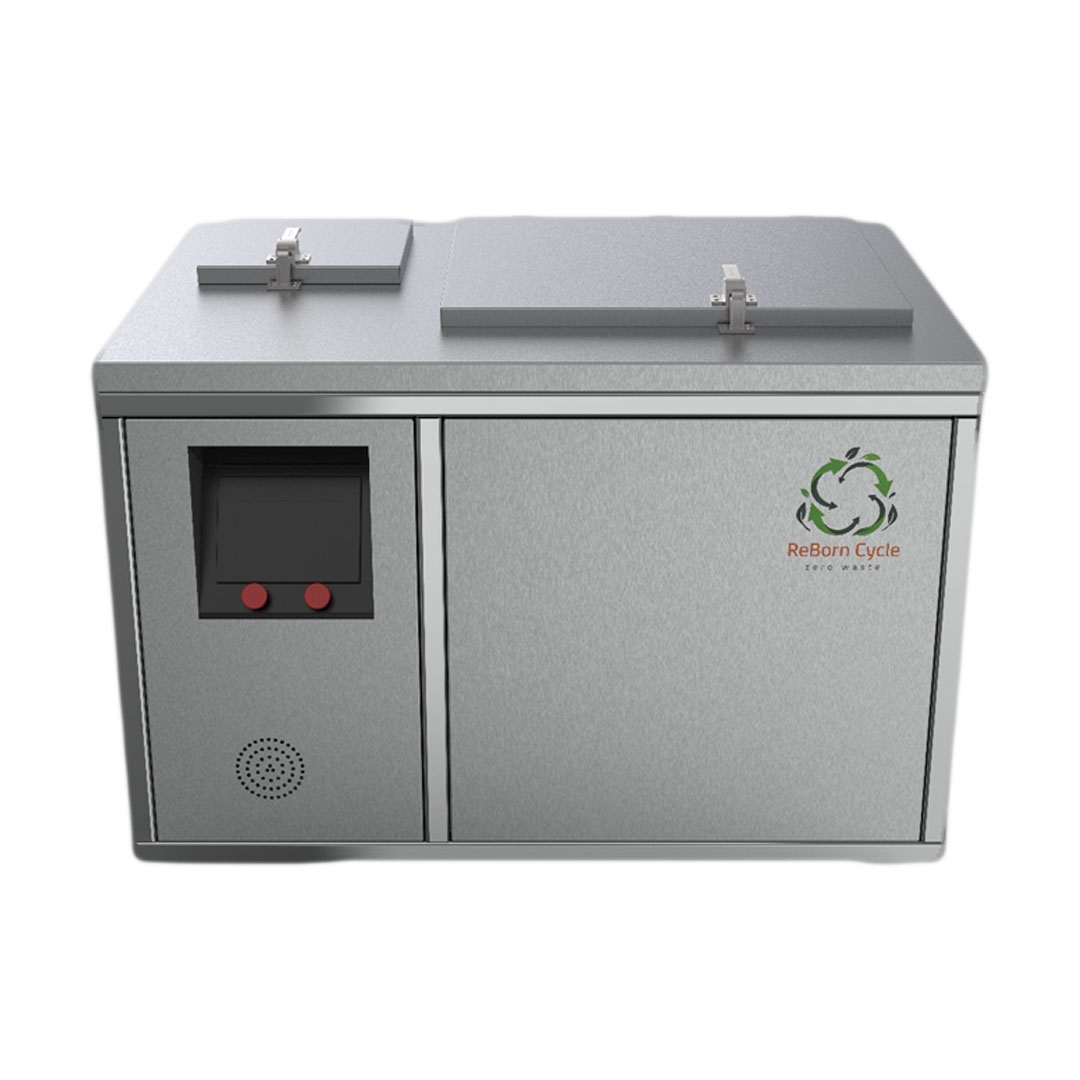
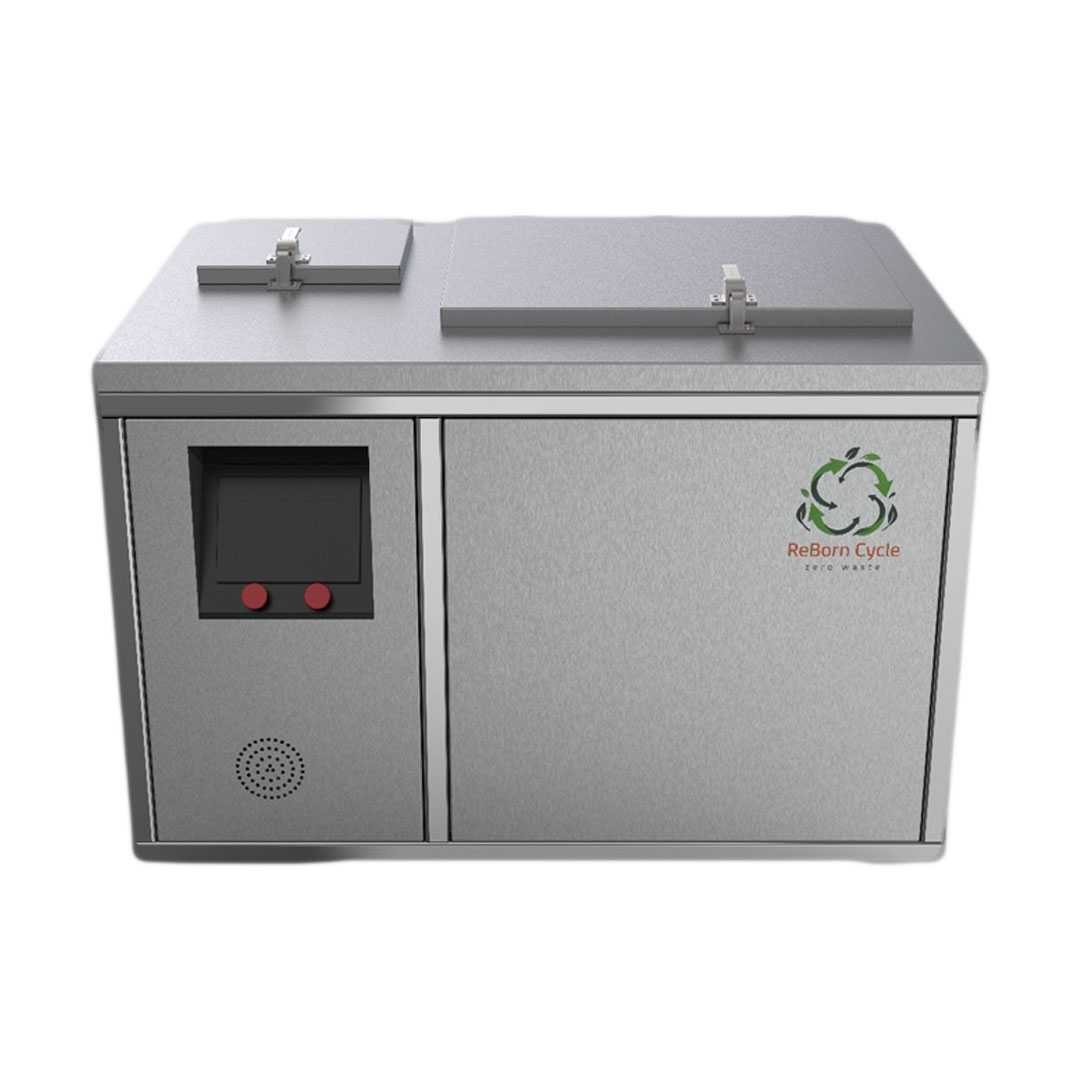
For example, the RBN-C100 Compost Machine suits sites such as hospitals and malls generating 100 kg/day, while the RBN-C250 Compost Machine fits large hotels and campuses at around 250 kg/day. For temperature and feeding settings, see our article on compost machine process parameters.
Frequently asked questions
What is the best C/N ratio for compost?
The best starting C/N ratio for compost is 25–30:1. In this range, microorganisms have both enough energy and enough nitrogen, the mass heats up quickly and odors do not develop. Composting still works between 20:1 and 40:1, but the risk of odor or slowdown grows toward either end.
What is the C/N ratio of food waste?
Food waste typically has a C/N ratio of about 15–20:1, which is below the ideal compost mix, and it is also very wet. Composted on its own, it can produce ammonia odor and compaction, so it should be balanced with carbon-rich material such as sawdust, dry leaves or wood chips.
What should I do if my compost smells like ammonia?
An ammonia smell usually means the C/N ratio is too low, with too much nitrogen in the mix. Add dry, carbon-rich material such as sawdust, dry leaves or wood chips, mix thoroughly and check the moisture. If the smell persists, review the aeration as well.
What should the C/N ratio of finished compost be?
Finished, mature compost usually has a C/N ratio below 20:1, because carbon leaves as CO2 during the process. Maturity is not judged by C/N alone, however; near-ambient temperature, an earthy smell, a dark crumbly texture and plant tests should be considered together.
What does sawdust do in compost?
Sawdust acts as a strong carbon source and moisture absorber in compost. With a C/N ratio of 200–500:1, even small amounts bring nitrogen-rich, wet material such as food waste closer to the target. Use untreated wood sawdust without paint, varnish or chemical preservatives.
How is the C/N ratio measured?
The C/N ratio is measured most accurately by laboratory analysis of total carbon and total nitrogen in a sample. In day-to-day operation, typical values of known materials and a mix calculation are used instead. Odor, temperature and texture observations show in practice whether the recipe is right.
Let us define a feeding recipe and machine capacity that fit the C/N and moisture profile of your waste. Get in touch for a site survey and capacity recommendation.