Compost is mature when it is dark and crumbly, smells earthy, stays near ambient temperature after turning, passes a cress germination test and has a C/N ratio below 20:1.
You can tell compost is mature when it is dark brown and crumbly, smells like forest soil, stays close to ambient temperature after turning, does not harm seedlings in a cress germination test and has a C/N ratio below 20:1. No single test is enough; visual, smell, temperature and germination checks should be judged together.
The most common mistake in compost production is using material right after the hot phase. Sanitized material and mature compost are not the same thing, and plants show the difference quickly. This guide explains how to test maturity in the field and in the lab, how mature and immature compost differ, and why the output of an in-vessel machine still needs curing. For the basics, start with our guide what is compost.
What Is Mature Compost and Why Does It Matter?
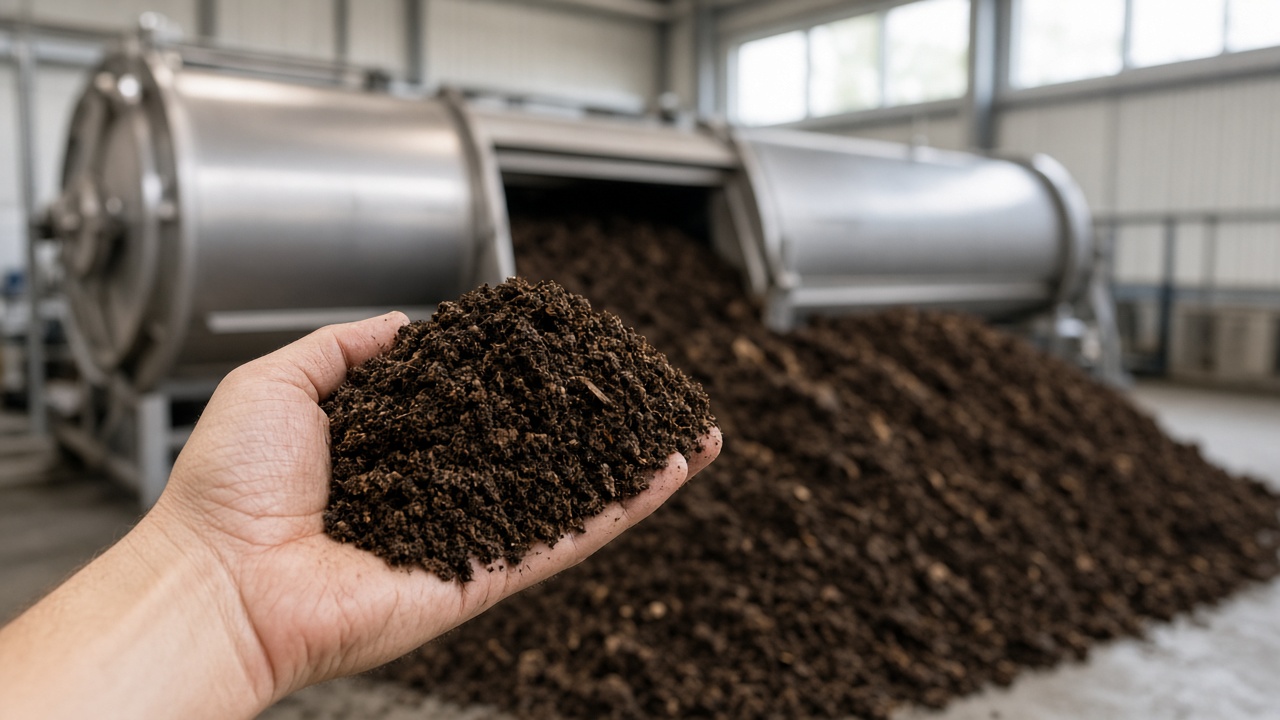
Mature compost is organic matter that has completed the intensive phase of microbial decomposition, has become stable and no longer harms plants. Once the active phase ends, microbial oxygen demand drops, the temperature falls to ambient levels and the remaining organic matter turns into a humus-like material.
When immature compost is added to soil, decomposition simply continues there. Microbes tie up soil nitrogen for their own growth, oxygen in the root zone decreases, and intermediate products such as organic acids or ammonia can damage young roots. In storage, immature material may reheat and cause odor and fly problems.
Warning: Sanitized material is not the same as mature compost. The 55–65 °C thermophilic phase reduces pathogens, while maturity develops during the cooling and curing period that follows.
That is why maturity should be confirmed with a few simple tests before compost is sold, used in a greenhouse or applied at planting.
How Can You Judge Maturity by Look and Smell?
The first check is done with your eyes and nose. Take a handful of material from several points in the pile, squeeze it, smell it and crumble it. Mature compost is dark brown to black, crumbly and smells like forest soil; the original materials, such as food scraps or fruit peels, can no longer be recognized. Slow-degrading pieces such as wood chips or tough stems may remain and can be screened out.
| Property | Mature compost | Immature compost |
|---|---|---|
| Color | Dark brown to black, uniform | Light brown, mixed colors |
| Smell | Earthy | Sour, ammonia or rotten odor |
| Structure | Crumbly, loose | Sticky, fibrous, pieces still visible |
| Temperature | Stays near ambient after turning | Reheats after turning |
| C/N ratio | Below 20:1 | Usually above 20:1 |
| Germination test | Germination close to the control | Poor germination, short darkened roots |
An ammonia smell points to excess nitrogen, while a sour or rotten-egg smell indicates oxygen-poor zones. In both cases, the material is not yet mature.
How Do You Check Maturity With a Temperature Test?
Temperature is the most practical indicator of maturity. While decomposition is active, microbial activity generates heat; as compost matures, heat production declines and the material approaches ambient temperature.
A practical test works like this: turn the material, bring its moisture to 50–60 % and leave it in an insulated container or a small pile for a few days. Measure the core temperature at the same spot every day. If the temperature rises clearly above ambient, the material still contains easily degradable organic matter and curing should continue.
Laboratories apply the same logic in a standardized self-heating test.
How Do You Do a Cress Germination Test?
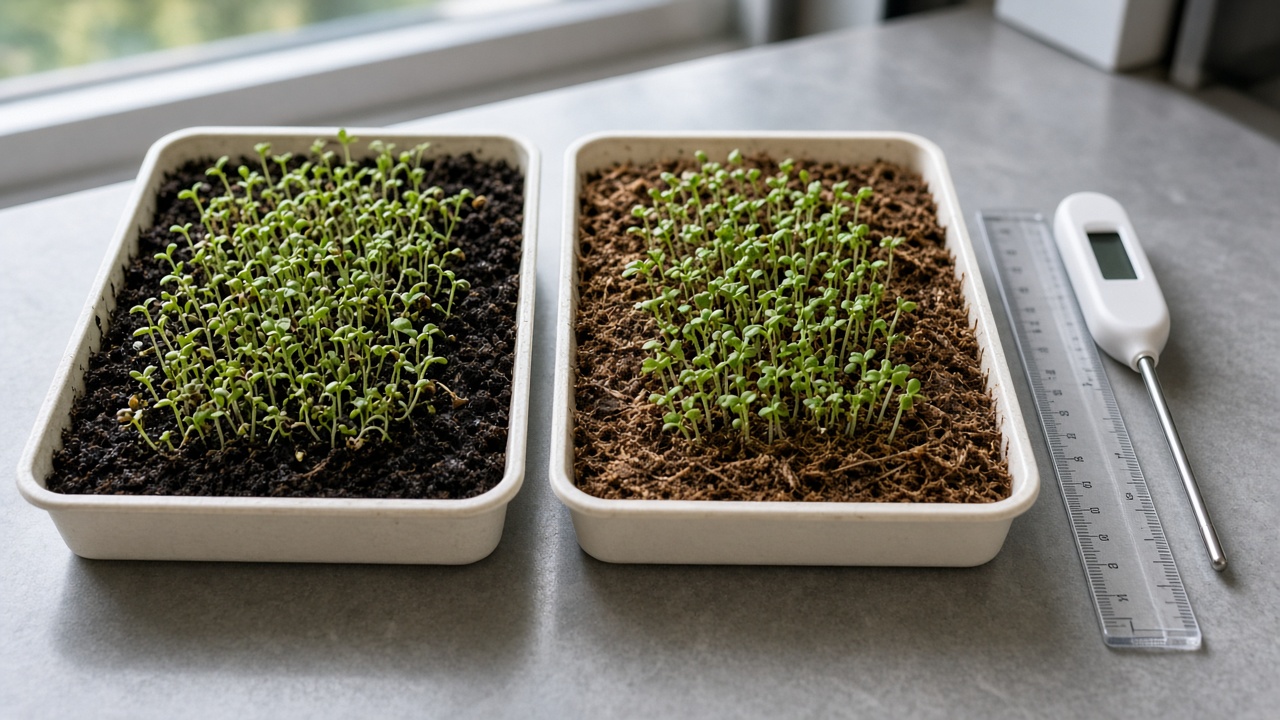
A germination test shows directly whether compost harms plants. Cress is the most common test plant because it germinates quickly and is sensitive to phytotoxic compounds. You do not need a lab for it.
- Prepare the sample Screen the compost and moisten it lightly if it is dry. Set aside peat or clean garden soil as a control.
- Fill the trays Put equal amounts of compost and control material into two shallow trays. Optionally add a third tray with compost mixed 1:1 with the control soil.
- Sow the seeds Sprinkle the same number of cress seeds, for example 20–30, on each tray and press them in lightly.
- Wait Keep the trays at room temperature, moist and covered.
- Compare After 3–7 days, count the germinated seeds and compare root length and color with the control.
If germination and root growth in the compost tray are close to the control, the material can be considered safe for plants. If seeds fail to germinate or roots look short, brown or burnt, the compost is not mature yet; cure it for a few more weeks and repeat the test.
What Do the C/N Ratio and Lab Tests Show?
Field tests give a quick indication; if you plan to sell compost or use it commercially, you need a lab analysis. The best-known chemical indicator is the C/N ratio. A compost mix usually starts at around 25–30:1; during decomposition part of the carbon leaves as CO2, so the ratio falls and drops below 20:1 in mature compost. With food waste, however, which already starts low at about 15–20:1, this ratio alone can be misleading and should be read together with temperature and germination results.
Lab reports typically include:
- C/N ratio, organic matter and moisture
- pH and electrical conductivity (salinity)
- Respiration (oxygen uptake or CO2 release) or a self-heating test
- Germination index
- Heavy metals and pathogen indicators
In Turkey, technical and quality criteria for compost facilities and products are set by the Compost Communiqué; check its current text for limit values, and follow the applicable rules in your own country. For a sampling plan, see our compost quality control guide, and for calculating the ratio, read what the C/N ratio in compost is.
When Is Compost From ReBorn Cycle Machines Mature?
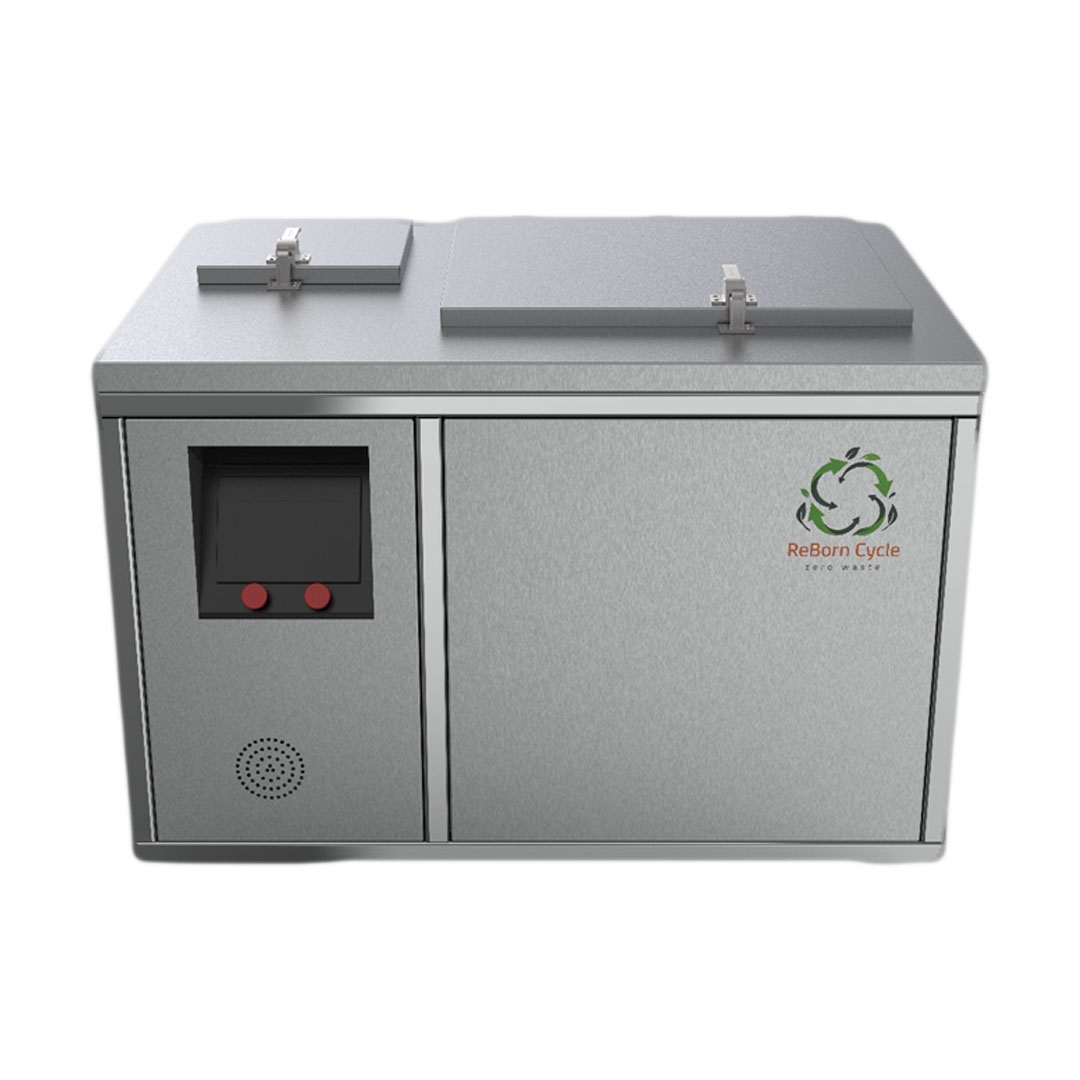
Our closed in-vessel compost machines speed up the intensive decomposition phase by controlling temperature, aeration and mixing. For kitchen waste with balanced moisture, the typical in-machine cycle is 24–48 hours; with fatty or irregular feeding it can reach 48–72 hours or more. The machine output is a stabilized, hygienized pre-compost / compost material.
If fully mature compost is required, we recommend curing this material for a few weeks, depending on the intended use. In our site surveys, we usually advise a covered but well-ventilated area with moisture-controlled piles or bins, weekly temperature readings and periodic germination tests.
When a facility chooses the RBN-C100 Compost Machine for about 100 kg of waste per day, or the RBN-C500 Compost Machine for a central kitchen or municipality, the curing area is planned for that capacity as well. If you plan to use the output in a greenhouse, our article on using compost in greenhouses will help.
Tip: Label every batch in the curing area with its machine discharge date so you can track temperature and germination results per batch.
Frequently asked questions
How long does it take for compost to mature?
It depends on the method and the feedstock. In open piles, decomposition and maturation usually take several months. In closed compost machines, the intensive phase is completed in 24–48 hours for balanced kitchen waste, followed by a recommended curing period of a few weeks depending on the use. An unbalanced C/N ratio, moisture or aeration extends the time with either method.
Can immature compost harm plants?
Yes, it can. In immature compost, decomposition continues in the soil; microbes tie up soil nitrogen, oxygen in the root zone drops, and organic acids or ammonia can damage young roots. For seedlings, potted plants and greenhouse use in particular, only compost that has passed a germination test should be applied.
What does mature compost smell like?
Mature compost has a mild, pleasant earthy smell similar to damp forest soil. An ammonia smell points to excess nitrogen, while a sour or rotten-egg smell indicates oxygen-poor zones. If you notice either odor, the material is not mature yet; check aeration and moisture balance and continue curing.
What temperature is mature compost?
Mature compost stays close to ambient temperature when it is turned and left for a few days. The 55–65 °C thermophilic temperatures of active decomposition and the following 25–45 °C cooling phase are over. Clear reheating after turning shows that the material still contains easily degradable organic matter.
Can material from a compost machine be used right away?
Machine output is a stabilized, hygienized pre-compost. It may be suitable for some uses, such as mixing into landscaping or field soil, but for sensitive uses like greenhouses, seedlings or retail sale, we recommend a few weeks of curing and a germination test. The need for curing should be decided based on where the output will be used.
How is compost maturity measured in a lab?
Labs measure maturity by evaluating several parameters together. The main ones are the C/N ratio, respiration rate (oxygen uptake or CO2 release), a self-heating test, germination index, pH and electrical conductivity. In Turkey, product quality criteria are set by the Compost Communiqué; always check the current limit values in the regulation that applies to you.
To plan machine capacity and curing space together based on your waste volume, request a site survey and capacity recommendation.