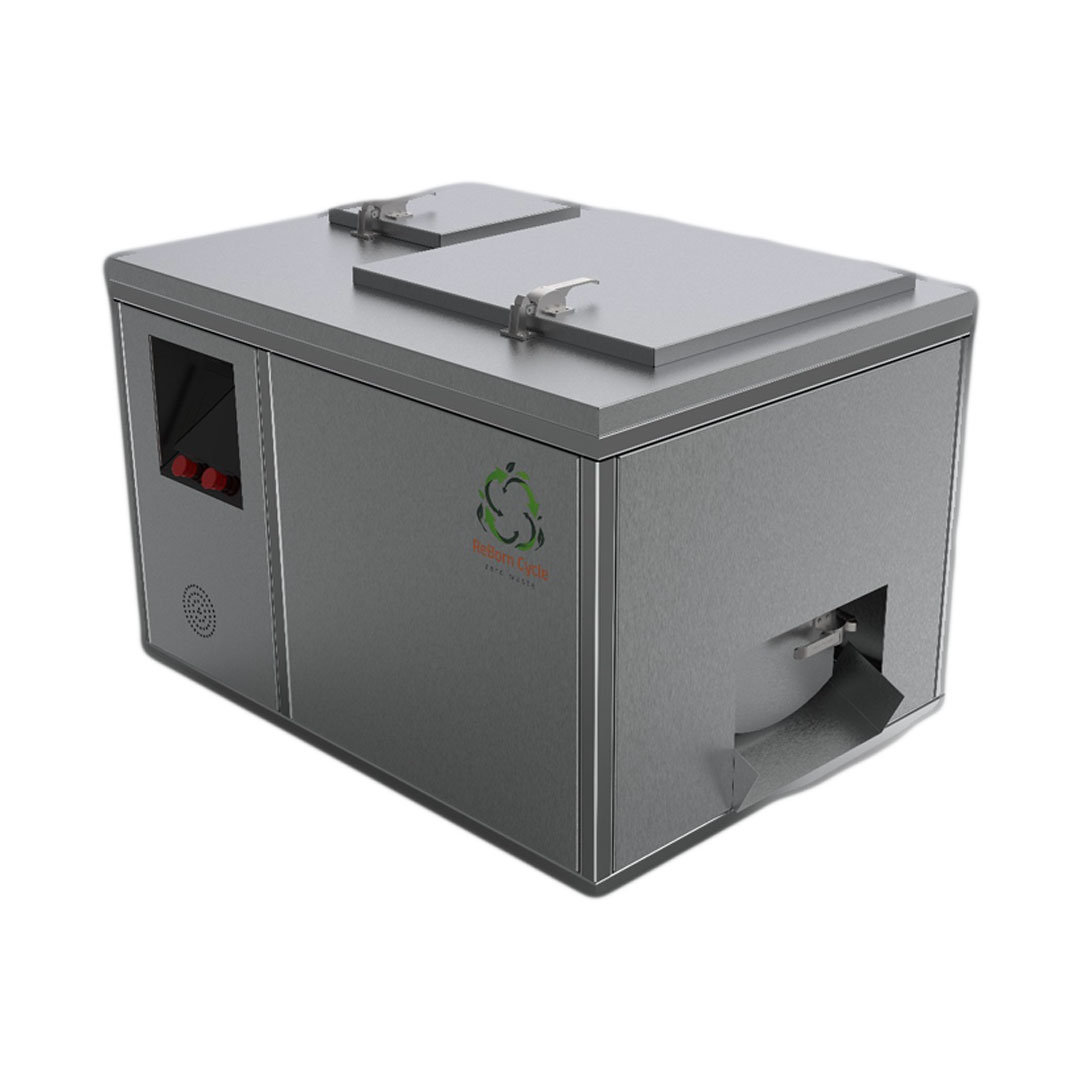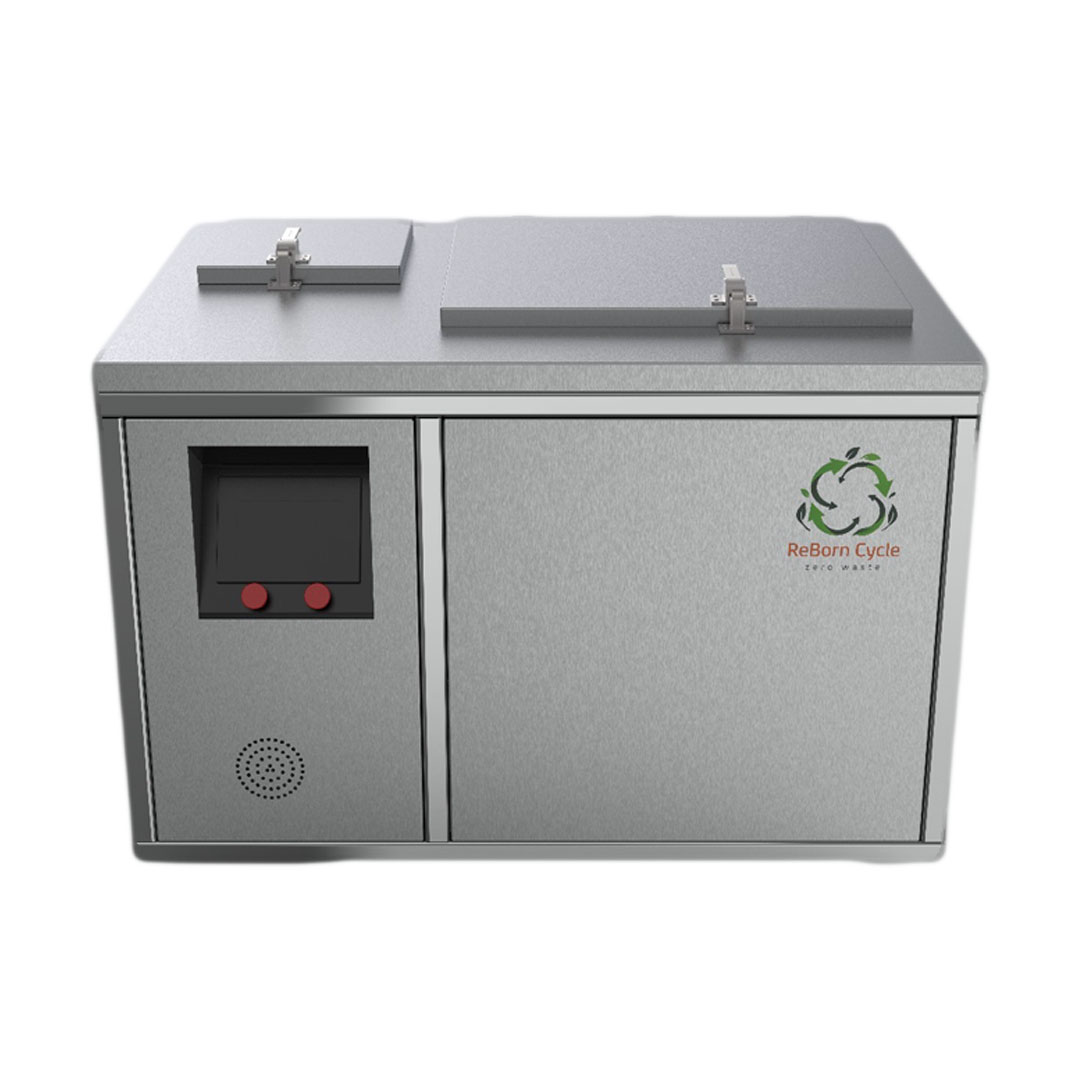


A closed industrial compost machine with balanced moisture, regular feeding and 55–65 °C operation usually gives a mild earthy scent with daily kitchen waste; bad odour usually comes from open storage or wet anaerobic pockets.
A compost machine is not odour-free by default, but a well-run closed, heated, mixed industrial unit limits bad smells. With typical kitchen input you may notice a light humus or warm-soil note. Sharp ammonia, rot or sewage-like odour usually points to moisture above about 60 %, irregular feeding, contaminants or poor ventilation.
Facility managers worry most about odour when placing equipment near guest corridors. In site surveys the source is often not the machine but wet plate waste waiting in the open, leaky bins or process moisture out of range. This article explains what is normal in a closed system versus an alarm, aligned with organic waste odour control, and lists daily operational steps.
What Smells Come From a Compost Machine?
Inside a closed industrial compost machine, aerobic decomposition produces a different smell than an open skip or rotting bin. In the thermophilic range (about 55–65 °C) material breaks down while mixing and controlled aeration limit methane and hydrogen sulfide buildup. Many sites report a faint warm-earth or damp-leaf note near the unit as normal.
Bad odour usually falls into three groups: sharp ammonia (very protein-rich or overly wet feed), sulfurous rot (long-standing anaerobic wet mass) and sour acid notes (irregular feeding and cooling semi-anaerobic zones). Greasy waste in open tubs can fill a corridor before it ever reaches the machine, so the chain before loading matters as much as the vessel.
This ranking is illustrative, not a measured score; your waste profile and HVAC layout will shift results. When someone asks whether the machine smells, check pre-collection holding first.
Why Does a Closed Compost Machine Smell Less?
Open bins expose waste to air unevenly: aerobic skin, anaerobic pockets inside, and odour drift. How an industrial compost machine works matters here: a sealed shell, mixing and timed aeration keep oxygen in the mass; typical kitchen waste often stabilises in a 24–48 hour in-vessel cycle.
Heating into the thermophilic band (around 55 °C and above for several days) breaks down volatile organics and supports pathogen and weed-seed suppression. Exhaust routes and condensate handling vary by model. Near guest areas, exhaust path, filters and door seals matter as much as airflow volume.
Small domestic-style units are also closed but limited in capacity and mixing; heavy commercial loads can cool and smell. For mid-size kitchens, RBN-C50 Compost Machine or RBN-C100 Compost Machine in the 50–100 kg/day range shorten time waste sits open before processing.
How Is Odour Prevented in a Compost Machine?
Prevention is process discipline, not room spray. Targets: moisture about 50–60 %, balanced C/N (kitchen waste is often ~15–20:1 so dry structural carbon is needed), oxygen above about 5 % and steady feeding. Adjusting compost moisture and temperature is directly tied to odour.
- Pre-collection Use lidded, washable carts; cap open holding at roughly 4–6 hours in your written rule.
- Input control Remove plastic, metal and excess fat; clogged strainers raise odour fast.
- Feeding rhythm Split loads across the day; one huge dump can drop the thermophilic phase.
- Monitoring Log temperature, moisture and mix cycles; set alarm thresholds on the panel.
Tip: In the first weeks, note odour by time, load and greasy service days; patterns repeat and become training material.

Operator and hygiene training helps teams fix parameters instead of assuming a mechanical fault whenever they notice smell.
Can Wet Waste Cause Odour in a Compost Machine?
Yes, it can, but a closed, well-run unit keeps risk manageable. Kitchen waste is naturally wet; without matching dry carbon the mass compacts, anaerobic pockets form in channels and ammonia rises. Grease and soups left too long in holding accelerate that; fatty feed can push cycle time toward 48–72 hours or more.
The fix is usually not adding rinse water but confirming drains work and grease traps are cleaned. Hygiene protocol on the compost line limits wet floors and leaks, which cuts both slip and smell risk. Large hotel or campus kitchens may use RBN-C250 Compost Machine at 250 kg/day to keep peak wet days inside the vessel instead of in open carts.
Warning: Do not feed foam, disinfectant concentrate or harsh chemicals into the compost machine; microbial balance fails and chemical odours can appear.
How Is Compost Machine Odour Controlled in a Hotel Kitchen?
In hotels, odour touches guest experience directly. Place the machine in a service corridor, loading bay or technical room with dedicated exhaust, away from lifts and room corridors. Keep cart routes short and lids closed in the back of house. Hotel kitchen organic waste management should treat smell and cart logistics as one block.
| Symptom | Likely cause | Suggested action |
|---|---|---|
| Sharp ammonia | Very wet feed, low carbon | Add dry carbon, split loads, measure moisture |
| Rot / sewage note | Anaerobic pocket, blocked drain | Increase mixing, clean drain, check aeration |
| Smell mainly when lid opens | Normal flash gas | Feed quickly, shorten open time, verify exhaust |
| Persistent corridor smell | Open pre-holding, worn seal | Close carts, inspect seals, request technical support |
Even with a single night porter, a weekly odour checklist (lids, filters, floor hygiene) should sit in the operating log.
How Does Odour Management Work on ReBorn Compost Machines?
ReBorn Cycle supplies closed in-vessel systems with controlled temperature, aeration and mixing sized to your site. Surveys capture kg/day, waste profile and layout; high-risk points such as lift shafts and guest corridors are flagged on the plan. After commissioning, operator training and the first 30 days of parameter tracking resolve most odour complaints we see in the field.
Deferred maintenance on mixers, filters and door seals lowers performance and indirectly raises smell. Keeping to the service plan prevents seal leaks that read as corridor sewage odour. At the decision stage, the capacity selector narrows C50–C250 models to your daily load; undersizing forces overload and cold, smelly mass.
Odour is not a perfume claim but a measurable process outcome: with balanced moisture, steady feeding and trained staff, a closed industrial compost machine can recover kitchen organics without turning the corridor into a waste dock.
Frequently asked questions
Does a compost machine always smell?
No. A closed, heated, regularly fed industrial unit with most kitchen waste produces a mild earthy note; strong odour is usually a parameter or pre-collection fault. Wet waste waiting in the open smells regardless of the machine.
Is compost machine odour harmful?
Under normal aerobic operation smell is mainly a nuisance, not chemical fumes, but concentrated ammonia or sulfur notes warrant ventilation and PPE for staff. Persistent heavy odour signals a hygiene and process review, not something to ignore.
Which wastes cause odour in a compost machine?
Excess frying fat, long-held soup and very wet protein-heavy mass raise ammonia odour. Plastic and glass are not the main driver; moisture and carbon imbalance with anaerobic pockets are.
Do domestic and industrial compost machines differ on odour?
Domestic units work at low volume; heavy commercial loads risk cold, smelly mass. Industrial models offer stronger mixing, heating and ventilation for that reason.
Can compost machine odour reach neighbors?
Poor placement and open pre-holding can let exhaust or lid openings drift outdoors. Technical rooms, seal maintenance and closed cart transport prevent most neighbor complaints.
Should deodorizer be added inside the machine?
Sprays mask the problem; adjust moisture, carbon and feeding instead. Exhaust filter change or HVAC revision is the technical fix, not perfume.
Low-Odour Operation on Compost Machines
Does a compost machine smell? In practice, bad odour is the exception when capacity, closed aerobic operation and disciplined pre-collection align. When alarms appear, check moisture and feeding first, then seals and ventilation; the symptom table and daily log show repeating shifts and menu days.
If you are planning a new line, measure daily kg/day, peak days and greasy-service share before choosing a model; undersized equipment runs cold and smells under load. For an existing line, put lidded pre-collection, floor hygiene and shift rules in a written procedure so staff turnover does not erase habits or leave log gaps.
To review your layout and capacity with our team, book a free site survey; the visit covers daily waste, corridor distance and exhaust routing together, and model choice reduces odour risk before installation.