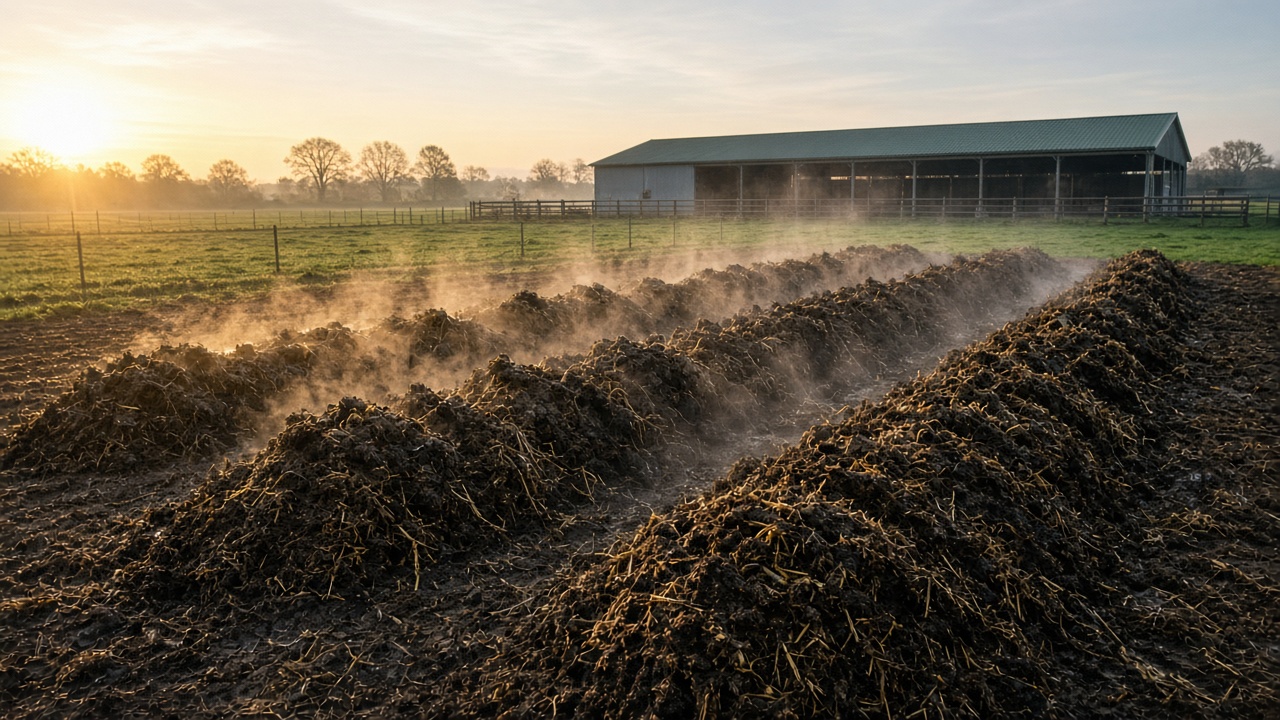
Animal manure is composted safely by mixing it with straw or sawdust to a C/N ratio of 25–30:1, keeping moisture at 50–60 %, aerating it and holding it at 55 °C or more for several days.
To compost animal manure, mix it with straw, sawdust or dry leaves to reach a C/N ratio of about 25–30:1 and a moisture content of 50–60 %. Aerate the pile or in-vessel machine regularly and keep the whole mass at 55 °C or higher for several days, then cure it for a few weeks. This reduces pathogens and odour and stabilizes nitrogen.
Fresh manure is a valuable nutrient source, but spread straight onto fields it also brings pathogens, weed seeds, flies and odour. This article covers mixing ratios by manure type, temperature and moisture targets, ways to limit ammonia loss and a practical step-by-step process. If you want the hygiene perspective in more depth, our article on the hygiene protocol for a compost line is a useful companion.
Why Should Animal Manure Be Composted?
Raw manure carries microorganisms from the animal's gut, including bacteria such as E. coli and Salmonella and parasite eggs. Weed seeds from feed often survive digestion and end up back on the field.
Composting tackles these problems in one process:
- Hygiene: The thermophilic phase at 55–65 °C, held for several days, clearly reduces pathogens and the germination capacity of seeds.
- Odour and flies: Easily degradable organic matter is consumed, so odour drops and fly larvae lose their habitat.
- Nitrogen balance: Ammonia in fresh manure volatilizes or leaches quickly. In compost, nitrogen is bound in organic matter and released more slowly.
- Volume and transport: Water and organic matter losses reduce volume, so the product is easier to store and spread.
In our site surveys, the most common picture is an open manure heap producing leachate every time it rains. Controlled composting turns that heap into a manageable product for both the environment and the business.
What Is the C/N Ratio of Different Manures?
The key setting in composting is the carbon-to-nitrogen (C/N) ratio. The ideal starting point for microorganisms is about 25–30:1. Most manures fall below this, meaning they are rich in nitrogen and poor in carbon. The values below are approximate ranges from the literature and vary with feed, bedding and storage time.
Poultry manure therefore needs the most added carbon, while horse manure with bedding is often close to the target on its own. Cattle and sheep manure sit in between; how much carbon they need depends largely on the amount of bedding used in the barn.
Below 20:1, surplus nitrogen escapes as ammonia and odour increases. Above 40:1, decomposition slows and the pile does not heat properly. Staying in the target range is the shortest route to fast hygienization and a valuable end product.
What to Mix with Each Type of Manure
The most common carbon sources are straw (~50–150:1), sawdust (~200–500:1) and dry leaves (~40–80:1). Sawdust is very carbon-rich, so a small amount goes a long way; straw adds structure and makes aeration easier.
| Manure | Approx. C/N | Suggested carbon source | Watch out for |
|---|---|---|---|
| Poultry | 6–10:1 | Sawdust, straw | High ammonia loss, needs plenty of carbon |
| Cattle | 15–25:1 | Straw, dry leaves | Very wet, add structure and dry matter |
| Sheep and goat | 15–20:1 | Straw | Forms clumps, break them up |
| Horse (with bedding) | 25–30:1 | Small amount if needed | Can dry out, check moisture |
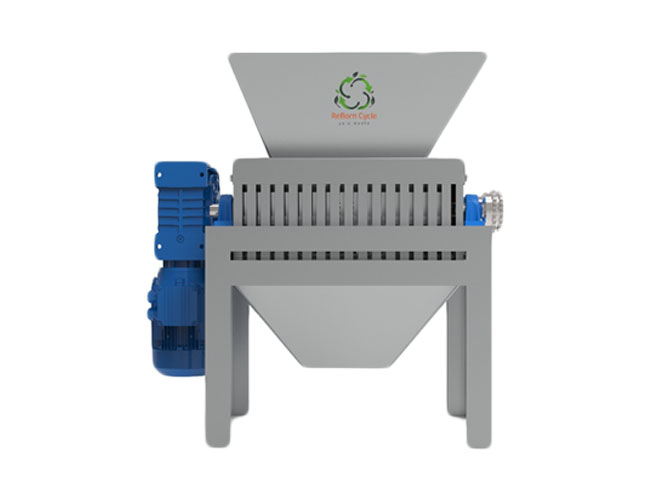
As a practical rule of thumb, try 2–3 volumes of straw to 1 volume of poultry manure. This is only a starting point; the right ratio is confirmed by lab analysis and the temperature curve of your first batch. Reducing long straw and clumpy manure with a Shredder makes the mix far more homogeneous.
How to Compost Animal Manure Step by Step
- Analyse Measure moisture and, if possible, the C/N ratio, and record daily quantities.
- Prepare the carbon source Keep straw or sawdust dry and shred it if needed.
- Mix Bring C/N to 25–30:1 and moisture to 50–60 %. A squeezed handful should release only a few drops.
- Heat and aerate Keep oxygen above 5 % and hold the whole mass at 55 °C or more for several days.
- Cure Once the temperature drops, let the material rest for a few weeks.
- Check and screen An earthy smell, ambient temperature and a C/N below 20 indicate maturity.
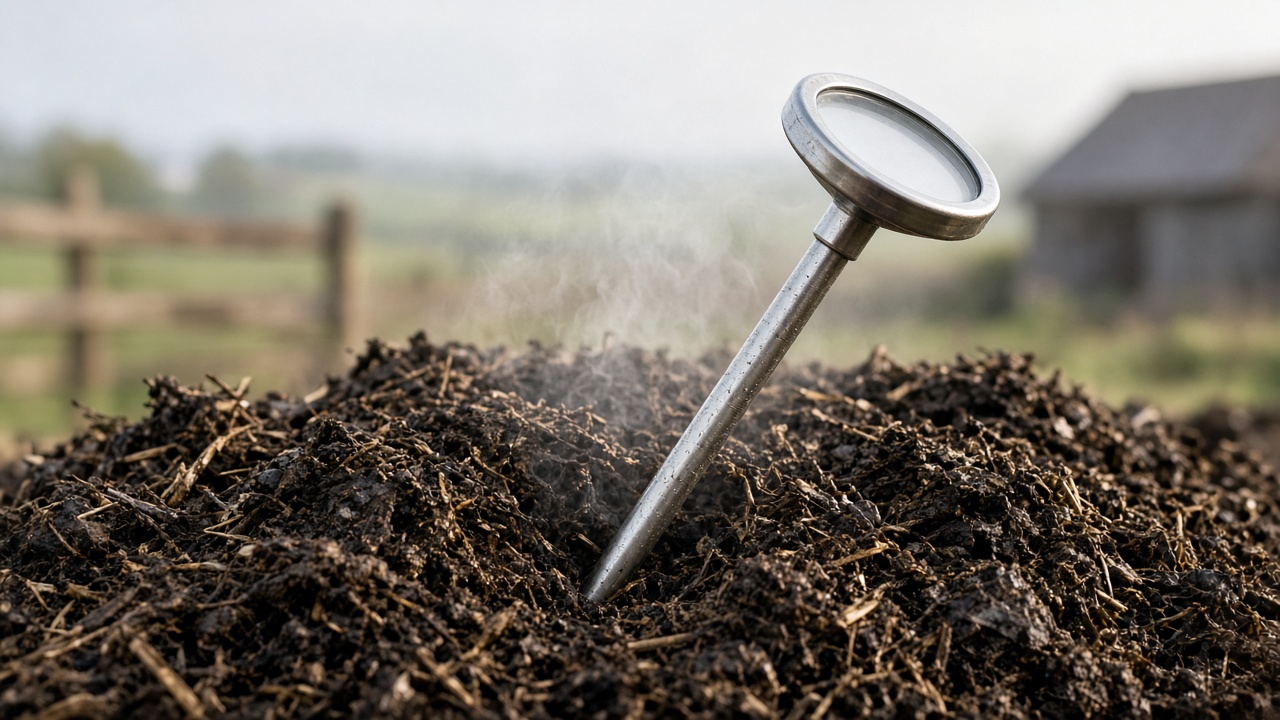
In an open pile, this usually takes 2–6 months and depends heavily on the weather. In closed systems, temperature and oxygen are monitored continuously, so hygienization is far more predictable. We explain how to measure maturity in our guide to compost quality control.
Managing Moisture, Temperature and Ammonia Loss
Fresh manure such as cattle manure often has a moisture content above 80 %. In a mass this wet, air spaces fill with water, conditions turn anaerobic and a rotten-egg smell starts. Adding a dry carbon source corrects both moisture and C/N at the same time.
A pile that will not heat up is usually too wet, too dry or short of nitrogen. Overheating is also unwanted, as microbial activity slows above 70 °C. For fine-tuning, see our guide on setting compost moisture and temperature.
Warning: A sharp ammonia smell means nitrogen is escaping into the air. If the C/N ratio is low, add carbon, avoid unnecessary turning at high temperatures and protect the pile from rain.
The aim of aeration is to supply enough oxygen without removing more heat and moisture than necessary. Our article on compost machine aeration requirements explains how airflow is planned in closed systems.
Composting Manure with ReBorn Cycle Machines and Regulations
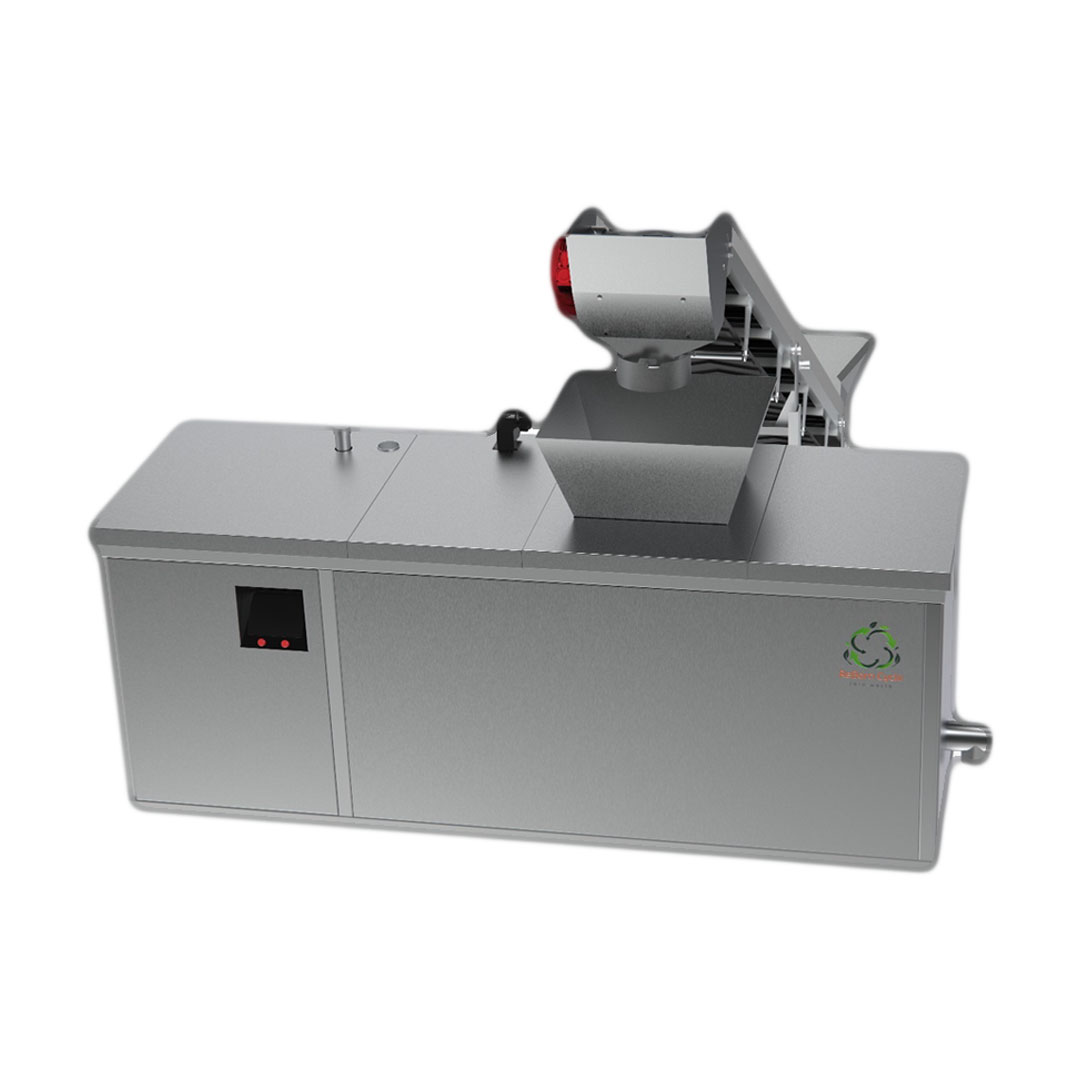
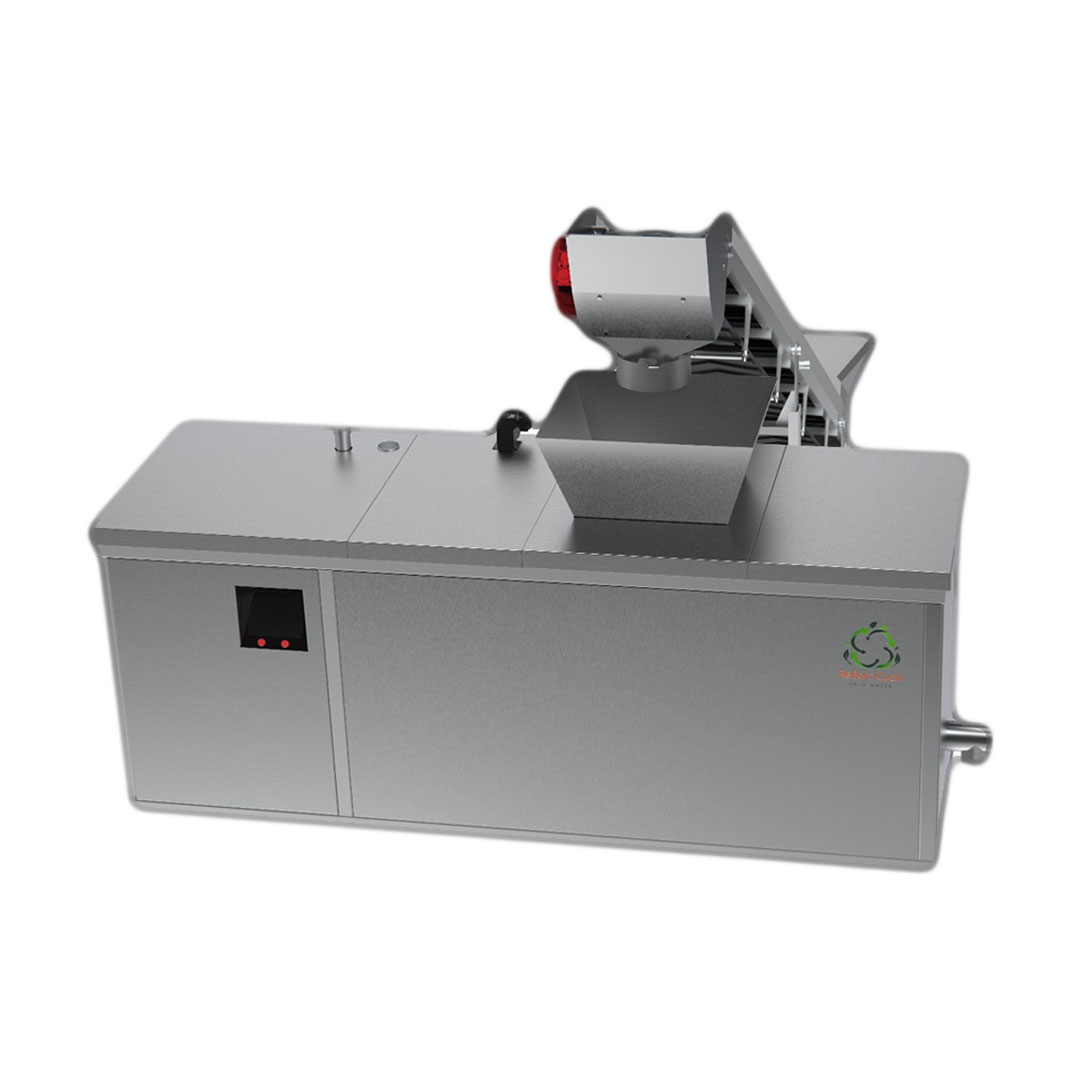
When processing manure at farm or facility scale, we start by defining the mix. The in-vessel RBN-C1000 Compost Machine handles 1,000 kg/day and the RBN-C2500 Compost Machine handles 2,500 kg/day with controlled temperature, aeration and mixing. The closed body reduces odour and fly problems, and temperature logging makes it easier to document hygienization.
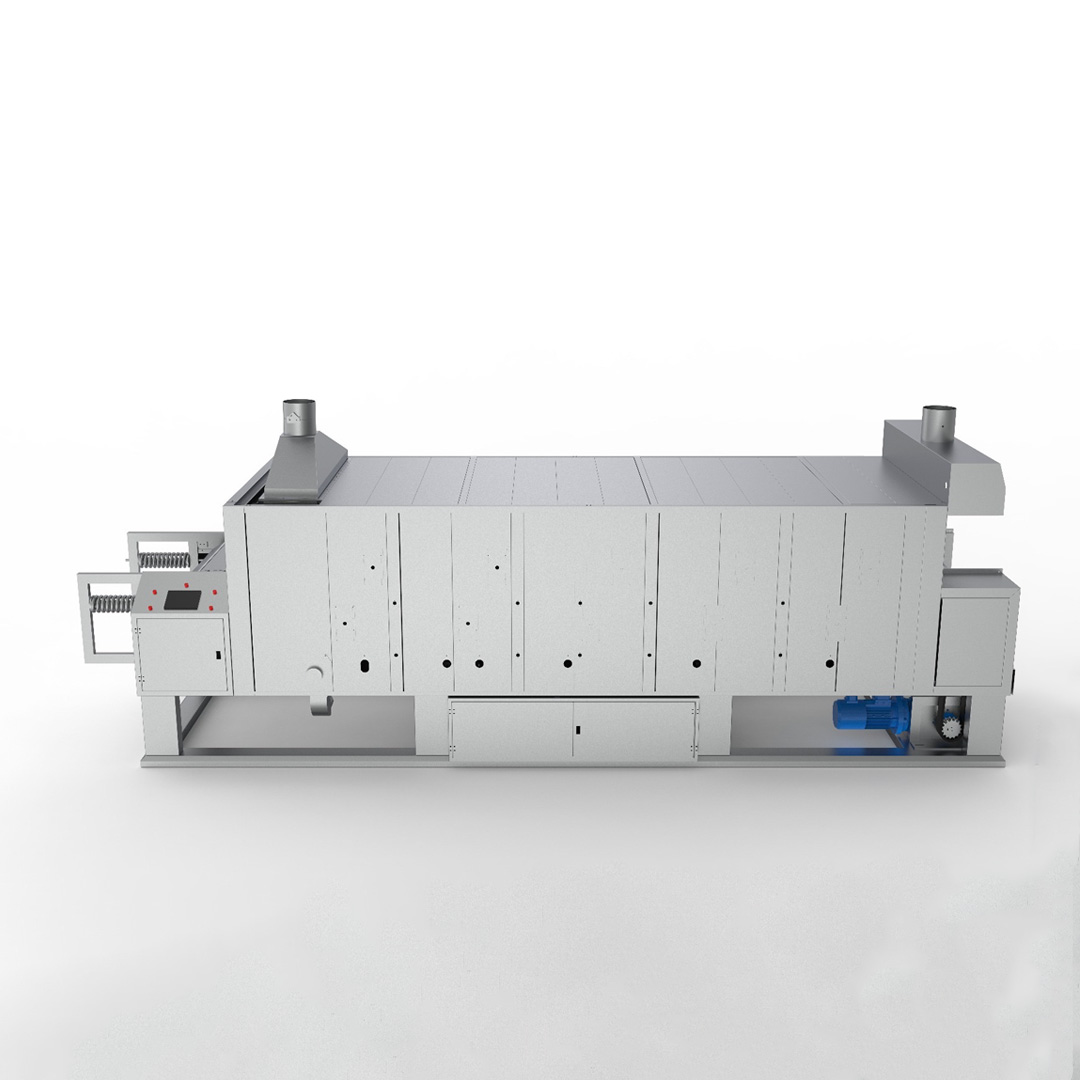
The machine output is a stabilized, hygienized pre-compost material; for a fully mature product we recommend a curing period of a few weeks. If you want to store or pelletize the product, drying is possible with the Tunnel Kiln. For installation, commissioning and maintenance, our technical support team works on site.
On the regulatory side, manure is classified in the EU as a category 2 animal by-product under Regulation (EC) 1069/2009. In Turkey, the animal by-product rules of the Ministry of Agriculture and Forestry and the criteria of the Compost Communique (2015) apply. Before starting a project, confirm the current rules with the provincial directorate or the Ministry.
Frequently asked questions
Can chicken manure be composted on its own?
It is not recommended, because its C/N ratio of about 6–10:1 is very low and nitrogen is quickly lost as ammonia. Mixing it with sawdust or straw to bring the ratio towards 25–30:1 reduces odour and helps the pile heat up properly.
How long does manure compost take?
In an open pile it usually takes 2–6 months. In closed, aerated systems the thermophilic phase is far more controlled, but depending on the mix a few weeks of curing are still needed. The exact time depends on manure type, moisture and carbon source.
Does composted manure still contain pathogens?
If the whole mass was kept at 55 °C or more for several days, pathogens are clearly reduced. The risk usually lies at the edges of the pile and in cold zones, so mixing and temperature measurement should cover several points.
How do you stop manure compost from smelling?
Odour usually comes from excess moisture, a low C/N ratio and lack of oxygen. Add a dry carbon source, keep moisture at 50–60 % and aerate regularly. In closed systems, exhaust air can also be passed through a biofilter to cut odour further.
Do you need a permit to compost manure?
It may be required depending on scale and use. Because manure counts as an animal by-product, the Ministry of Agriculture and Forestry rules apply in Turkey, and the Compost Communique criteria apply if the product is sold. Confirm current requirements with the authorities before you start.
Turning Animal Manure into Safe Compost
Successful manure composting rests on three settings: the right C/N ratio, 50–60 % moisture and several days above 55 °C. Once these are in place, odour, flies and pathogens are largely under control, and nitrogen is kept for the soil.
Our practical advice is to keep the first batch small and log its temperature curve daily. Having manure and carbon source analysed a few times bases the mixing ratio on measurement rather than guesswork. Note seasonal changes too: manure tends to arrive wetter in winter and drier in summer.
We can review your daily manure volume, bedding type and the intended use of the end product together to plan the right capacity and process. Get support through our consulting service or book a free site survey so we can see your site in person.