

Compost tea is a short steep of mature compost in clean water. It does not replace compost as a soil amendment, and it should be used fresh, never left anaerobic.
Compost tea is a liquid extract made by steeping mature compost in clean water for a short time. An aerated brew stays oxygenated. Tea left without air, or made from immature compost, smells and should not be used. Tea does not replace the organic matter compost adds to soil, and it should be applied within a few hours of brewing.
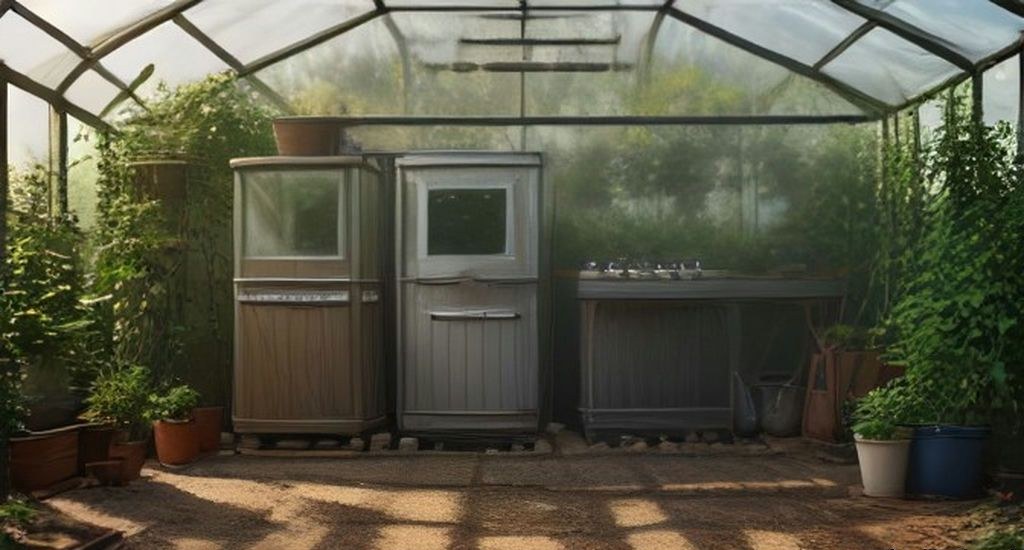
Greenhouse, nursery and garden teams ask about compost tea when carrying solid compost at every watering is impractical. A short oxygenated steep moves the soluble fraction to the root zone. Liquid left sealed too long, or made from compost that is still working, turns sour. Below: aeration, why leachate is not tea, when compost itself is the better choice, and brew hygiene.
How Is Compost Tea Made?
Compost tea is a liquid extract prepared by steeping mature compost in clean water. It is not the solid compost itself. It is called tea because the steep is measured in hours. The mix is not boiled.
Good tea starts with mature compost. Mature compost is dark brown, crumbly, smells like forest soil and has cooled to ambient temperature. Its C/N ratio is usually below 20. If food scraps are still recognisable, or if it smells of ammonia, it does not go into the brew. How to read maturity on site is covered in how to tell when compost is mature.
The steeping ratio is not a fixed recipe. A common starting point is about 1 part mature compost to 5–10 parts water. Tea is not a fertiliser with an NPK label. Nutrient level changes with the compost and the steep time, so tea does not replace a fertiliser programme.
Aerated and Still Brews
Both methods start with the same mature compost and split on oxygen. Aerated compost tea is steeped in a tank while an air stone runs, usually for 12–24 hours. The air keeps the mix aerobic. A still brew is a bucket left for only a few hours. Left sealed too long, the liquid sours.
Anaerobic tea is a poor idea. Once oxygen falls below about 5%, decomposition shifts anaerobic. Odour rises, and intermediate compounds can harm roots. Brewing from compost that is still hot is the same mistake. Acids and ammonia from active decomposition pass into the water.
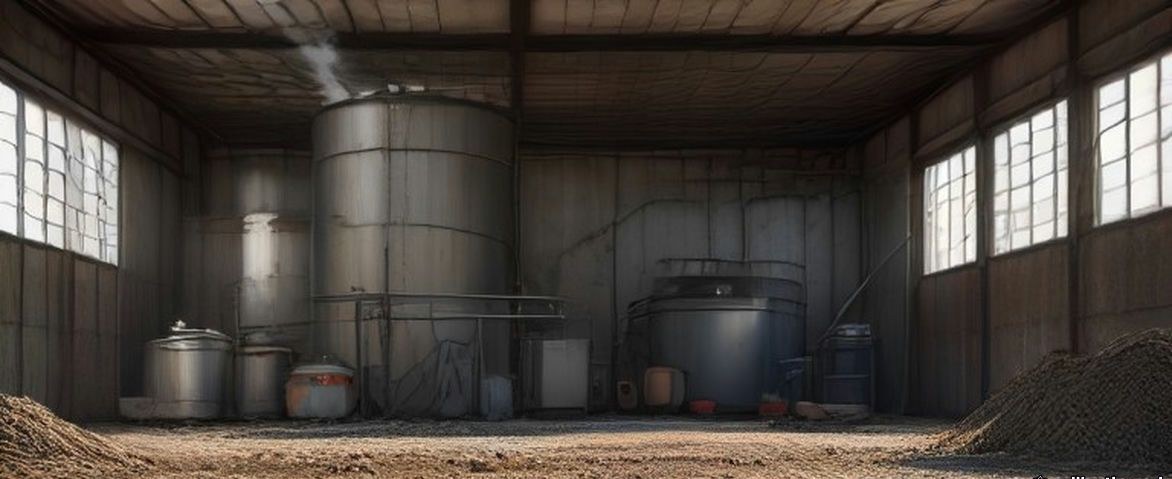
On site surveys we often see hot material from the machine put into water the same day. That output is hygienised pre-compost, not mature compost. Tea does not replace a hot phase at 55–65 °C held for several days.
Tip: Set the brew up on the day you will use it. Tea left at room temperature loses oxygen within hours, and a bucket kept overnight usually smells sour.
Compost, Tea and Leachate
Compost, compost tea and leachate are three different materials. Do not collect all three in the same bucket.
| Material | What it does | How it is made | When not to apply |
|---|---|---|---|
| Mature compost | Soil structure and organic matter | Controlled decay and curing | If scraps show or it smells of ammonia |
| Compost tea | A fresh liquid at the root zone | A short steep in clean water | If it is anaerobic, smelly or stored |
| Leachate | Not a plant feed | Uncontrolled drainage of excess water | Never as a fertiliser |
Treating leachate as free compost tea is the most common mix-up. Leachate carries whatever excess water picks up as it passes through a pile or a machine. It is not a mature extract. If it smells, do not put it on plants. Collect it, return it to the process or handle it as wastewater. Where to spread solid compost is a separate decision, set out in how to use compost output.
When Do Growers Use Compost or Tea?
A grower is doing two different jobs. To improve soil structure, mix mature compost into the bed or the potting mix. For a short liquid application, brew fresh tea from that same compost. Tea does not replace the organic matter compost adds to soil. A bucket of tea is only that day's watering.
The bars are not a laboratory result. They are an example of relative fit for four jobs. Foliar spraying sits last because the risk rises on crops eaten close to harvest. How solid compost goes into a greenhouse bed is covered in using compost in a greenhouse.
On an example vegetable bed, mixing in 2–3 cm of mature compost is about structure. If tea is used, dilute it and apply it at root level. That depth is a gardening example, not a required dose for every crop.
How Do You Brew Compost Tea Safely?
A safe brew needs mature compost, a clean vessel, a short time and same-day use. Do not add sugar or molasses, and do not promise a microbe count. Fresh liquid that smells like soil is enough.
- Choose the material. Use only mature compost that is at ambient temperature and smells like soil. Remove coarse wood pieces.
- Wash the vessel. Tank, bucket, air stone and strainer should be free of the previous sediment.
- Mix. A starting example is 1 part compost to 5–10 parts water. Keep the air stone on for the whole aerated steep.
- Keep the time short. An aerated brew is usually 12–24 hours. Do not leave a still bucket for more than a few hours.
- Strain and use the same day. Do not pour a smelly leftover on plants.
Warning: Close to harvest, do not spray compost tea on leaves, strawberries or fresh herbs that are eaten unwashed. The wet film on the leaf is a hygiene risk. Watering the root zone is the safer route.
Check smell, temperature and foreign matter before you brew. Compost quality control is part of brew day as well.
When Can Machine Output Enter the Tea?
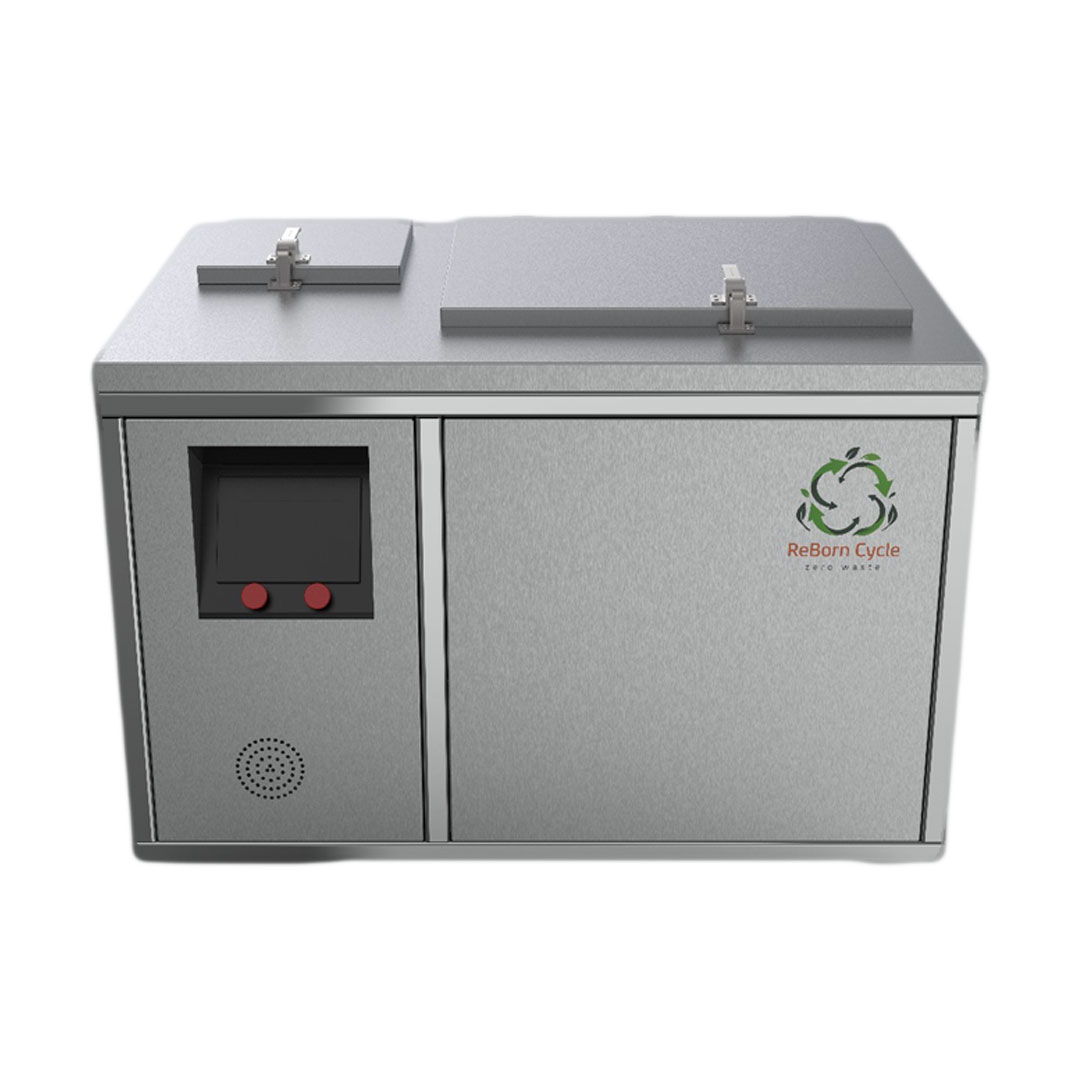
ReBorn Cycle closed compost machines do not brew tea. They produce compost material that can later become the feedstock. Waste is fed into the vessel, and temperature, aeration and mixing are controlled. With balanced moisture the cycle is 24–48 hours, or 48–72 hours if the feed is fatty or irregular. The output is stabilised pre-compost. Tea comes only after curing, once it smells like soil.
For sites producing about 250 kg/day of organic waste, such as a large hotel, campus or production kitchen, we look at RBN-C250 Compost Machine. At higher throughput, including a central kitchen, we look at RBN-C500 Compost Machine. On a survey, fat and moisture decide how many weeks of curing the output needs.
Nothing goes into water before it smells like soil. If the mass is still hot, sour or still shows food scraps, it stays out of the tea. That line is part of operator and process training.
Frequently asked questions
Does compost tea replace fertiliser?
Compost tea does not replace a fertiliser with an NPK value on the label. Nutrient level changes with the compost and the steep, so a fixed percentage would be wrong. Use mature compost itself for soil structure. Tea is only an extra root watering while it is fresh. Do not cancel a fertiliser programme for tea.
How soon must compost tea be used?
Use compost tea within a few hours of finishing the brew. An aerated steep usually runs 12–24 hours, and the liquid is not stored after that. At room temperature it loses oxygen and turns sour. Do not keep it until the next day. If the smell changes, do not apply it.
Can you brew tea from immature compost?
No. Do not brew tea from compost that is immature, still hot or smelling of ammonia. Acids and ammonia pass into the water. Material just out of a machine is still pre-compost, even after 24–48 hours. Tea needs a few weeks of curing and an earthy smell.
Can compost tea be sprayed on leaves?
Watering the root zone is safer than spraying leaves. Do not spray compost tea close to harvest on lettuce, rocket, strawberries or herbs eaten unwashed. The wet film on the leaf is a hygiene risk. If you are unsure, do not wet the leaf.
Why does compost tea smell bad?
A bad smell means the brew ran out of air or the feedstock was not mature. A rotten-egg or sour smell is lack of oxygen. Ammonia points to raw compost. Diluting does not rescue it. Empty the vessel, wash it and start again with mature compost.
A Safe Brew from Mature Compost
Compost tea is a fresh extract of mature compost steeped briefly in clean water. Aeration keeps oxygen in the brew. A sealed wait or raw feedstock leads to smell. Tea does not supply the organic matter soil needs. Use compost itself for structure, and tea only as a same-day liquid at the roots. Leachate replaces neither.
Only compost that smells like soil and is at ambient temperature goes into the brew. Wash the vessel every time. A starting example is 1 part compost to 5–10 parts water. Strain after the aerated steep and use it the same day. Close to harvest, do not spray crops eaten unwashed. If the smell changes, discard the liquid.
Tea quality depends on curing what leaves the machine. Waste volume, moisture and whether the compost is for a greenhouse or a garden belong in the same conversation. Start with a waste measurement, before any tea recipe. Our consulting team asks where the output will be used. To see the site, book a free site survey.