Vermicompost is made by red worms digesting organic waste at 15–25 °C, while compost is produced by microbes in a hot process that reaches 55–65 °C. They differ in temperature, hygiene, speed and scale.
The main difference between vermicompost and compost is who transforms the waste and at what temperature. In vermicomposting, red worms digest the material at 15–25 °C; in composting, microorganisms heat the mass to 55–65 °C. That heat reduces pathogens and weed seeds. Vermicompost has a finer texture, but the process is slower and smaller in scale.
Both are valuable organic soil amendments, and in practice they often complement rather than compete with each other. Choosing the right method for a restaurant, hotel, greenhouse or municipality, however, depends on waste volume, available space and hygiene requirements. This article compares the two processes by temperature, time, scale and use, and shows a practical way to combine them. If you want to know how to put the finished product to work, see our guide on how to use compost output.
What Is Vermicompost and How Is It Made?
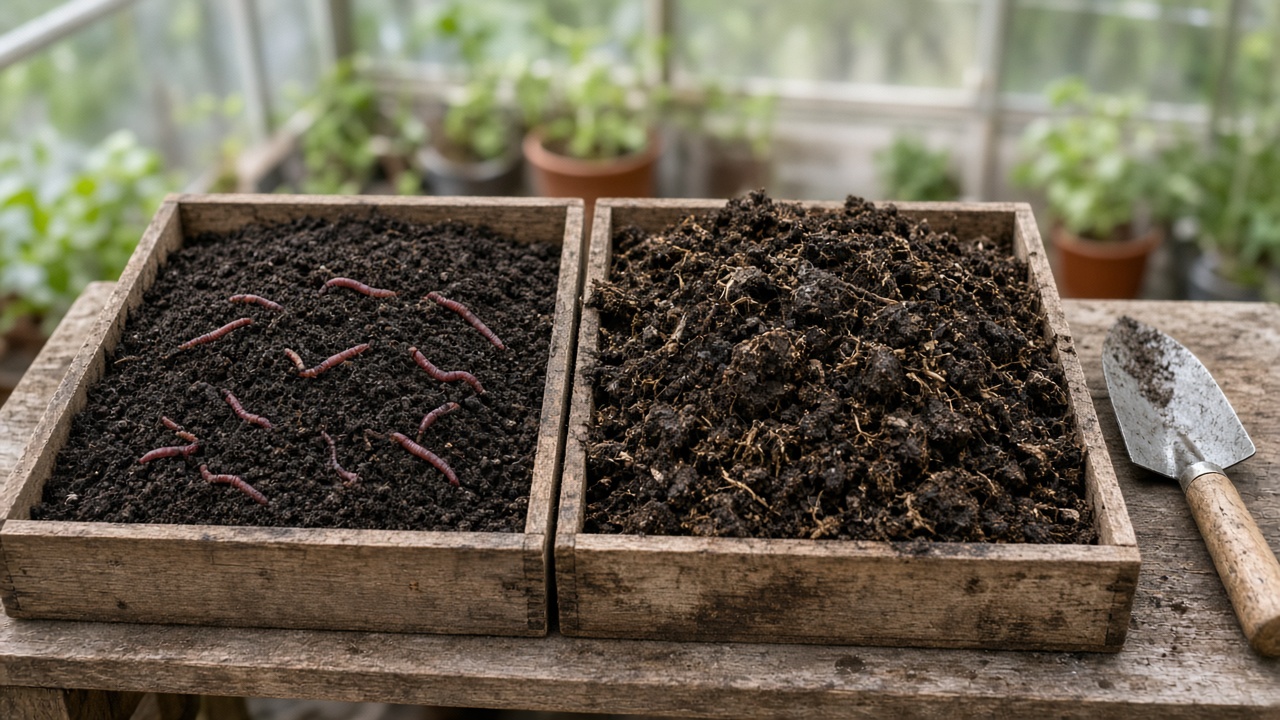
Vermicompost (also called worm castings) is a fine, granular, earthy-smelling material produced when red worms eat and digest organic waste. The most common species is Eisenia fetida, known as the red wiggler.
The worms work best at roughly 15–25 °C. The bedding is kept moist, waste is added in thin layers on top, and as the worms move upward to feed, the finished castings are harvested from below. Depending on conditions, a batch usually takes 2–3 months.
The strength of this method is product quality: the texture is uniform and easy to use in potting and seedling mixes. Its weakness is that the workers are alive. When the bedding climbs above about 35 °C, the worms start to die, and salty, oily, acidic (citrus, onion) or meat-containing waste can spoil the bed. That is why raw food waste is not well suited to direct vermicomposting.
How Does Compost Form and Why Does It Heat Up?
Compost forms when microorganisms break down organic matter in the presence of oxygen. With the right mix, microbial activity generates heat and the material enters the thermophilic phase at 55–65 °C. Holding the temperature above 55 °C for several days markedly reduces pathogens and weed seeds.
A few basic conditions are needed: a carbon-to-nitrogen ratio of about 25–30:1, moisture of 50–60 % and oxygen above 5 %. We explain how to keep these parameters on target in practice in our article on setting compost moisture and temperature.
The chart makes the gap clear: the temperature at which worms survive is well below the hygienization threshold.
Vermicompost vs Compost Comparison Table
Putting the two methods side by side on the most frequently asked points gives the following picture:
| Criterion | Vermicompost | Thermophilic compost |
|---|---|---|
| Main agents | Worms and microorganisms | Microorganisms |
| Temperature | 15–25 °C | 55–65 °C |
| Hygienization | None, pre-treatment needed | Yes, ≥55 °C for several days |
| Time | Usually 2–3 months | 24–48 hours in a machine + a few weeks of curing |
| Space | Large, shallow beds | Compact, in a closed machine |
| Sensitive inputs | Salt, oil, citrus, meat | Oil and salt must be balanced |
| Scale | Small to medium | From 25 kg/day to tons per day |
In short, vermicompost wins on product fineness, while compost leads on speed, hygiene and scale. Nutrient content is not a fixed figure for either product; it depends largely on the input waste and on how the process is managed. Rather than trusting exact percentages that circulate online, rely on a laboratory analysis of your own product.
Space also shapes the decision. Because worms live in shallow beds, the same amount of waste needs a far larger, shaded and temperature-controlled area than a closed machine does.
Where Is Each One Used?
The right choice depends on where you will use the product. As a general guide:
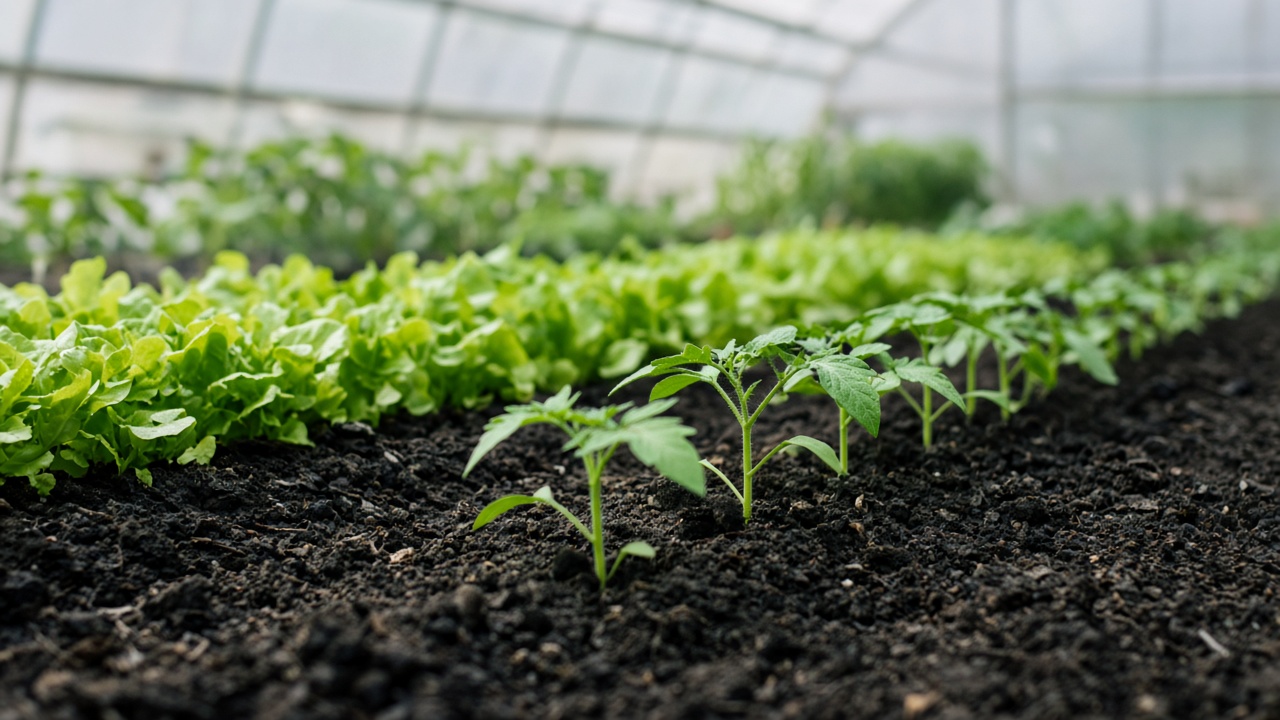
- Seedlings, pots and ornamentals: the fine texture of vermicompost is an advantage here; it is usually blended into the mix at low rates.
- Greenhouse soils: mature compost improves soil structure and water retention. For rates and timing, see our guide on using compost in greenhouses.
- Gardens, parks and landscaping: large volumes are needed, so compost is more practical.
- Field crops: demand is measured in tons, which favours scalable compost production.
Whichever you use, the product must be mature. Mature compost has a C/N ratio below 20, a temperature close to ambient and an earthy smell. We walk through maturity, contaminant and salinity checks step by step in our article on compost quality control.
Warning: Immature compost or fresh worm-bed material can cause root burn in sensitive seedlings.
Can Both Methods Be Used Together?
Yes, and for large amounts of food waste this is often the most sensible route. The waste first passes through a thermophilic process, and the cooled pre-compost is then fed to the worms. Hygiene is achieved during composting, while the worms refine the product.
- Separate at source Keep plastic, glass, metal and other contaminants out from the start.
- Run a thermophilic pre-treatment Hygienize the waste in a closed machine with a controlled 24–48 hour cycle.
- Cool and rest Let the material drop to around 25 °C and allow the effect of fat and salt to ease.
- Feed the worm beds Add the material in thin layers and keep the bedding moist.
- Screen and test Sieve the harvested product and check its maturity.
In our site surveys we often see that operations producing vermicompost lose beds mainly because of the fat and salt in raw food waste. Pre-composting reduces this risk considerably.
What Do ReBorn Cycle Machines Do in This Process?
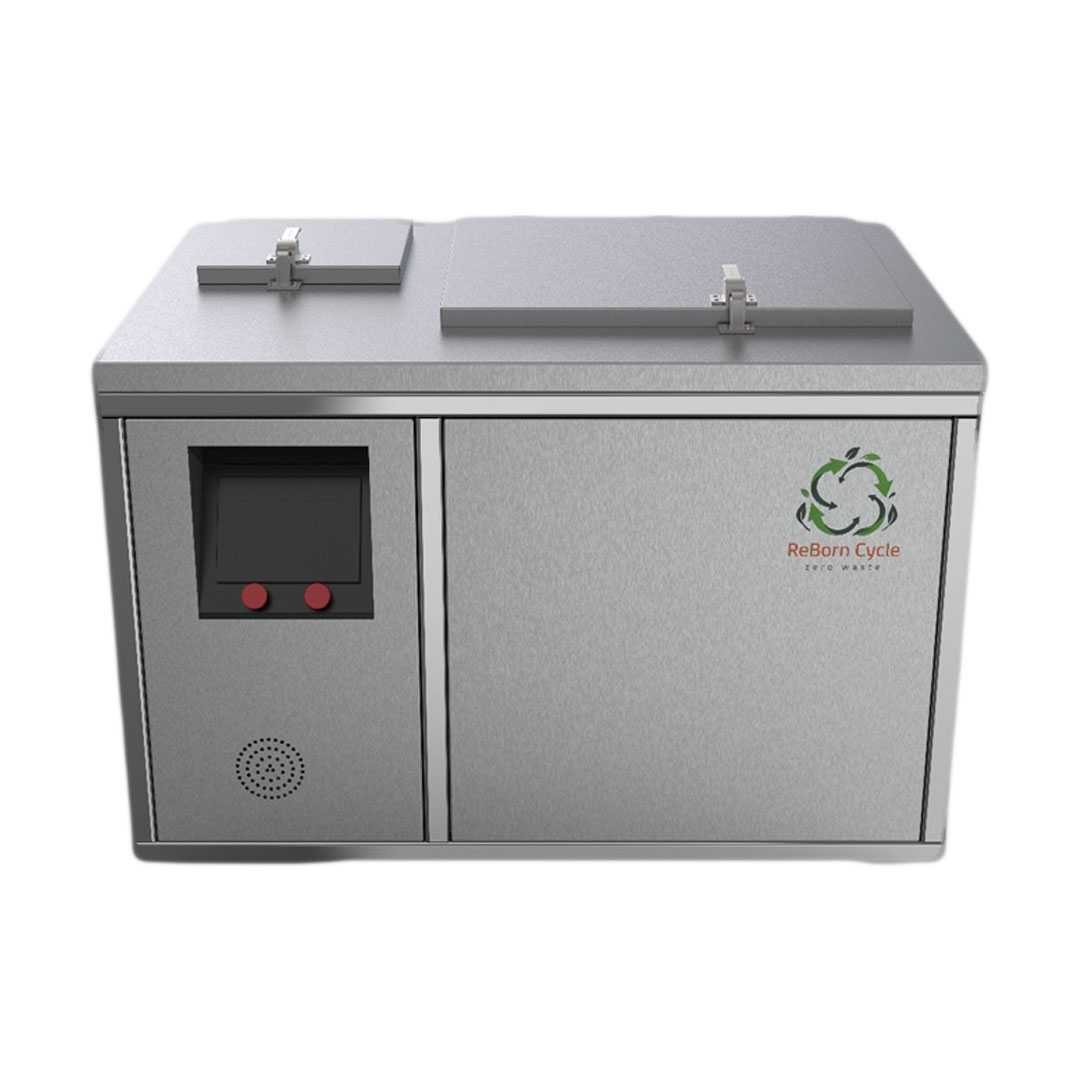
ReBorn Cycle compost machines are closed, heated, aerated and mixed in-vessel systems. When kitchen waste is fed with balanced moisture, the in-machine cycle typically takes 24–48 hours; with fatty or irregular feeding it can extend to 48–72 hours. The output is a stabilized, hygienized pre-compost, and a curing period of a few weeks is recommended for full maturity.
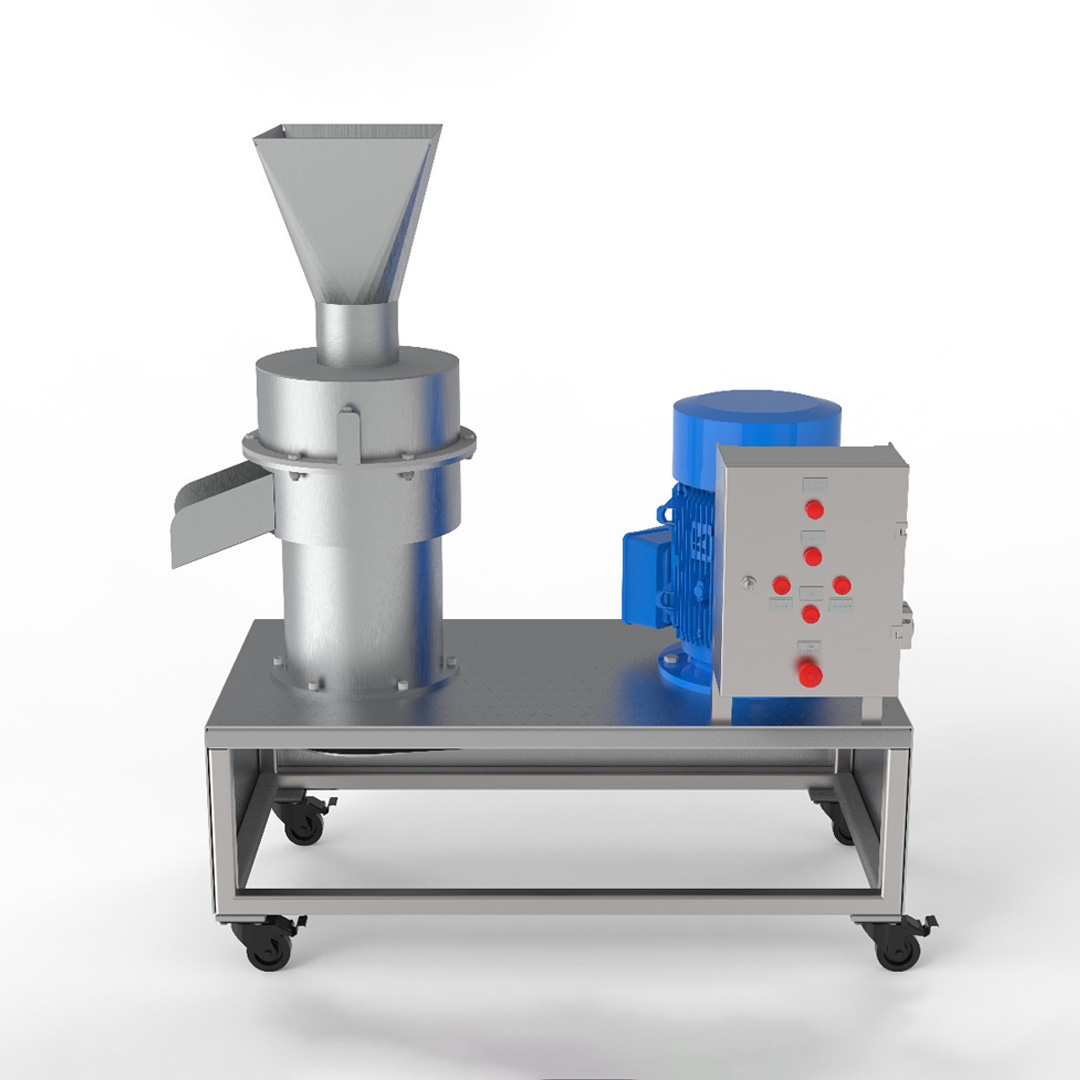
For a large hotel or production site generating around 250 kg of waste per day, for example, the RBN-C250 Compost Machine is a suitable starting point. Its output can be used directly as compost or serve as feedstock for worm beds. If you plan to package and sell the product, the Pellet Machine turns mature compost into pellets that are easy to transport and dose.
We define the right setup after a waste analysis; our consulting service covers capacity and process design. You can explore a similar application in our article on compost production from restaurant waste.
Frequently asked questions
Is vermicompost better than compost?
Both are good; which one fits better depends on what you need it for. For small, sensitive applications such as seedlings and pots, the fine texture of vermicompost is an advantage. For processing large volumes of waste, meeting hygiene requirements and supplying fields or landscaping, thermophilic compost is the more practical and scalable solution.
Can food waste be fed directly to worms?
In small quantities yes, but it is not recommended at scale. Salt, fat, meat and citrus in food waste can spoil a worm bed, and decomposing waste can heat up to temperatures that are dangerous for the worms. For businesses, running the waste through a thermophilic process first is the safer approach.
How long does vermicompost take to be ready?
Vermicompost is usually ready to harvest in 2–3 months, depending on conditions. Temperature, moisture, feeding frequency, particle size of the waste and worm density in the bed all determine the timing. When pre-composted and shredded material is fed, the process runs more evenly.
Does vermicomposting kill pathogens?
Vermicomposting alone does not provide reliable hygienization, because the temperature stays around 15–25 °C. Reducing pathogens and weed seeds requires holding the material above 55 °C for several days, which is achieved through thermophilic composting or a closed compost machine.
Can compost machine output be used to make vermicompost?
Yes, pre-compost from a compost machine is a suitable feedstock for worm beds. The material should first cool to ambient temperature and rest for a few days. For correct feeding and moisture management, we recommend process training for your operators.
Choosing Between Vermicompost and Compost
Vermicompost and compost reach the same goal by different routes. Vermicompost delivers a fine, valuable product at low temperature, while thermophilic compost provides hygiene, speed and scale. When large volumes of food waste are involved, a composting stage is almost always necessary.
Our practical advice: first pin down your daily waste volume and where you will use the product. If volumes are high, compost the waste in a closed machine; if you want a finer product, set aside part of the cured material for worm beds.
If you would like to assess which setup suits your site, you can book a free site survey. Our team reviews your waste volume, waste types and available space on site, then prepares a capacity and process proposal for compost, vermicompost or a combination of both.