A household compost machine is a small appliance that dries and grinds a few kilograms of kitchen scraps; an industrial compost machine treats business food waste from 25 kg/day to tonnes per day in a controlled process.
The main difference between a household and an industrial compost machine is scale and process. Household devices dry and grind 1–3 kg of kitchen scraps per batch in a few hours, and the output is not mature compost. An industrial compost machine handles 25 kg/day to tonnes per day with continuous aeration, mixing and controlled 55–65 °C temperatures, producing hygienized pre-compost.
Because both are sold as “compost machines”, the difference is easy to miss. One is designed for a family's vegetable peels, the other for the dozens of kilograms of food waste a restaurant, hotel or hospital generates every single day. In this article we explain what each machine type actually does, how capacity and output compare, and at what point a business should move to an industrial solution, with concrete numbers. For the technical background, see how an industrial compost machine works.
What Does a Household Compost Machine Actually Do?
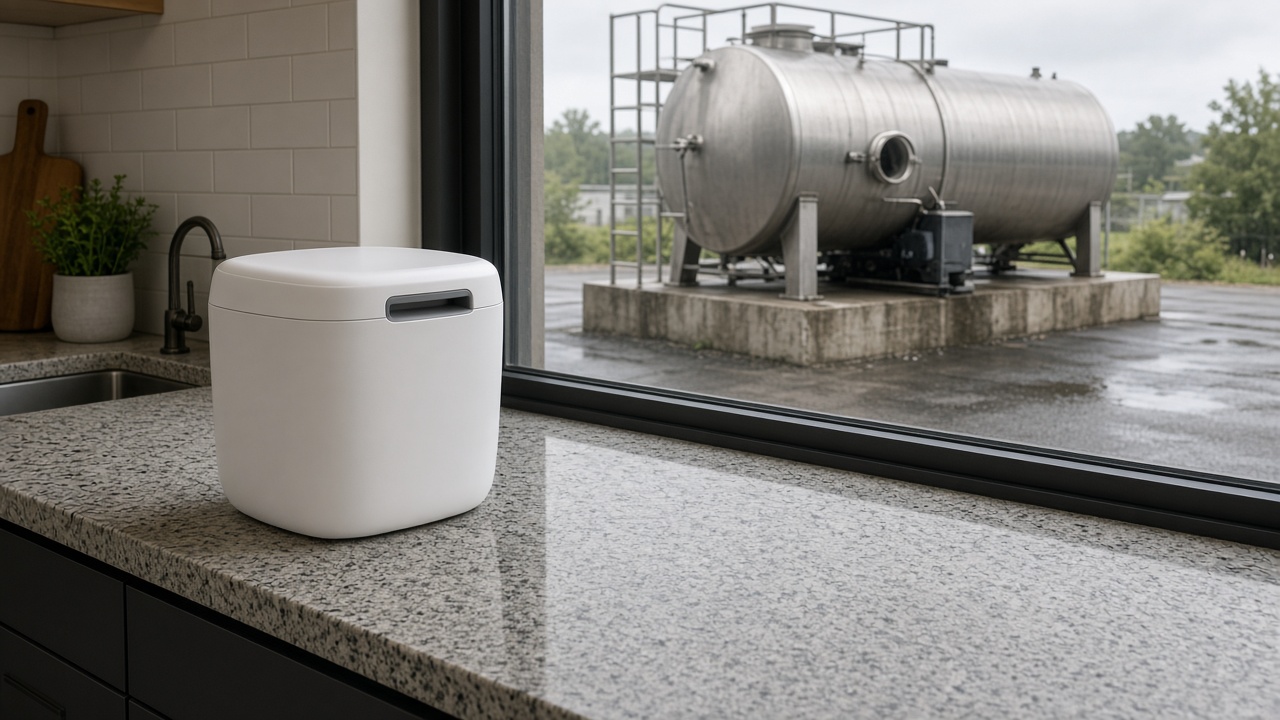
Countertop household compost machines mostly work as “food recyclers”. Scraps placed in the bucket are heated, dried and ground. Depending on the model, one cycle usually takes several hours and handles 1–3 kg of waste per batch.
The result is a dry residue, greatly reduced in volume, that looks a bit like coffee grounds. This residue is not biologically mature compost: it has not gone through the thermophilic phase in which microorganisms work at 55–65 °C for days. Once mixed into soil or added to a compost bin, it absorbs moisture again and keeps decomposing.
For a home, that is perfectly adequate. Bin odours drop, kitchen waste gets lighter and garden or pot soil receives some organic matter. However, the appliance is not built for continuous duty, fatty mixed waste or dozens of kilograms per day.
How Does an Industrial Compost Machine Work?
An industrial compost machine is a closed reactor. Waste enters through a feeding hatch, is turned regularly by an internal mixer, aerated by fans and kept at a controlled temperature by a heating system. The goal is not to dry the waste but to create the conditions microorganisms need: 50–60 % moisture, more than 5 % oxygen and a thermophilic temperature of 55–65 °C.
For kitchen waste with balanced moisture, the in-machine cycle typically takes 24–48 hours; with fatty or irregular feeding it can extend to 48–72 hours. The material that comes out is a stabilized, hygienized pre-compost. For fully mature compost, a curing period of a few weeks is recommended depending on the intended use.
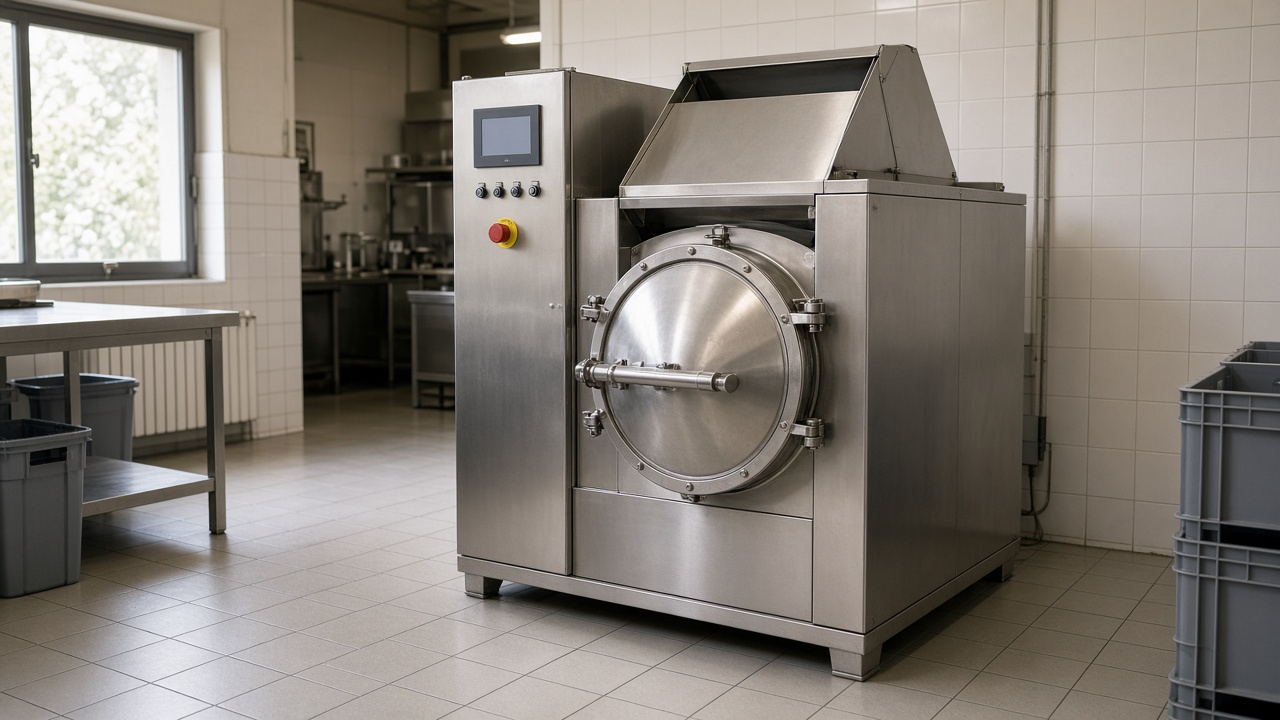
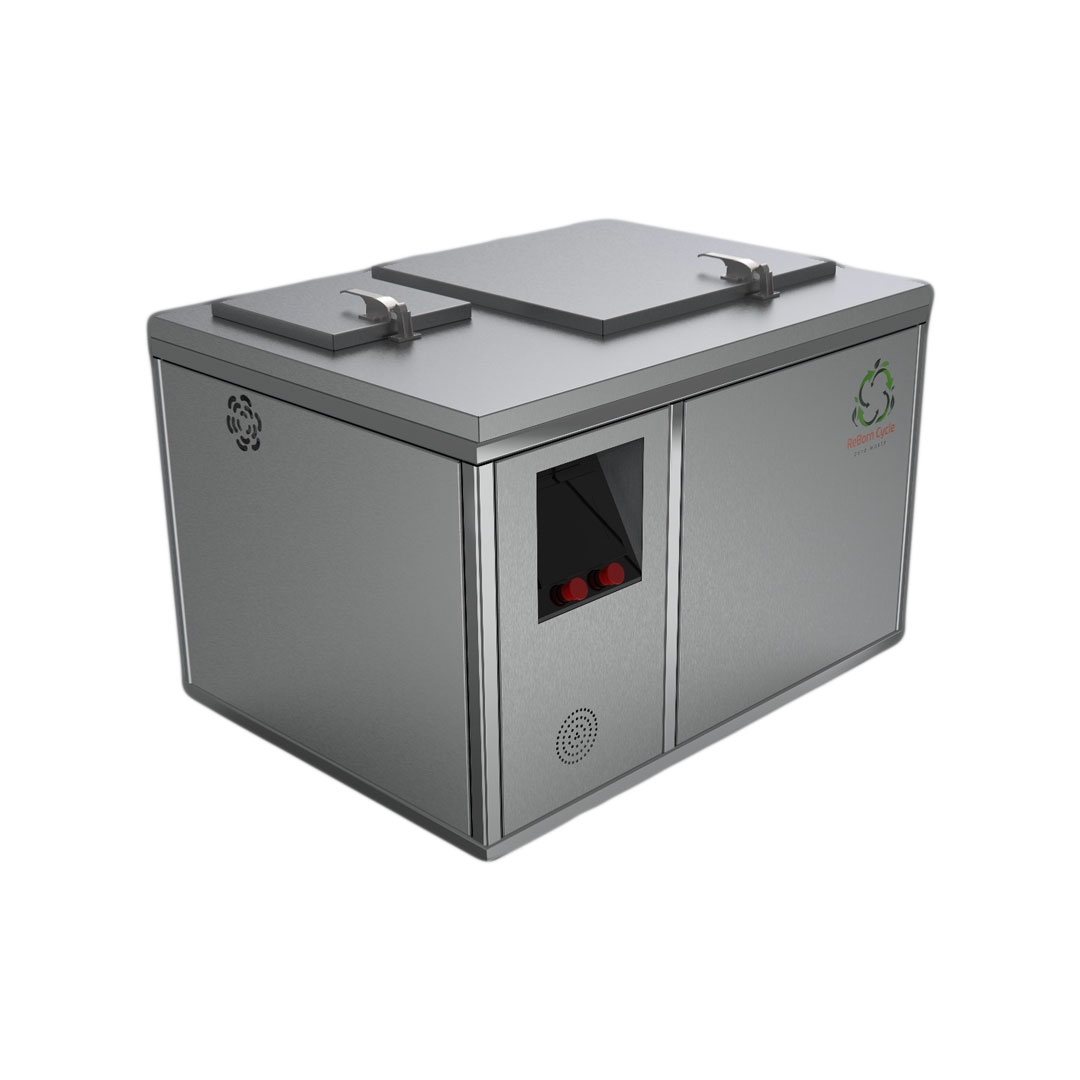
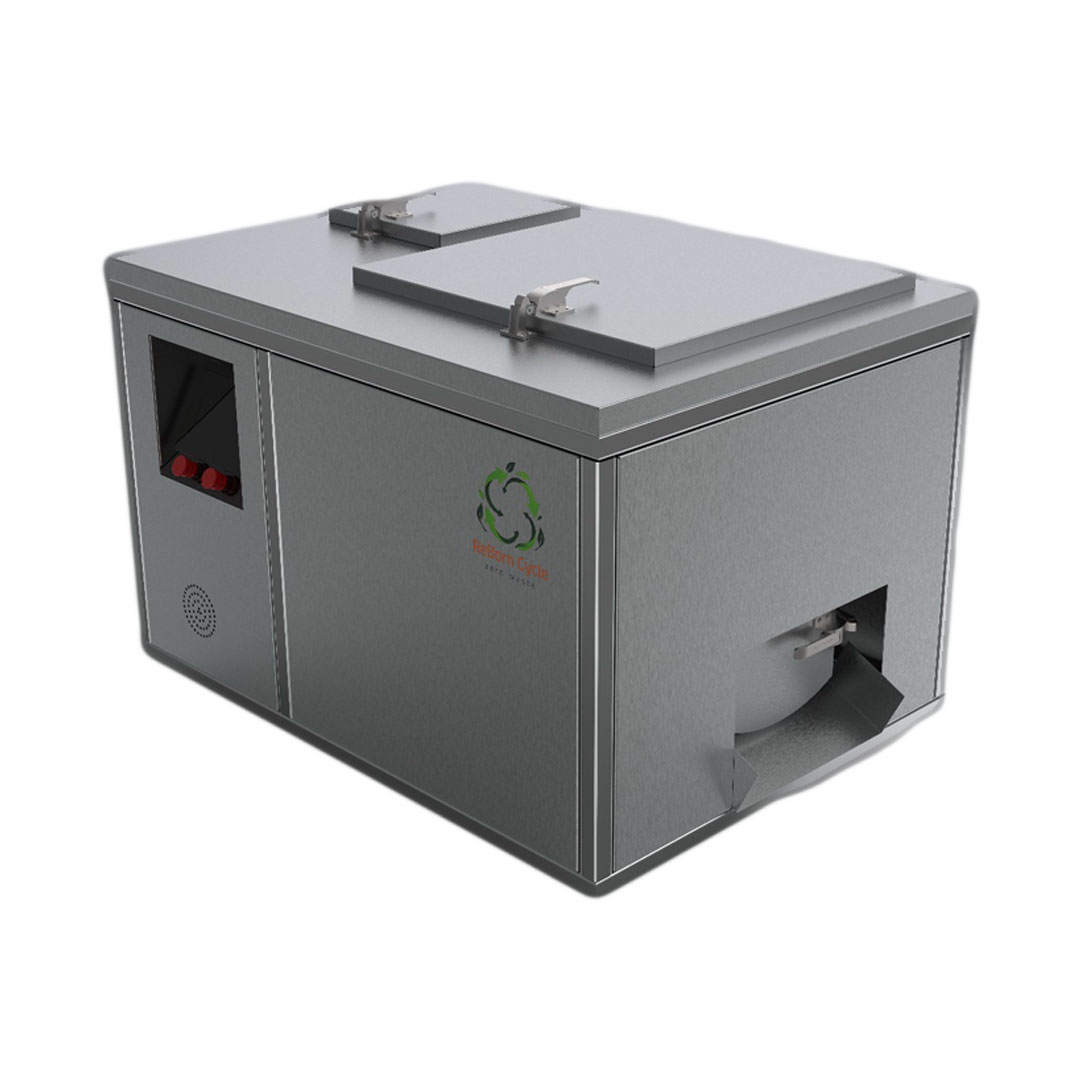
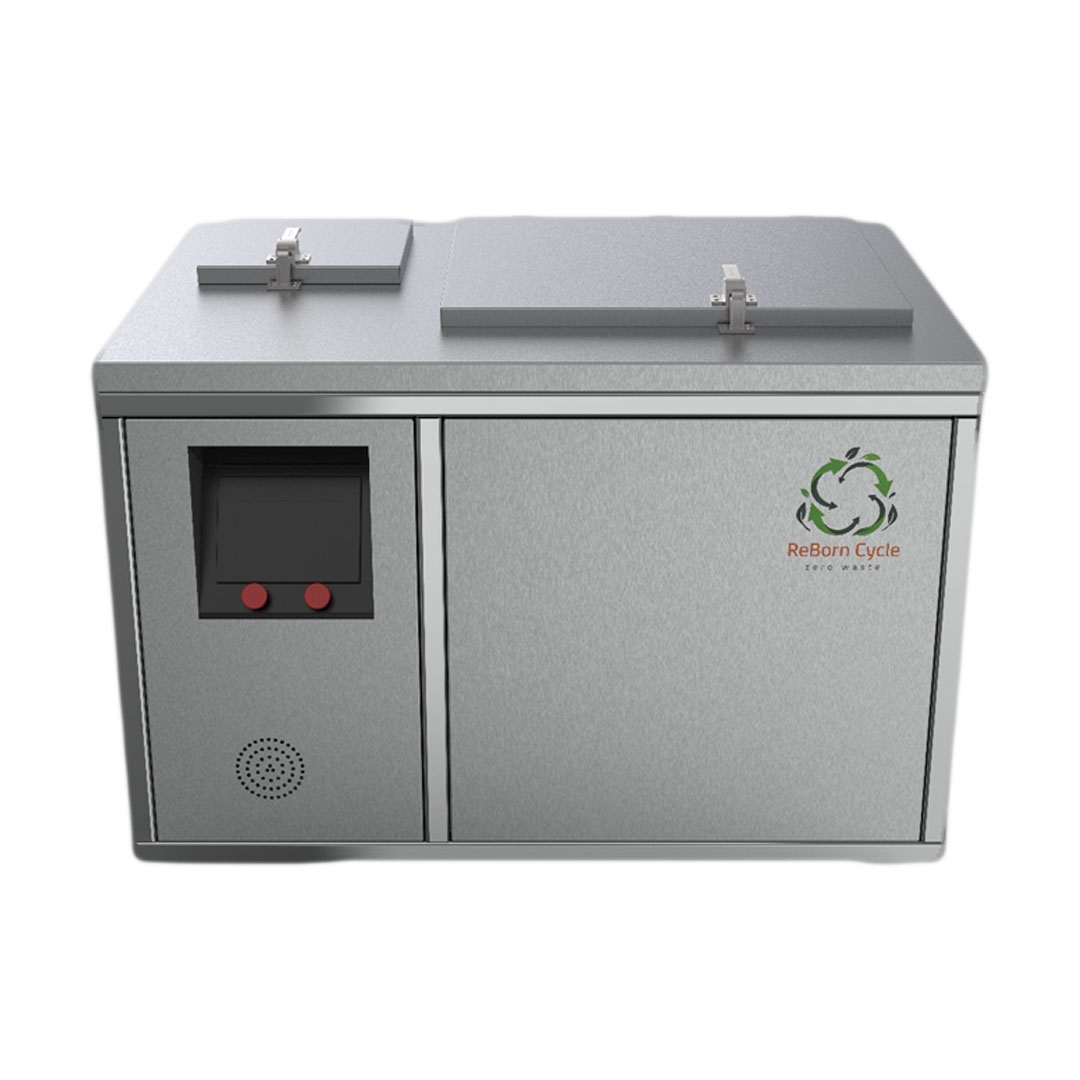
Thanks to its stainless steel body, closed design and odour control, the machine can run every day in a service area close to the kitchen. For example, the RBN-C25 Compost Machine processes 25 kg/day on site at the scale of a boutique hotel or café.
Household vs Industrial Compost Machine Compared
The table below puts the two machine types side by side on the points that actually drive the decision. Household values are general ranges for common countertop models on the market.
| Feature | Household appliance | Industrial compost machine |
|---|---|---|
| Capacity | 1–3 kg per batch | 25 kg/day to tonnes per day |
| Core process | Drying and grinding | Biological breakdown with aeration, mixing and heating |
| Temperature control | Drying-oriented | 55–65 °C thermophilic phase monitored |
| Cycle | Batches of a few hours | 24–48 hours, continuous feeding |
| Output | Dried food residue | Hygienized pre-compost |
| Body and duty | Mostly plastic, occasional use | Stainless steel, daily operation |
| Support | User manual | Site survey, installation, training and service |
The most important row is the output. A dry residue is useful at home, but a business working towards zero waste needs a regular, controlled composting process with a predictable result.
How Big Is the Capacity Gap?
Daily capacity shows the gap most clearly. A household appliance run once or twice a day processes roughly 2 kg of waste. The smallest model in an industrial range covers more than ten times that amount.
A simple example: a restaurant serving 150 covers with 0.15 kg of waste per cover produces about 22 kg per day. Processing that with a household appliance would take eleven batches a day, and since each batch lasts several hours, that is not realistic. The same waste goes into a RBN-C25 Compost Machine with continuous feeding. Once weekly swings and seasonal peaks are factored in, the next size up often gives more comfortable operation. You will find the differences between models in our RBN C50, C100 and C250 comparison.
When Should a Business Switch to an Industrial Machine?
In our site surveys we often see businesses that started with a household appliance run into the same problems within a few weeks. If any of the following applies to you, it is time to consider an industrial solution:
- Daily waste exceeds a few kilograms and the appliance runs full all day.
- The waste contains a high share of fat, meat, bones or cooked food.
- Zero waste rules require the waste to be recorded and reported.
- Odour, flies and the cost of hauling waste containers are becoming a problem.
- You want to use the output regularly in gardens, landscaping or greenhouses.
For restaurants and cafés the RBN-C25 Compost Machine or RBN-C50 Compost Machine is usually enough. Hospitals, shopping malls and mid-size facilities tend to choose the RBN-C100 Compost Machine; we explain separately which businesses the RBN-C100 suits.
Warning: Lining up several household appliances in a commercial kitchen does not solve the capacity problem, and the output is still not mature compost.
How ReBorn Cycle Helps You Choose the Right Machine
Selection starts with measurement. In our consulting service we work with you to record 7–14 days of waste quantities, waste types and seasonal swings, then add a safe capacity margin. For a quick first estimate you can use the online capacity selector; the method is covered in detail in our capacity selection guide.
Once the machine is chosen, the installation area, electrical supply and ventilation connections are planned. For your operating budget we also recommend calculating the electricity consumption of a compost machine in advance. The machine is usually placed in a service area near the kitchen, replacing waste containers, which cuts carrying distances and staff workload.
After installation, operators are trained in feeding, moisture balance and daily checks. Our technical support team stays with you for commissioning, periodic maintenance and spare parts. Because the machines are manufactured in Turkey, service and parts are handled locally. During the first weeks we monitor output quality together with you and adjust the feeding routine to your shift plan.
Frequently asked questions
Does a household compost machine make real compost?
Most household appliances produce dried and ground food residue, not real compost. Because the residue has not passed through a thermophilic phase, it matures only after being mixed into soil or left in a compost bin for a few weeks. It should not be applied in large amounts directly around plant roots.
Can a restaurant use a household compost machine?
Apart from a very small café, it is not practical. A restaurant producing 20–30 kg of waste per day would need to fill a household appliance dozens of times. Fatty, mixed waste also strains these devices. From 25 kg/day upwards, an industrial machine is the better fit.
How long does an industrial compost machine take to make compost?
Kitchen waste with balanced moisture typically turns into stabilized pre-compost in 24–48 hours inside the machine; with fatty or irregular feeding this can extend to 48–72 hours. For fully mature compost, a curing period of a few weeks is recommended depending on the intended use.
What is the smallest industrial compost machine capacity?
The smallest model in the ReBorn Cycle range is the RBN-C25, which processes 25 kg of organic waste per day. It is designed for restaurants, cafés and boutique hotels. For larger volumes there are stepped capacities such as the RBN-C50 and RBN-C100.
Is there an odour difference between household and industrial compost machines?
Both types run closed, so odour is limited, but the method differs. Household appliances usually rely on a carbon filter. In an industrial machine, controlled aeration and an aerobic process prevent the anaerobic decay that causes odour in the first place, and exhaust air is filtered where needed.
Where can the output of an industrial compost machine be used?
After curing, the output of an industrial machine can be used as a soil improver in gardens, landscaping, parks and greenhouses. Hotels and campuses usually use it on their own green areas. If you plan to sell it or use it in agriculture, quality control against the criteria of Turkey's Compost Regulation (2015) is recommended.
Choosing the Right Compost Machine for Your Business
A household compost machine is a practical tool for shrinking a family's kitchen waste. An industrial compost machine is process equipment that treats business food waste every day with controlled temperature and aeration. The difference is not just size but the quality of the output and the reliability of the process.
Before deciding, weigh your waste for at least a week, note the share of fatty and cooked food and allow for seasonal swings. If your daily volume is more than a few kilograms, looking at industrial models from 25 kg/day upwards makes more sense in terms of both time and labour than juggling household appliances.
If you would like to map your waste profile together and find the right capacity, you can talk to our consulting team. We review your waste volume, installation space and where you plan to use the output, then tell you clearly whether a household solution is enough or which industrial model fits.