You make compost by mixing green waste (fruit, vegetable and food scraps) with brown material (dry leaves, straw, sawdust) and keeping it moist and aerated; a pile takes 2–6 months, an in-vessel machine 24–48 hours plus a few weeks of curing.
To make compost, mix nitrogen-rich green waste (fruit and vegetable scraps, grass) with carbon-rich brown material (dry leaves, straw, sawdust) at roughly 1 part green to 2–3 parts brown by volume. Keep the mix as moist as a wrung-out sponge (50–60 %), aerate it regularly and let it pass through a hot phase of 55–65 °C. Then cure it for a few weeks and screen it.
Making compost really means creating the right conditions for microorganisms. Give them enough carbon, nitrogen, water and oxygen, and kitchen scraps turn into a dark, earthy-smelling soil improver within weeks to months. In this guide you will find the material ratios, the process step by step, how long each method takes, the most common mistakes, and how businesses handle dozens of kilograms of food waste a day with an in-vessel compost machine.
What Materials Do You Need to Make Compost?
Good compost is built from two groups of materials. Greens supply nitrogen and break down quickly; browns supply carbon, keep the structure loose and soak up excess moisture. The ideal carbon-to-nitrogen (C/N) ratio for the microbes is around 25–30:1.
- Greens (nitrogen) fruit and vegetable scraps and food waste (C/N about 15–20:1), fresh grass clippings (15–25:1), coffee grounds.
- Browns (carbon) dry leaves (40–80:1), straw (50–150:1), sawdust (200–500:1), plain unprinted cardboard.
You do not need a lab calculation. As a rule of thumb, use 2–3 parts brown to 1 part green by volume. Sawdust is very carbon-rich, so use it sparingly; dry leaves and straw give a more balanced start.
Keep meat, bones, dairy and fats out of an open pile, as they attract odour and pests. Plastic, glass, metal and diseased plants also stay out. Closed, heated machines can process mixed kitchen waste including cooked leftovers, but removing foreign material is still essential.
How to Make Compost Step by Step
- Choose a method. An open pile in the garden, a lidded bin on the balcony, an in-vessel compost machine at a business.
- Collect and shred the material. Collect scraps separately; pieces of 2–5 cm break down faster.
- Mix. Lay twigs and straw at the base, then add 2–3 parts brown to 1 part green and mix well.
- Test the moisture. Squeeze a handful; like a wrung-out sponge, only a few drops should come out (50–60 % moisture).
- Aerate. Turn the pile every 3–7 days in the first weeks; oxygen should not fall below 5 %.
- Watch the hot phase. Within a few days the pile reaches 55–65 °C. Several days above 55 °C reduce pathogens and weed seeds.
- Cure. Once the temperature drops, let the compost rest for a few weeks.
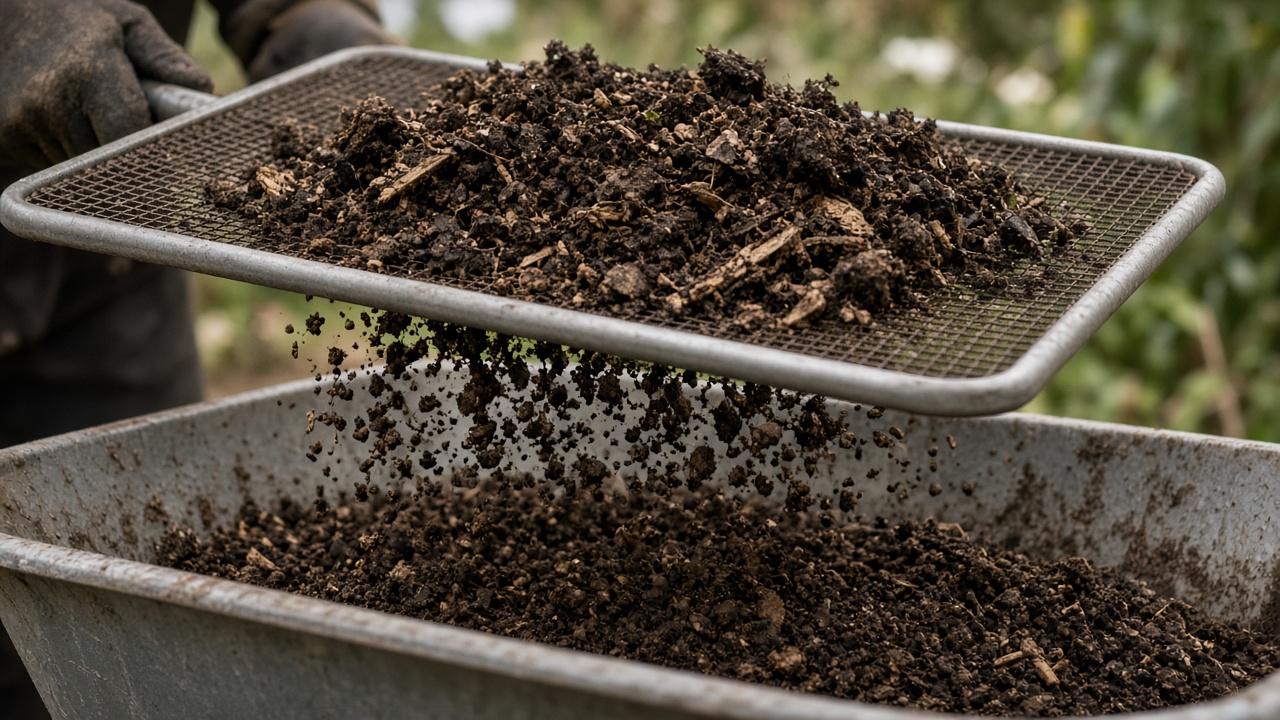
- Screen and use. Sieve it through a 10–15 mm screen and return the coarse pieces to a new pile.
Reading moisture and temperature correctly is half the job. For detailed target values, see our guide to setting compost moisture and temperature.
Pile vs Bin vs Compost Machine
Compost forms through the same biology in every method; what changes is speed, control and capacity. Your choice depends on waste volume, space and odour tolerance.
| Method | Suitable scale | Typical time | Control |
|---|---|---|---|
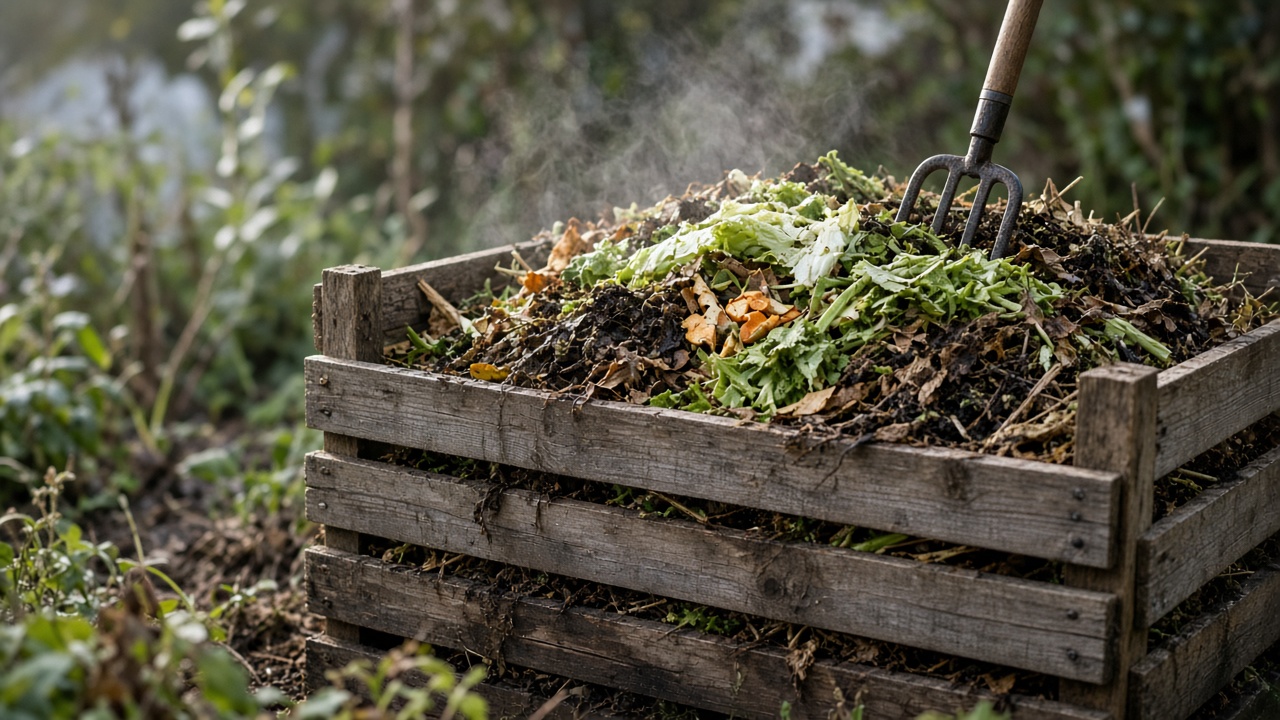
| Open pile | Garden, farm | 2–6 months | Manual turning, weather-dependent |
| Lidded compost bin | Home, balcony, small garden | 3–6 months | Limited, small volumes heat up poorly |
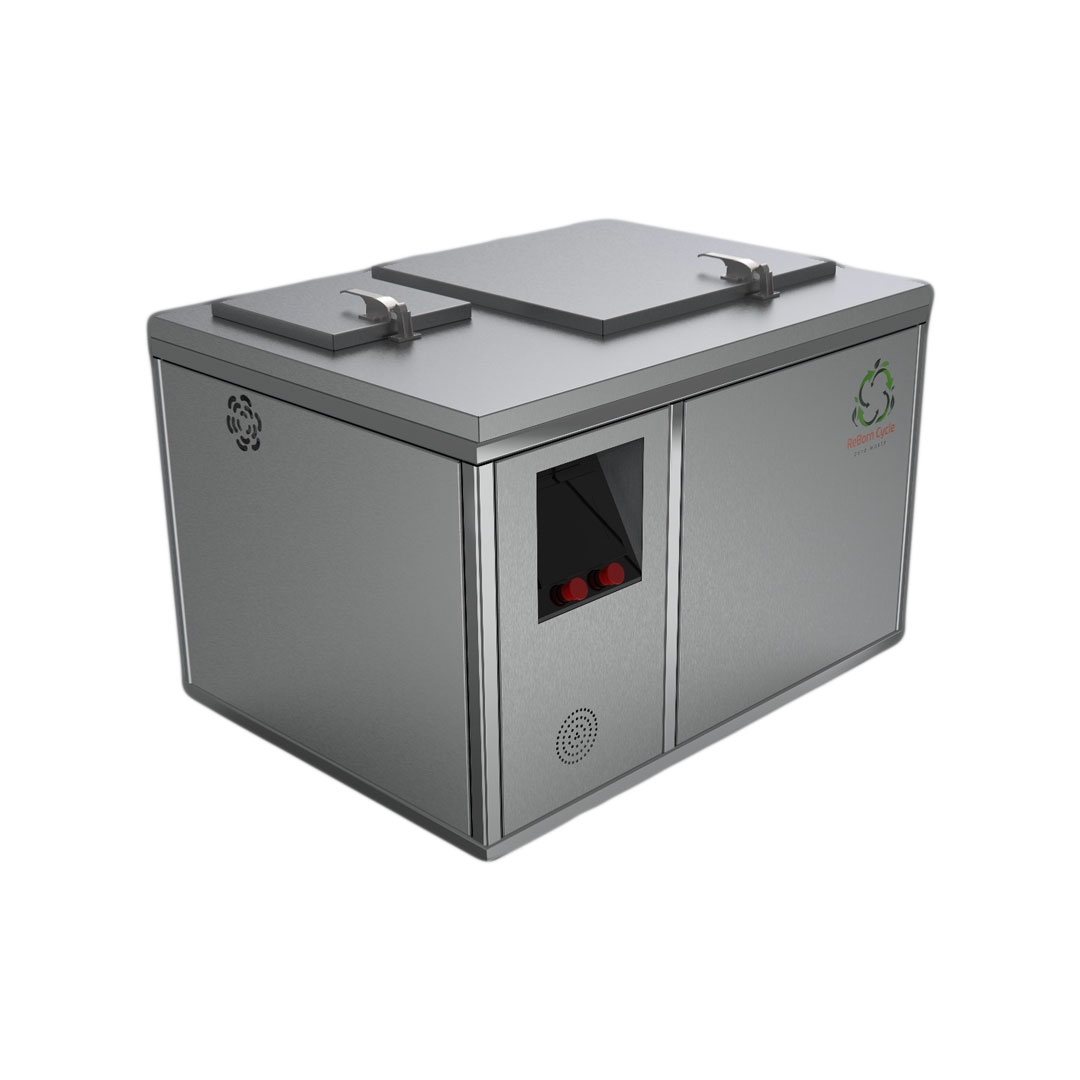
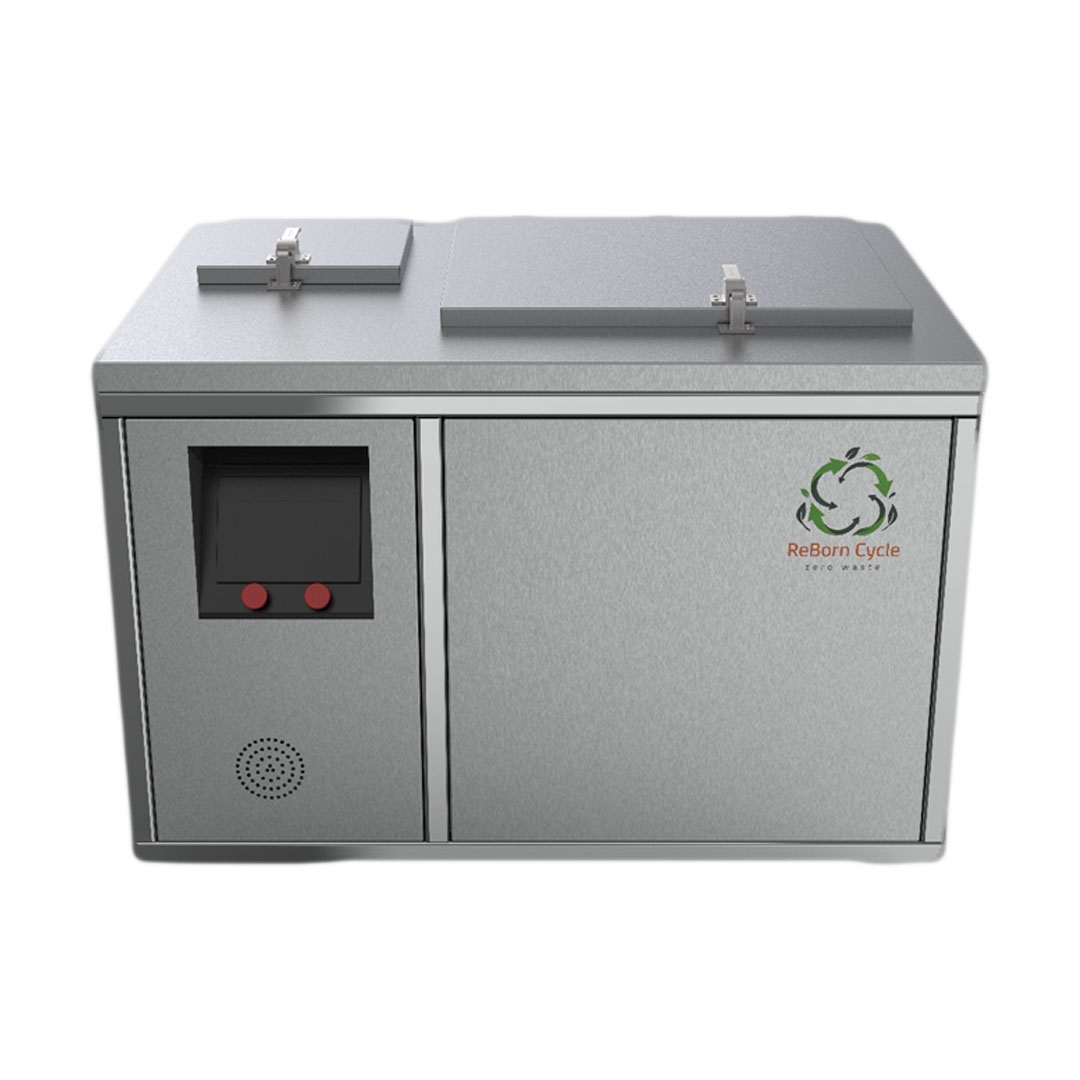
| In-vessel compost machine | Restaurant, hotel, hospital, municipality | 24–48 hours + a few weeks of curing | Automatic temperature, aeration and mixing |
For a few hundred grams of scraps a day at home, a bin is enough. In a kitchen producing dozens of kilograms a day, an open pile quickly becomes unworkable; odour, flies and leachate soon turn into complaints. At this scale a closed system shortens the process and makes it repeatable.
How Long Does Compost Take?
Three things set the pace: the material balance, how often you aerate and the temperature. A pile that is never turned can take half a year, while a balanced pile turned regularly is ready in 2–3 months. The season matters too; open piles that work fast in summer can almost stop in winter.
Because temperature and oxygen are controlled continuously in a closed machine, active decomposition of kitchen waste with balanced moisture takes 24–48 hours; with fatty waste or irregular feeding it can take 48–72 hours. The output is a hygienized pre-compost, and a few weeks of curing are recommended depending on the end use. Details are in our article on how long a compost machine takes. The machine controls the hot phase; curing needs time with every method.
Common Composting Mistakes
Most problems we see on site and in home composting come from the same handful of mistakes. All of them are easy to fix.
- Too many greens. The pile turns wet and sticky and smells of ammonia. Add dry leaves or straw and mix.
- Too many browns. The pile does not heat up and stays unchanged for months. Add water and green waste.
- No air. Compost without oxygen smells like rotten eggs. Turn the pile and add loose structural material.
- Large pieces. Watermelon rinds, corn cobs and branches slow everything down; cut them up before adding.
- Foreign material. Bags, foil and plastic cutlery spoil compost quality and are hard to remove later.
Warning: Do not put immature compost straight onto seedlings or into pots; while it is still decomposing it can damage plant roots. Wait until the temperature has dropped and the compost smells earthy.
How Businesses Make Compost with a Compost Machine
In a restaurant, hotel or hospital kitchen the basic rules are the same, but the scale is different. 25–100 kg of waste a day is far too much for an open pile; odour, flies and space problems grow quickly.
In ReBorn Cycle in-vessel compost machines the waste is fed into the chamber, and temperature, aeration and mixing are managed in a controlled way. The operator's job is to keep foreign material out, add dry structural material to very wet waste if needed, and monitor the process. For cafés and restaurants producing around 25 kg a day, the RBN-C25 Compost Machine is a sensible starting point; for hospitals, shopping centres and mid-size facilities, the RBN-C100 Compost Machine. We explain what happens inside the drum in how an industrial compost machine works.
What we often see during site surveys is that feeding habits, not the machine, decide the result. That is why installation comes with operator and staff training. To see which capacity fits you, try our online capacity selector.
Frequently asked questions
How many days does it take to make compost?
In an open pile compost usually takes 2–6 months; regular turning shortens this. In an in-vessel compost machine active decomposition takes 24–48 hours, followed by a few weeks of curing depending on the end use. Open piles slow down noticeably in winter because microbial activity drops in the cold.
What should not go into compost?
Home compost and open piles should not contain meat, fish, bones, dairy, fats, diseased plants, cat or dog faeces, plastic, glass or metal. These cause odour, pests and hygiene risks. Closed, heated industrial machines can process cooked food leftovers, but packaging and foreign material must always be removed.
Why does my compost smell bad?
Bad smells usually come from a lack of oxygen or from too much wet, nitrogen-rich material. A rotten-egg smell points to missing air, an ammonia smell to too many greens. Turn the pile, add dry leaves or straw and bring moisture back to 50–60 %. Well-managed compost smells like forest soil.
How do you know when compost is ready?
Mature compost is dark brown, crumbly and smells earthy; its temperature has fallen to ambient and the original scraps are no longer recognisable. In a lab analysis, mature compost usually has a C/N ratio below 20. For practical tips, read our article on how to use compost output.
Can you make compost on a balcony?
Yes, you can compost on a balcony with a lidded bin that has air holes. Mix fruit and vegetable scraps with dry leaves or torn plain cardboard, keep it as moist as a sponge and stir it once a week. Small bins do not heat up much, so the process can take 3–6 months; leave out meat and fat.
Getting Composting Right from the Start
The essence of composting is balance. Mix green and brown material at about 1 to 2–3 by volume, keep the moisture like a wrung-out sponge, never let the pile run short of oxygen, and give it time to cure after the hot phase. Any pile that follows these four rules makes good compost, in the garden or in a machine.
If you are starting at home, a small bin and a few weeks of observation are enough; heat and smell tell you how to adjust the ratio. If your business produces organic waste every day, weigh it for 7–14 days first. The daily amount and the type of waste are the most reliable basis for choosing the method and the machine capacity.
If you are thinking about turning your waste into compost on site, our consulting team can support you with waste analysis, capacity calculation and process design. Seeing your waste flow and installation space in person is the fastest route. To assess your site together, book a free site survey.