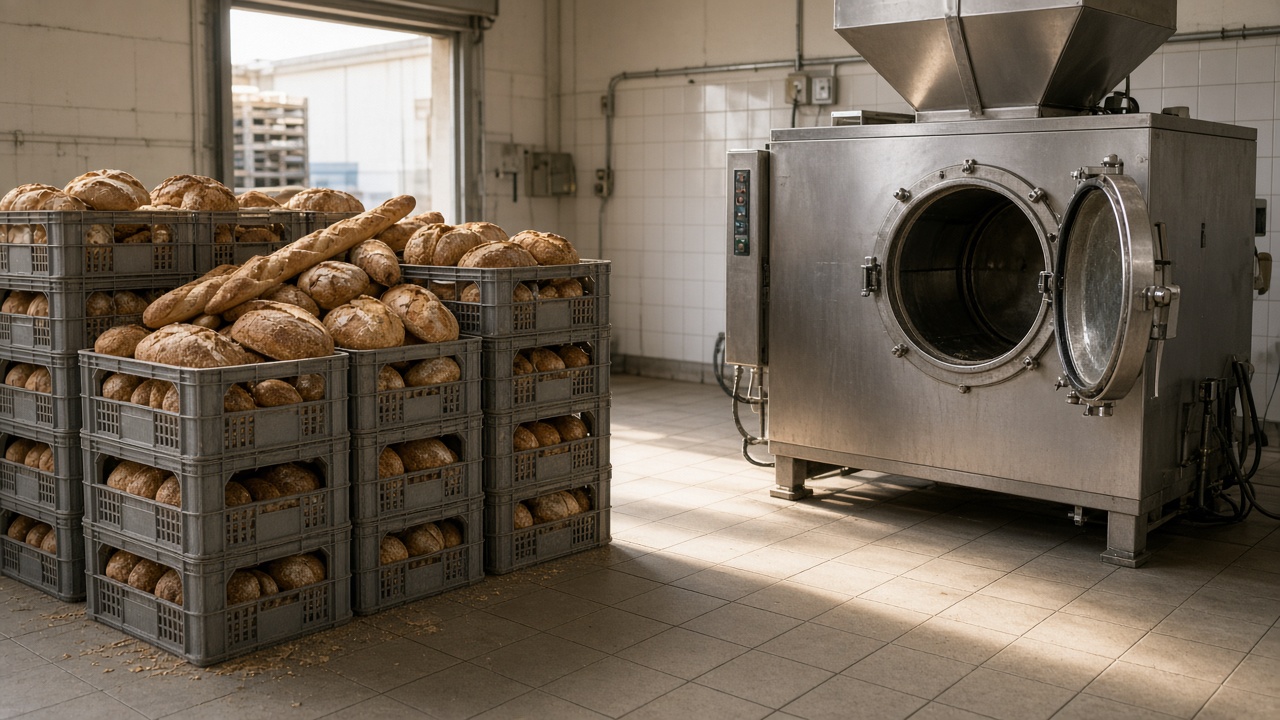
Bread waste should first be prevented through production planning and sellable bread donated. Clean, mould-free dry bread can become feed material under the rules, while mouldy bread and plate waste should be composted.
Bread waste is best handled in priority order through prevention, donation, feed material and composting. Clean, unpackaged, mould-free dry bread such as bakery returns and production rejects can become feed material under the applicable feed rules, in Turkey those of the Ministry of Agriculture and Forestry. Mouldy bread and plate waste must not be fed and should be composted.
Bread is one of the most wasted foods in households and across the food sector. According to the FAO, roughly one third of all food produced worldwide is lost or wasted, and bakery products are a highly visible part of that loss. This article explains where bread waste comes from, the options from prevention and donation to feed material and compost, the mould risk, and a practical plan for bakeries, hotels and food plants.
Where Does Bread Waste Come From
Bread waste is not a single stream, and the right recovery route depends on its source. During our site surveys we usually group bread waste into four categories:
- Bakery and retail returns: packaged or unpackaged bread left unsold at the end of the day. By volume, this is often the largest stream.
- Production rejects: misshapen or over-baked loaves, plus crusts and crumbs from slicing. Their origin is known and their composition consistent.
- Over-preparation: bread left over in hotel buffets and cafeterias that never reached the table.
- Plate waste bread: bread returned from tables after service that has been in contact with other food.
The first three groups are pre-consumer products that never reached the consumer, and when properly separated they qualify for higher-value options. The fourth group legally counts as plate waste and must not be used to feed animals. That is why the first step is to collect bread in separate bins by source and to weigh and record daily quantities.
What Are the Options for Recycling Bread Waste
The US EPA Food Recovery Hierarchy recommends the following order, from most to least preferred: source reduction, feeding hungry people, feeding animals, industrial uses, composting and, last, disposal. For bread waste, this order translates into the table below.
| Option | Suitable bread stream | Advantage | Watch out for |
|---|---|---|---|
| Prevention | All streams | Saves raw materials and energy | Tracking sales and return data |
| Donation | Fresh, unsold bread | Used as food | Food safety, fast logistics |
| Feed material | Clean, mould-free returns and rejects | High-value recovery | Feed rules, registration, mould control |
| Composting | Mouldy, mixed, plate waste | Accepts every stream, returns to soil | Balanced mix with other waste |
| Biogas | Large, regular volumes | Energy production | Plant proximity and acceptance terms |
| Landfill | Not recommended | None | Methane formation, lost resource |
A single option is rarely enough for one site; once streams are separated, two or three options are usually used side by side on the same day.
How to Prevent and Donate Surplus Bread
The cheapest bread waste is the waste that never happens. In bakeries and food plants, prevention usually starts with data-driven production planning: tracking how much of each product is returned on which day and at which outlet makes it possible to set the next day's production more accurately.
- Reduce the second and third baking batches based on same-day sales data
- Serve bread in buffets in small portions and replenish it frequently
- Deliver unsold fresh bread to food banks or community pantries on the same day
- Reprocess suitable products as food, for example into breadcrumbs or croutons
Tip: Weigh returned bread by product and outlet for one week. This short measurement improves production planning and makes it much easier to size the right machine for the remaining waste.
Can Stale Bread Be Used as Feed Material
Clean, unpackaged and mould-free dry bread is a pre-consumer food by-product and a candidate feed material. However, this use is not automatically permitted. In the EU, Regulation (EC) No 1069/2009 bans feeding kitchen and plate waste to farmed animals; in Turkey, feed use depends on Ministry of Agriculture and Forestry rules, registration and traceability. We cover the legal framework in detail in our article can food waste be turned into animal feed.
- Separate collection Bakery returns and rejects are collected apart from plate waste and meat-containing waste.
- Packaging removal Bags, labels, ties and other foreign matter are removed completely.
- Mould check Mouldy batches are separated and sent to the compost stream.
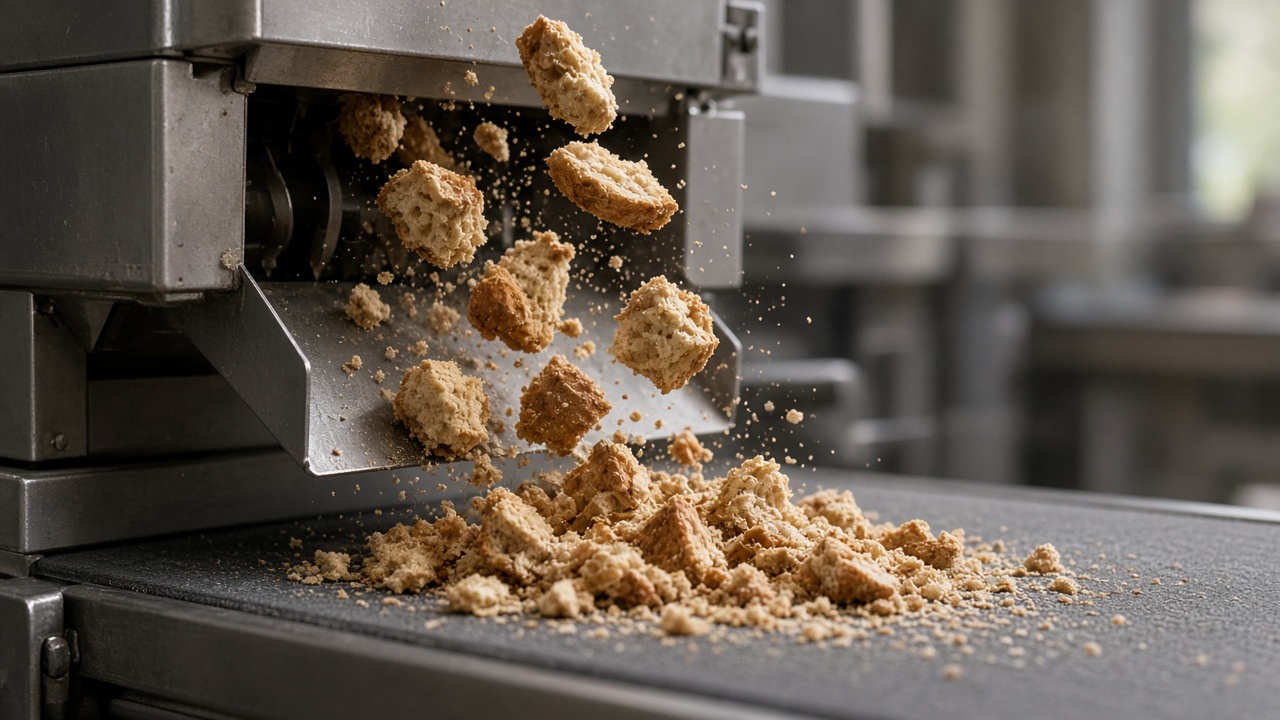
- Shredding and drying Bread is size-reduced and dried to a storable moisture level.
- Storage and analysis The product is stored dry and covered, with analysis and records kept per batch.
Warning: Mouldy bread carries a mycotoxin risk, and drying does not remove these toxins. Mouldy bread must never be mixed into the feed stream.
Can You Compost Bread Waste
Yes. Bread is a compostable organic waste, and controlled composting is the safest route for mouldy bread and plate waste bread. Dried bread is low in moisture and rich in starch; composted on its own it can clump and create pockets without air. It is therefore best mixed in a balanced way with other food waste and, if needed, a bulking agent.
General targets for a successful composting process:
- C/N ratio: ideally 25–30:1
- Moisture: 50–60%; dry bread lowers moisture, wet vegetable waste raises it
- Oxygen: above 5%, with regular mixing
- Temperature: 55–65 °C in the thermophilic phase for pathogen reduction
In a closed, heated and aerated compost machine, kitchen waste with balanced moisture typically becomes a stabilized pre-compost material within 24–48 hours. For fully mature compost, a curing period of a few weeks is recommended depending on the intended use.
How ReBorn Cycle Machines Handle Bread Waste
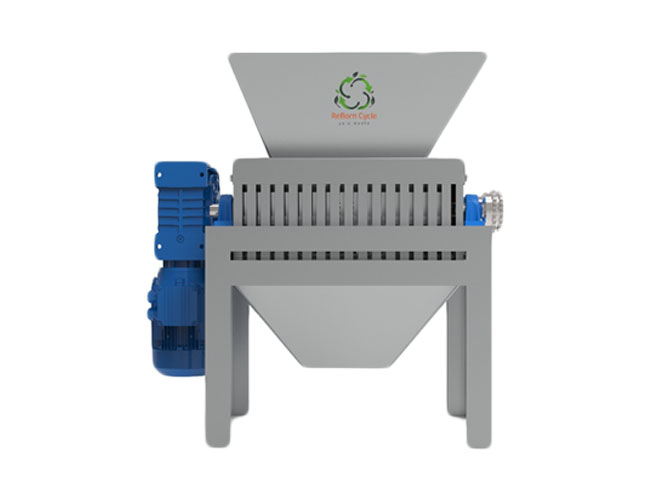
In our installations we do not send all bread waste to one machine; we route each stream to the right line. Loaves and baguettes are bulky, so they are first size-reduced in the Shredder, which helps heat and mixing act evenly on the material.
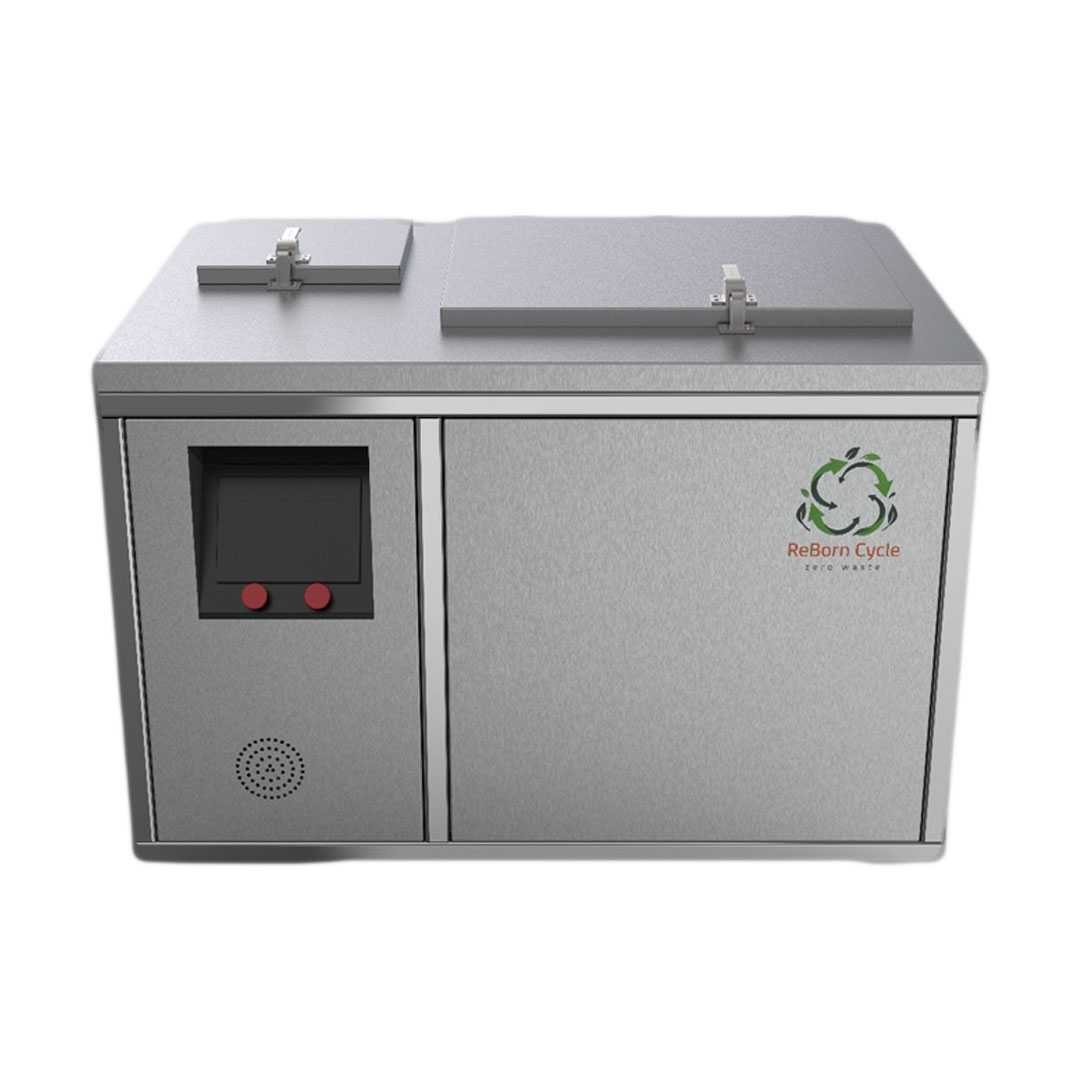
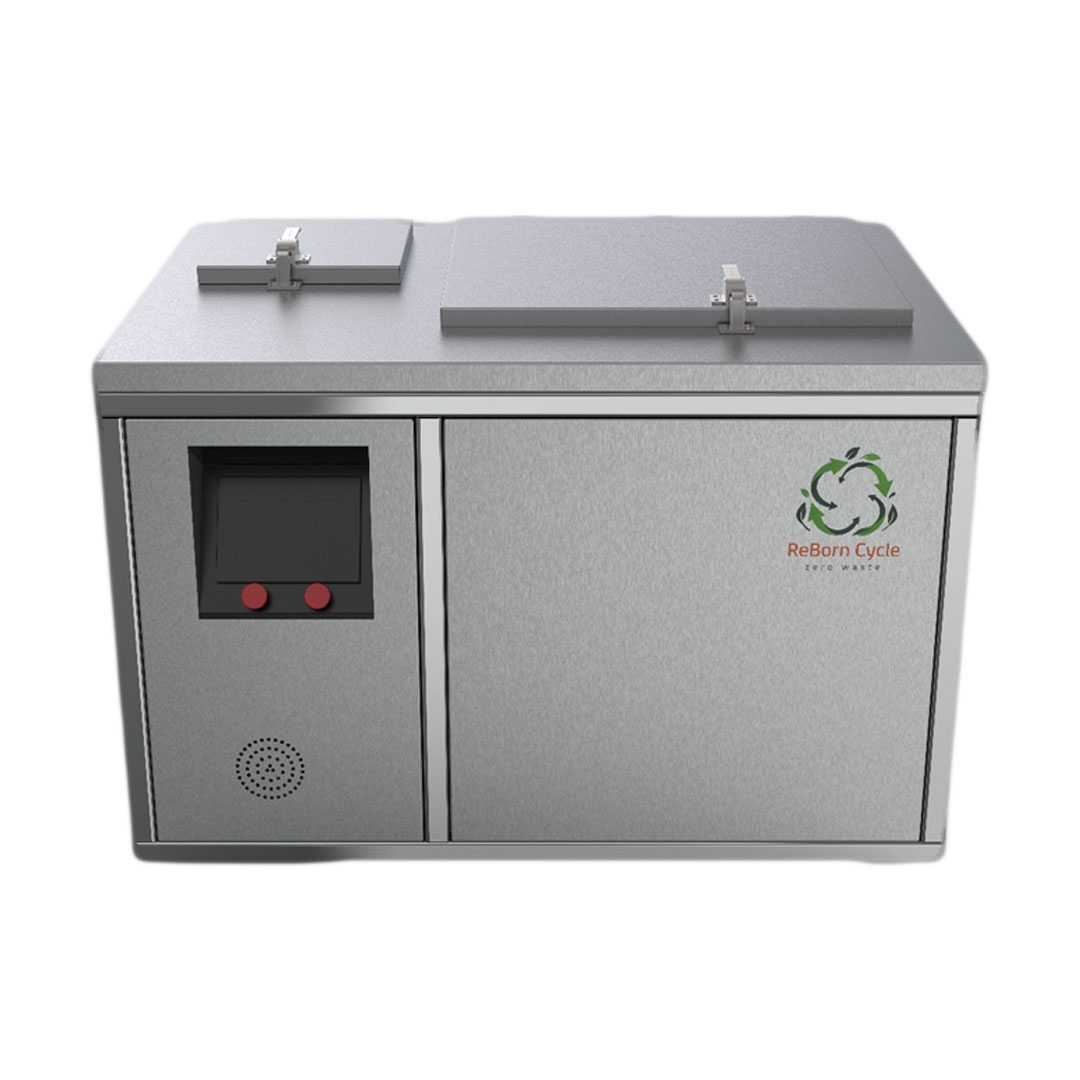
- Clean, mould-free returns and rejects: the RBN-C250 Feed Machine turns 250 kg of suitable food waste per day into dry feed material through heat treatment and drying in a closed drum. Using the output as feed depends on the operator obtaining the registrations and approvals required by the Ministry's rules.
- Mouldy, mixed and plate waste bread: the RBN-C250 Compost Machine turns 250 kg of organic waste per day into a stabilized pre-compost material with controlled temperature, aeration and mixing.
To plan bread waste together with other production waste in bakeries and food plants, see our guide to organic waste management in a food factory. Site surveys, installation, operator training and after-sales service are provided by our in-house engineering team.
Frequently asked questions
Should stale bread be thrown away?
No, throwing stale bread into mixed waste is the worst option, because in a landfill it decomposes without oxygen and produces methane. Fresh bread can be donated or reprocessed as food, clean and mould-free bread can become feed material under the applicable rules, and mouldy or soiled bread should be composted.
What should be done with mouldy bread?
Mouldy bread is suitable neither for human consumption nor for animal feed, because mould toxins cannot be reliably removed by heating or drying. The best route is to collect mouldy bread separately and send it to controlled composting. In closed compost machines, processing is more controlled in terms of dust and odour than in open piles.
Can bread waste be fed to animals?
Only under conditions. Clean, unpackaged and mould-free bread such as bakery returns and production rejects can become feed material with registration and controls in line with the applicable rules, in Turkey those of the Ministry of Agriculture and Forestry. Bread returned from plates counts as plate waste; in the EU, Regulation (EC) No 1069/2009 bans feeding such waste to farmed animals.
Does composting bread smell?
Not when it is managed correctly. Odour usually comes from bread sitting in large lumps in an airless, overly wet environment. Shredding the bread, keeping moisture at 50–60% and supplying oxygen through regular mixing prevents odour. Closed, aerated machines control these conditions automatically.
What capacity is needed for bakery bread returns?
Capacity is based on the average and peak daily return volumes. We recommend weighing returns and rejects for one to two weeks first. Depending on the measured volume, for example around 250 kg of suitable waste per day, a model such as the RBN-C250 Feed Machine or RBN-C250 Compost Machine can be considered together with a shredder.
Can bread waste be used to produce biogas?
Yes, bread is rich in starch and can be used in biogas plants. However, this option depends on having a plant nearby that accepts the waste, on a regular and sufficient volume and on the plant's acceptance terms. For small and mid-size operations, an on-site compost or feed material line is often more practical.
Let us work out the right line for the bread waste at your bakery or plant; contact us for a site survey and capacity recommendation.