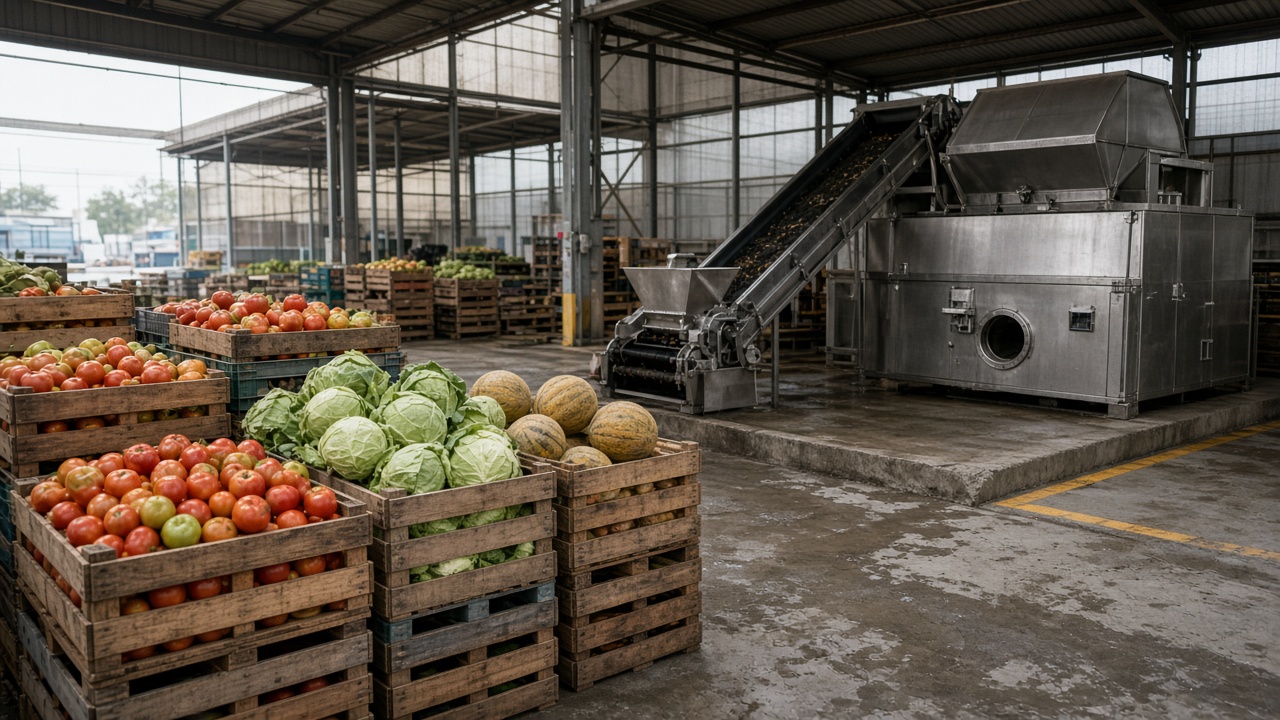
Fruit and vegetable market waste is recycled by removing packaging, shredding it, balancing its moisture with a dry bulking agent and processing it in an in-vessel compost machine into valuable compost feedstock.
Fruit and vegetable market waste is recycled by removing packaging and contaminants, shredding it and mixing it with a dry bulking agent before processing in an in-vessel compost machine. Because the waste holds 80–90 % moisture, the mix is brought down to 50–60 %. Sellable produce goes to food banks, suitable streams to regulated feed use, the rest to compost.
Wholesale fruit and vegetable markets are among the densest organic waste sources a municipality manages: waste arrives every day, in volumes that swing with the season, and often mixed with crates, nets and plastic film. This guide explains why market waste is difficult, how moisture is balanced, how packaging is removed and how capacity is chosen for a municipal organic waste plant.
Why Is Market Waste a Difficult Organic Waste?
Market waste consists mostly of overripe, bruised or unsellable fruit and vegetables. It carries 80–90 % moisture, has a soft structure and leaves almost no air space when piled. Once oxygen runs out, conditions turn anaerobic and odour and leachate follow.
The second problem is a lack of carbon. Produce waste has a C/N ratio of roughly 15–25:1, while good composting targets 25–30:1. The third is seasonal fluctuation: in summer, the melon, watermelon and tomato season pushes volumes noticeably higher.
| Property | Typical condition | Process impact |
|---|---|---|
| Moisture | 80–90 % | Dry bulking agent required |
| C/N ratio | 15–25:1 | Carbon-rich material is added |
| Particle size | Whole squash, cabbage, melons | Shredded to 1–5 cm |
| Contaminants | Crates, nets, plastic film, labels | Pre-sorting is essential |
| Volume | Seasonal swings | Capacity sized for peak season |
What Are the Options for Recovering Market Waste?
As in the US EPA Food Recovery Hierarchy, the first goal is to prevent waste and get edible food to people. At a market, that means sending sellable but cosmetically imperfect produce to food banks or social supermarkets.
- Animal feed: Clean, separately collected produce trimmings can become feed material, but this route is governed by veterinary and feed rules (in Turkey, the Ministry of Agriculture and Forestry) and registration requirements. Check current regulations.
- Compost: The most practical route for mixed, partly rotten material or anything that touched packaging.
- Biogas: The wet structure also suits anaerobic digestion, but it needs larger investment and continuous feeding.
In our site surveys, most market waste ends up on the compost route because of spoilage and mixed collection. A compost line is therefore usually the core solution, with the other routes as complements.
How Is High Moisture Balanced With a Bulking Agent?
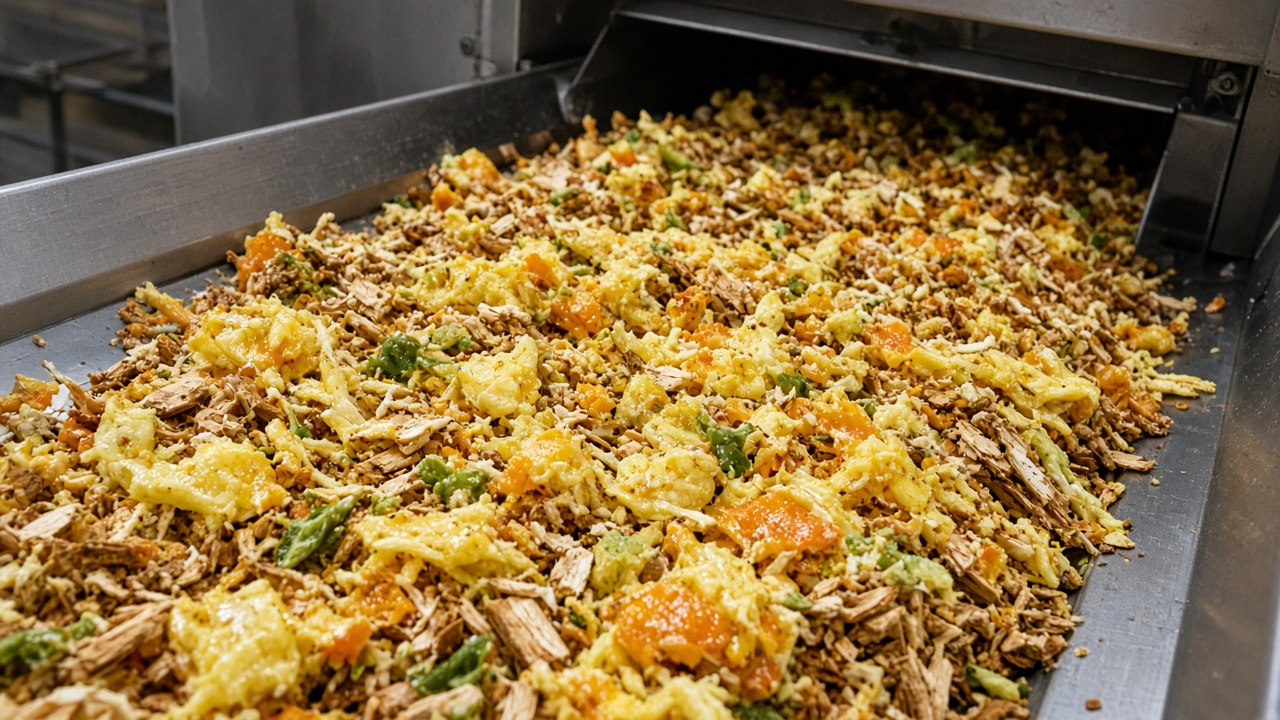
Composting microbes work best at 50–60 % moisture. To bring 80–90 % moisture market waste into this range, a dry, carbon-rich bulking agent is added: wood chips, sawdust, dry leaves, straw or screened compost from the line itself. These materials absorb water, raise the C/N ratio and create air space at the same time.
Example calculation: to bring 1,000 kg of market waste at 85 % moisture to 60 % with a dry amendment at 15 % moisture, about 556 kg of amendment is needed. In a closed, heated machine, aeration removes part of the water as vapour, so the real ratio is confirmed with a trial feed during the site survey.
Warning: Market waste fed without a bulking agent turns to slurry in the machine, temperature fails to rise and odour develops. Plan your amendment stock for the busiest season in advance.
How Are Packaging and Contaminants Removed?
The biggest quality risks in market waste are plastic nets, film bags, foam trays, nails from wooden crates and fruit stickers. Turkey's Compost Communiqué sets quality criteria for compost products, including foreign matter, so separation has to start at the source, not at the end of the line.
- Place a separate organic bin and a separate packaging bin at each trader's stall.
- Require crates to be emptied at the waste area; do not allow them to be thrown in.
- Install a short sorting belt or picking table at the plant entrance.
- Send the removed packaging to the recycling stream.
Turkey's Zero Waste Regulation is also built on separate collection of biodegradable waste. The better separate collection works, the less the shredder blades wear and the cleaner the output. For details, see our article on contaminant removal in industrial composting.
Tip: Giving traders color-coded bins and a simple visual poster raises sorting quality quickly in the first weeks.
How Do You Set Up a Market Waste Compost Line?
An efficient line for market waste is arranged so that each step prepares the material for the next. This is the flow we use most often in installations:
- Reception and weighing Incoming waste is weighed and recorded; this data is the basis for capacity and reporting.
- Pre-sorting Packaging, crates and large contaminants are removed by hand or on a belt.
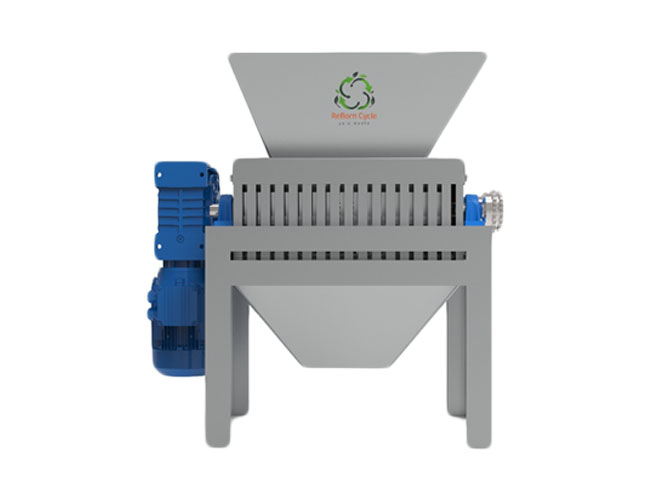
- Shredding The waste shredder reduces whole vegetables to roughly 1–5 cm pieces and homogenizes the mix.
- Mixing with amendment The dry bulking agent is added at the defined ratio.
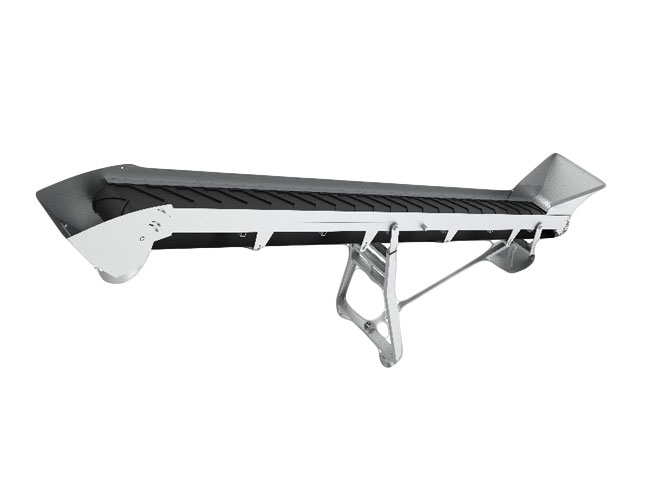
- Conveying The conveyor belt feeds the mix into the machine without manual handling.
- In-vessel composting Temperature, aeration and mixing are controlled.
- Curing The output rests for a few weeks to become mature compost.
If you want to know more about the shredder's role, our article on what a waste shredder does in a compost line is a good place to start.
How Should a Municipality Size a Market Waste Plant?
The most common sizing mistake is counting only the market waste. What enters the machine is market waste plus bulking agent. Summer peak volumes can also be well above the annual average, so capacity should be chosen for peak weeks with some margin.
| Daily market waste | Feed incl. amendment | Suitable model |
|---|---|---|
| ~1.5 t | ~2.0–2.3 t | RBN-C2500 (2,500 kg/day) |
| ~3 t | ~3.9–4.5 t | RBN-C5000 (5,000 kg/day) |
| ~6 t | ~7.8–9.0 t | RBN-C10000 (10,000 kg/day) |
| ~12 t | ~15.6–18.0 t | RBN-C20000 (20,000 kg/day) |
The table is a starting point; the real amendment ratio and peak volume should be confirmed with a few weeks of weighing data. For a mid-sized district market, the RBN-C2500 Compost Machine or the next size up, the RBN-C5000, are usually the first options to evaluate.
How Do ReBorn Cycle Machines Process Market Waste?
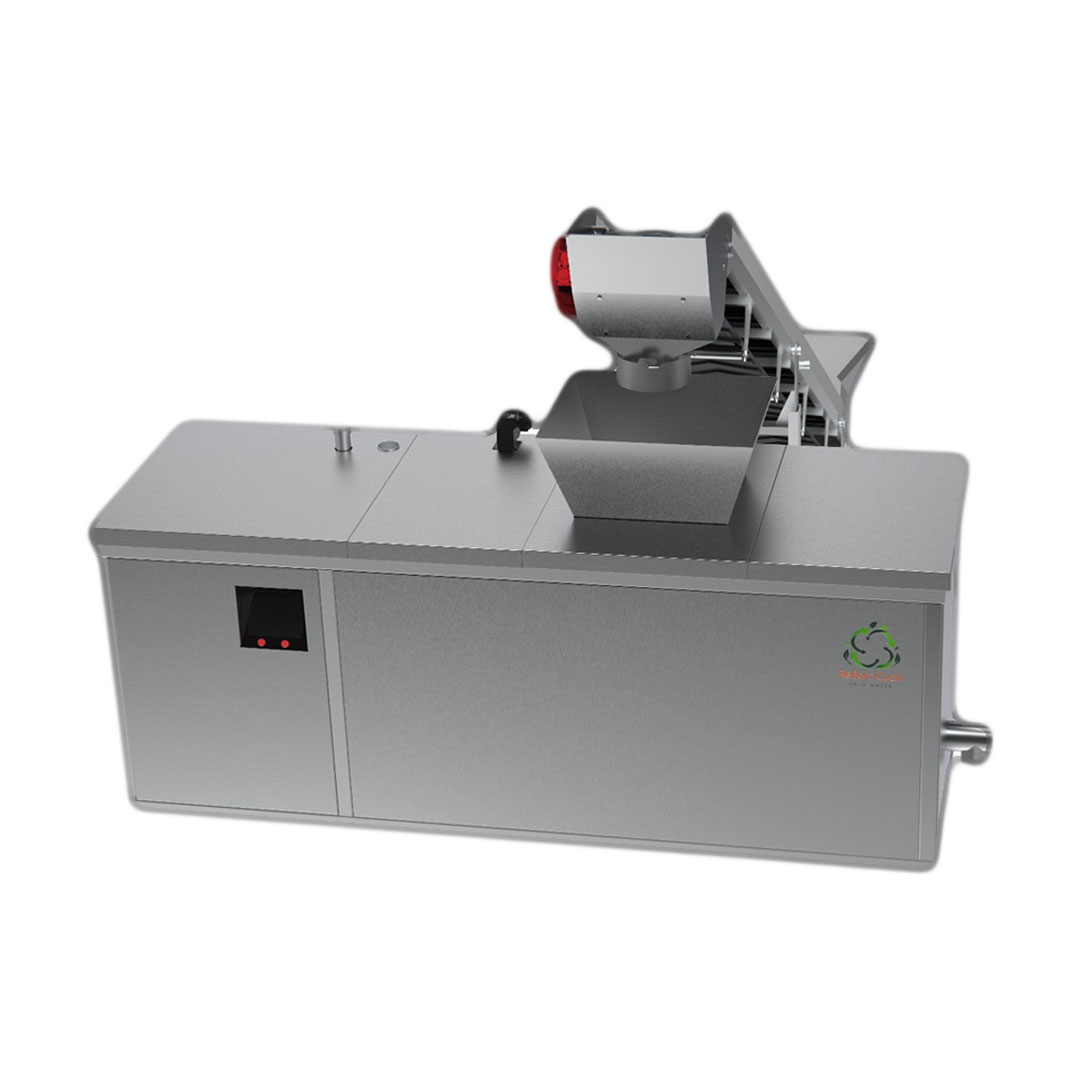
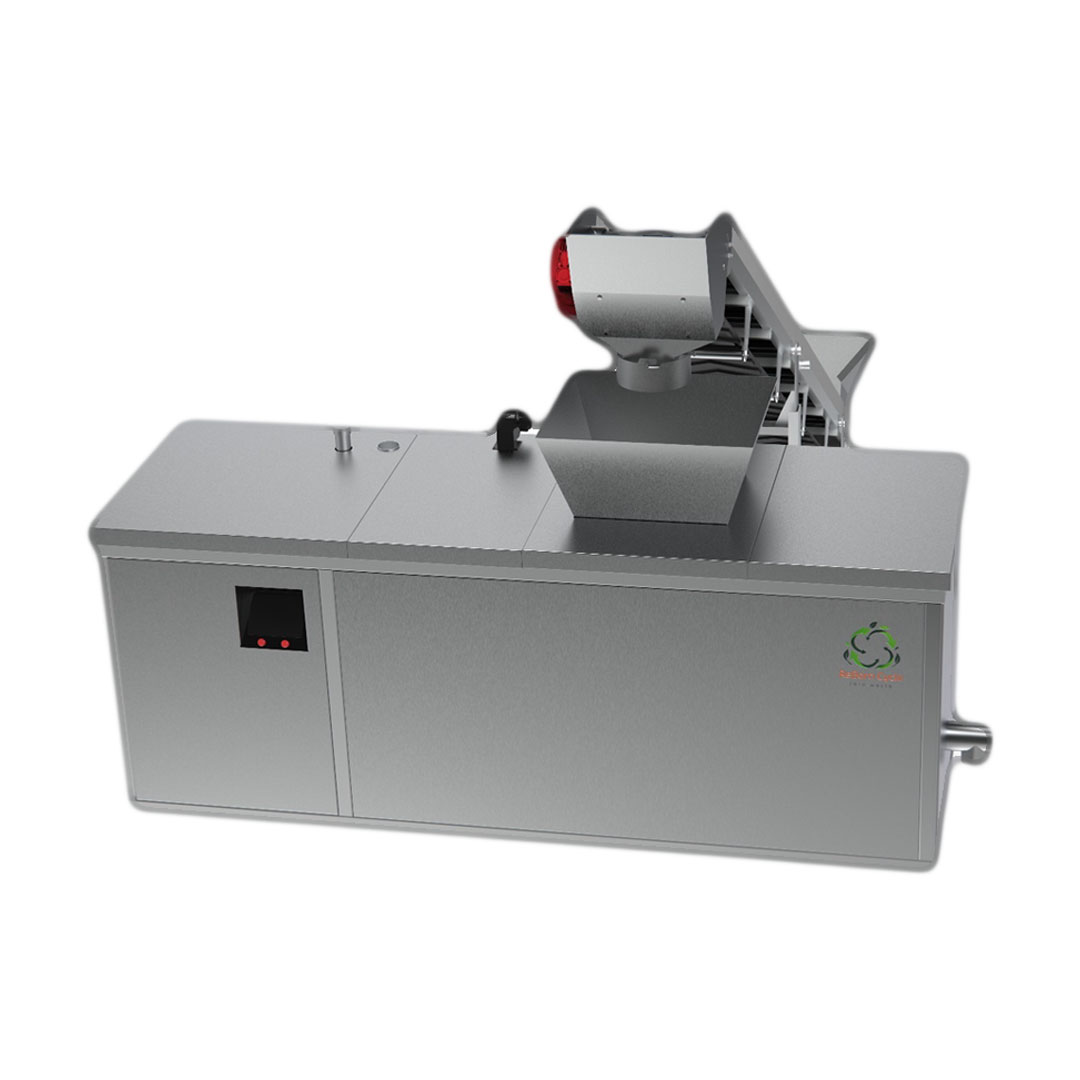
ReBorn Cycle compost machines are closed in-vessel systems: waste is processed in a chamber with controlled temperature, aeration and mixing. Compared with open piles, this reduces odour and hygiene risk and makes operation easier at markets close to residential areas.
For kitchen waste with balanced moisture, the typical cycle is 24–48 hours; for wet, irregularly fed material such as market waste it can extend to 48–72 hours or more. The output is a stabilized, hygienized pre-compost; depending on the end use, a curing period of a few weeks is recommended.
In projects, we plan the shredder, conveyor belt and compost machine as one line and support it with domestic manufacturing, site survey, installation, operator training and after-sales service. During the survey, weighing data, the source of bulking agent and seasonal peaks are assessed together.
Frequently asked questions
Can market waste go straight into a compost machine?
Not recommended. With 80–90 % moisture, market waste should first be separated from packaging, shredded and mixed with a dry bulking agent. Otherwise the mix turns to slurry, temperature does not rise and odour develops. Properly prepared feed is processed in a controlled way in an in-vessel machine.
Which bulking agent is used for fruit and vegetable waste?
The most common amendments are wood chips, sawdust, dry leaves, straw and screened compost from the line itself. All of them absorb moisture, raise the C/N ratio and create air space. Reliable local availability and cost usually decide the choice; the ratio is set with a trial feed during the survey.
Can fruit and vegetable waste be used as animal feed?
Conditionally, yes. Clean, separately collected and unspoiled produce trimmings can become feed material, but this use is subject to feed and veterinary rules and registration, in Turkey under the Ministry of Agriculture and Forestry. For mouldy, mixed or packaging-contaminated waste, composting is the safer route.
How long does it take to compost market waste?
In an in-vessel compost machine, wet market waste typically needs a cycle of 48–72 hours or slightly more. The output is a stabilized pre-compost; for fully mature compost, a curing period of a few weeks should be added depending on the end use.
Why does market waste smell so bad?
High moisture and a soft structure close up air spaces, oxygen runs out and anaerobic decomposition begins, producing odorous gases and leachate. Processing waste without delay, balancing moisture with an amendment and using a closed, aerated system reduce odour considerably.
What size machine does a municipal produce market need?
Capacity should be based on market waste plus bulking agent and on the summer peak. For example, about 3 tonnes of market waste per day with 30–50 % amendment results in 3.9–4.5 tonnes of feed, so a 5,000 kg/day machine is a sensible starting point.
Let us review your market's daily waste volume and seasonal peaks together; contact us for a site survey and capacity recommendation.