A compost machine fault shows up as sharp odor, temperature that never reaches 55 °C, unusual noise, motor overload trips, wet output or an alarm code. Most symptoms are process-related and can be fixed with a first response.
You can tell a compost machine is faulty when it drifts from its normal operating values: sharp or rotten odor, temperature that stays below 55 °C for several days, squeaking or knocking, motor overload trips, sludgy output and alarm codes are the main signs. Most of these come from moisture, feeding or aeration; with a mechanical fault, stop the machine and call service.
An industrial compost machine runs in the same rhythm every day, so even small deviations are early warnings. In our site visits, a large share of reported "breakdowns" turn out to be wrong feeding, excess moisture or skipped maintenance steps. This guide shows how to read the symptoms, when you can fix things yourself and when you should call service, and how a regular maintenance schedule prevents most faults in the first place.
What Are the Signs of a Faulty Compost Machine?
An in-vessel compost machine runs a controlled aerobic process through temperature, aeration and mixing. When one of these drifts, the machine almost always gives you a signal. The most common symptoms are:
- Odor change: sour, rotten-egg or ammonia smell instead of an earthy one.
- Low temperature: display readings stuck below 45–50 °C for several days.
- Unusual noise: squeaking, metallic knocking or uneven rotation.
- Motor overload: the thermal overload trips and the mixer stops.
- Wet output: sludgy, clumping or leaking material.
- Alarm or error code: sensor, door, temperature or phase warnings.
The key distinction: odor, low temperature and wet output are usually process problems that you fix by correcting feeding and moisture. Noise, motor overload and recurring alarms point more often to a mechanical or electrical cause. To know what normal looks like, see our guide to compost machine process parameters.
Symptom, Likely Cause and First Action Table
The table below summarizes the symptoms we see most often in the field, their likely causes and the first action an operator can take safely.
| Symptom | Likely cause | First action |
|---|---|---|
| Sour or rotten odor | Excess moisture, poor aeration, overloading | Check the fan and mixing, add dry carbon-rich material, reduce feeding |
| Ammonia odor | C/N ratio too low (excess nitrogen) | Add carbon-rich material such as sawdust or dry leaves |
| Temperature never reaches 55 °C | Excess moisture, underfeeding, heater or sensor issue | Verify with a hand thermometer, check moisture, inspect the heater fuse |
| Squeaking or knocking | Foreign object, dry bearing or chain | Stop the machine, isolate power, remove the foreign object |
| Motor overload trips | Overfilling, sticky wet mass, jamming | Reduce the load; do not reset repeatedly without finding the cause |
| Wet, sludgy output | Moisture above 60%, short cycle, liquid waste input | Extend the cycle, drain liquids, add dry material |
| Alarm or error code | Sensor, door safety switch, overtemperature, phase fault | Look up the code in the manual, log it, call service if needed |
Why Is My Compost Not Heating Up?
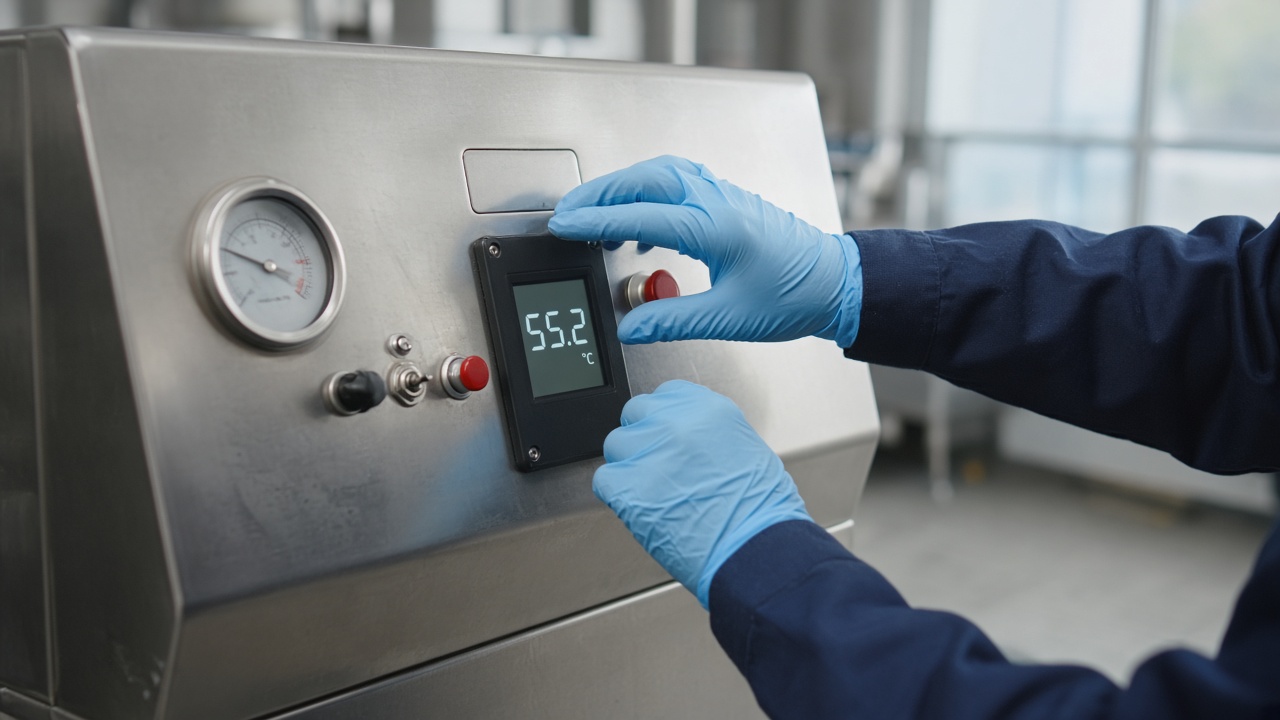
Temperature is the most reliable health indicator of a compost machine. With balanced feeding, microorganisms bring the material into the 55–65 °C thermophilic range, and that temperature needs to hold for several days for pathogen reduction. If it does not rise, question the process first and the hardware second.
The most common cause is moisture above 60%: water fills the pores, oxygen drops below 5% and the process slows down. The second is an unbalanced mix; food waste has a C/N ratio of about 15–20:1, while the ideal range is 25–30:1. If the display and a hand thermometer differ clearly, suspect the sensor; if both are low, look at the process or the heater.
How to Troubleshoot a Compost Machine Step by Step
Working systematically instead of guessing saves both time and spare-part costs. This is the sequence we recommend to operators:
- Record what you see Note the symptom, time, displayed temperature and alarm code; take a photo or video if possible.
- Stop safely If the lid will be opened, stop the machine and lock out the power supply.
- Review feeding Check how much waste came in over the last 24–48 hours and whether liquids, oil or packaging got in.
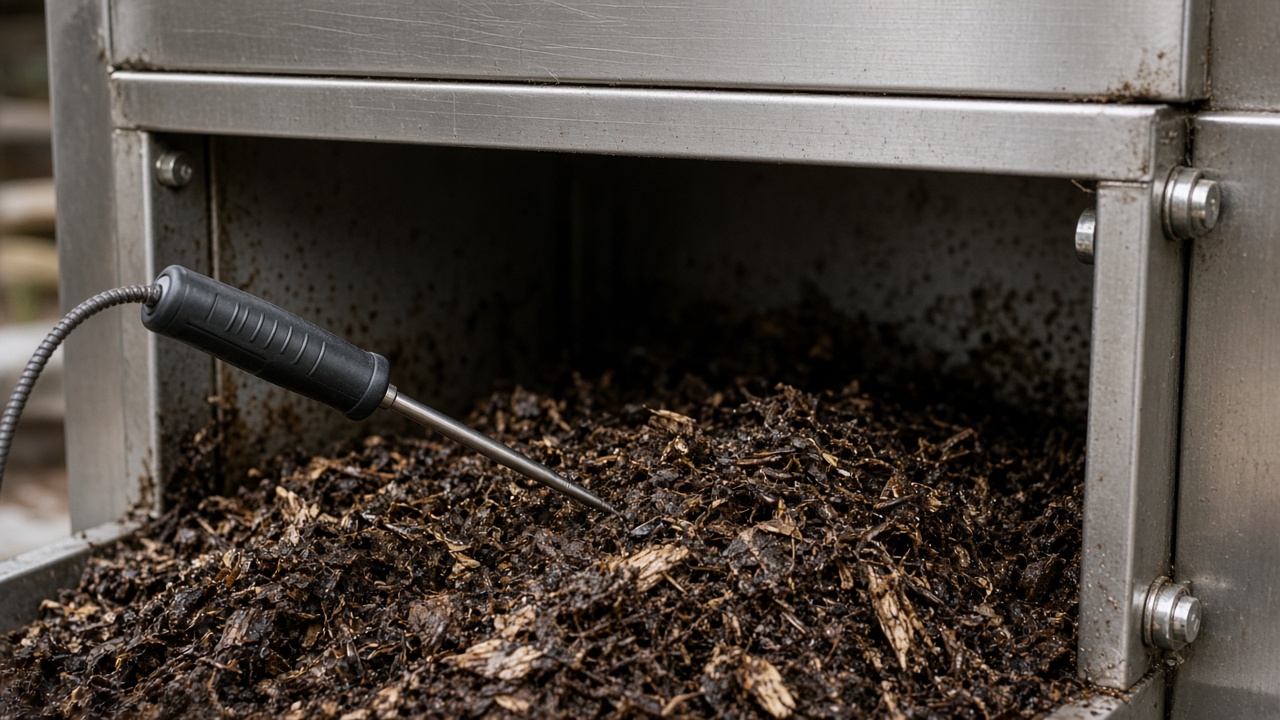
- Test moisture and odor Do a squeeze test; dripping material is too wet, crumbling material is too dry.
- Verify the sensor Compare the displayed temperature with a hand thermometer.
- Mechanical check Look for foreign objects, loose connections, oil leaks and chain tension.
- Decide If the cause is process-related, correct it and monitor for 24 hours; if not, call service.
Warning: Never open the lid or reach in while the mixer shaft or shredder blades are turning or before power is isolated. Never bypass safety switches.
When Should You Call Technical Service?
Not every symptom needs a service call, but in some cases waiting causes bigger damage. Stop operating the machine and contact service when:
- The motor overload trips again even after the cause has been removed.
- You notice metallic knocking, a burning smell, heavy vibration or an oil leak.
- The same error code returns after a reset.
- Temperature does not rise within 48–72 hours although moisture and feeding have been corrected.
- The electrical cabinet shows heating, sparks or blown fuses.
When you call, have the machine model, serial number, alarm code, last maintenance date and your notes ready. This speeds up remote pre-diagnosis and helps the technician arrive with the right part. For response times see our article on compost machine service response time, and for parts supply read the warranty and spare parts guide.
How ReBorn Cycle Machines Help Prevent Faults
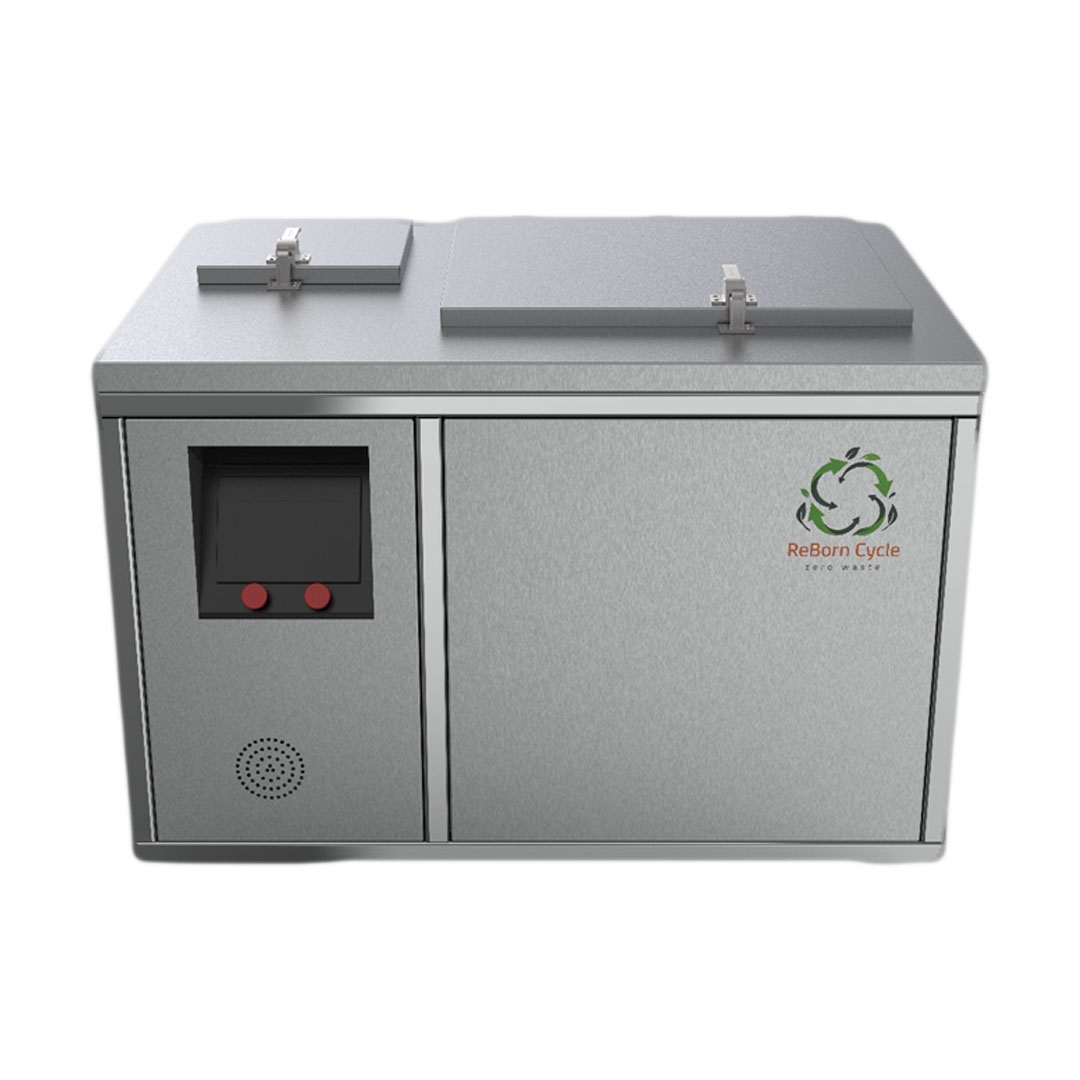
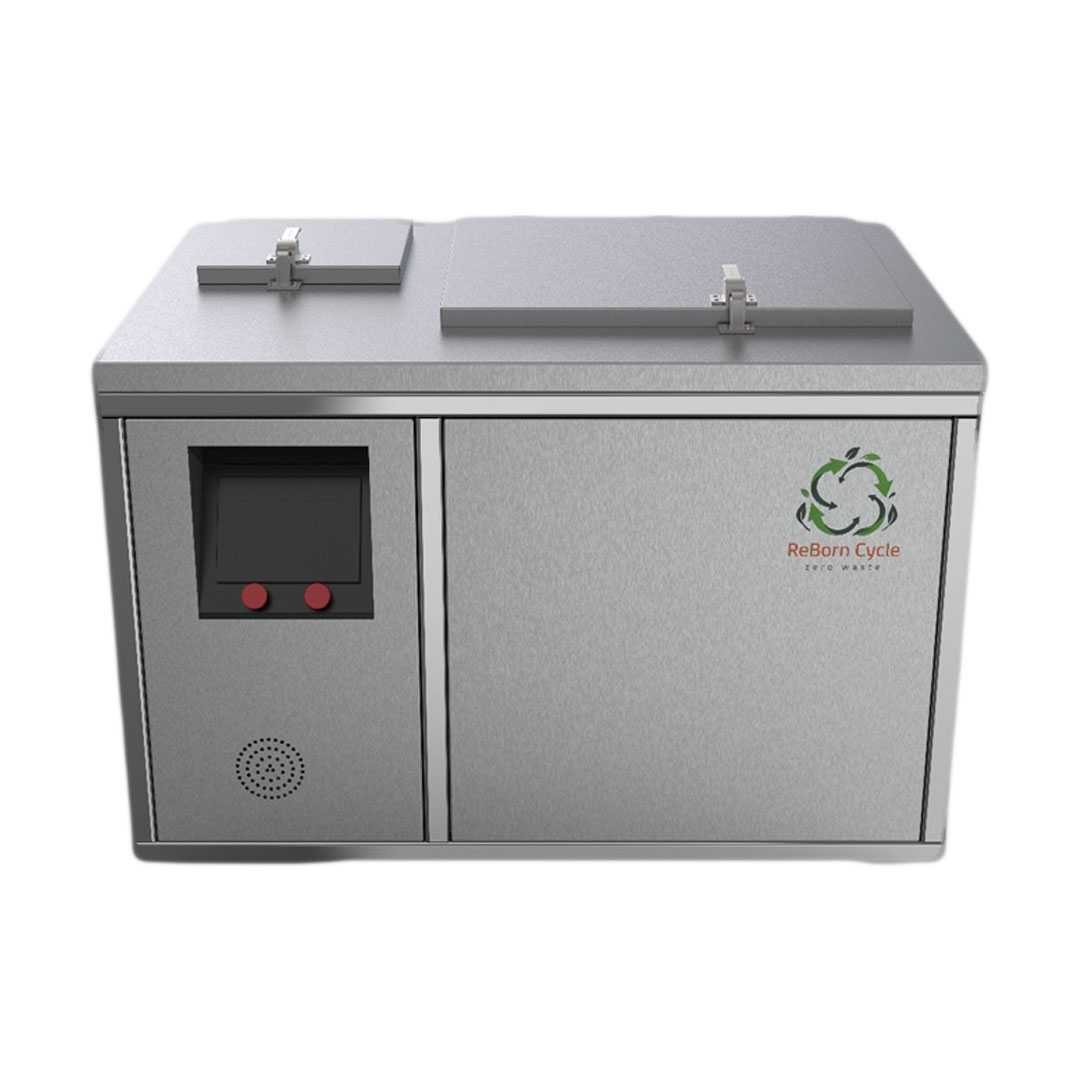
ReBorn Cycle machines work in a closed, heated, aerated and mixed vessel, with temperature and cycle time monitored from the control panel. This design makes symptoms easy to spot early. In installations of the RBN-C100 Compost Machine, which processes 100 kg/day, or the RBN-C250 Compost Machine at 250 kg/day, the typical in-machine cycle for balanced kitchen waste is 24–48 hours. If that time grows noticeably, check feeding and moisture before looking for a fault.
The operator training we provide at installation covers correct feeding, the squeeze test, reading alarm codes and safe shutdown. After-sales service then schedules periodic maintenance, lubrication and sensor checks. What we see on site is clear: facilities that keep a daily log and separate foreign objects at the source have far fewer mechanical faults.
Tip: Write the daily waste amount, the displayed temperature and anything unusual in a simple log. A few weeks of records reveal a fault before the symptom appears.
Frequently asked questions
Why does my compost machine smell bad?
A compost machine usually smells bad because of excess moisture and too little oxygen. A rotten-egg smell indicates anaerobic conditions, while ammonia indicates excess nitrogen, meaning a low C/N ratio. Check that aeration works, add dry carbon-rich material and bring feeding back within capacity; the odor usually fades within 24 hours.
What temperature should a compost machine reach?
A well-balanced compost machine should reach 55–65 °C in the thermophilic phase. For pathogen reduction, holding at least 55 °C for several days is recommended. If the temperature stays below 45 °C for a long time, check moisture, mix ratio, heater and sensor in that order.
What should I do when the motor overload trips?
When the motor overload trips, stop the machine, isolate power and find the cause first. Overfilling, a sticky wet mass or foreign objects such as bones and metal are the most common reasons. Resetting again and again without removing the cause strains the motor and gearbox; if it trips again, call technical service.
Why is the compost output wet and sludgy?
Compost output is usually wet because moisture exceeds 60% or the cycle is too short. Liquid inputs such as soup, sauces or undrained vegetable water make it worse. Drain liquids, add dry carbon-rich material and extend the cycle time; fatty or irregular feeding may need 48–72 hours or more.
Which faults can an operator fix on their own?
An operator can fix process-related problems within the limits of their training: adjusting moisture, adding carbon-rich material, correcting feed amounts, removing foreign objects after power isolation and cleaning filters. Work on the electrical cabinet, motor, gearbox or sensor replacement should be done by authorized technical service.
Does regular maintenance prevent compost machine breakdowns?
Yes, regular maintenance prevents or catches most breakdowns early. Planned lubrication, chain and bearing checks, sensor verification and filter cleaning reduce unexpected downtime. Set maintenance intervals according to the machine manual and how intensively it is used; combined with daily logs, maintenance lets you see a fault before symptoms appear.
Seeing a recurring symptom, or looking for the right capacity for a new facility? Get in touch with us and our team will survey your site and recommend a capacity and maintenance plan that fits your waste profile.