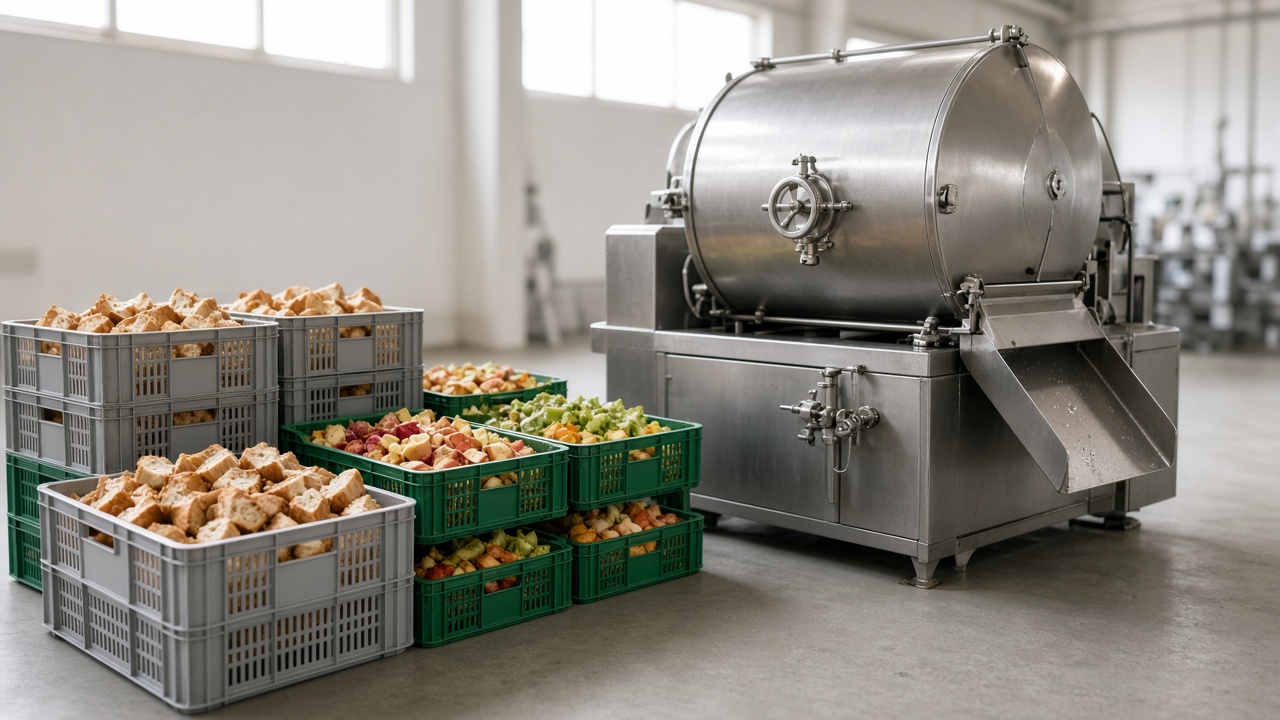
Food waste can become animal feed only under strict conditions. Plate waste is banned for farmed animals; pre-consumer by-products like bakery items and produce trimmings can become feed with compliant heat treatment and records.
Food waste can be turned into animal feed only under specific conditions. In the EU, Regulation (EC) No 1069/2009 bans feeding catering waste to farmed animals other than fur animals. In Turkey, feed use depends on Ministry of Agriculture and Forestry rules and registration. Pre-consumer by-products such as bakery items and produce trimmings can become feed material after heat treatment.
According to the FAO, roughly one third of all food produced is lost or wasted. Hotels, cafeterias and food plants generate edible leftovers every day, and the first question many operators ask is whether these could become animal feed. The answer depends on where the waste comes from and on the regulations in force. This article covers the legal framework, which waste streams qualify, the heat treatment and drying steps, key safety criteria and the role of feed machines in the process.
Can Food Waste Be Used as Animal Feed?
Yes, but not all food waste. What matters is where and at which stage the waste is generated. From a regulatory and hygiene perspective, two groups must be kept clearly apart.
- Pre-consumer food by-products: unsold bread and biscuits returned from bakeries, fruit and vegetable trimmings, production rejects from food plants. These streams have a known origin, a consistent composition and usually contain no meat.
- Plate and kitchen waste: mixed leftovers from restaurants, hotels and cafeterias after service. They may contain meat, bones, sauces and packaging residues, and their history cannot be traced.
The first group can be a feed material candidate under the right regulatory and process conditions. Feeding the second group to farmed animals is explicitly banned in the EU, and in Turkey it should not be used as feed without permission from the competent authority.
The US EPA Food Recovery Hierarchy ranks feeding animals after source reduction and feeding hungry people, but ahead of industrial uses and composting. In other words, when the right stream is chosen, feed sits one step above compost.
What Is the Legal Framework for Animal Feed?
Regulation (EC) No 1069/2009 governs animal by-products in the EU. It bans feeding catering waste, meaning kitchen and food service waste, to farmed animals other than fur animals. The ban covers pigs, poultry, cattle and sheep, and also insects reared for feed, because they count as farmed animals too. The main reason is the risk of spreading diseases such as African swine fever and foot-and-mouth disease through swill.
In Turkey, feed rules are set by the Ministry of Agriculture and Forestry. Producing feed, placing it on the market or selling a by-product as feed material requires business registration or approval, traceability records and product safety compliance. Because regulations are updated from time to time, we recommend consulting the provincial or district directorate before investing.
Warning: A machine that dries and heat-treats waste does not automatically turn the output into legal feed. The competent authority decides which input may be used, for which animal species and under which registration.
Which Food Waste Streams Qualify for Feed?
The most common mistake we see during site surveys is collecting all organic waste in a single bin. To preserve feed potential, streams must be separated at source. The table below is general guidance; the final decision rests with the regulations and the competent authority.
| Waste stream | Typical source | Feed potential | Main risk |
|---|---|---|---|
| Unsold bread, bagels, biscuits | Bakery, pastry shop, food plant | High (conditional) | Mould, packaging residues |
| Fruit and vegetable trimmings | Produce market, food processing, kitchen prep area | Medium–high (conditional) | High moisture, fast spoilage |
| Cereals, bran and production rejects | Flour, pasta, snack production | High (conditional) | Foreign matter, storage |
| Dairy rejects | Dairy, food plant | Depends on regulations | Animal by-product rules |
| Plate and kitchen waste | Restaurant, hotel, cafeteria | Banned for farmed animals (EU) | Pathogens, meat and bones, no traceability |
| Waste containing meat, fish, bones | All kitchens | Not suitable | Spread of animal disease |
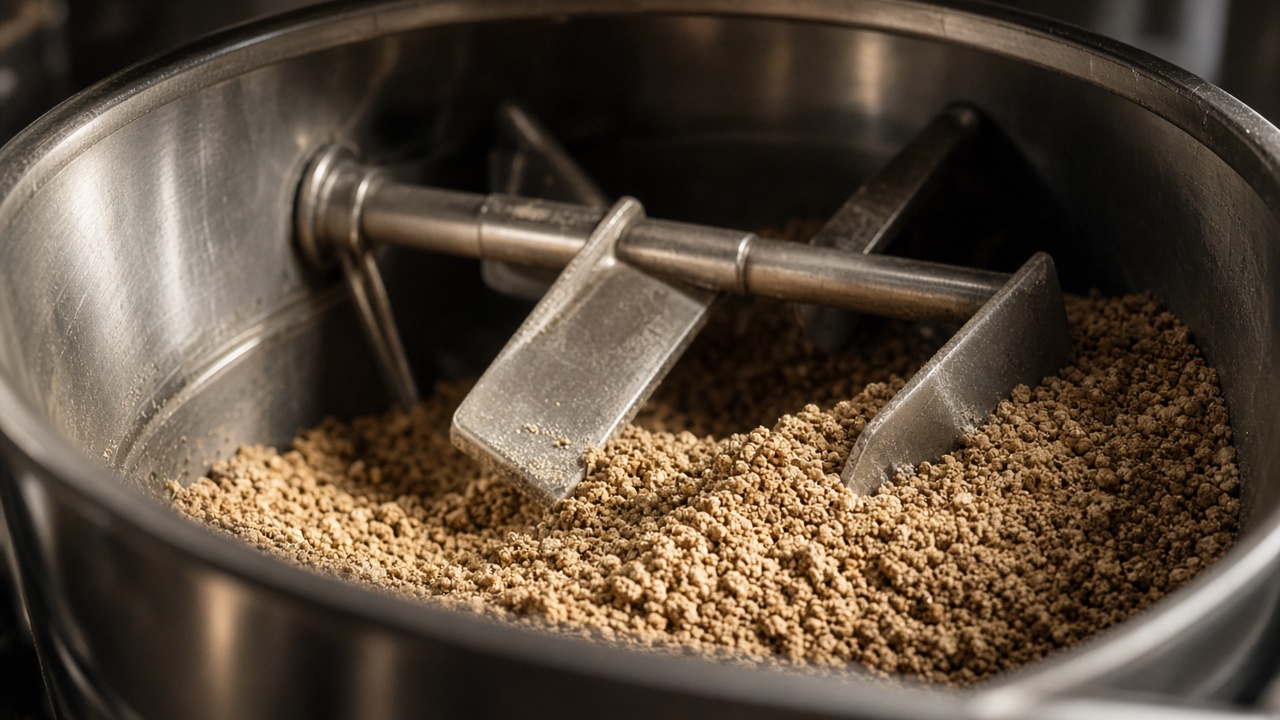
Even streams marked as conditional must be free of packaging, come from a single source and be recorded. For streams that are not suitable for feed, controlled composting is the safest route.
How Does Processing Into Feed Material Work?
Once a suitable stream has been selected, the goal is to reduce moisture, lower the microbial load and obtain a uniform product that can be stored. A typical process looks like this:
- Source separation Packaging, plastic, metal and non-permitted contents are removed on the production line or in the kitchen.
- Weighing and records The origin, quantity and date of every batch are recorded; this is the basis of traceability.
- Size reduction A shredder reduces particle size so that heat and drying act evenly on the material.
- Heat treatment The material is mixed at a controlled temperature in a closed drum and hygienized.
- Drying Moisture is lowered to a level that limits mould and bacterial growth.
- Cooling and storage The product is cooled and stored dry, covered and labeled by batch.
- Analysis Moisture, mould, mycotoxins and microbiological parameters are checked by an accredited laboratory.
For more detail on each step, see our article on how the feed recycling process works.
What Safety and Quality Checks Are Needed?
With any product intended for feed, the real risks are the invisible ones. Even a bread crumb that looks dry and clean can carry mould toxins. That is why the following checks should be applied to every batch:
- Mould and mycotoxins: mouldy batches are separated and never mixed into the feed stream.
- Salt and fat: salty or fatty products can affect animal health; an animal nutritionist should set their share in the ration.
- Foreign matter: pieces of plastic, foil, metal and glass pose a serious injury risk.
- Cross-contamination: bins and equipment used for meat-containing streams must not be shared.
- Traceability: batch number, source, process temperature and duration must be recorded.
Tip: Using dedicated color-coded bins and a separate weighing log for the feed stream is the most practical way to prove traceability during inspections. For a detailed checklist, read our article on safety criteria for feed recycling.
How ReBorn Cycle Feed Machines Fit Into the Process?
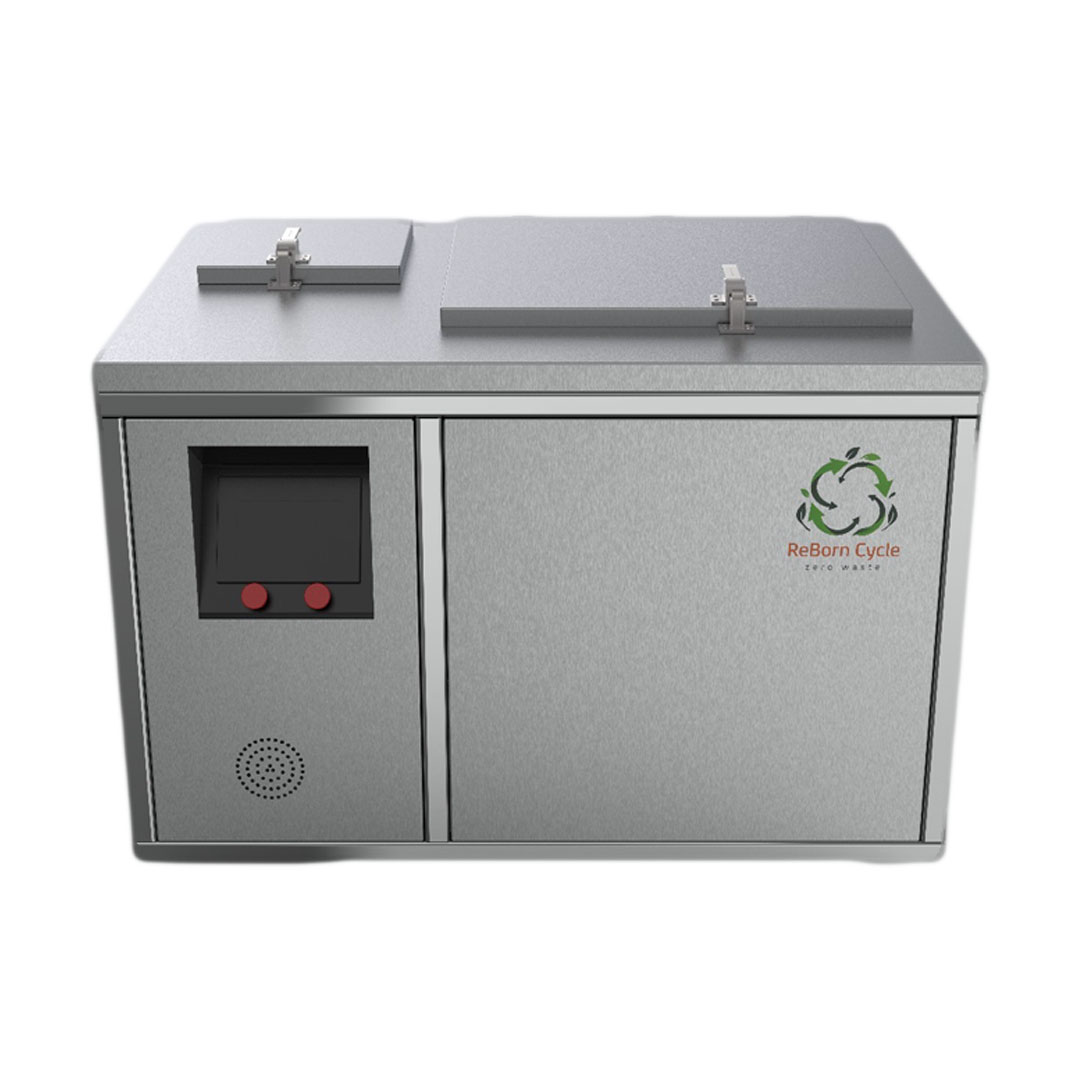
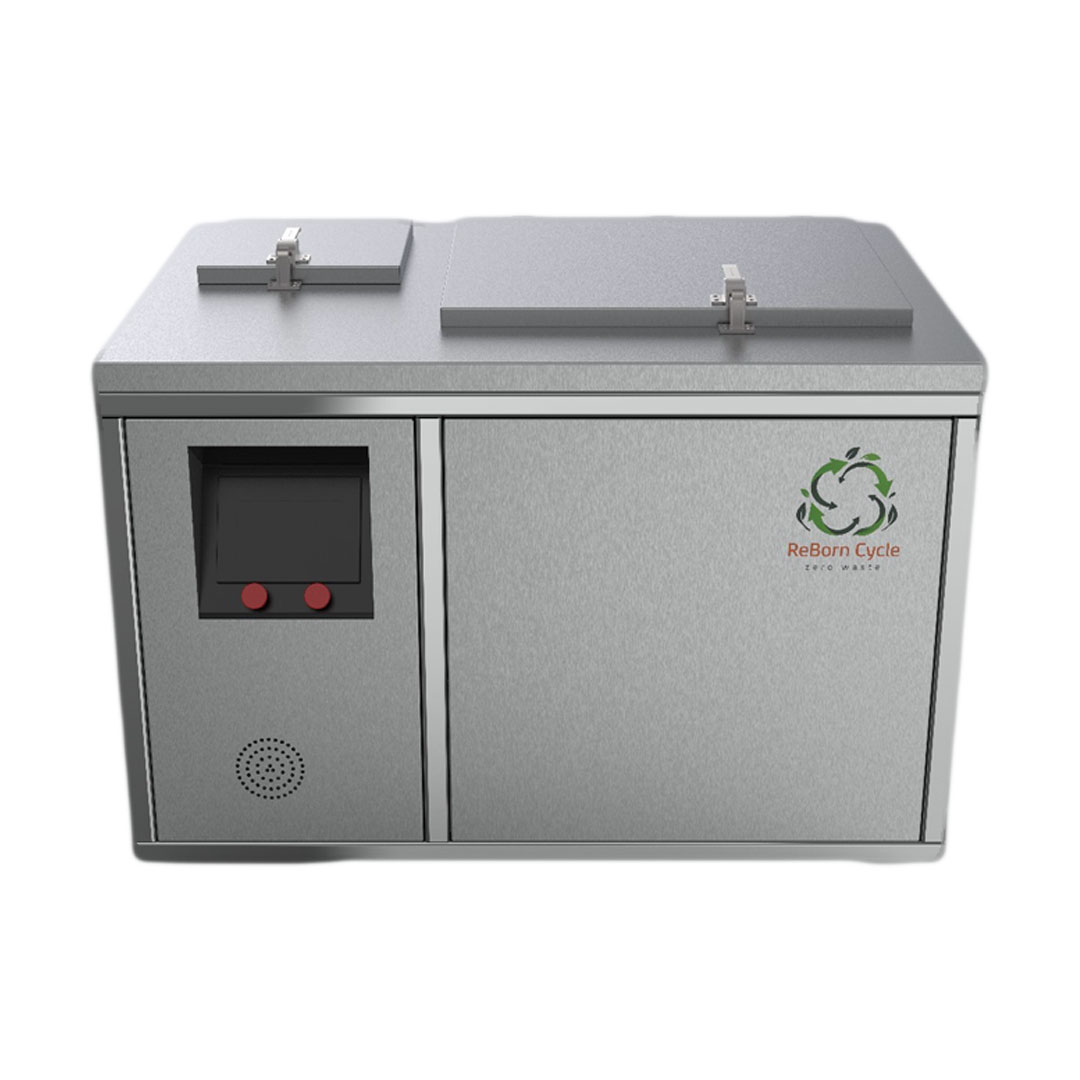
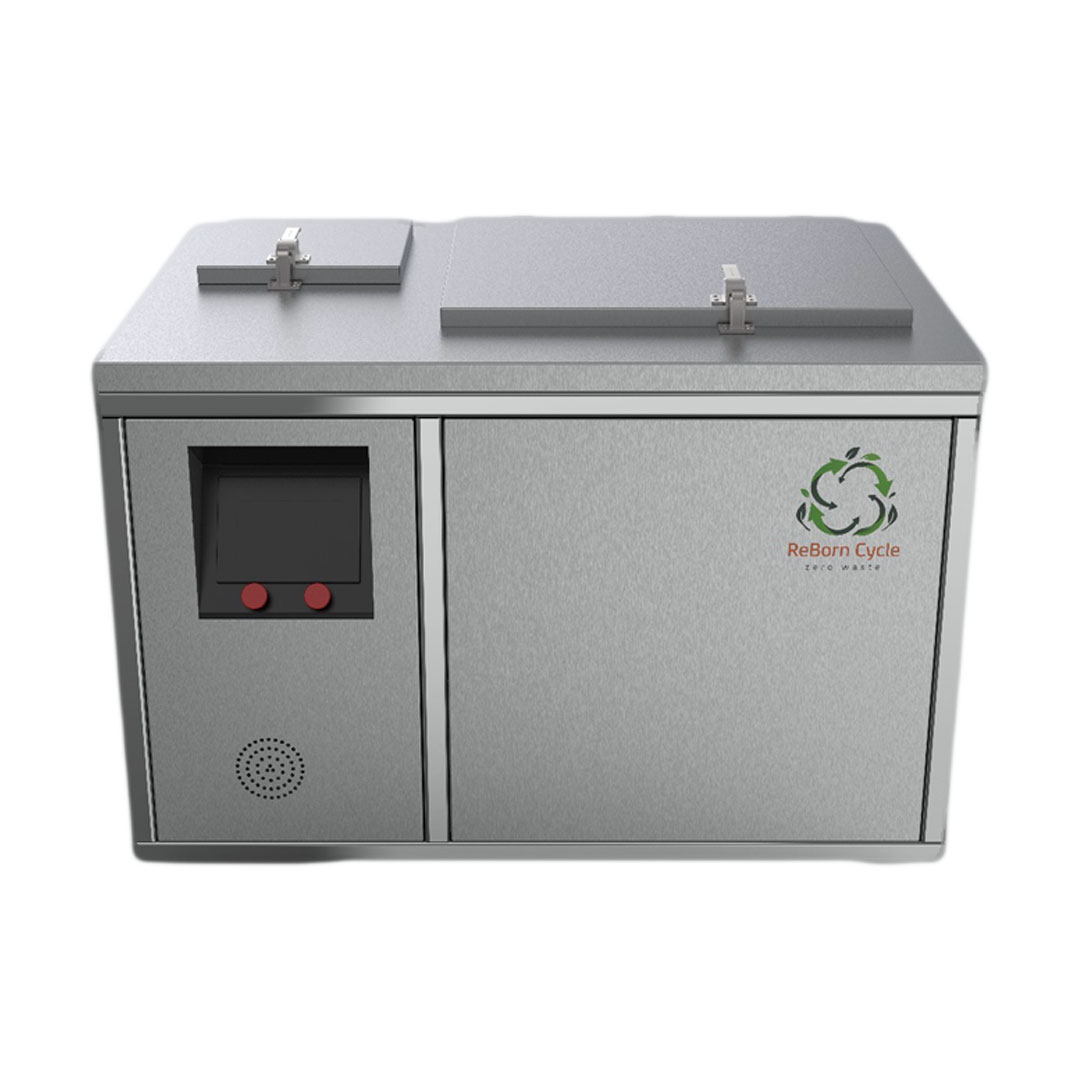
ReBorn Cycle feed machines are designed to process suitable food waste in a closed drum with controlled temperature and mixing, producing a dry feed material. Capacity is selected by daily waste volume: the RBN-C100 Feed Machine handles 100 kg per day, the RBN-C250 Feed Machine 250 kg and the RBN-C500 Feed Machine 500 kg.
In our installations we first build a waste profile and decide together with the operator which stream suits feed and which suits compost. Using or selling the output as feed depends on the operator obtaining the registrations and approvals required by the Ministry's rules. For streams that do not qualify, such as plate waste, a compost machine is the better choice; we compare both technologies in our article on the difference between a feed machine and a compost machine.
Site surveys, installation, operator training and after-sales service are provided by our in-house engineering team in Turkey.
Frequently asked questions
Can restaurant leftovers be fed to pigs?
No. In the EU, Regulation (EC) No 1069/2009 bans feeding restaurant and kitchen leftovers to farmed animals, including pigs. The main reason is the risk of spreading diseases such as African swine fever and foot-and-mouth disease through swill. In Turkey, any such use must follow Ministry of Agriculture and Forestry rules and should be cleared with the competent authority; unauthorized feeding carries both legal and health risks.
Can stale bread be used as animal feed?
Stale bread from bakeries and food plants that is free of packaging and mould can be used as feed material under the right conditions. Bread returned from plates after service, however, counts as plate waste. Mould control, drying and traceability records are essential, and an animal nutritionist should decide its share in the ration.
Can pet food be made from food waste?
Pet food manufacturing is a separate industrial activity with strict rules. The origin of raw materials, heat treatment, analysis and plant approval are all regulated. Mixed plate waste is generally not suitable for this purpose, while controlled food industry by-products can only be used in approved plants and in line with the regulations.
Can food waste be used for insect farming?
Under EU rules, insects reared for feed count as farmed animals, so they cannot be fed kitchen or plate waste either. Insect farms usually rely on plant-based food industry by-products with a known origin. For the current rules in Turkey, check with the Ministry of Agriculture and Forestry.
Can feed machine output be sold directly as feed?
No, not automatically. The machine processes waste through heat treatment and drying, but placing the product on the market as feed requires business registration or approval, laboratory analysis and traceability. The competent authority decides, under Ministry of Agriculture and Forestry rules, which input may be used for which animal species.
What should be done with food waste that is not suitable for feed?
For plate waste and mixed waste containing meat and bones, controlled composting is the most suitable route. Closed, heated and aerated compost machines typically turn this waste into a stabilized pre-compost material in 24–48 hours at balanced moisture; a curing period of a few weeks is recommended for fully mature compost. This keeps the waste out of landfill and avoids methane formation.
Let us help you determine whether your waste streams are better suited to feed or compost; contact us for a site survey and capacity recommendation.