

Supermarket waste is composted by separating unsaleable produce, bakery and deli scraps from packaging, then balancing moisture in a closed machine. Edible food is donated first.
Supermarket waste is composted by balancing moisture and processing unsaleable produce, bakery, deli and fully depackaged grocery scraps in a closed compost machine. Food that is still safe to eat is donated first. Bags, labels and trays never enter the line. Wet produce is brought toward 50–60% moisture with dry bread or controlled aeration.
The back room is where a store decides what its waste becomes. Compost quality depends on whether a bag in the crate is still there at feeding time. This article covers donation versus composting, how each stream is prepared, how moisture is balanced, and how capacity is read from your own scale. An in-store machine is not a site that takes other people's waste. That case can fall under Turkey's 2015 compost criteria; confirm the current text.
Where Does Supermarket Waste Go First?
Supermarket waste is split before it reaches a compost bin: food that is still safe to eat, and food that is no longer food. Cosmetically damaged but sound fruit, dry goods nearing their date, and unsold bakery items go to donation. Only spoiled, contaminated or otherwise inedible material is composted. Borderline crates stay with the food-safety lead.
Donation needs its own cold shelf and a daily handover time. The compost line does not replace that route. Four streams collect in the back room: produce, bakery, deli and packaged groceries. Separate crates cut donation mistakes and plastic in the compost. Wet greens left overnight in a tied bag smell by morning.
- Separate. Edible food goes to the donation crate; the rest goes to the organic crate.
- Strip. Leave bags, trays, clips and price labels outside the organic crate.
- Weigh. Record each stream in kilograms at the end of the shift.
- Feed. Mix wet produce with dry bread in the same batch before it enters the machine.
On surveys, sound fruit often shares a bag with rotten produce. Two crates and one owner per shift stop most of that.
Which Supermarket Waste Suits Compost?
Suitability depends more on preparation than on the ingredient. Clean produce, bread and cooked deli scraps can go into a closed machine. Plastic film, foam trays, metal clips and adhesive labels are not compost. Heat does not make them disappear.
| Stream | Suitability | Preparation |
|---|---|---|
| Fruit and vegetables | Suitable, very wet | Remove netting, tape and labels |
| Bakery goods | Suitable, relatively dry | Remove bags and clips |
| Deli and prepared food | Suitable, watch the fat | Unpack, dilute very fatty loads |
| Packaged groceries | If the contents suit | Fully depackage first |
| Plastic, labels, trays | Not suitable | Never enter the organic bin |
A produce aisle repeats the moisture problem of a wholesale market, at a smaller scale. Sorting is covered in how wholesale fruit and vegetable waste is recovered. Bread is dry enough to balance wet greens, and it is never ground in the bag. See how bread waste is recovered for that stream alone.
Deli waste that contains meat or dairy can be composted in a closed, heated machine. Feed is a separate route: EU Regulation 1069/2009 bans catering waste for farmed animals, and Turkey's agriculture ministry rules apply. For mixed supermarket waste, compost is the default.
How Do You Balance Moisture in Store Waste?
Fresh fruit and vegetables typically hold 85–90% moisture. Mixed deli is often 65–75%, and bread about 35–40%. The bars below are typical mid-points for those materials, not an audit of any store. The process target is 50–60% moisture.
Produce fed alone pushes air out of the mass, oxygen falls and odour rises. A handful of mix should feel like a wrung sponge and should not drip. Bread and dry peels soak up that water. If the mix is still wet, add sawdust (C/N roughly 200–500:1) or straw (roughly 50–150:1). A waxed banana box is not a carbon source. The working C/N range is 20–40:1, with an optimum of 25–30:1. Fruit and vegetables alone sit near 15–25:1 and are nitrogen-rich.
A closed machine holds this swing better than an open pile because temperature, aeration and mixing are controlled. A very wet or fatty batch still leaves the typical 24–48 hour cycle and can take 48–72 hours. Keep oxygen above 5%.
How Are Packaging and Labels Kept Out?
The quality risk in supermarket waste is often contamination, not moisture. Price labels, fruit stickers, stretch film, net bags and foam trays do not vanish at 55–65 °C. Several days there reduces pathogens and weed seeds. It does not destroy plastic. Visible film makes the output unfit for the store grounds.
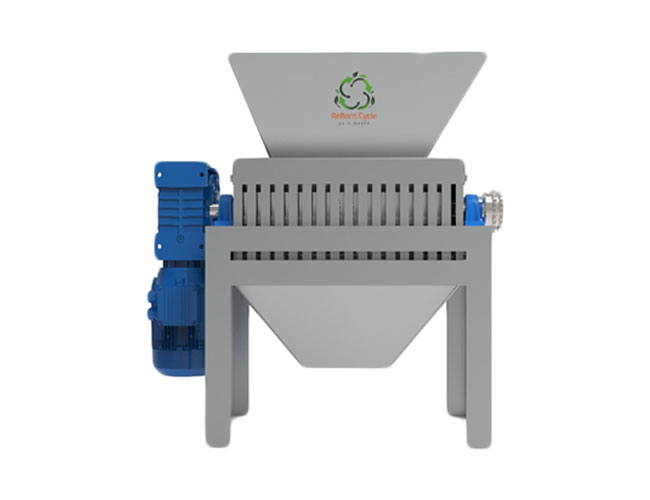
Packaged food enters the line only after the contents are fully separated. That work belongs on a lit bench in the back room, not in the checkout queue. Whole melons, cabbages or a crate of hard produce need size reduction. A Shredder cuts large pieces so the vessel can mix them. It is not a device that sorts bags from food.
Warning: Do not feed stickered peel or bagged bread straight into the shredder. The shredder makes plastic smaller. It does not remove it. Separation comes before size reduction.
Once a week, count film and labels in a handful of output. If the count does not fall, fix the light and name one person per shift. The control is set out in foreign-matter separation in industrial composting.
How Do You Size a Machine for a Store?
Capacity comes from your own 14-day weighings, not from a chain's published tonnage. Record the organic flow left after donation, including weekends and promotion days. Add at least 20% to the average. Supermarket waste peaks on delivery day and drops mid-week.
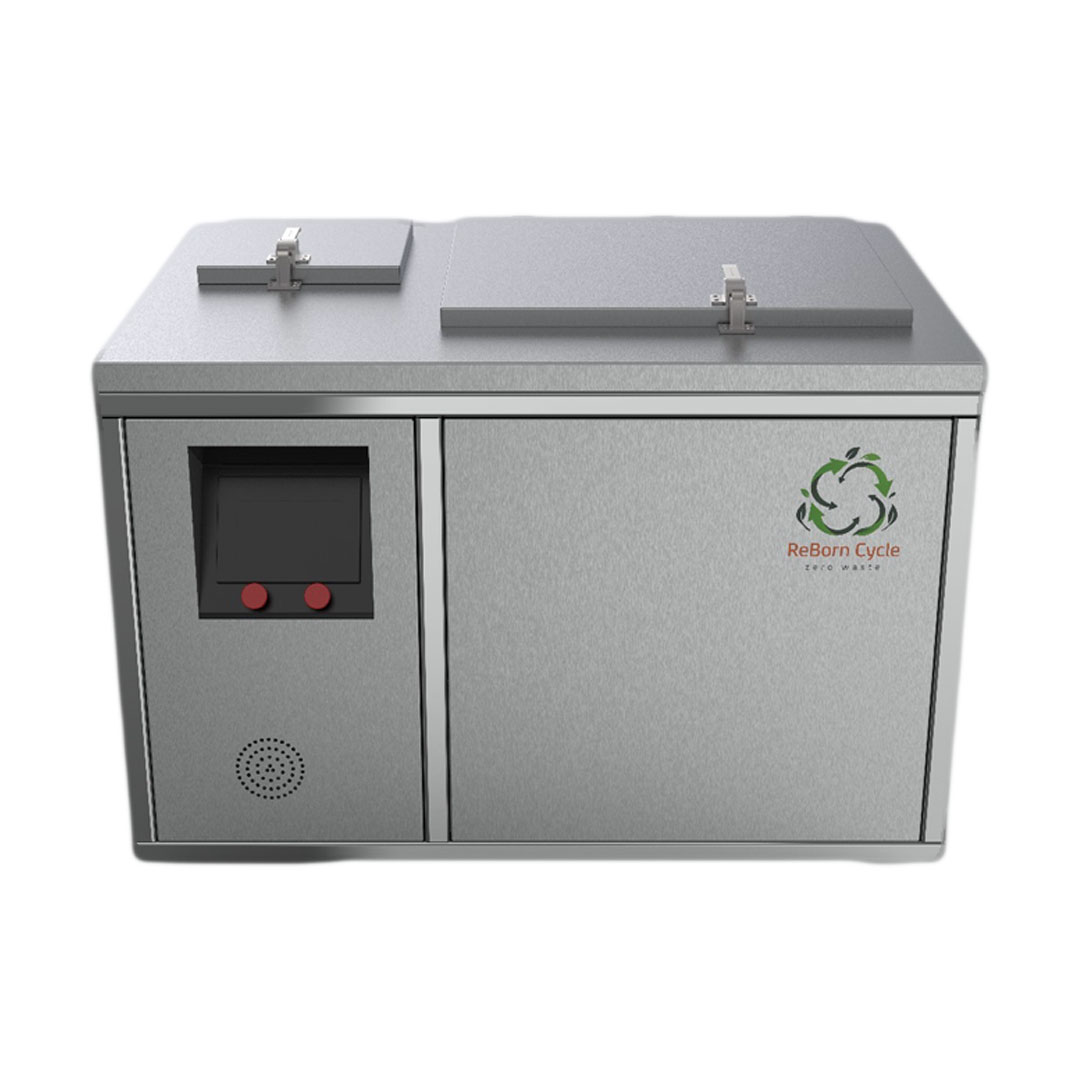
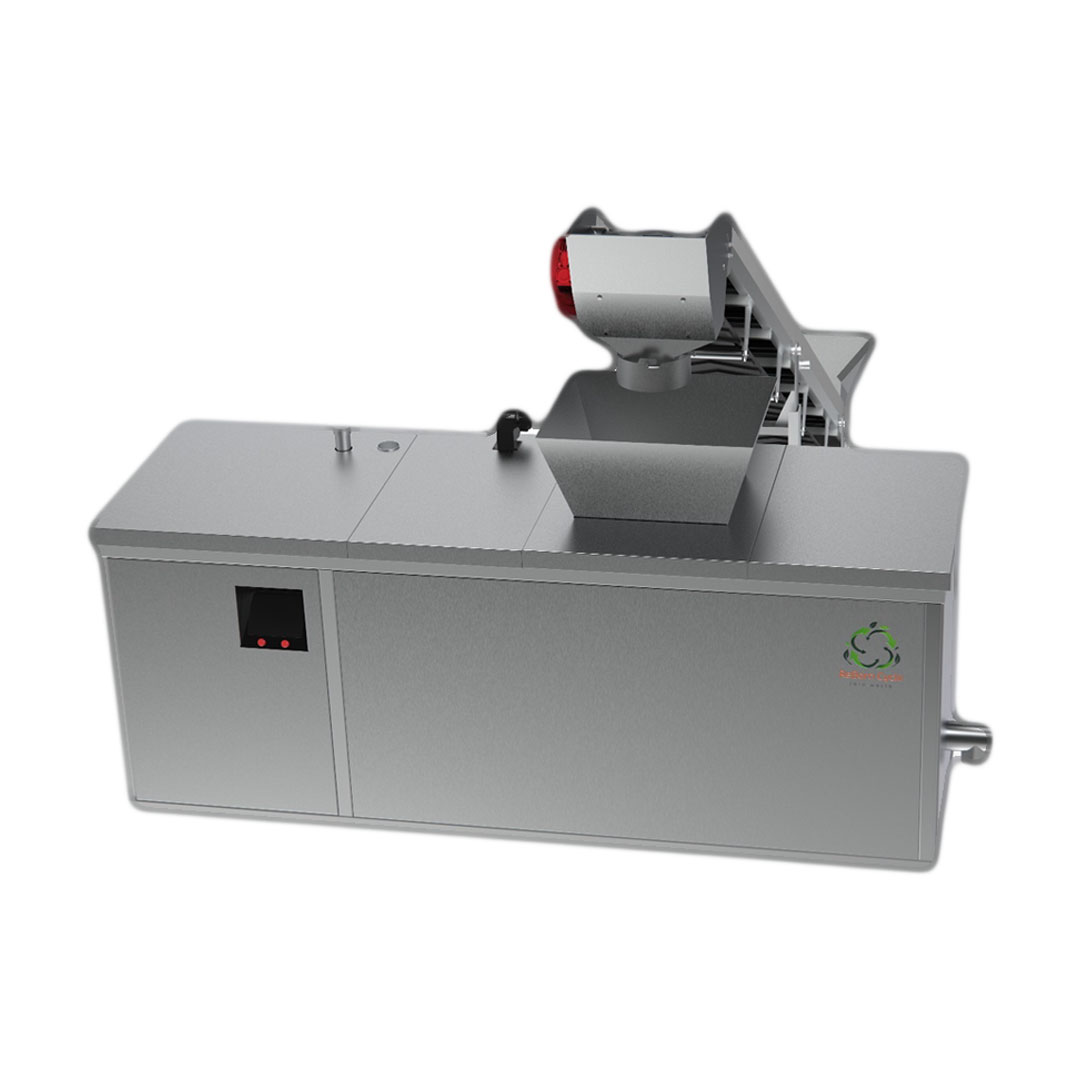
- A RBN-C500 Compost Machine at 500 kg/day often fits the back room of one large store.
- A RBN-C1000 Compost Machine at 1,000 kg/day is the range to consider for a large store or a point that gathers a few branches' own waste.
Outside that range, a different model is required. Waste analysis and layout are part of consulting. Records resemble organic waste management in a food factory, but a store carries more packaging. Turkey's 2019 Zero Waste Regulation asks many facility types to collect biodegradable waste separately. Check whether your store is covered.
The machines are a closed vessel with controlled temperature, aeration and mixing. Balanced moisture means a cycle of about 24–48 hours. Output is stabilized, hygienized pre-compost; allow a few weeks of curing before it is mature. On installation, technical support commissions the line and trains operators on site. The wash-water drain is settled at the survey.
Tip: Finish the 14-day weighing before you choose a machine. A tonnage borrowed from another store overflows in a promotion week and sits idle mid-week.
Frequently asked questions
Can supermarket rubbish go straight into the compost machine?
Supermarket rubbish does not go straight into the machine. Donate edible food first, then remove bags, trays and labels. Remaining produce, bread and suitable deli scraps go into the closed machine. Mixed rubbish carries plastic and spoils the compost. Separate it in the back room before feeding.
Can packaged food be composted?
The organic contents of packaged food can be composted. The package cannot. Remove stretch film, trays, lids and labels before a shredder or a machine. A shredder makes plastic smaller. It does not separate it. A dedicated bench and a named person in the back room are the reliable setup. Vacuum packs enter only after the film is peeled off.
Why does produce waste start to smell?
Fresh produce typically holds 85–90% moisture. Water pushes air out of the mass. Once oxygen drops, breakdown turns anaerobic and a sour smell builds. Dry bread, sawdust or straw pulls moisture back toward 50–60%. A closed, aerated machine holds odour better than an open crate, but it does not fix a soaking-wet feed alone.
Can spoiled meat and deli waste be composted?
Spoiled meat and deli waste can be processed in a closed compost machine at 55–65 °C. Several days in that band reduces pathogens. Feeding the same waste to farmed animals is tightly regulated. EU Regulation 1069/2009 bans catering waste for that use. In Turkey, check the agriculture ministry's current rules before any feed route.
How do you find the daily capacity for a store?
Capacity is the average of a 14-day weighing, plus margin for promotions and weekends. Do not copy a tonnage a chain has published. Fresh-goods share changes from store to store. A few hundred kilograms a day and a point near one tonne a day need different machines. A margin of at least 20% covers the delivery-day peak.
A Working Order for Supermarket Compost
Composting supermarket waste is a sequence. Edible food is donated, packaging is removed in the back room, wet produce is balanced with dry bread or another carbon source, and only then does the mix enter a closed machine. Skip that order and labels and odour show up in the output. Set the routine before you choose equipment.
Weigh the four streams separately for two weeks. Once produce, bakery, deli and depackaged groceries have a kilogram figure, a guess about capacity gives way to a measurement. Keep weekends and promotion days in the log. Add a weekly note of foreign matter from one handful of output. That log is what a machine discussion needs.
To see the flow on site, book a free survey appointment. The visit looks at daily kilograms, the share of packaging, the room and the drain together. Which model fits the waste you actually measured becomes clear from that. Capacity is chosen from the back room, not from a catalogue line.