

Work safety on an industrial compost machine rests on lockout–tagout, guards on moving parts, hot-surface rules, PPE, spill response and documented operator training.
Work safety on a compost machine is ensured through energy lockout (LOTO), guarding of mixers and conveyors, clear hot-surface zones, required personal protective equipment, spill cleanup and trained operators. During the thermophilic phase the vessel and exhaust paths can reach 55–65 °C; maintenance inside the process must wait until the machine is stopped and locked out.
Behind hotel and plant kitchens the compost line often looks quiet, yet mixers, conveyors and heaters together create crush, burn and slip hazards. This article explains compost machine work safety as site controls, not a legal digest. Where hygiene and safety overlap, read it alongside the compost line hygiene protocol guide.
Which Work Safety Risks Stand Out on a Compost Machine?
A closed industrial compost unit generates risk from three sources: moving mechanics (mixer, interlocks, conveyor), thermal energy (heaters, hot mass, exhaust) and organic slipperiness (oily plate waste, wet slurry). Crush and pinch injuries are common when hands or feet are near the feed point while equipment runs.
When temperature stays above 55 °C for several days, internal surfaces and pipes cause serious burns; that same heat supports hygiene, so no entry while the process is hot is a hard rule. Motors, drives and damp service rooms raise electrical risk during maintenance. Odour control fans run at high speed; never restart them with guards removed for cleaning.
In our site surveys most incidents trace to routine drift, not design: skipping lockout on shift change, reaching past a guard, or cleaning a spill without stopping the line. Safety culture lives in a short daily checklist.
How Are Hazards Matched to Control Measures?
Each site’s risk profile differs; the table below is a typical hazard → control map for an industrial compost line. Your local OHS rules and site procedures may add further requirements.
| Hazard | Possible outcome | Practical control |
|---|---|---|
| Rotating mixer / conveyor | Crush, amputation | Fixed guards, emergency stop, pre-feed “is it running?” check |
| Hot vessel and pipes | Burn | Marked zones, suitable gloves, no internal work until cool |
| Live equipment during repair | Shock, unexpected motion | LOTO: isolate, tag, verify zero energy |
| Oily organic spill | Slip, fall | Immediate cleanup, anti-slip footwear, spill kit |
| Dust and vapour (wet waste) | Respiratory irritation | Ventilation on, mask policy in written procedure |
Turning table rows into weekly shift questions shortens audits. Share the how to spot compost machine faults list with operators; safe shutdown often starts from the same early signs.
How Is Safety Protected on the Feed and Conveyor Line?
Waste usually reaches the machine via a conveyor belt or wheeled bin. Pushing with hands, a broom or metal sheet on a running belt must be forbidden; any blockage needs emergency stop then verified lockout. Finger guards, fall protection at elevated discharge and a visible emergency stop are baseline equipment.
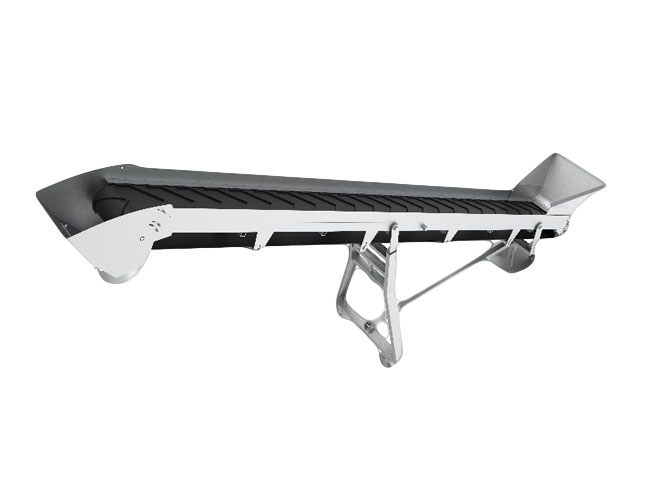
On feed lines such as the Conveyor Belt, speed and incline are set to limit overflow; too fast a flow causes splash and pulls operators too close. Bin latches and weight limits also reduce forklift and pallet-truck incidents.
Warning: Plastic, glass or knives pierce gloves and machine parts. Feeding without pre-sorting raises both injury and fire risk.
Scheduling feeds outside peak service reduces rushing. Sorting standards are summarized in foreign matter separation in industrial composting.
How Is Lockout Applied During Faults and Maintenance?
Lockout–tagout (LOTO) is the critical control: mixer, conveyor, heater and fan circuits are isolated and padlocked separately; one main switch must not be assumed to cut everything. Tags show date, name and reason; the next shift must not re-energize while locks remain.
- Stop Bring the process to a safe state with normal or emergency stop; watch pressure and temperature fall.
- Isolate and lock Apply personal locks to each energy source; only you remove your lock.
- Verify Confirm zero motion or voltage with a brief test or meter.
- Restore Refit guards and covers, remove locks in order, log the work.
When swapping parts, use correct torque and never leave guards off; supply planning is covered in warranty and spare parts. For authorized repair, open a request via technical support rather than informal internal fixes.
How Does ReBorn Cycle Weight Safety Topics in Training?
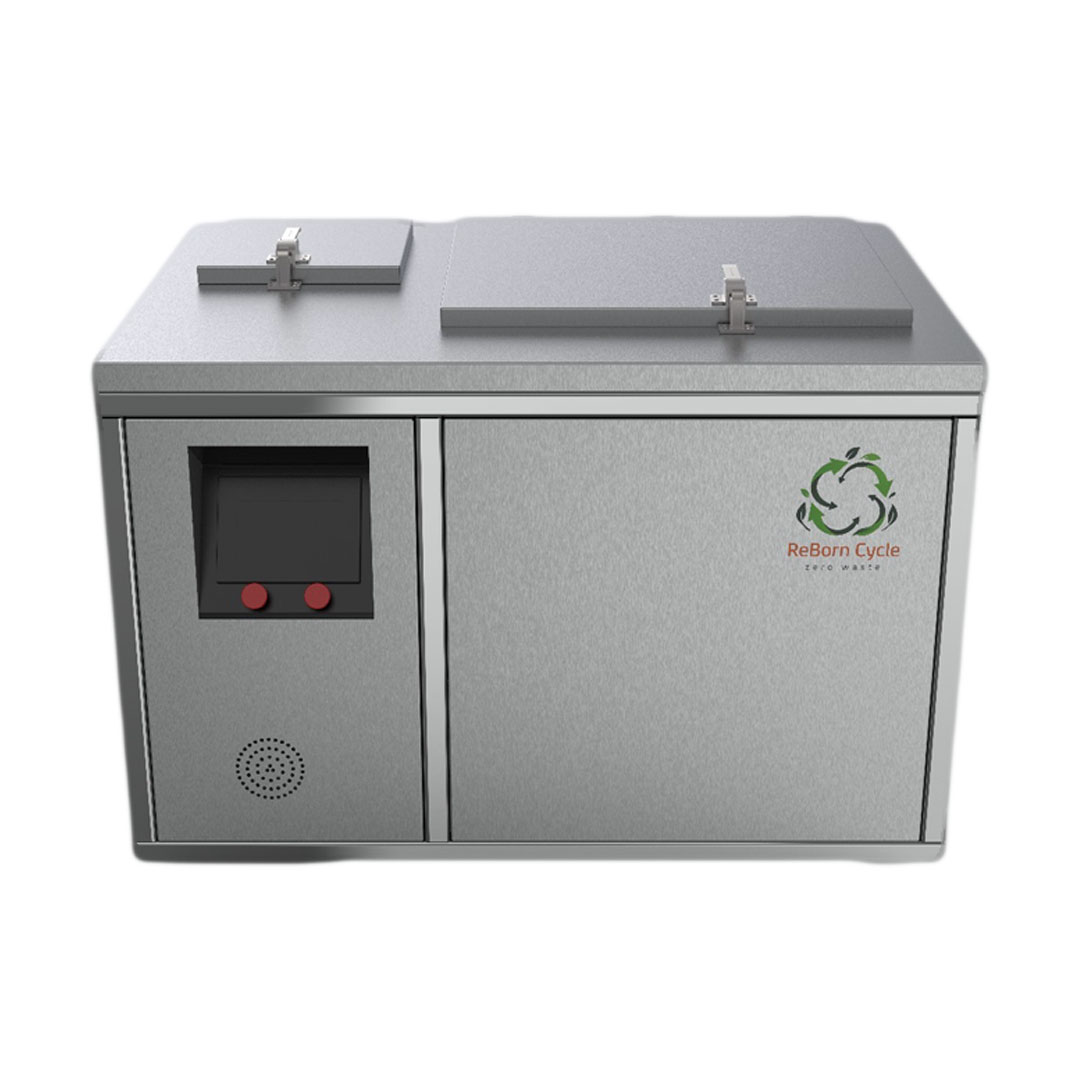
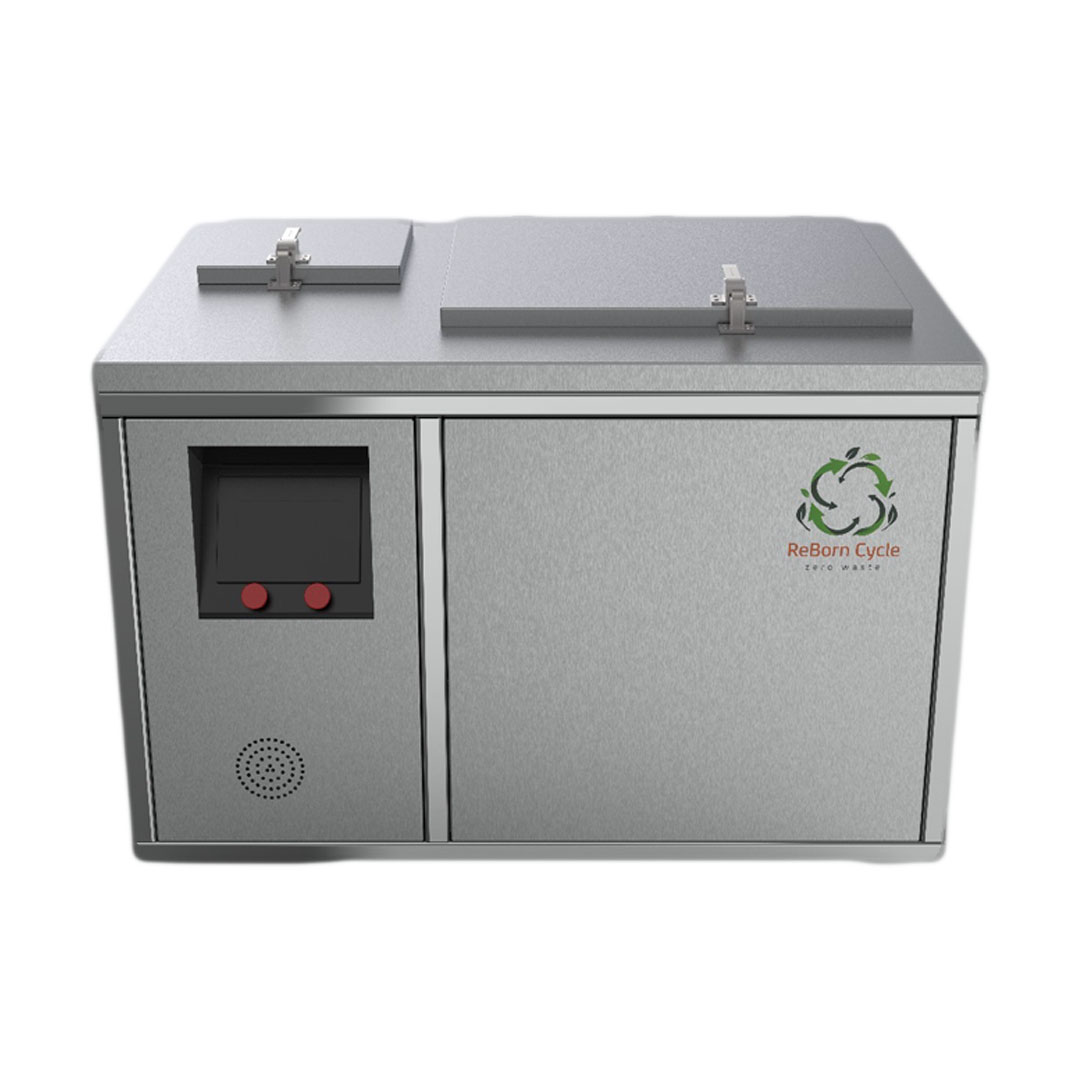
At ReBorn Cycle commissioning, safety comes before throughput. On RBN-C100 Compost Machine and mid-scale RBN-C500 Compost Machine installs, operators walk through door interlocks, emergency-stop chains, hot zones and discharge stand-off distances on site. Integrated conveyor lines have belt speed and overflow points noted in the survey report.
Training records prove operator competence in audits. The syllabus aligns with compost machine operator training. Refresher sessions can be booked through the training service when shifts change; a second walk-through in the first month often reveals missing guard overlap.
How Are PPE and Spill Cleanup Managed?
Standard kitchen PPE is not enough at the compost line. Cut-resistant gloves, slip-resistant footwear, goggles for splash and sometimes a face shield form the usual minimum. Heat-resistant gloves are defined separately for discharge and pipe work; one glove type will not fit all tasks.
After an organic spill, stop the machine, cordon the area, scoop solids, wash the film with approved detergent and dry the floor. Disinfectants can increase slipperiness; hygiene and safety procedures should not contradict each other. On greasy days, temporary anti-slip mats at the feed door help.
Tip: A 30-second start-of-shift scan for hot surfaces, guards, emergency stops and spill kits beats long unread forms.
During maintenance, check guard bolts and moving-part play in the maintenance interval checklist. After any repair, use a two-person rule before restart: are all guards present?
Frequently asked questions
Can non-operators enter the compost machine area?
Even if the service corridor is open, only trained operators and authorized maintenance staff should approach the machine. Do not bring visitors or interns near an exposed guard; intro tours need the process stopped and locked out.
Is it safe to open the lid during the thermophilic phase?
No. Internal temperature at 55–65 °C can cause burns and steam release. Discharge follows the maker’s cool-down or programmed steps; rushing endangers people and equipment.
Which gloves should be used on a compost machine?
Cut-resistant gloves suited to wet organics for feeding and cleaning; heat-resistant types near hot surfaces. Thin disposable latex is often inadequate with oily waste because of slip and tear.
Should the emergency stop be tested?
Yes. Test on the period the manufacturer recommends, in empty or low load, and log the result. After testing, follow reset procedure and check fault codes before production.
Can blockages be cleared while the conveyor runs?
Never. Emergency stop first, then LOTO; only clear material after the belt is verified stopped. Using a broom or rod on a moving belt causes crush injuries.
How often should work safety training be refreshed?
Refresh after new hires, shift changes or serious faults. Annual plans depend on site risk class; sign-in sheets and records are basic audit evidence.
Safe Operating Habits on the Compost Line
Work safety on a compost machine is protected by habits repeated every shift: LOTO discipline, guard checks, respect for hot surfaces and fast cordoning after spills. Those four themes cover most rows in the hazard table; monthly mini-audits work better than a single annual walk-through.
When new staff arrive, show emergency-stop locations and conveyor rules as well as hygiene. Mapping fault codes to required safe states reduces unauthorized panel access; a two-person rule before opening enclosures helps in many sites.
For an on-site risk walk and operator training plan, book a site survey appointment, or submit a service request for technical support on an existing install.