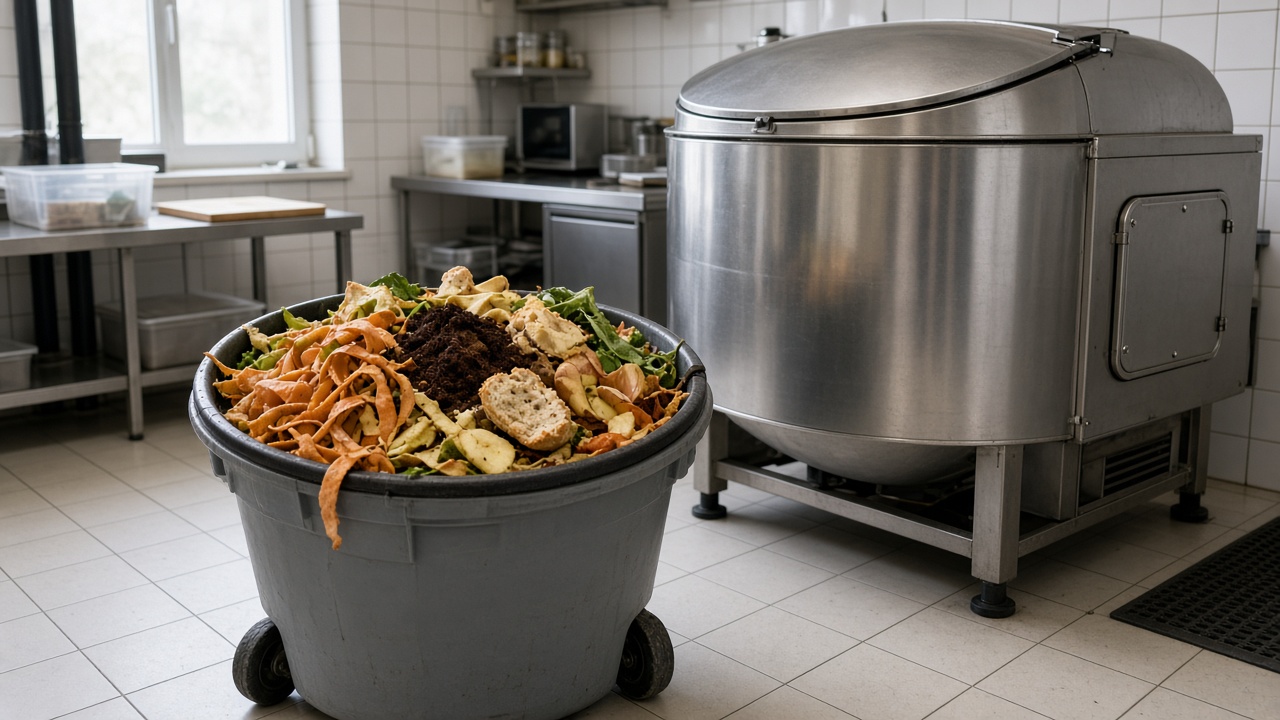
Organic waste is plant- or animal-based waste that microorganisms can break down, such as food scraps, fruit and vegetable peels, bread, coffee grounds and garden waste, and it can be composted.
Organic waste is waste of plant or animal origin that microorganisms can break down biologically. Food scraps, fruit and vegetable peels, bread, coffee grounds, tea leaves and garden waste are the most common examples. Collected separately, it can be turned into compost or biogas; sent to landfill, it produces methane, a potent greenhouse gas.
A large share of the waste from a hotel kitchen, hospital cafeteria or food plant is organic, yet many businesses still send this stream out with mixed trash. This guide explains what organic waste is, which materials fall into this category, where it comes from by sector, why it causes problems in landfills and how to manage it according to the waste hierarchy. The last section shows, with practical examples, how closed compost machines process this waste.
What Does Organic Waste Mean?
Organic waste is waste that comes from living organisms and can be broken down by microorganisms such as bacteria and fungi into water, carbon dioxide and humus-like matter. In regulations and in practice, the terms biodegradable waste, biowaste and wet waste are used with a similar meaning.
What sets organic waste apart from plastic, glass and metal is that, under the right conditions, it can return to the natural cycle. When it is collected and treated separately, it stops being waste and becomes a product such as compost. When it ends up in mixed trash, it contaminates packaging waste, lowers recycling quality and causes odors.
Most organic waste is very wet. Fruit and vegetable waste can reach 80–90 % moisture. This raises transport costs and the risk of leachate, and it is one of the strongest reasons to treat organic waste where it is generated.
Which Types of Waste Count as Organic?
In practice, organic waste falls into three groups: materials that can be processed directly, materials that depend on processing conditions, and materials that look organic but should be kept separate.
| Group | Examples | Note |
|---|---|---|
| Suitable | Food scraps, fruit and vegetable peels, bread, coffee grounds, tea leaves, eggshells | Can be processed directly in a closed compost machine |
| Suitable | Grass, leaves, fine prunings | Help balance carbon; large branches must be shredded |
| Conditional | Meat, fish, dairy | In a closed, heated system and in controlled proportions |
| Conditional | Frying oil, large bones | Collect oil separately; large bones break down slowly |
| Conditional | Uncontaminated paper napkins, cardboard | In small amounts, as a carbon source |
| Keep separate | Plastic, aluminum foil, glass, metal, batteries | Not organic; contaminates compost |
Animal by-products such as meat, bones and slaughterhouse waste may also be subject to veterinary and hygiene rules. Packaging sold as compostable does not break down at the same rate in every system, so check with the machine manufacturer before using it.
Where Does Organic Waste Come From?
Organic waste is generated everywhere, but its volume and composition vary widely by sector. These are the sources we see most often in our site surveys:
- Hotels and restaurants Prep waste, plate waste and buffet surplus.
- Hospitals, schools and cafeterias Predictable volumes tied to regular meal times.
- Shopping mall food courts Mixed kitchen and plate waste from many outlets.
- Food factories Production losses, rejected batches, peels and pulp.
- Wholesale produce markets Unsold fruit and vegetables with very high moisture.
- Municipalities Household kitchen waste plus park and garden waste.
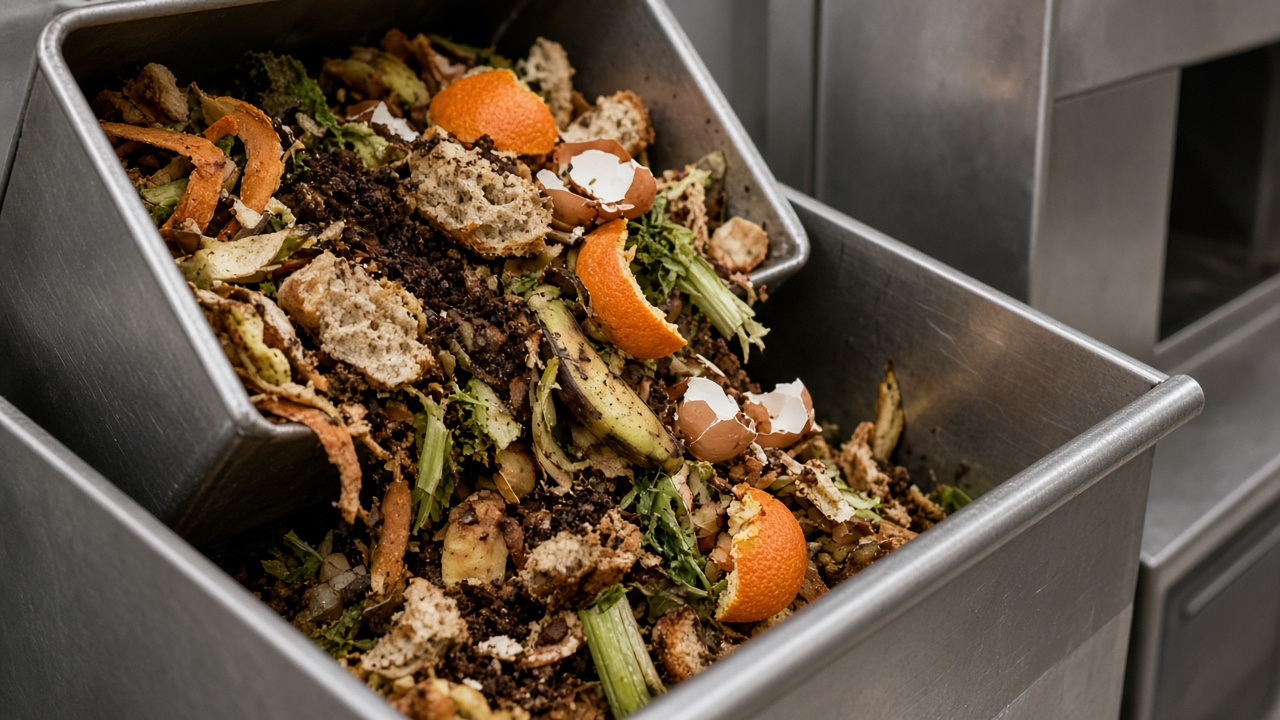
According to the FAO, roughly one third of the food produced worldwide is lost or wasted. Part of this loss occurs along the chain from farm to fork, and a significant share becomes organic waste in kitchens and at retail. That is why the first step in every sector is to weigh and record organic waste separately.
What Happens to Organic Waste in a Landfill?
Organic waste sent to a landfill decomposes without oxygen (anaerobically) once it is covered. According to the US EPA, the resulting landfill gas consists of roughly 50 % methane and 50 % carbon dioxide. Methane is a potent greenhouse gas: according to IPCC AR6, its 100-year global warming potential is 29.8 for fossil methane and 27.0 for non-fossil methane.
Besides methane, organic waste produces leachate, attracts pests, causes odors and quickly uses up landfill capacity. Collecting and hauling this wet, heavy stream also adds cost and emissions.
Warning: In Turkey, the Zero Waste Regulation requires separate collection of biodegradable waste in many facility types, and many other countries have similar rules. Check the current text of the regulation that applies to your site.
How Is Organic Waste Managed?
The basic framework for organic waste management is the waste hierarchy: the best option is to prevent waste, and the worst is disposal. The steps in order are:
- Prevention Reduce waste through smart purchasing, portion planning and inventory control.
- Donation Redirect safe, edible surplus food to people in need.
- Animal feed Use only streams that are legally permitted. In the EU, Regulation (EC) No 1069/2009 bans feeding catering waste to farmed animals other than fur animals; in Turkey, the rules and registration of the Ministry of Agriculture and Forestry apply.
- Recovery Turn waste into a soil conditioner or energy through composting or biogas.
- Disposal Use landfill or incineration only for residues that cannot be recovered.
For businesses, the practical path is source separation, weighing and record keeping, followed by choosing a suitable on-site treatment solution. For details, see our zero waste roadmap for businesses and our guide to organic waste management in hotels and restaurants.
How Do ReBorn Cycle Machines Process Organic Waste?
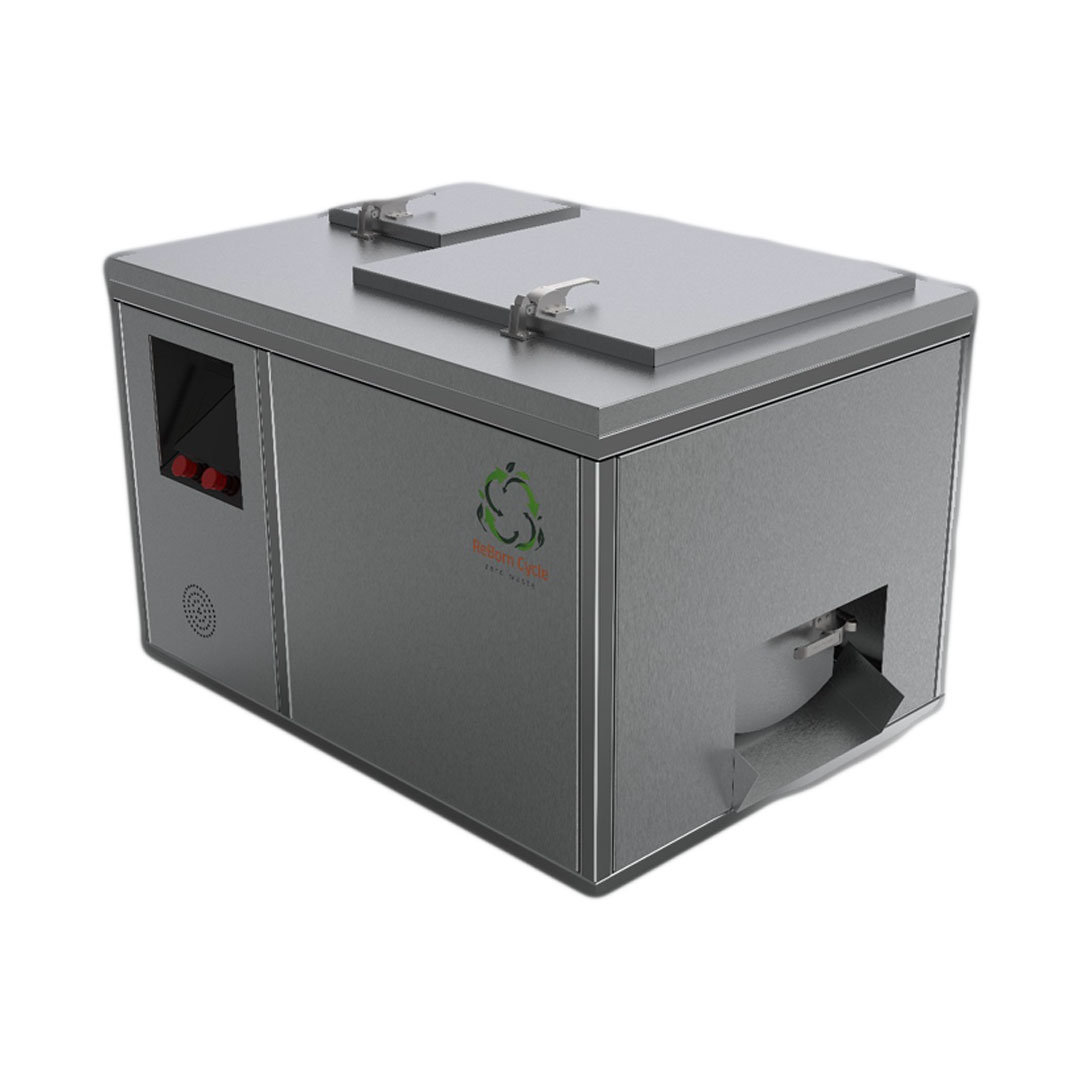
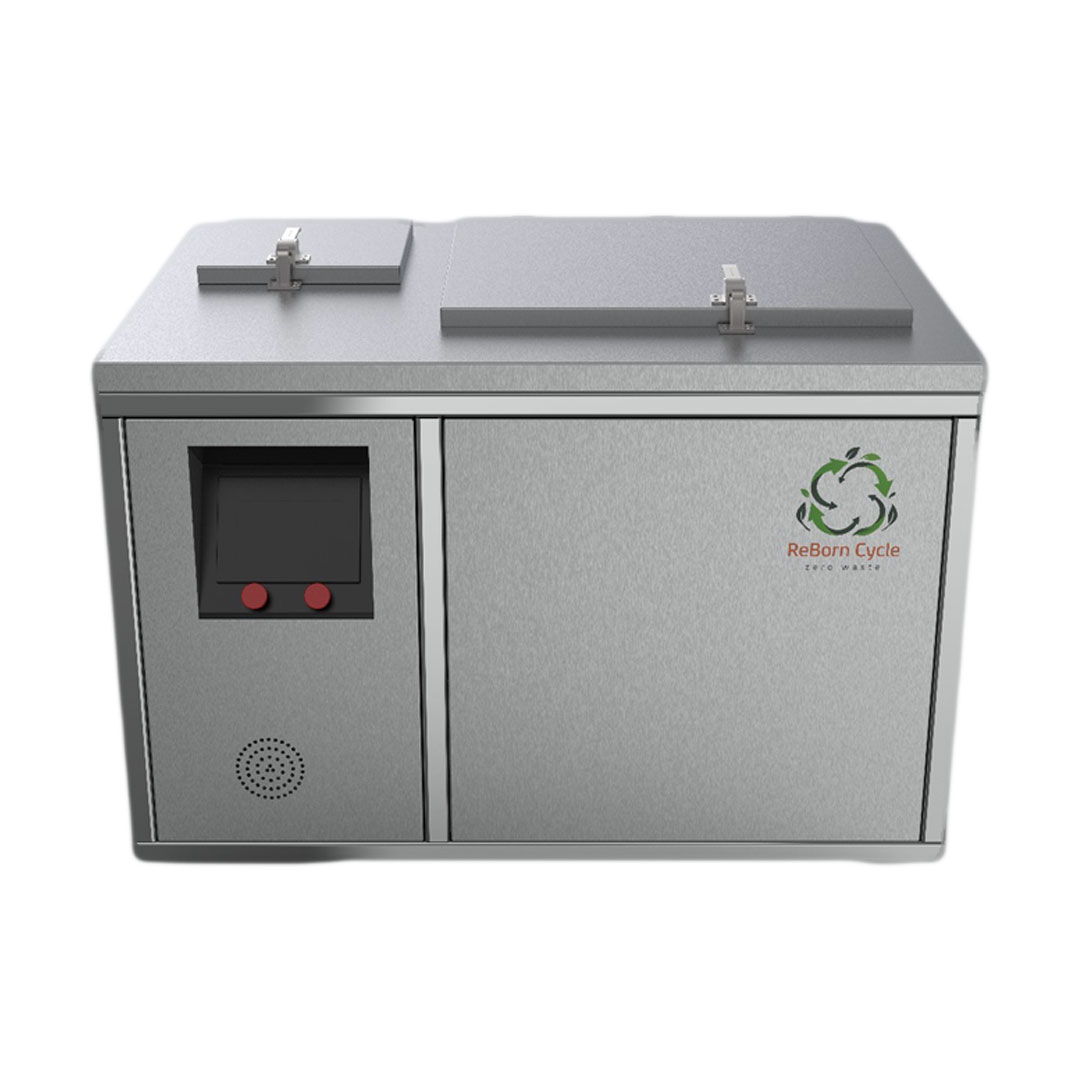
Our compost machines process separately collected organic waste where it is generated, inside a closed vessel. Because temperature, aeration and mixing are controlled, odor and hygiene risks are reduced. For kitchen waste with balanced moisture, the typical cycle is 24–48 hours; with fatty or irregular feeding it can reach 48–72 hours or more. Depending on the input, volume can be reduced by up to 80–90 %, which noticeably cuts transport and storage needs.
The output is a stabilized, hygienized pre-compost / compost material; for fully mature compost, a curing period of a few weeks is recommended depending on the use. Site surveys, installation, operator training and after-sales service are provided by our in-house team.
Capacity is chosen based on daily waste volume: the RBN-C50 Compost Machine (50 kg/day) is a typical starting point for hotels, schools and mid-size kitchens, and the RBN-C250 Compost Machine (250 kg/day) for large hotels, production plants and campuses. We explain what can go into the machine in which waste goes into a compost machine and how to measure volumes in our guide to an organic waste weighing and record system.
Tip: Weigh organic waste separately for at least two weeks before choosing a machine; differences between weekdays and weekends directly affect the capacity calculation.
Frequently asked questions
Is organic waste the same as biodegradable waste?
In everyday use, they mean largely the same thing. Both refer to plant- or animal-based waste that microorganisms can break down. Regulations tend to use the term biodegradable waste, which may also cover slow-degrading materials such as paper, while in practice organic waste usually means food and garden waste.
Can organic waste be recycled?
Yes, organic waste can be recovered. The most common methods are composting and biogas production; compost is used as a soil conditioner and biogas as energy. Some streams can be turned into feed material if legal requirements are met. The precondition for recovery is collecting organic waste separately from plastic, glass and other waste at the source.
What happens if organic waste goes in the trash?
Organic waste sent to landfill with mixed trash decomposes without oxygen and produces landfill gas, about half of which is methane. According to IPCC AR6, methane has 27–30 times the 100-year warming effect of carbon dioxide. It also creates leachate, odors and pests, and contaminates other recyclable waste.
Are paper napkins organic waste?
Clean paper napkins, or napkins soiled only with food, are biodegradable and can be added to the composting process in small amounts as a carbon source. Napkins contaminated with cleaning chemicals, plastic-coated products and wet wipes should not be treated as organic waste. If you use a machine, limit the share of napkins according to the manufacturer's advice.
How can I handle organic waste at home?
At home, the easiest option is a backyard or balcony compost bin. Fruit and vegetable peels, coffee grounds and leaves are mixed, kept moist and aerated regularly. Meat, dairy and oil can cause odors and pests in a home compost bin, so they are better left to closed systems or your local separate collection service.
Do businesses have to collect organic waste separately?
In many cases, yes. In Turkey, the Zero Waste Regulation calls for biodegradable waste to be collected separately in many facility types, such as hotels, hospitals, shopping malls and public buildings, and similar rules exist in many other countries. We recommend checking the current regulation and your local authority to see which obligations apply to you.
To determine the right machine capacity for your daily organic waste volume, request a site survey and capacity recommendation.