A compost machine takes cooked and raw food scraps, fruit and vegetable peels, bread and coffee grounds; meat, bones, fats and citrus are limited, while packaging, glass, metal and plastic never go in.
You can put cooked and raw food scraps, fruit and vegetable peels, bread, coffee grounds and eggshells in a compost machine, as long as the waste is biodegradable and organic. Meat, bones, fatty food, citrus and paper napkins can go in limited amounts. Packaging, plastic, glass, metal, liquid frying oil, chemicals and diapers must never go in.
A compost machine performs only as well as what it is fed. The wrong waste slows the process and lowers compost quality. In this article we group what you can and cannot put in a compost machine into yes, limited and no, explain why meat, bones, oil and citrus need care, and suggest a sorting setup that works in a real kitchen. For the basics, see our article on what organic waste is.
What Can Go Into a Compost Machine?
The basic rule is simple: only biodegradable organic waste that microorganisms can break down belongs in a compost machine. Because temperature, aeration and mixing are controlled in a closed machine, it can handle a much wider range of food waste than an open pile.
The main items you can feed with confidence are:
- Cooked food leftovers, rice, pasta and vegetable dishes
- Fruit and vegetable peels and trimmings
- Stale bread, pastries and baked goods
- Coffee grounds and tea leaves
- Crushed eggshells
- Wilted flowers and plant-based kitchen scraps
These materials are usually rich in nitrogen and moisture. To keep the mix balanced, a carbon-rich bulking agent such as sawdust may need to be added from time to time. In our site surveys we see that most of the organic waste in a hotel or cafeteria kitchen fits this list; the real work is keeping everything else out at the source.
Compost Machine Yes and No List
The table below sorts the waste most often found in kitchens into three groups. You can use it directly for staff training and bin labels.
| Waste | Status | Note |
|---|---|---|
| Cooked food leftovers | Yes | Remove toothpicks, foil and similar items |
| Fruit and vegetable peels | Yes | Shredding large pieces speeds up the process |
| Bread and baked goods | Yes | Mix with other waste |
| Coffee grounds, tea leaves | Yes | No capsules or bags containing plastic |
| Meat, poultry, fish | Limited | Mixed in, as a small share of the feed |
| Bones | Limited | Small bones are fine, separate large hard bones |
| Fatty food | Limited | Too much fat lengthens the cycle |
| Citrus peels | Limited | Acidic, keep balanced with other waste |
| Paper napkins and towels | Limited | Unprinted, uncoated, in small amounts |
| Liquid frying oil | No | Collect separately for licensed recycling |
| Packaging, plastic, glass, metal | No | Damages equipment and compost quality |
| Chemicals, medicines, diapers, cigarette butts | No | Hygiene and quality risk |
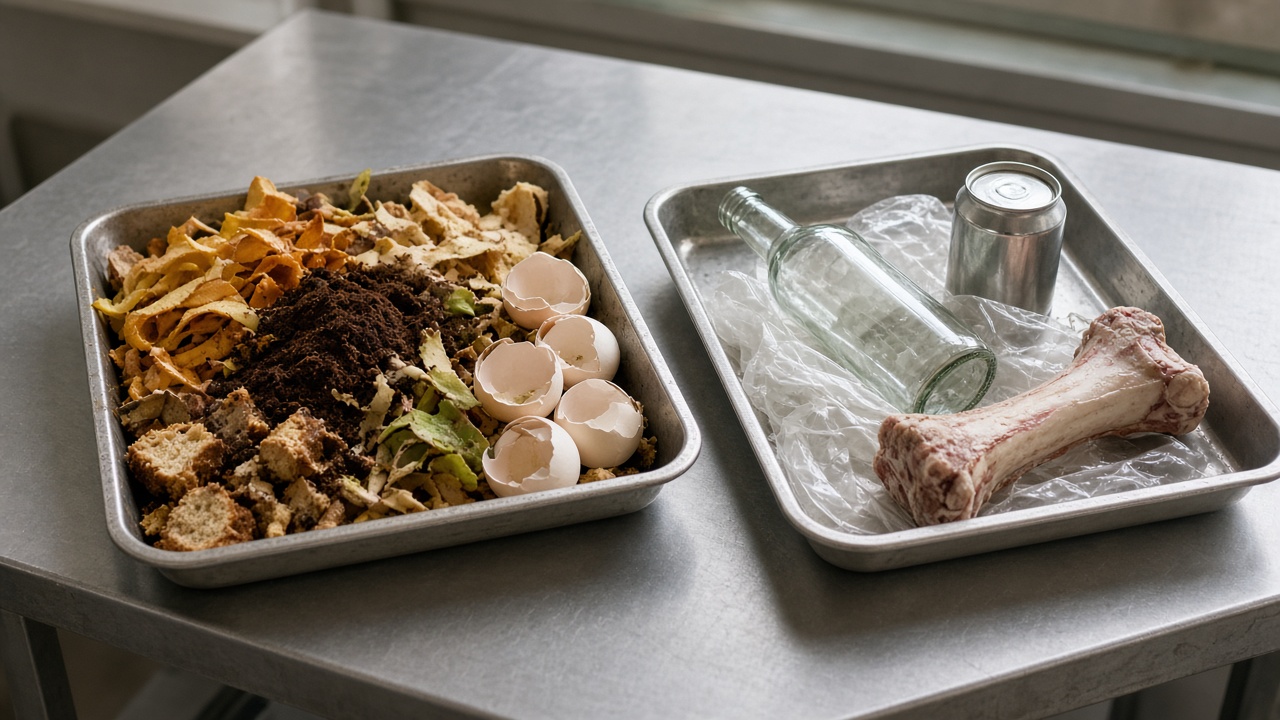
For anything in doubt, the general rule is: if you are not sure, keep it out of the organic bin. Turkey's Compost Communique sets quality criteria for compost products, and contaminants are one of the main factors that make those criteria harder to meet.
Why Are Meat, Bones, Oil and Citrus Limited?
Meat, poultry and fish can be processed in a closed machine, but their high protein and fat content raises the risk of odour and moisture imbalance when fed alone and in large amounts. Mix them with other kitchen waste.
Bones break down very slowly. Small pieces such as chicken bones usually cause no problems, while large, hard bones remain in the output at the end of the cycle and can strain the mixer.
Oil coats the material, reduces oxygen flow and causes clumping. Fat that is part of a dish is fine, but liquid oils such as frying oil must not be poured into the machine. With fatty feeding, the cycle can exceed 48–72 hours.
Citrus peels are acidic. Fed in balance with other waste they cause no issues, but a heavy feed made only of citrus can slow the process.
Warning: Liquid oil, packaging and waste containing chemicals disrupt the process and can cause odour problems. For odour management, see our guide on how to control odour from organic waste.
How Do Moisture and the C/N Ratio Affect Feeding?
Compost microorganisms need carbon and nitrogen in a certain ratio. According to the Cornell Waste Management Institute, the ideal starting C/N ratio is about 25–30:1, with an acceptable range of 20–40:1. Food waste, at roughly 15–20:1, is rich in nitrogen and wet.
In a machine fed only with wet food waste, moisture rises, oxygen drops and ammonia odour can develop. The target moisture is 50–60 %. Adding small amounts of a carbon-rich bulking agent such as sawdust (200–500:1) or dry leaves balances both the C/N ratio and moisture. That is also why paper napkins are on the limited list: in small amounts they are a useful carbon source, but too many slow the process.
How Do You Set Up Waste Sorting in a Kitchen?
Machine performance depends largely on sorting discipline in the kitchen. In our installations, the most common problem is not the equipment but packaging, gloves and bags ending up in the organic bin.
- Place the bins Put separate bins for organic waste, packaging and general waste in the prep area, dishwashing area and service return.
- Label them Add picture-based yes and no labels to the bins; visuals help staff who speak different languages.
- Separate liquids Drain soups and drinks before scraping plates into the bin, and collect frying oil in a separate container.
- Check Inspect bins visually before emptying them into the machine and remove plastic, metal and glass.
- Feed evenly Load waste in several batches throughout the day instead of one large load.
- Train and measure Brief new staff on their first day and log the contamination rate weekly.
Tip: Using bagless, washable bins for organic waste keeps bags out of the machine and shortens sorting time.
How Do ReBorn Cycle Machines Handle Different Waste Types?
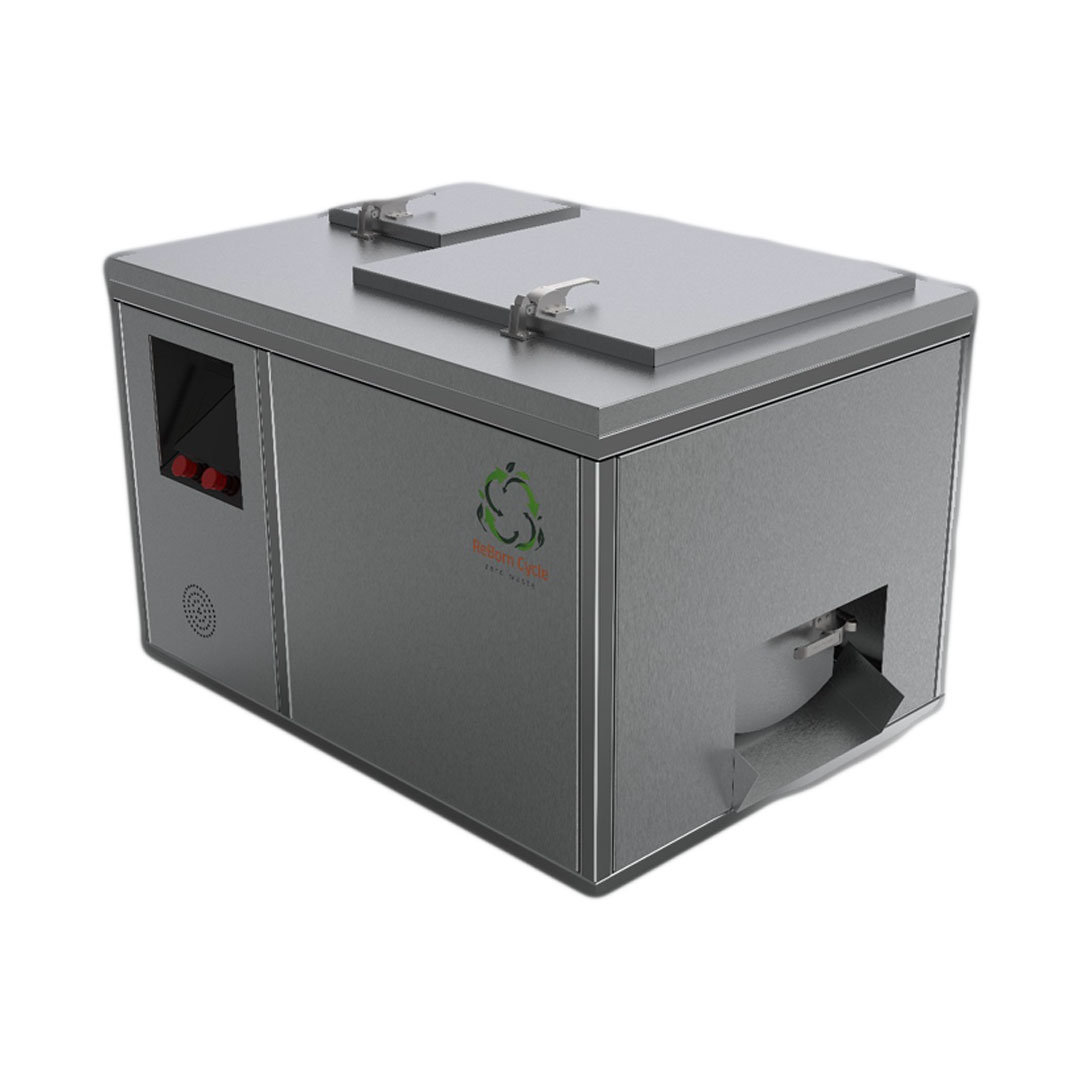
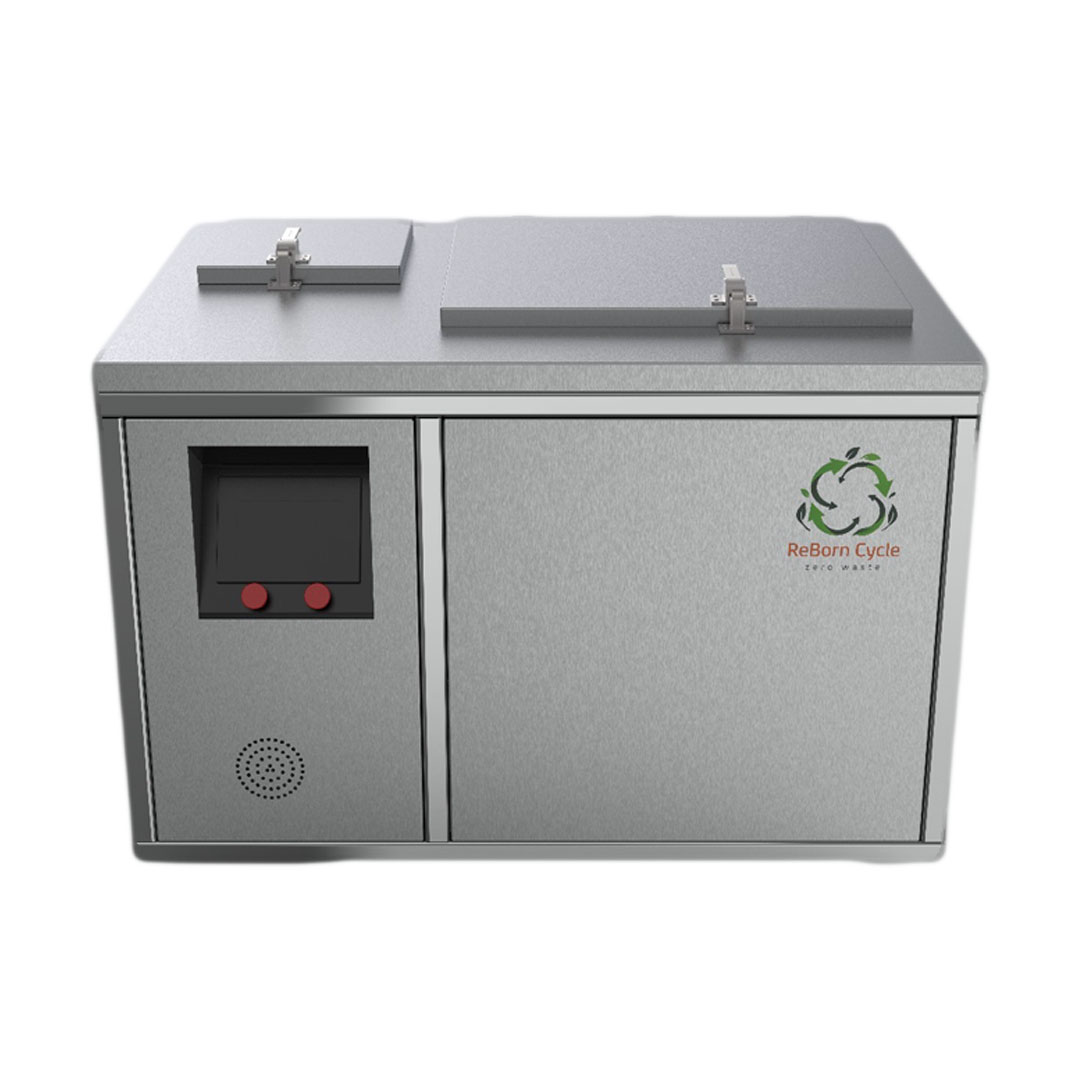
ReBorn Cycle compost machines are closed in-vessel systems with controlled temperature, aeration and mixing. This allows waste that causes trouble in an open pile, such as cooked food, meat and bread, to be hygienized in the thermophilic phase at 55–65 °C with a reduced odour risk.
For kitchen waste with balanced moisture, the in-machine cycle is typically 24–48 hours; with fatty or irregular feeding it can exceed 48–72 hours. The output is a stabilized pre-compost or compost material, and a curing period of a few weeks is recommended for full maturity.
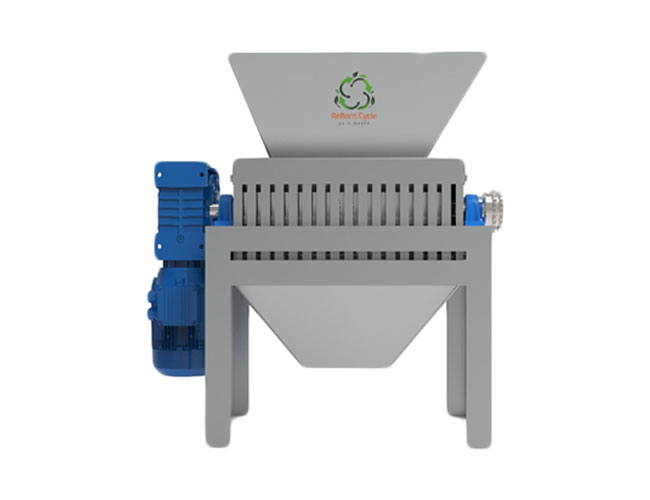
For hotels, schools and mid-size kitchens producing about 50 kg per day, the RBN-C50 Compost Machine is a typical choice; for about 100 kg, the RBN-C100 Compost Machine. Where bulky items such as watermelon rinds or cabbage are common, a Shredder for pre-treatment reduces particle size and speeds up the process. We explain how contaminants are removed on the line in our article on separating contaminants in industrial composting. During installation, we show operators hands-on what goes in and what stays out.
Frequently asked questions
Can you put meat in a compost machine?
Yes, cooked or raw meat can go into a closed industrial compost machine in limited amounts. Controlled temperature and aeration greatly reduce the odour and pest risks of an open pile. Still, meat and fish should not be fed alone; mix them with other kitchen waste and keep them to a small share of the total feed.
Do bones break down in a compost machine?
Bones break down very slowly in a compost machine and do not fully decompose within one cycle. Small pieces such as chicken bones usually cause no problems and can be screened out later. Large, hard bones can strain the mixer and remain in the output, so it is best to collect them separately in the kitchen.
Can you pour cooking oil into a compost machine?
No, liquid oils such as frying oil should not be poured into a compost machine. Oil coats the material, reduces oxygen flow and leads to clumping and odour problems. The normal amount of fat in food is fine, but with fatty feeding the cycle can exceed 48–72 hours. Collect used frying oil separately and hand it to a licensed recycler.
Can citrus peels go in a compost machine?
Yes, orange and lemon peels can go in a compost machine, but they should be limited. Citrus is acidic, and a heavy feed made only of citrus can slow the process. Mixed with other food and vegetable waste, it causes no issues. Businesses with large citrus volumes, such as juice production, should plan the mixing ratio during the site survey.
Can paper napkins go in a compost machine?
Unprinted, uncoated paper napkins can go in a compost machine in small amounts. Napkins are rich in carbon and help balance wet food waste. Too many napkins, however, slow the process, and napkins soaked with chemicals or heavy grease, as well as wet wipes, should stay out of the organic bin, because most wet wipes contain plastic fibers.
Can compostable bags go in a compost machine?
Unless the manufacturer confirms they suit the machine process, it is safer to keep compostable bags out of the machine. These materials are usually designed for longer industrial composting conditions and may not fully break down in a 24–48 hour machine cycle. Bagless, washable bins for organic waste are the most practical solution.
Let us plan the right machine and sorting setup for your kitchen's waste types and daily volume together; contact us to request a site survey and a capacity recommendation.