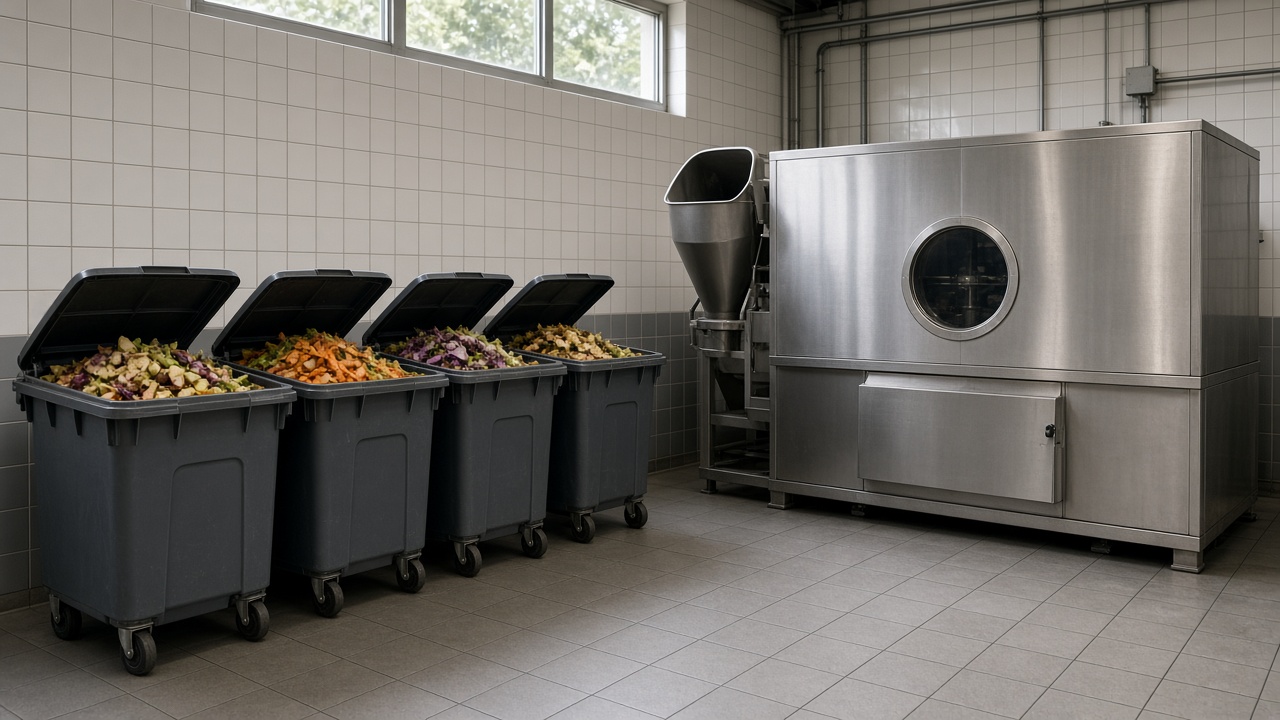
Food waste is recovered by first preventing it at the source, donating safe surplus food, turning suitable streams into feed and sending the rest to biogas or a compost machine.
Food waste is recovered, in order of priority, through prevention, donation, animal feed, biogas and composting. Avoid generating it, donate safe surplus and convert suitable pre-consumer streams into feed where regulations allow. The remaining cooked and raw waste can be turned into a stabilized compost material in an in-vessel compost machine, typically within 24–48 hours.
Restaurants, hotels, hospitals and cafeterias generate food waste every day, and each kilogram is both a cost and an environmental burden. In this guide we walk through the main ways to recover food waste in order of priority, compare prevention, donation, feed, biogas and composting, and finish with a step plan any kitchen can apply. If you are deciding between feed and compost, our article on the difference between a feed machine and a compost machine will help.
Why Does Food Waste Need Proper Recovery?
According to the FAO, roughly one third of all food produced worldwide is lost or wasted. In kitchens, the visible part of that loss is food waste: prep trimmings, plate waste, expired products and cooked food that never reached service.
When food waste goes to landfill with mixed garbage, it decomposes without oxygen. The US EPA notes that landfill gas is roughly half methane and half carbon dioxide. According to the IPCC AR6 report, methane has a 100-year global warming potential 27–30 times that of carbon dioxide.
That is why collecting food waste separately and diverting it from landfill makes a real difference for both the climate and operating costs. In Turkey, the Zero Waste Regulation requires separate collection of biodegradable waste in many facility types. Separate handling also cuts collection frequency, odour and pest problems.
What Is the Priority Order for Food Waste?
The US EPA Food Recovery Hierarchy ranks food waste options from the one that creates the most value to the least preferred. The rule is simple: if a higher level is feasible, do not drop to a lower one.
- Source reduction – avoid generating waste through accurate purchasing, portion planning and stock rotation.
- Feed hungry people – donate safe surplus food that never reached service to food banks or social supermarkets.
- Feed animals – convert compliant and safe streams into feed or pet food raw material.
- Industrial uses – recover used cooking oil and produce energy, for example through biogas.
- Composting – turn the remaining organic fraction into a material that returns to the soil.
- Landfill or incineration – only as a last resort.
In practice, one method is never enough. In a hotel kitchen, prevention and donation handle the avoidable part, while plate waste, peelings and spoiled products go to composting or, where suitable, to a feed line. In our site surveys we usually see the fastest results where prevention and on-site composting are planned together.
How Do Food Waste Recovery Methods Compare?
Each method suits a different type of waste, needs different infrastructure and delivers a different output. The table below summarizes the key differences to weigh when making a decision.
| Method | Suitable waste | Output | Key consideration |
|---|---|---|---|
| Prevention | All streams | Less waste, lower cost | Regular measurement and staff habits |
| Donation | Safe food that never reached service | Human consumption | Cold chain and food safety rules |
| Animal feed / pet food | Pre-consumer, separately collected streams | Feed or pet food raw material | Regulations and registration are decisive |
| Biogas | Large, continuous organic flow | Energy and digestate | Requires a large-scale plant and investment |
| Composting (in a machine) | Cooked and raw food waste, peelings | Stabilized compost material | Packaging and contaminants must be removed |
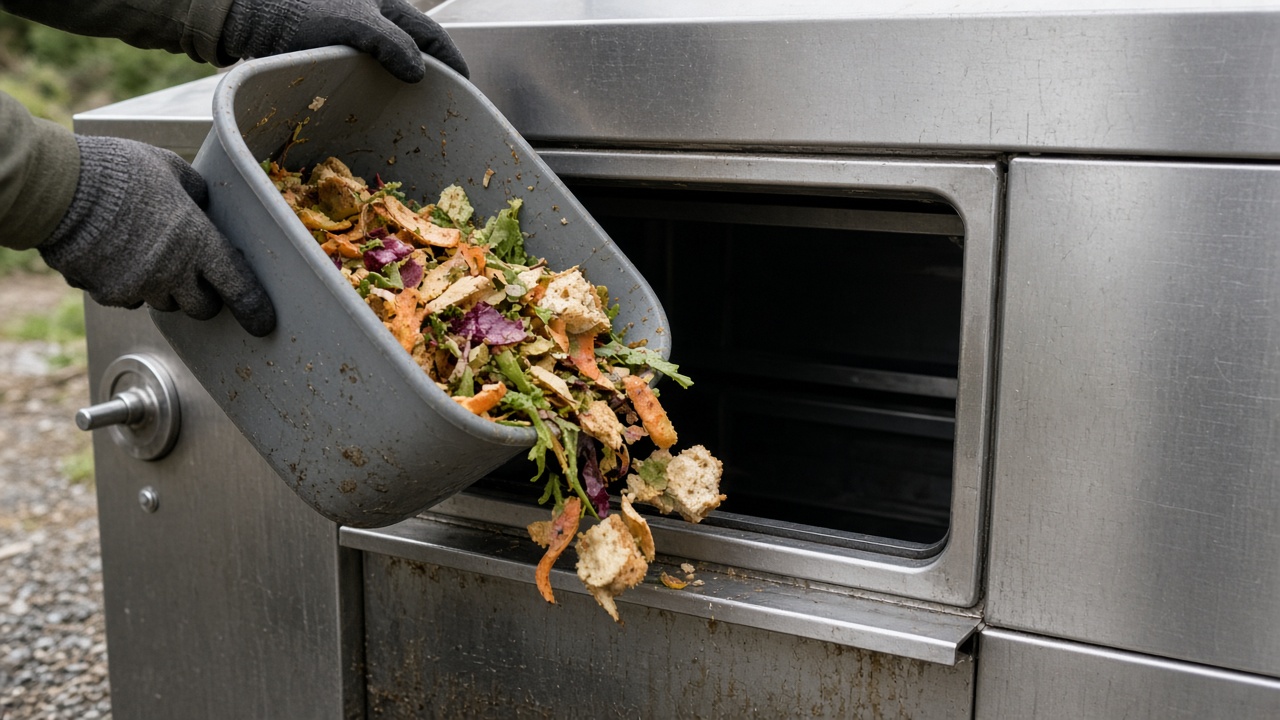
For small and mid-size businesses, biogas usually makes sense through a regional plant rather than on site. For kitchens, cafeterias and hotels that want on-site processing, an in-vessel compost machine or a feed machine handles waste where it is generated and significantly reduces transport needs.
Can Food Waste Be Turned Into Animal Feed?
The short answer is yes, under conditions. Pre-consumer, separately collected streams such as bakery products, fruit and vegetable trimmings and food industry by-products can be converted into feed or pet food raw material with proper heat treatment and drying. The RBN-C100 Feed Machine is designed to process such streams at a scale of 100 kg/day.
Regulation, however, is decisive. In the European Union, Regulation (EC) No 1069/2009 bans feeding catering waste to farmed animals other than fur animals. In Turkey, feed use is subject to the rules and registration requirements of the Ministry of Agriculture and Forestry. Always check the current regulations before starting a project.
Warning: Plate waste and food waste mixed with meat or dairy are, in most cases, not suitable for feed. Composting is the safer and compliant route for these streams.
To clarify which stream should go where, see our detailed guide on whether food waste can be turned into animal feed.
How Does a ReBorn Cycle Compost Machine Process Food Waste?
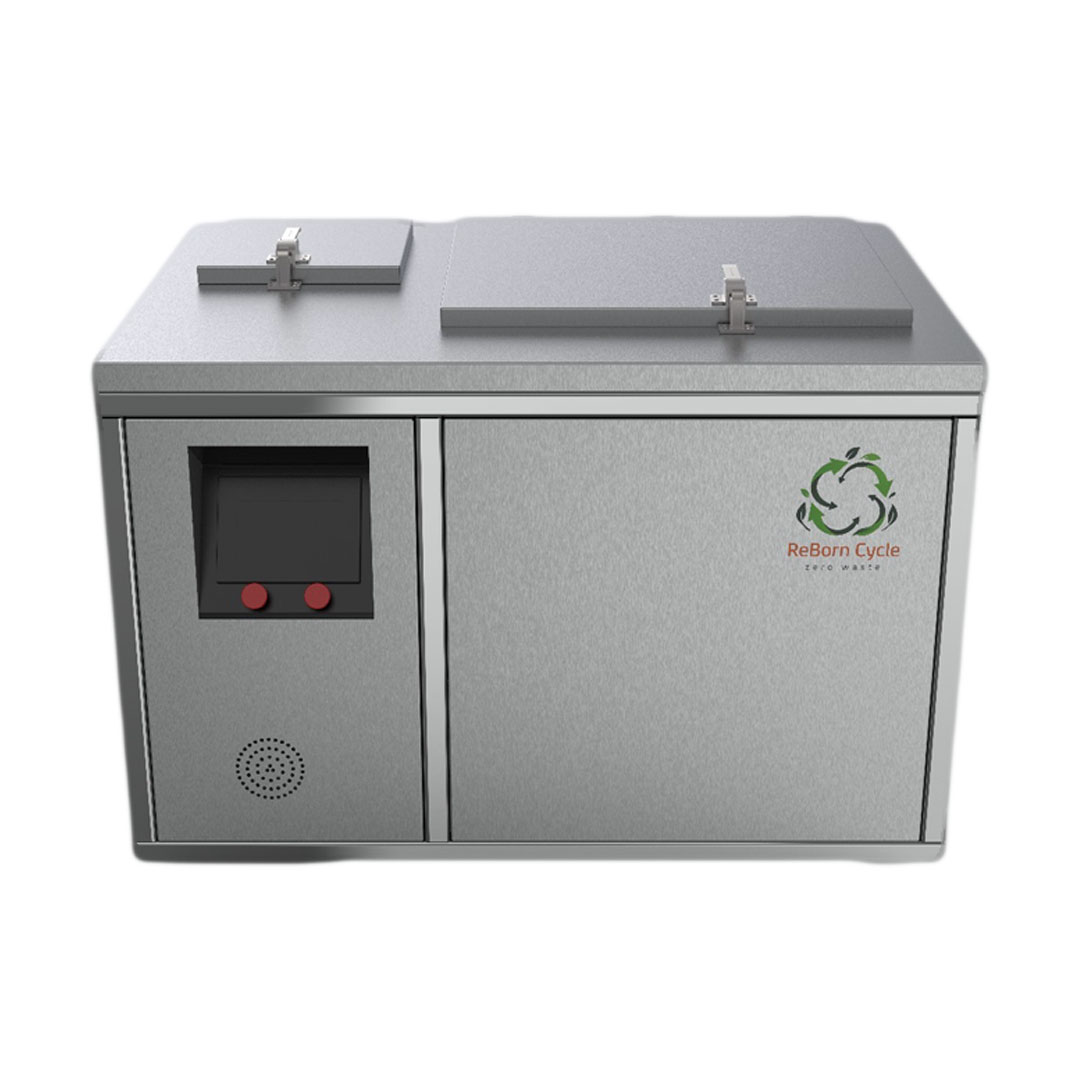
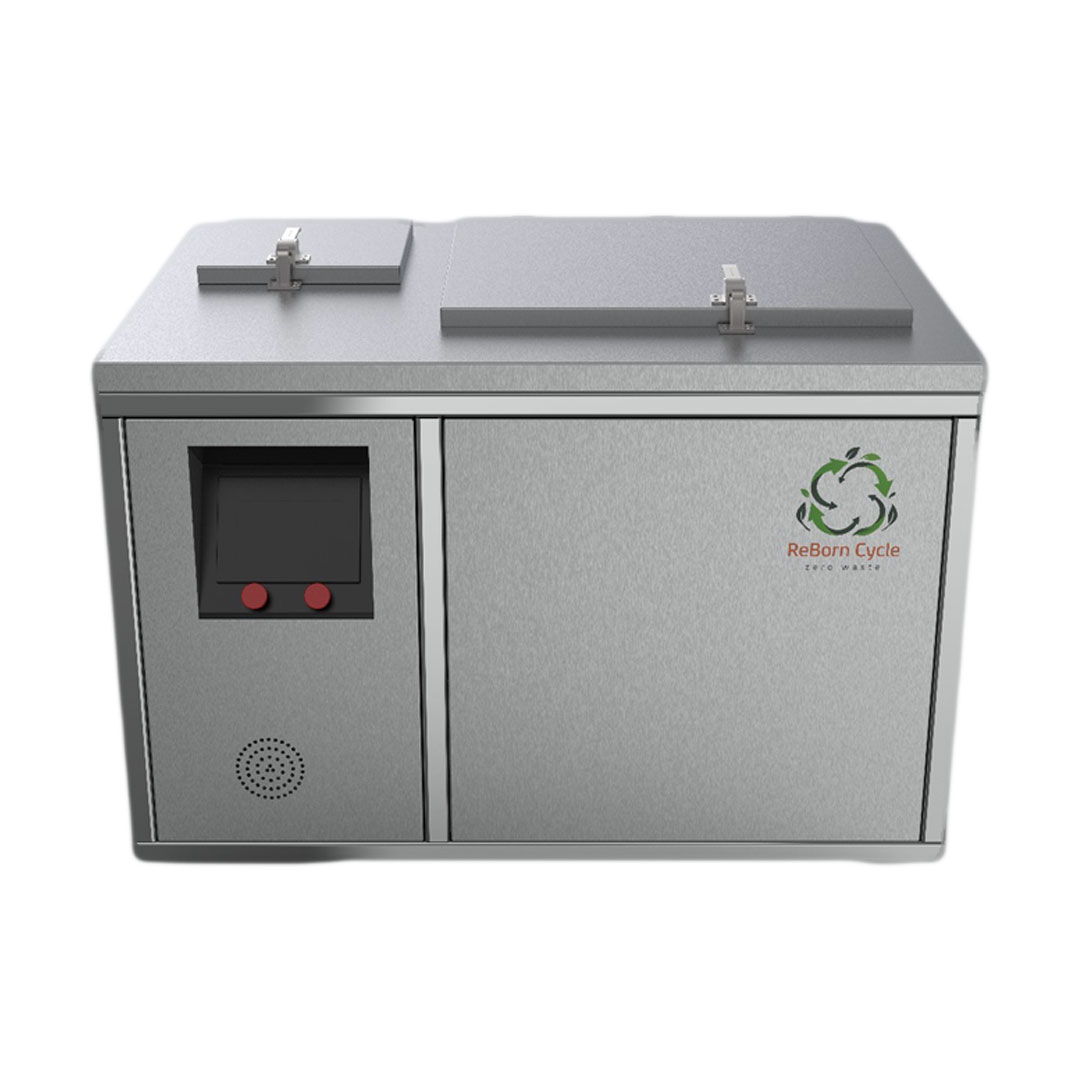
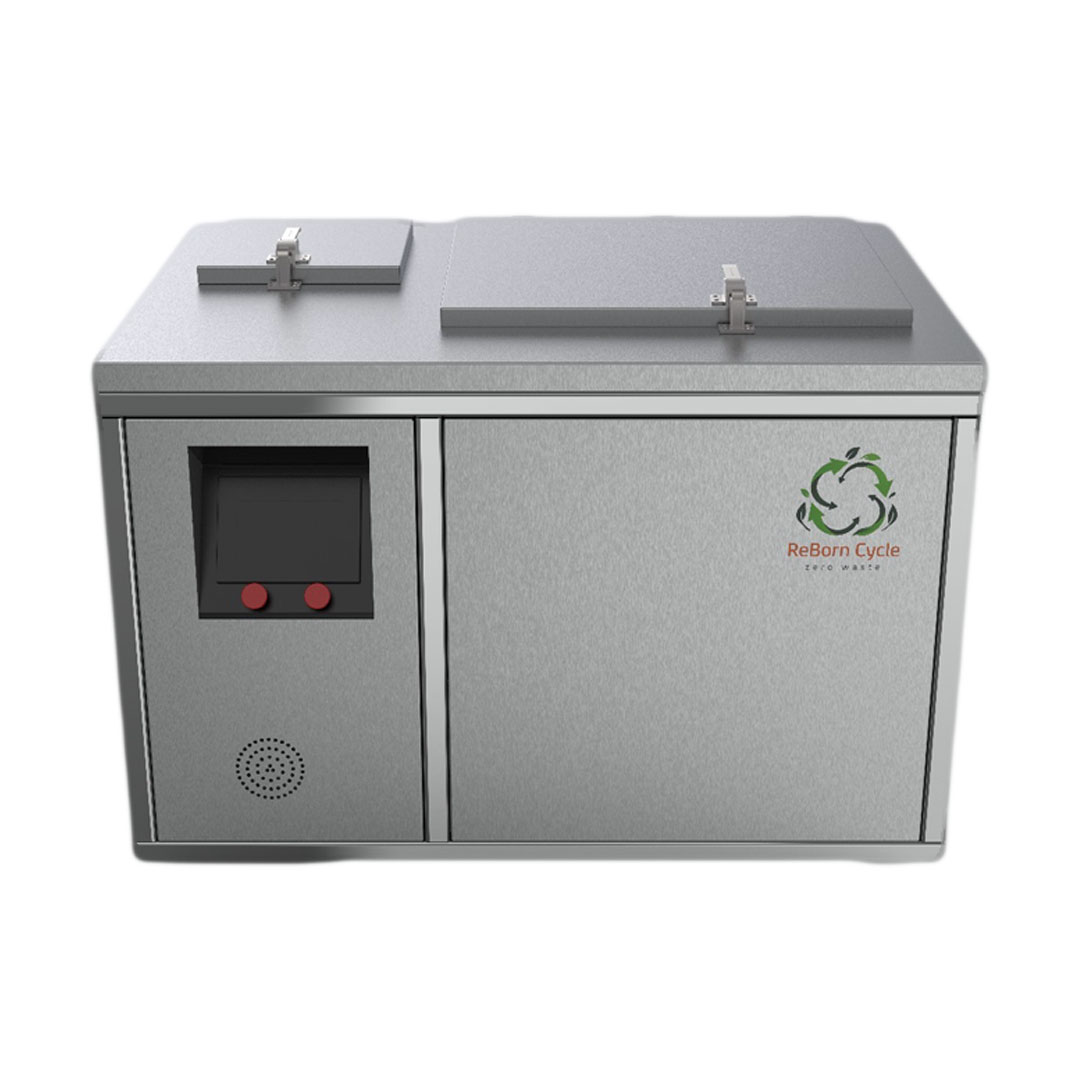
ReBorn Cycle compost machines are closed in-vessel systems with controlled temperature, aeration and mixing. Sorted food waste is fed into the machine, the mixer keeps the material homogeneous, aeration helps keep oxygen above 5 % and the process reaches the thermophilic phase of 55–65 °C.
For kitchen waste with balanced moisture, the in-machine cycle typically takes 24–48 hours; with fatty or irregular feeding it can exceed 48–72 hours. The output is a stabilized, hygienized pre-compost or compost material. For fully mature compost, a curing period of a few weeks is recommended depending on the intended use.
Capacity is chosen based on daily waste volume. For a hospital or shopping mall producing about 100 kg per day, the RBN-C100 Compost Machine is a typical starting point; for large hotels, production plants and campuses, the RBN-C250 Compost Machine. Site survey, installation, operator training and after-sales service are part of the process. For practical examples, read our article on producing compost from restaurant waste.
Tip: Weighing and logging your waste for a few days helps you pick the right capacity and measure your reduction targets.
A Step-by-Step Food Waste Plan for a Kitchen
The plan below summarizes the steps shared by the successful programs we see in the field. A small restaurant and a large central kitchen can follow the same logic; only the scale and the equipment change.
- Measure Weigh and log waste by type (prep, plate, expired products) for at least one to two weeks.
- Reduce Adjust menus, portions and purchase quantities based on the measurements.
- Donate Set up an agreement with a food bank or social supermarket for safe surplus that never reached service.
- Separate Use separate, labelled bins in the kitchen for organic waste, packaging and general waste.
- Route Send suitable pre-consumer streams to the feed line and the remaining organic waste to the compost machine.
- Report Transfer monthly volumes and recovery rates into your zero waste and sustainability reports.
When this cycle is repeated every quarter, the numbers show which step really works, and investment decisions rest on data instead of guesswork.
Frequently asked questions
Which bin does food waste go in?
Food waste should be removed from its packaging and placed in the bin dedicated to organic (biodegradable) waste. Many facilities in Turkey are required by the Zero Waste Regulation to collect biodegradable waste separately. Plastic, glass and metal must not end up in the organic bin, otherwise compost or feed quality drops and sorting costs rise.
Can food waste be composted?
Yes, food waste is a suitable composting feedstock. Because its C/N ratio is about 15–20:1 and its moisture is high, it may need a carbon-rich bulking agent such as sawdust or dry leaves to move closer to the ideal 25–30:1. In an in-vessel compost machine, temperature, aeration and mixing are controlled, so the process runs much faster than in an open pile.
How is biogas produced from food waste?
Biogas is produced from food waste in anaerobic digesters that operate without oxygen. Microorganisms convert organic matter into biogas made of methane and carbon dioxide; the gas is used for energy and a digestate remains. Because this method needs a large, continuous waste flow, it is mostly applied at municipal or regional plant scale.
Can restaurants donate leftover food?
Surplus food that never reached service, kept in an unbroken cold chain and safe to eat, can be donated. Food that has already been plated or served to guests is not suitable for donation. Agreeing on pickup times, packaging and record-keeping with a food bank or social supermarket beforehand ensures both safety and continuity.
How long does a compost machine take to process food waste?
Kitchen waste with balanced moisture is typically stabilized in an in-vessel compost machine within 24–48 hours. With fatty or irregular feeding, the cycle can exceed 48–72 hours. The material leaving the machine is a hygienized pre-compost; for fully mature compost, a curing period of a few weeks is recommended depending on the intended use.
Why shouldn't food waste go to landfill?
Food waste sent to landfill decomposes without oxygen and produces methane, whose 100-year global warming potential is 27–30 times that of carbon dioxide. Mixed garbage also makes recoverable organic matter unusable. Separately collected food waste, by contrast, regains value through donation, feed, biogas or composting and lowers waste transport costs.
Let us find the right method and capacity for your kitchen's waste profile together; contact us to request a site survey and a capacity recommendation.