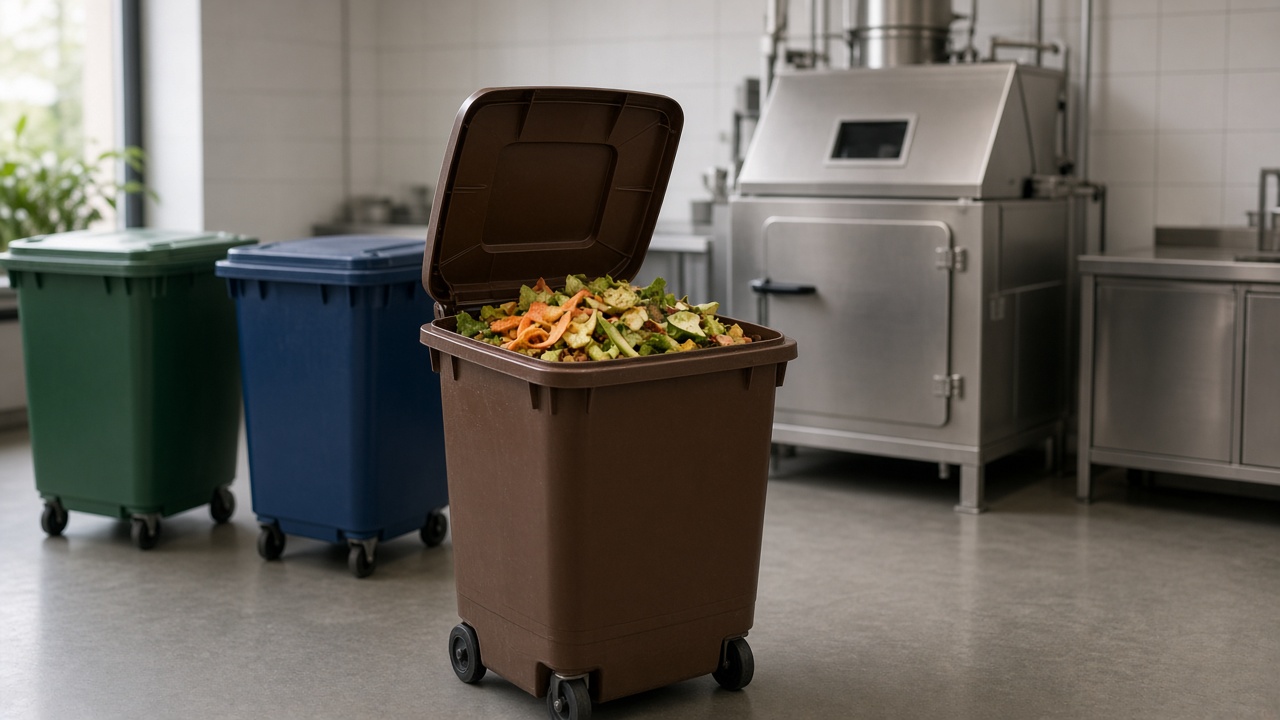
To recycle organic waste, measure it, separate it at source and treat it with the right method – prevention, donation, feed, composting or biogas – then reuse the output. Landfill is the last resort.
Organic waste recycling means separating kitchen, food and garden waste at source and turning it into reusable products such as compost, feed material or biogas. The right order is: measure and reduce waste first, donate edible food, collect the rest separately, treat it on site or at a facility, use the output and keep records. Landfill comes last.
In our site surveys at hotels, restaurants, hospitals and canteens, food waste usually makes up a large share of the bin by weight. According to the FAO, roughly one third of all food produced worldwide is lost or wasted. This article shows which methods you can use to recover organic waste, how to rank them and when on-site processing makes sense. For the wider picture, see our zero waste roadmap for businesses.
Why Organic Waste Recycling Matters
Organic waste is any material that breaks down biologically: food scraps, fruit and vegetable peels, coffee grounds, bread, garden and park waste. When it goes to landfill mixed with other rubbish, it rots without oxygen and produces landfill gas, which is roughly 50 % methane and 50 % carbon dioxide. Collected separately, the same waste can be treated with oxygen and turned into a useful product.
According to IPCC AR6, methane is about 27–30 times more potent than carbon dioxide over 100 years. Wet organic waste also makes general waste heavier, worsens odour and pests, and drives up transport costs.
Recycled organic waste returns to the soil as organic matter or becomes energy. In Turkey, the 2019 Zero Waste Regulation requires separate collection of biodegradable waste in many types of facilities, and the 2015 Compost Communique sets criteria for compost plants and product quality. Always check the current texts for the obligations that apply to you.
What Are the Methods of Organic Waste Recycling?
There is no single right method; waste type, daily volume and site conditions decide. Most businesses combine several methods. The table below summarises the main options.
| Method | Output | Suitable waste | Scale and notes |
|---|---|---|---|
| Prevention and reduction | Less waste | Prep trimmings, plate waste | Any scale; the cheapest method |
| Donation | Food for people | Safe, unserved food | Food safety rules apply |
| Feed material | Animal feed material | Suitable, cleanly separated food waste | Strict legal limits |
| Composting | Soil improver | Kitchen, food and garden waste | From 25 kg/day to tonnes |
| Biogas (anaerobic digestion) | Gas with 50–70 % methane, plus digestate | Large, steady food waste streams | Needs volume, permits and investment |
| Landfill or incineration | Energy or nothing | Non-recoverable residue | Last resort |
Warning: In the EU, Regulation 1069/2009 bans feeding catering waste to farmed animals. In Turkey, the rules of the Ministry of Agriculture and Forestry apply, so check the current legislation first. We explain the process in our article on how the feed recycling process works.
Which Recycling Method Should Come First?
The food recovery hierarchy of the US Environmental Protection Agency (EPA) sets a simple rule: the method that keeps the most value from food comes first. In other words, the best recycling is not creating the waste at all.
In practice the levels work together. A hotel kitchen cuts waste by adjusting portions, donates suitable food and composts peels, coffee grounds and plate waste. The goal is a smaller landfill share every month, which you can see by tracking the kilograms sent to each level.
The hierarchy is a direction, not a fixed rule. At small and medium volumes biogas is rarely economical, so composting is often the highest practical level you can reach.
How to Recycle Organic Waste Step by Step
- Measure. Weigh organic waste for 7–14 days and record prep, plate and spoilage waste separately.
- Separate at source. Place labelled, lidded organic bins in kitchens and service areas; keep plastic, glass and metal out.
- Choose the method. Decide between composting, feed or off-site collection based on daily volume, space and where the output will be used.
- Treat the waste. Process it on site in a machine or at a licensed facility, and keep storage times short.
- Use the output. Apply compost in landscaping, greenhouses or farming; send feed material only to a compliant buyer.
- Record and report. Report kilograms processed, output and waste diverted from landfill every month.
The most common mistake we see is choosing a machine or a collection contract without measuring first. Yet capacity sizing and zero waste reporting depend on this data. For a practical setup, read our guide to an organic waste weighing and record system.
Tip: The quality of separation decides the quality of the output. Short daily checks with staff in the first weeks quickly reduce contamination.
On-Site Processing or Off-Site Collection?
There are two ways to recycle organic waste: hand it over to a licensed contractor or treat it on site. Off-site collection needs no upfront investment, but wet waste is heavy, must be collected often and smells while it waits, especially in summer.
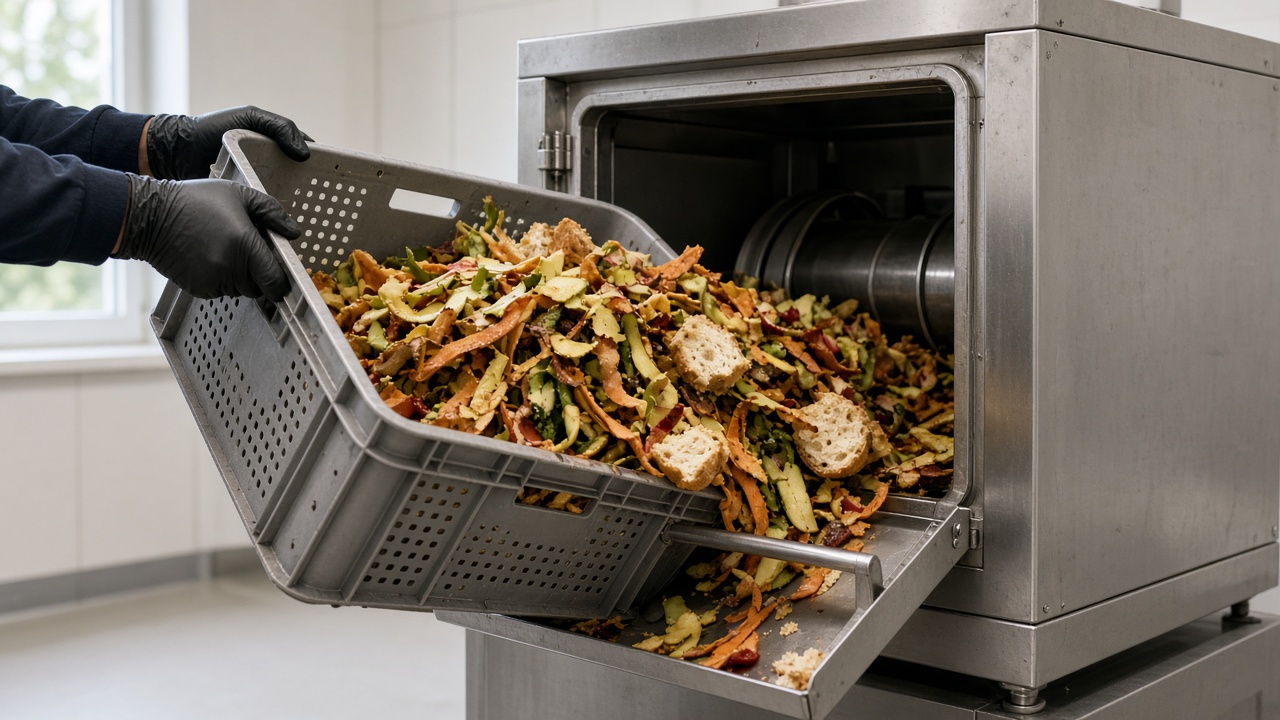
With on-site processing, waste goes into a closed machine on the day it is produced. Less weight is transported, collections drop and the processed amount is measured directly. Depending on the input, volume can shrink by up to about 80–90 %, and the output can be used in your own gardens.
- Off-site collection suits low, irregular volumes and sites without space.
- On-site processing pays off with steady volumes, high collection costs and odour problems.
In our surveys, on-site processing usually becomes a serious option once daily waste exceeds a few dozen kilograms and collection is paid per trip or per kilogram. To run the numbers, start with our article on how to reduce organic waste logistics costs. Our consulting service can prepare your waste profile and capacity study.
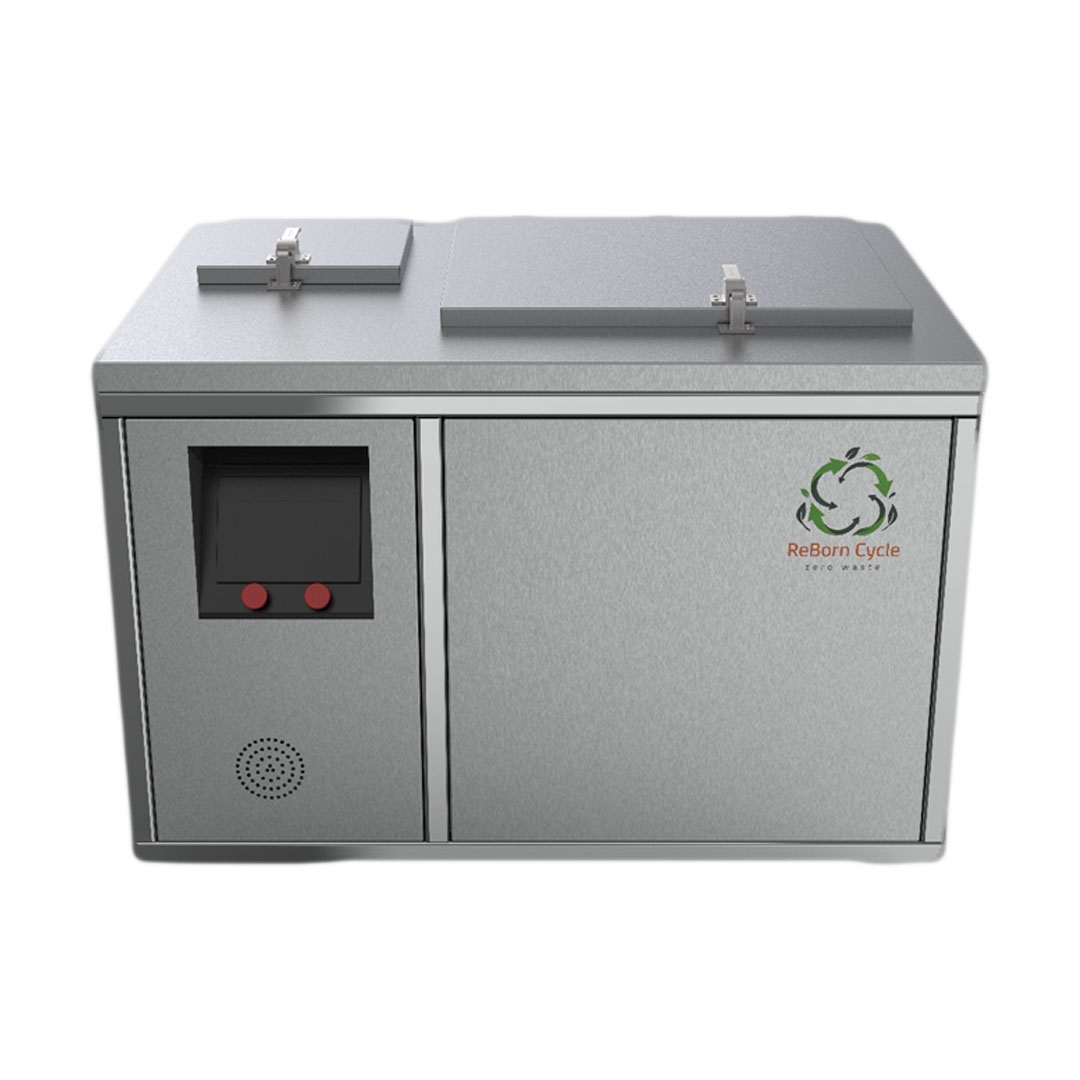
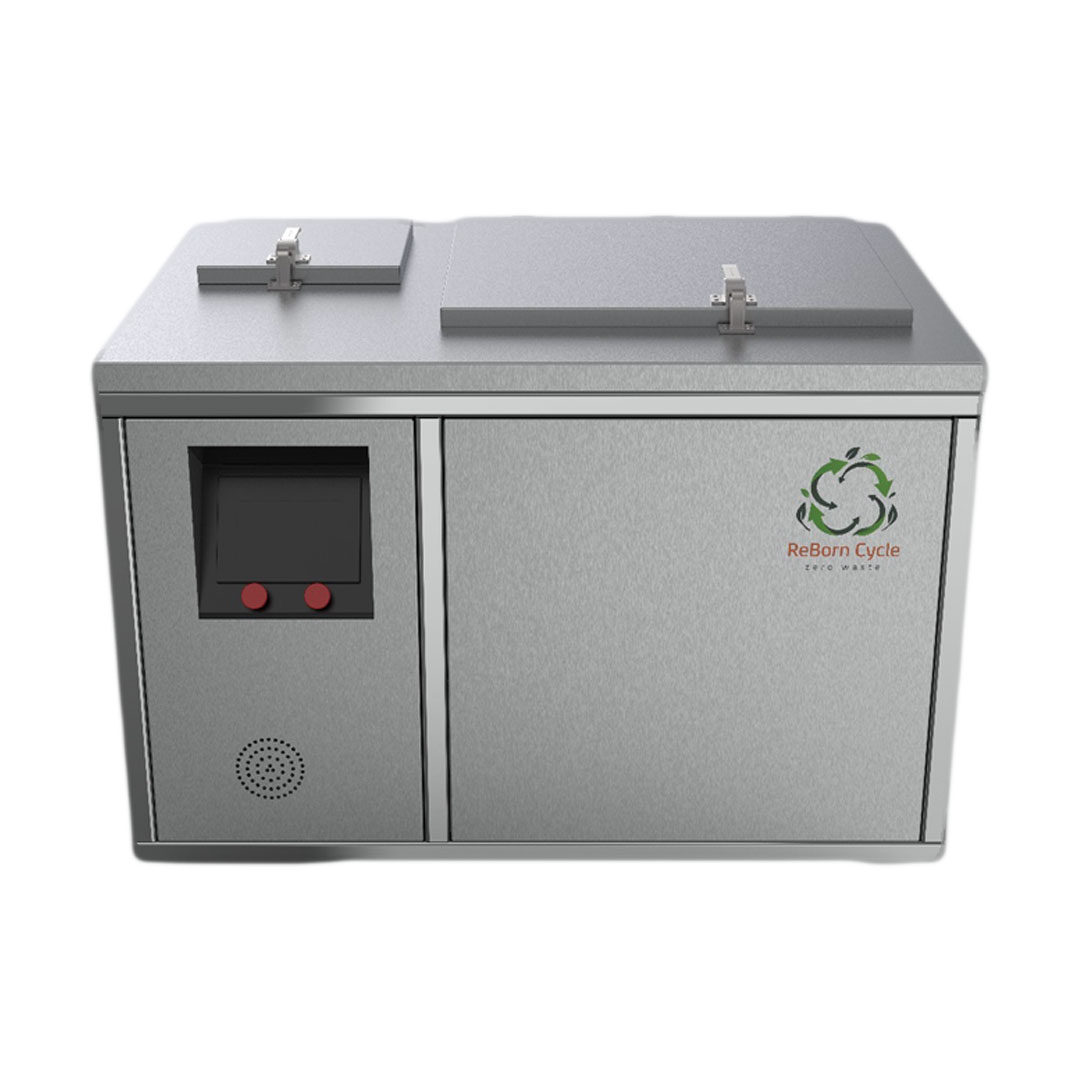
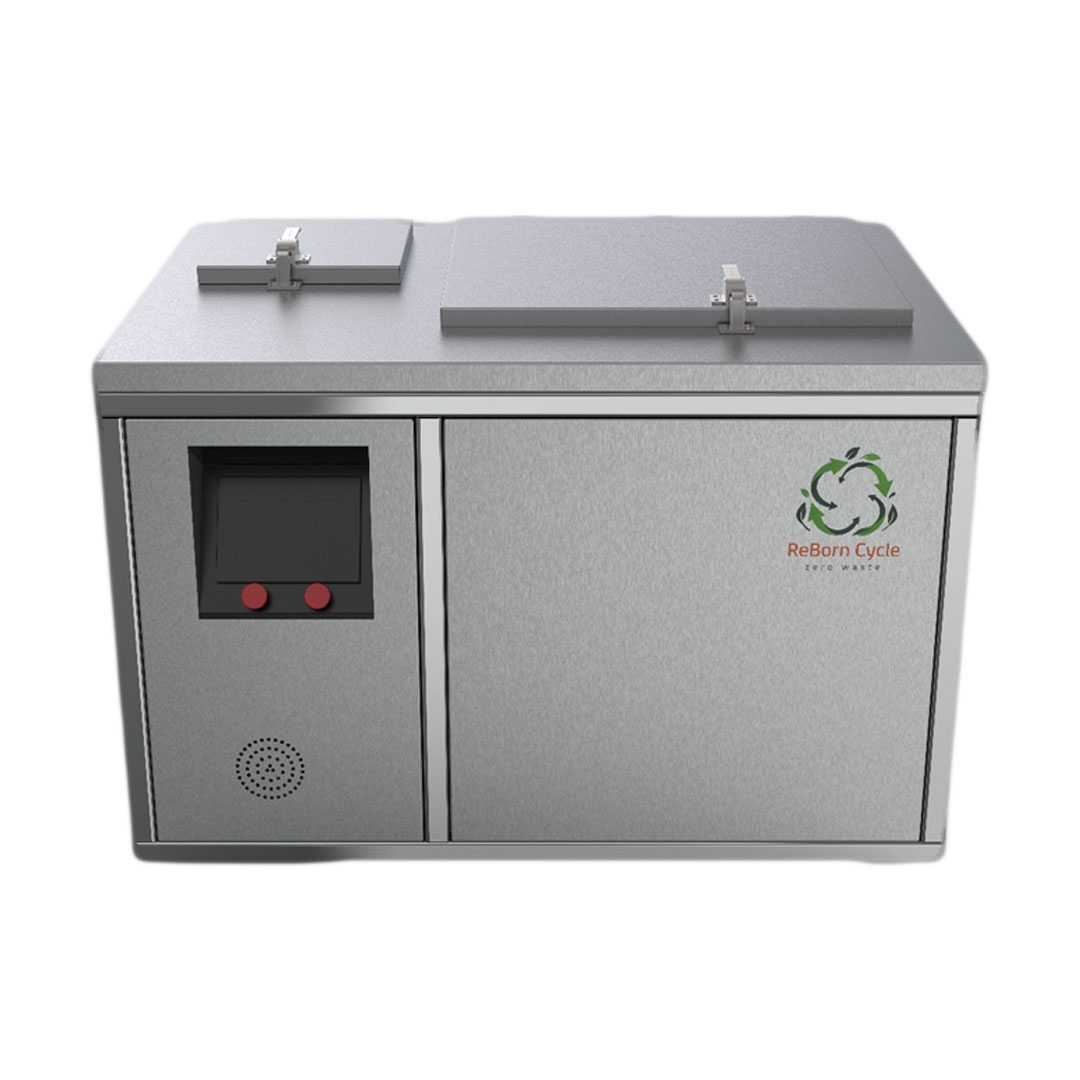
How ReBorn Cycle Compost Machines Process Organic Waste
Our machines are closed in-vessel systems: waste is treated under controlled temperature, aeration and mixing. In the thermophilic phase the temperature rises to 55–65 °C, and staying above 55 °C for several days reduces pathogens and weed seeds. Moisture is kept at 50–60 % and oxygen above 5 %. The closed body clearly reduces odour and hygiene risks compared with an open pile.
- RBN-C100 Compost Machine handles 100 kg/day for hospitals, shopping centres and mid-size facilities.
- RBN-C500 Compost Machine handles 500 kg/day for central kitchens, municipalities and corporate campuses.
- RBN-C250 Feed Machine turns 250 kg/day of suitable food waste into feed material.
Kitchen waste with balanced moisture typically becomes a stabilised, hygienised pre-compost material in 24–48 hours; with fatty or irregular feeding it can take 48–72 hours. A curing period of a few weeks is recommended for fully mature compost. After the survey, installation and operator training, our technical support team stays with you for maintenance and fault response.
Frequently asked questions
Which bin does organic waste go in?
Organic waste usually goes in the brown organic waste bin. It takes food scraps, fruit and vegetable peels, tea leaves and coffee grounds, stale bread and plant waste. Plastic bags, packaging, glass and metal must stay out because they lower the quality of the output. In businesses, lidded and labelled bins noticeably reduce sorting errors.
How long does it take to recycle organic waste?
It depends on the method. Composting in an open pile takes roughly 2–6 months. In a closed industrial compost machine, kitchen waste becomes a stabilised pre-compost material in 24–48 hours, followed by a curing period of a few weeks for fully mature compost. Mature compost is close to ambient temperature and smells earthy.
What can be made from organic waste?
Organic waste mainly becomes compost, feed material or biogas. Compost increases soil organic matter and water-holding capacity. Biogas contains roughly 50–70 % methane and is used for energy, while the remaining digestate is often composted afterwards. For small and medium-sized businesses, compost is usually the most practical output.
Can food waste be fed to animals?
Feeding food waste to animals is strictly regulated. In the EU, Regulation 1069/2009 bans feeding catering waste to farmed animals. In Turkey, the rules of the Ministry of Agriculture and Forestry apply, so check the current legislation and permit conditions before starting feed recycling. For waste that does not qualify, composting is a safe alternative.
Do businesses have to collect organic waste separately?
In many cases, yes. In Turkey, the 2019 Zero Waste Regulation requires separate collection of biodegradable waste in many facility types, such as hotels, hospitals, shopping centres and public institutions. Confirm which obligations apply to you in the current text and with your provincial directorate. Separate collection also gives you the data you need for reporting.
Choosing the Right Path for Your Organic Waste
The core of organic waste recycling is simple: reduce first, keep what has value, then collect and treat the rest separately. Projects that start without measurement often end up with the wrong capacity or method. Your first investment should be a reliable weighing and separation routine, not a machine.
Our practical advice is to start with two weeks of weighing data. Once daily volume, waste type and available space are clear, the choice between composting, feed and off-site collection usually becomes obvious. Allow for seasonal peaks and growth plans, and leave a sensible capacity margin.
To see your waste flow on site and choose the right method together, book a free site survey. Our team will profile your waste, review your space and make a practical recommendation based on real data, so organic waste becomes a measurable gain instead of a cost.