

Zero waste is a management order: prevent waste first, then reduce, reuse, recycle and recover it, and treat landfill as the last option rather than the default bin.
Zero waste is a hierarchy: waste is prevented first, then reduced, reused, recycled and recovered, and landfill comes only after those steps. In a kitchen the order starts with the menu and purchasing, then a separate bin, a weight log and, if needed, on-site composting. A municipality applies the same order to collection and the plant.
This article makes the definition concrete enough for a chef and a municipal officer to use at the same table. It covers where organic waste sits, why separate collection needs a record, and which job on-site composting does and does not do. What organic waste is is a separate question. We cite no article numbers. Check Turkey’s 2019 regulation against the copy your authority uses.
What Does the Zero Waste Hierarchy Mean?
Zero waste is not a poster line. It is the order in which waste is dealt with. The first job is not to create it. What remains is reduced, reused, recycled and only then recovered. Landfill is last.
On site surveys the log usually starts at the mixed bin; the hierarchy asks for the opposite. About half of landfill gas is methane. Under IPCC AR6 its 100-year effect is about 27–30 times that of carbon dioxide, so burial is the last resort.
| Step | Meaning for food waste | Example |
|---|---|---|
| Prevent | Stop waste before it exists | Match the menu to sales |
| Reduce | Shrink the unavoidable | Tighten portions and orders |
| Reuse | Keep edible food in use | Donate safe surplus |
| Recycle | Make a new material | Compost separated peelings |
| Recover | Take energy or another benefit | Biogas from separated organics |
| Dispose | Bury the remainder | Landfill of mixed refuse |
The table is a preference order, not a permit. Sending edible food to compost or landfill while a higher step is open breaks the definition.
Where Does Organic Waste Sit in That Order?
Organic waste is not the whole hierarchy. It is a stream spread across several steps. Edible surplus belongs to prevention and reuse. Peel, pulp, plate scrap and spoiled food usually fall to recycling. Biogas from separated organics is recovery. Burying it in mixed refuse is disposal.
The FAO states that roughly one third of food produced is lost or wasted. Part of that share can still be prevented in a kitchen. What cannot be prevented needs a separate bin and a controlled process. On-site composting is the tool for that second job. It does not replace the first.
On surveys the usual mix is vegetable prep scrap, bread, cooked food and a little packaging. Packaging spoils compost quality. Fruit and vegetable scrap often sits near 50–60% moisture; bread is dry, and fatty plate waste slows the process.
Tip: Edible surplus in the compost bucket reverses the order. Set safe food aside for donation or a staff meal first, then put the rest in the organic bin.
How Do a Kitchen and a Municipality Use the Same Order?
The definition is shared. Scale is not. A hotel, hospital or canteen kitchen sees waste where it is produced. The decision is daily: portion, order, the lid at the end of the shift, odour and hygiene. A municipality collects organics from many sources, hauls them and treats them at a plant. Both should talk prevention first and separate collection second.
As an example, not a measurement: a kitchen logs about 80 kg/day of prep scrap and 30 kg/day of plate waste for seven days. The first conversation is portions and purchasing. Compost is for the part of that 110 kg that cannot be prevented. A municipality uses the same logic by district or site. The difference is the scale of the weighbridge and the route.
The zero waste roadmap for businesses opens the kitchen-scale order step by step. Collection day, transfer distance and compost or biogas capacity are the same hierarchy in the field. A machine does not climb a step by itself if collection is still mixed.
Why Do Separate Collection and Records Belong Together?
Mixed, unweighed waste is hauled, not managed. Zero waste means knowing the kilograms in each stream. Separate collection of biodegradable waste at many facilities is tied to Turkey’s 2019 Zero Waste Regulation (Sifir Atik Yonetmeligi). Article numbers can change; check the current text with your environment unit. What that regulation asks for organic waste is a separate article.
The bars below are a preference rank, not a percentage. Rank 1 is looked at first. Rank 6 is the last resort.
Each shift can write the kilograms, a note on foreign matter, and where the full bin went. After a month the share between prevention and compost is visible.
Warning: A summary does not replace the regulation. Confirm your duty in the current text and with the provincial environment directorate.
What Can a Facility Start This Month?
The hierarchy does not have to stay in a folder this month. The order below is for measurement and habit. It does not wait on a build or a permit.
- Weigh for seven days. Weigh the organic bin at the end of the shift. Write prep scrap and plate waste on separate lines.
- Separate edible surplus. Move safe, traceable food to donation or internal use. The compost bucket is not a shortcut.
- Put peelings in their own bin. Keep packaging, cutlery, oil and liquids out of that bag. Close the lid when the shift ends.
- Write where it went. On-site compost, an outside plant, or mixed refuse. A week of shares shows the step you are on.
- Train the closing shift. If that team does not know the rule, waste sorted by day is mixed again at night.
This is a site’s first month. The same five jobs move to a municipal route and transfer point. An unweighed stream does not appear in a report.
Where Does On-Site Composting Sit in the Hierarchy?
On-site composting is the recycling tool for food waste that was not prevented. It does not replace prevention. In a closed, heated, aerated and mixed vessel, kitchen waste with balanced moisture typically becomes stabilized pre-compost in 24–48 hours. Fatty or irregular feeding can push that past 48–72 hours. Mature compost still needs a few weeks of curing, depending on use.
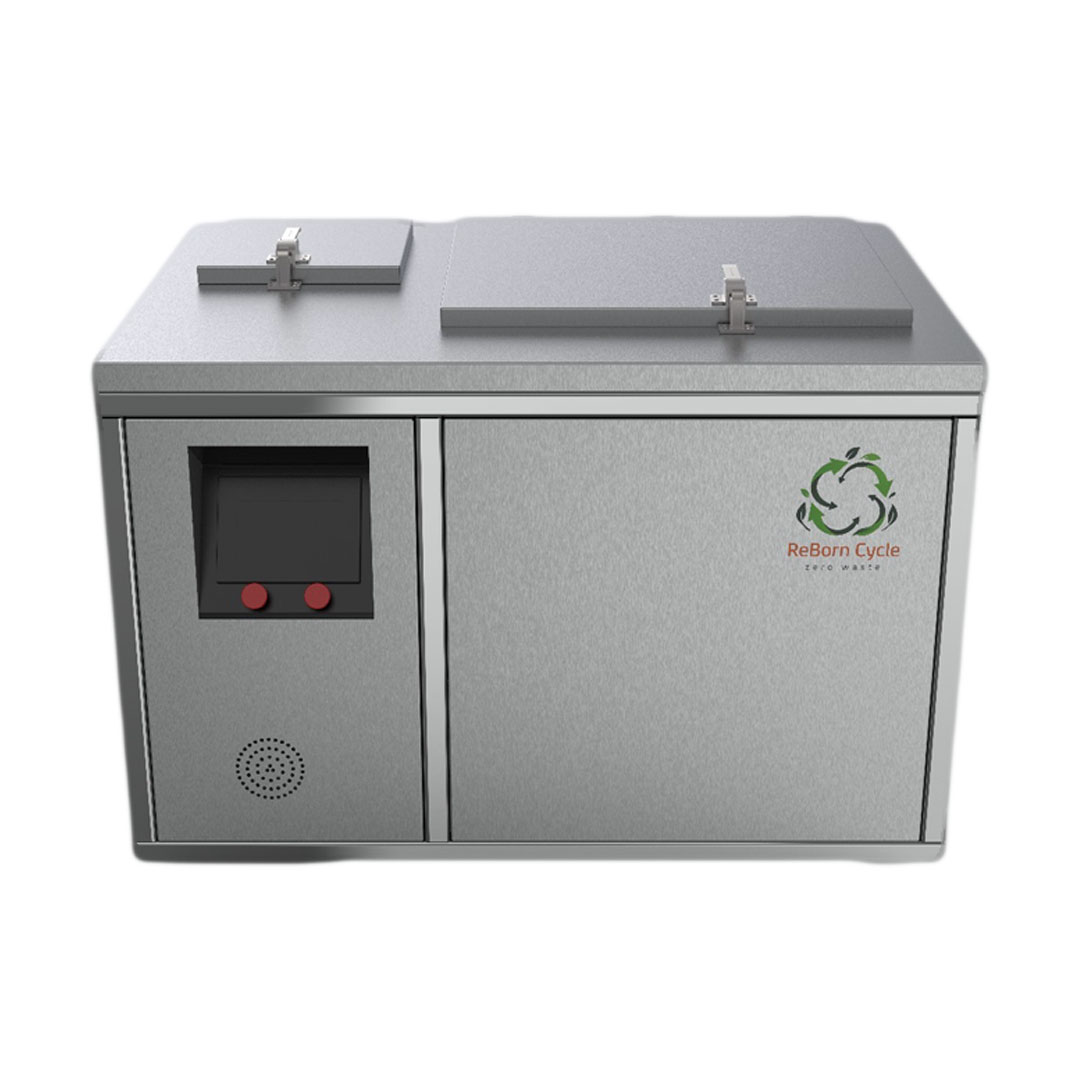
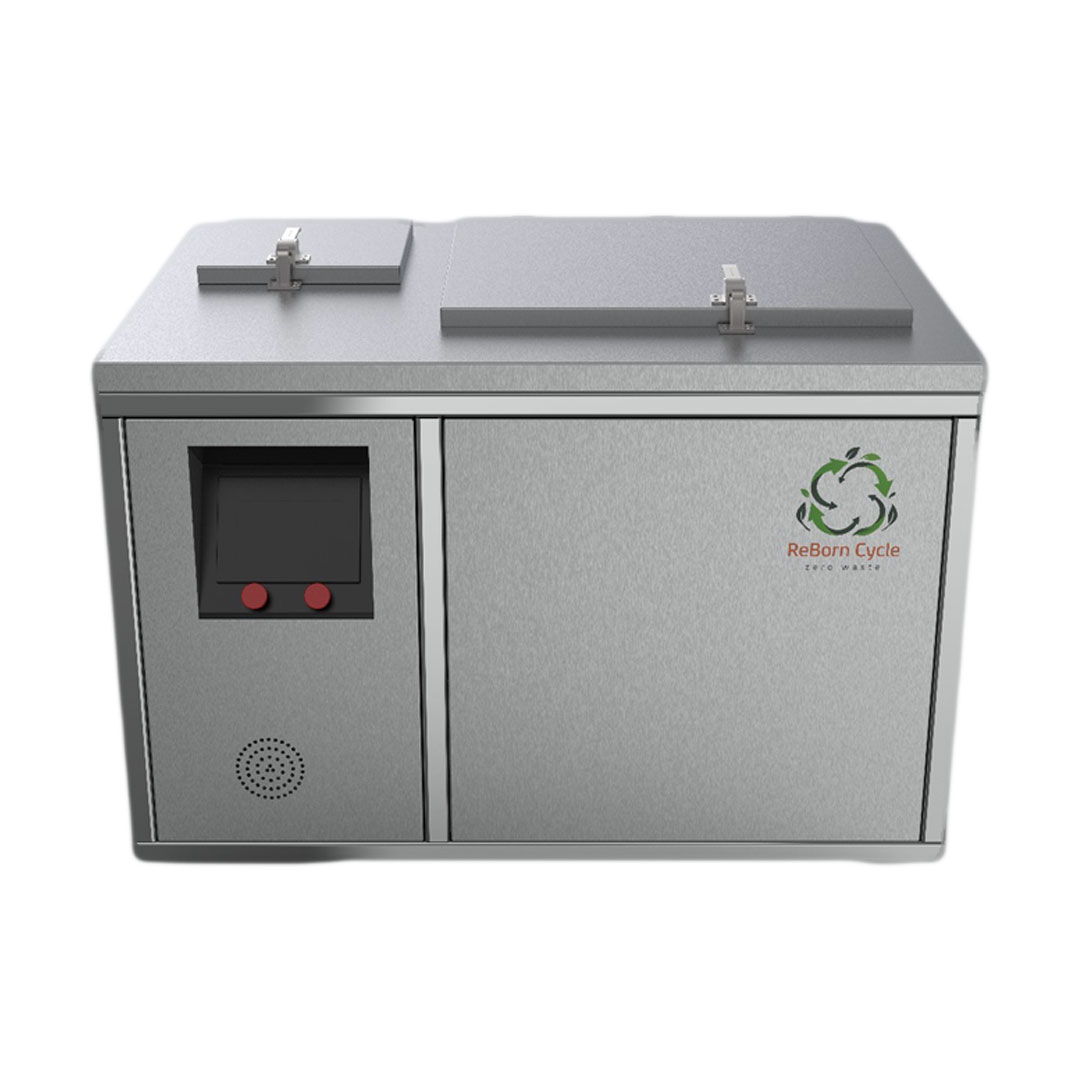
- RBN-C100 Compost Machine at 100 kg/day fits a hospital, a mall or a mid-size site.
- RBN-C250 Compost Machine at 250 kg/day fits a large hotel, a campus or a production kitchen.
ReBorn Cycle sets this up from a survey of the waste profile and kg/day, then the room and the drain, then operator training on the same shift pattern. Operator training makes the lid, moisture and foreign matter a daily job. Waste consulting puts the hierarchy ahead of the machine choice.
A site aiming at a certificate can use on-site processing as evidence. The conditions sit in the article on on-site processing for a zero waste certificate.
Frequently asked questions
Is zero waste the same thing as recycling?
No. Recycling is one step. Zero waste is the whole order: prevent, reduce, reuse, recycle, recover, and dispose last. Composting alone is not zero waste. If edible food can still be prevented, compost is a lower step.
Does zero waste ban landfill?
No. It is not a one-line ban. Zero waste makes landfill the last option. A remainder that cannot be separated or processed can remain. Measure that remainder and shrink it each month. For bans and exceptions, read the current text and ask the provincial environment directorate.
Where does organic waste sit in zero waste?
It is not fixed to one step. Edible food sits in prevention and reuse. Peel, pulp and plate scrap are mostly recycling; biogas is recovery. Organics buried in mixed refuse are disposal, which means the hierarchy was missed. A separate bin is the first condition for moving that waste up.
Does the 2019 regulation require a compost machine?
Turkey’s 2019 Zero Waste Regulation (Sifir Atik Yonetmeligi) is tied to separate collection of biodegradable waste at many sites. This article does not claim a machine brand is mandatory. The text can change, and the current copy should be checked. A machine can recycle separated organics that could not be prevented.
How can a kitchen start zero waste this month?
For seven days, weigh prep scrap and plate waste separately. Note foreign matter and where the waste went. Those figures show the prevention share and what goes to compost or an outside plant. Without that measurement a machine scales a guess.
The Right Order for Organic Waste
Zero waste starts with the same sentence in a kitchen and a municipality: do not create it, then separate it, and bury it last. Organic waste stands in the middle. Edible surplus stays on the upper steps. Separated peel and plate scrap move to recycling. A mixed bag is unmeasured disposal.
This month a scale, a separate bin and a shift rule are enough. Talk about a machine once seven days of weights are logged. A closed system makes pre-compost in 24–48 hours from kitchen waste with balanced moisture. If the order breaks, the result stays mixed.
A free site survey is enough to read the waste profile and the bin layout together. Once kilograms, room and shift pattern are clear, the step that needs on-site processing is clear too. Training comes up in that visit as a drill, not a poster.