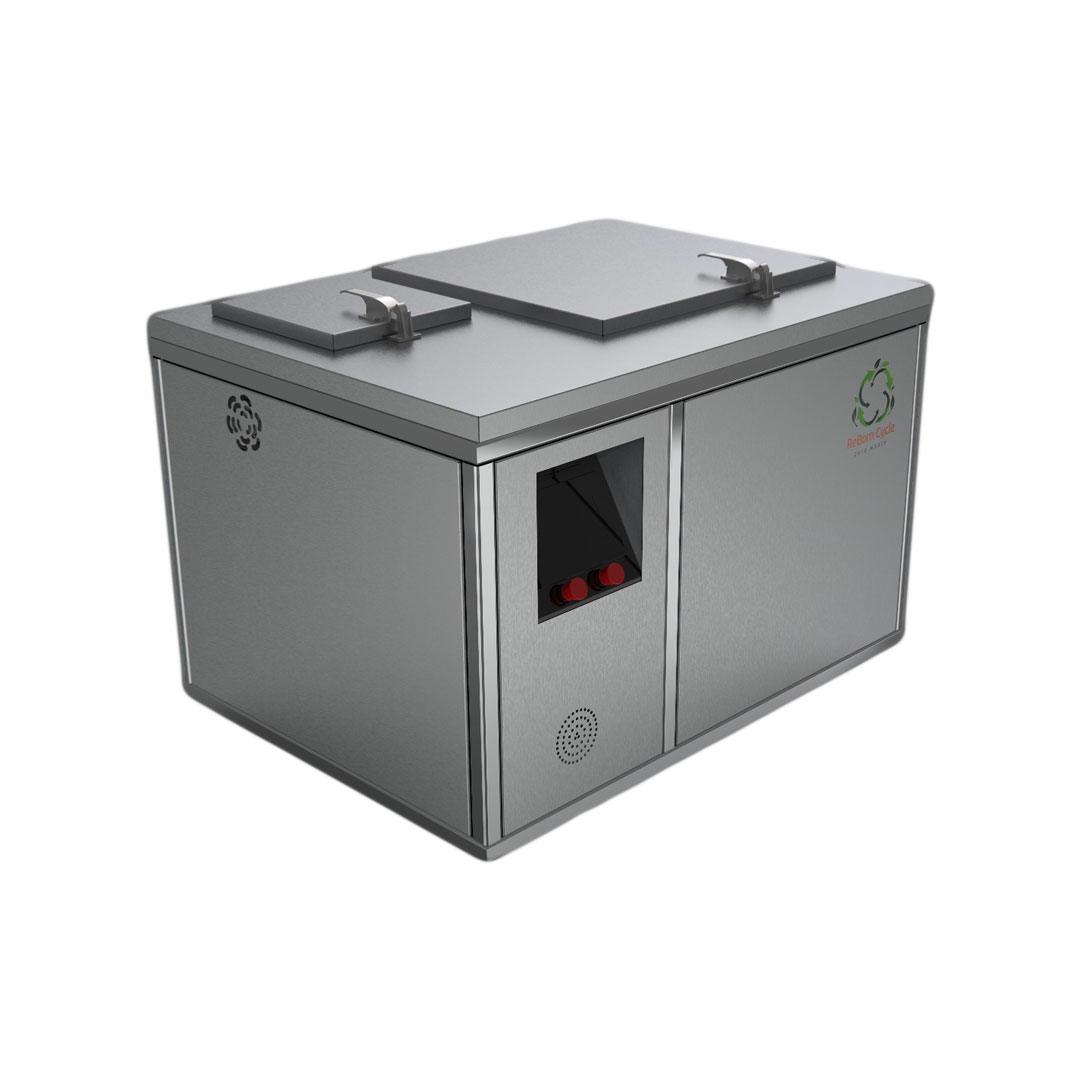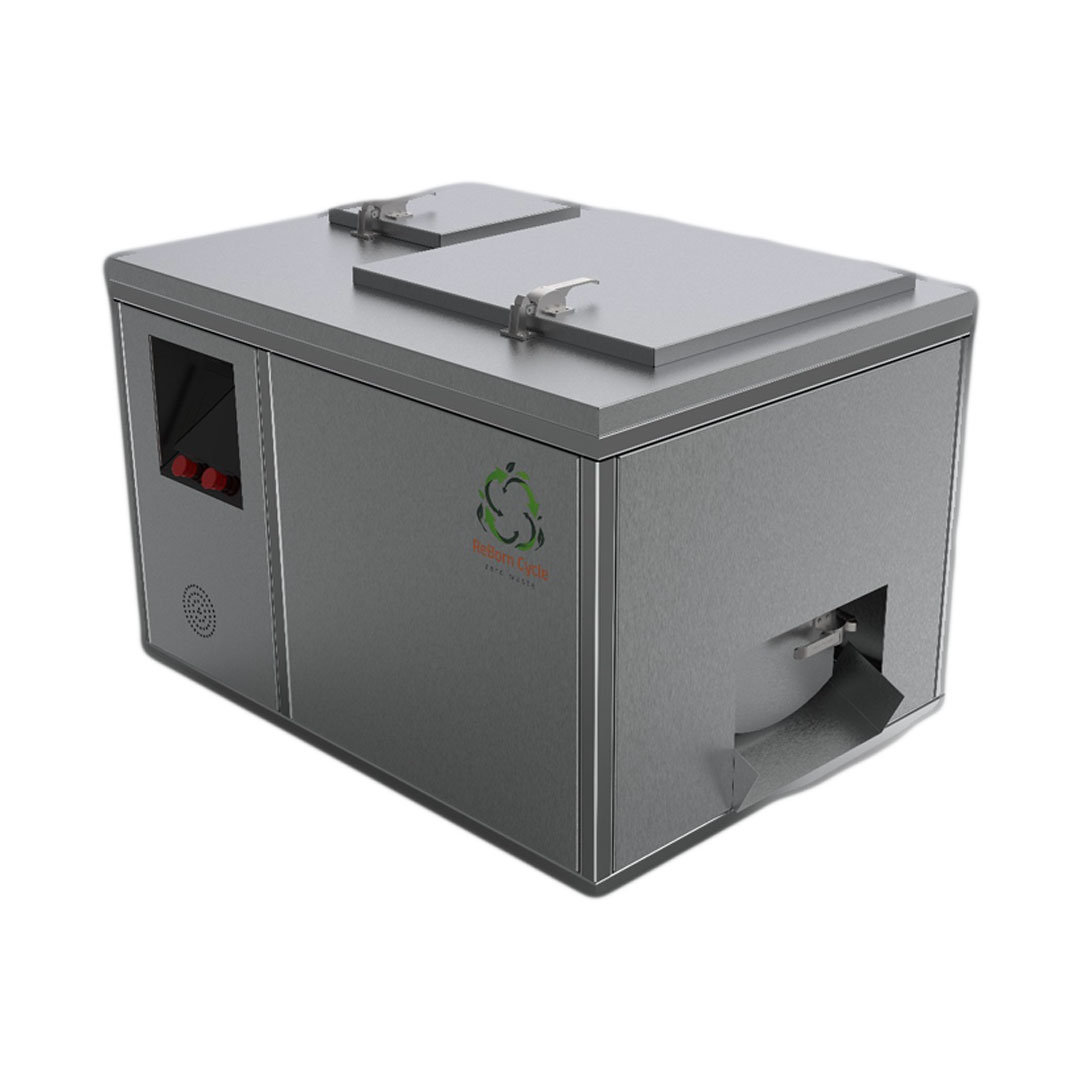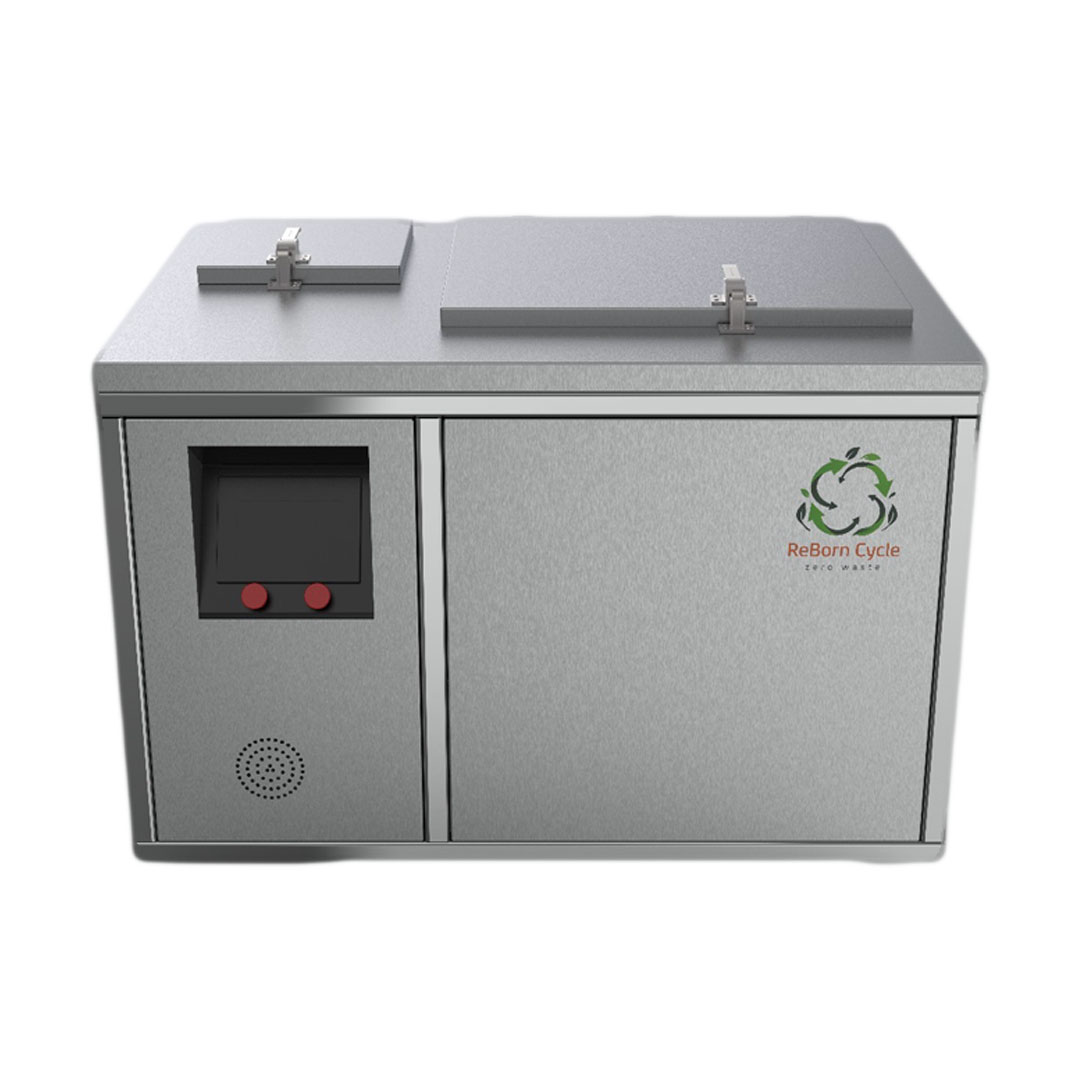



Most restaurants do not legally need an on-site compost machine; below about 15–40 kg/day and with reliable municipal collection, sorting and weighing come first. Above roughly 50 kg/day, odour pressure, or zero-waste reporting, a closed unit usually pays off.
A compost machine is not mandatory for every restaurant. The decision depends on daily organic waste in kg, back-of-house space, and how reliable your collection service is. With roughly 15–40 kg/day and regular municipal pickup, most small venues start with sorting, weighing, and training. Above about 50 kg/day, with odour near the dining room, or when recovering material on site, a closed industrial unit is usually sound.
Owners and head chefs often ask the same question: do we really need a compost machine, or is separate collection enough? The answer follows your daily weights, kitchen layout, and local waste service. Here we spell out when on-site processing makes sense, which capacity band fits, and how odour, space, and staffing change the maths. For the process itself, see our guide on composting from restaurant waste.
When Is a Compost Machine Necessary for a Restaurant?
An on-site compost machine is not a universal legal requirement. Many jurisdictions expect biodegradable waste to be collected separately; that does not automatically mean you must buy a machine. A unit earns its place when you want to stabilise waste on site and cut how often wet organics leave the building.
On site surveys we see recurring thresholds. Below about 15 kg/day with dependable weekly collection, most small restaurants begin with colour-coded bins, a weigh log, and brief steward training. In the 40–80 kg/day band, if the store room smells or sits close to the guest entrance, a closed machine removes a lot of daily friction. From 100 kg/day upward—hotel restaurants, central kitchens, multi-outlet brands—on-site processing often matches haulage cost and hygiene risk.
Three questions settle the call: what is your weighed daily kg? Does delayed collection or odour disrupt service? Does processed output (garden, supplier, reporting) add value? If all three are no, tightening separation under organic waste management in hotels and restaurants is usually enough for now.
Which Capacity Fits Daily Restaurant Waste?
Sizing starts with a 7–14 day weigh period. Prep trim, plate waste, and spoilage should use separate tubs; weekends and busy dinner services must sit inside the sample. Size for your measured peak day, not the monthly average; we typically add 20–30% headroom.
| Daily waste | Example profile | Machine family | Note |
|---|---|---|---|
| 10–25 kg | Café, small à la carte | RBN-C25 Compost Machine | Tight BOH; steady feeding rhythm |
| 25–60 kg | Mid-size restaurant, brunch-led | RBN-C50 Compost Machine | Add peak-day margin |
| 60–120 kg | Large kitchen, hotel dining | RBN-C100 Compost Machine | Plan for two shifts |
| 300 kg+ | Multi-menu site, central kitchen | C250 and up | See machine choice for high daily volume |
Open bins and household-scale devices rarely meet restaurant hygiene expectations. A closed, heated, aerated industrial compost machine is the usual benchmark. With balanced moisture, kitchen waste typically stabilises in 24–48 hours inside the vessel; fatty or irregular loads may need 48–72 hours. Before purchase, review what to check when buying a compost machine.
What Differs Between a Small Restaurant and a Large Kitchen?
Small sites generate waste from veg prep, limited plate returns, and daily spoilage. Back-of-house space is often a 6–12 m² service corridor; the machine must fit without pushing odour toward the dining room. Fewer staff means a simple routine—one or two tipped loads per day often suffice on C25 or C50 installs.
Large kitchens add prep lines, cold-room pull-outs, and event menus. Carts move more often; liquid leakage and fatty trim upset moisture balance. With several chefs and stewards, labelled bins, a weigh sheet, and shift handover are non-negotiable. Before layout sign-off, measure door width, floor load, power, and drains in the service room.
The gap between household and industrial gear is as much about hygiene and odour as throughput. Open piles and tiny home composters often vent smell toward guests; a closed, heated in-vessel system keeps aerobic conditions and lowers that risk in a restaurant setting.
How Are Odour and Space Managed in Restaurant Kitchens?
Odour—not capital cost—is what makes many operators pause. Organic waste smells when it heats without oxygen; a closed, mixed, temperature-controlled machine keeps the process aerobic. With moisture near 50–60% and regular feeding, the goal is no noticeable smell in guest corridors.
Draw a short, straight path from prep to the machine; wet bags waiting at the door are still the main odour source. Place the unit away from ready-to-eat lines, in a ventilated service room. Daily wipe-down of the lid area and weekly check of mixing channels should be standard.
Warning: Plastic, foil, and cooking oil do not belong in the compost stream. Contamination raises odour and ruins output quality. Give stewards a clear allowed vs forbidden list at the hand-wash station.
For symptom-based fixes, pin the checklist from controlling odour in organic waste on the kitchen board. Document separate collection and weigh records to support zero-waste compliance in your market.
Is On-Site Composting or External Collection More Sensible?
The two approaches coexist. A low-volume city restaurant with twice-weekly collection may stay on bins longer. When waste accumulates daily, the skip smells, or per-kilo haul cost rises, on-site processing moves up the list.
Example frame: at 20 kg/day with reliable twice-weekly pickup, tighten weighing before buying hardware. At 70 kg/day with a full bin every night, a C50–C100 class machine cuts logistics load. If you want numbers for both paths, our consulting team can model collection vs on-site using your weigh data.
How Does ReBorn Cycle Commission Restaurant Composting?
We start on site with measurement: which lines produce what, which day peaks, and how many metres staff walk with carts. Then we draft layout, power, drain, and airflow for a C25, C50, or C100 closed unit.
After installation we run a short operator session for stewards and the head chef: separation, feed rhythm, moisture checks, and cleaning steps. Discharge is a hygienised pre-compost, not fully mature fertiliser; many uses need a few weeks of curing—set that expectation early.
- Survey and weighing Collect 7–14 days of kg data and room photos.
- Capacity sign-off Pick the model using peak day plus margin.
- Installation Mount in the service room, commission, and trial load.
- Training Hand over shift checklists and log forms.
Tip: Treat month one as a pilot; compare log weights to machine intake. A gap usually points to bins or menu flow, not machine capacity.
Post-start hygiene rules—locked lids, hot-surface awareness—go on a laminated card. Schedule steward and chef orientation through our training service when you want a structured handover.
Frequently asked questions
Is a compost machine mandatory in a small restaurant?
If organic waste stays near 15–25 kg/day and municipal collection is reliable, a machine is usually not mandatory. Sorting, weighing, and staff briefing come first. Choose a closed C25-class unit when waste piles up or odour reaches guest areas.
What compost machine capacity suits a restaurant?
Size to your measured peak day in kg. Planning markers: about 10–25 kg/day → RBN-C25, 25–60 kg/day → RBN-C50, 60–120 kg/day → RBN-C100. Add 20–30% headroom after a 7–14 day weigh period.
Does a compost machine make restaurant kitchens smell?
A closed, temperature-controlled industrial unit kept on a steady feed schedule smells far less than an open skip. Most guest-area odour still comes from bags waiting at the door. Plastic, oil, wet piles, and irregular emptying make smell worse.
How much space does a restaurant compost machine need?
With service clearance, most installs need about 8–15 m² in a back-of-house room; C25 fits tighter footprints. Door width, floor load, power, and drains are checked at survey. Keep the machine away from ready-to-eat lines.
How many staff does a restaurant compost machine require?
On C25 and C50 scales, 15–30 minutes per day of steward time—sorting, feeding, and wiping surfaces—is often enough. A dedicated full-time operator is usually unnecessary; the duty can sit with the steward or shift lead.
Is an on-site machine required for zero-waste compliance?
Many schemes require separate organic collection, not necessarily on-site processing. A machine strengthens evidence when you report on-site recovery. If compliance alone is the goal, start with sorting; if recovery on site matters, a machine is logical.
Choosing the Right Restaurant Compost Path
A restaurant compost machine is a conditional investment: with low daily kg and dependable collection, sorting and weighing are often enough. Above roughly 50 kg/day, odour near guests, or a recovery target, a closed industrial unit is usually the sensible next step.
Before you commit, weigh for 7–14 days, record the peak, and walk the back-of-house for odour and clearance. The C25, C50, and C100 families cover small through large kitchens; align staff expectations with pre-compost output and a short curing period, not instant mature compost.
To map weighing and layout at your site, book a free site survey. Our team reviews kg data and kitchen flow, then shapes consulting and operator training around how your restaurant actually runs.