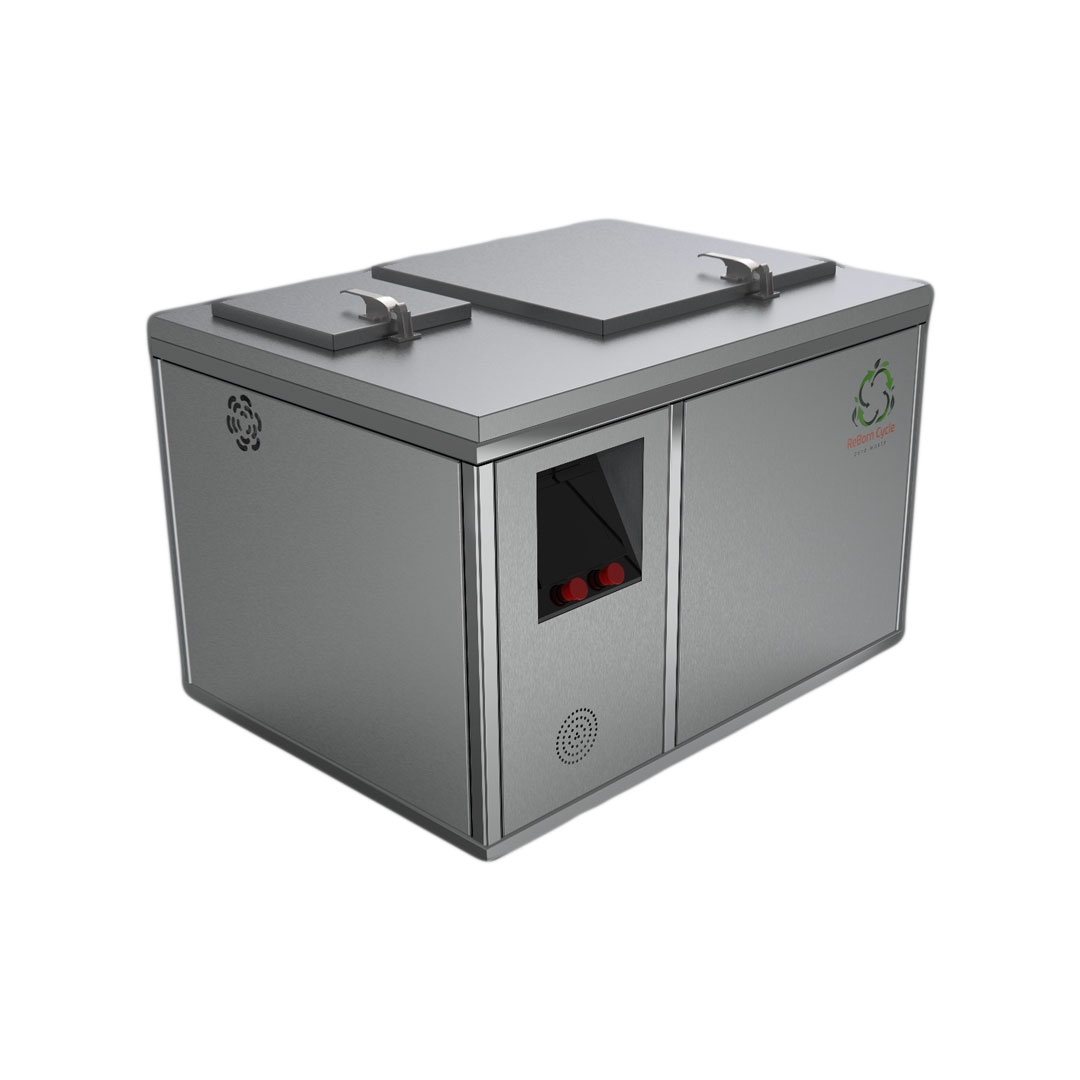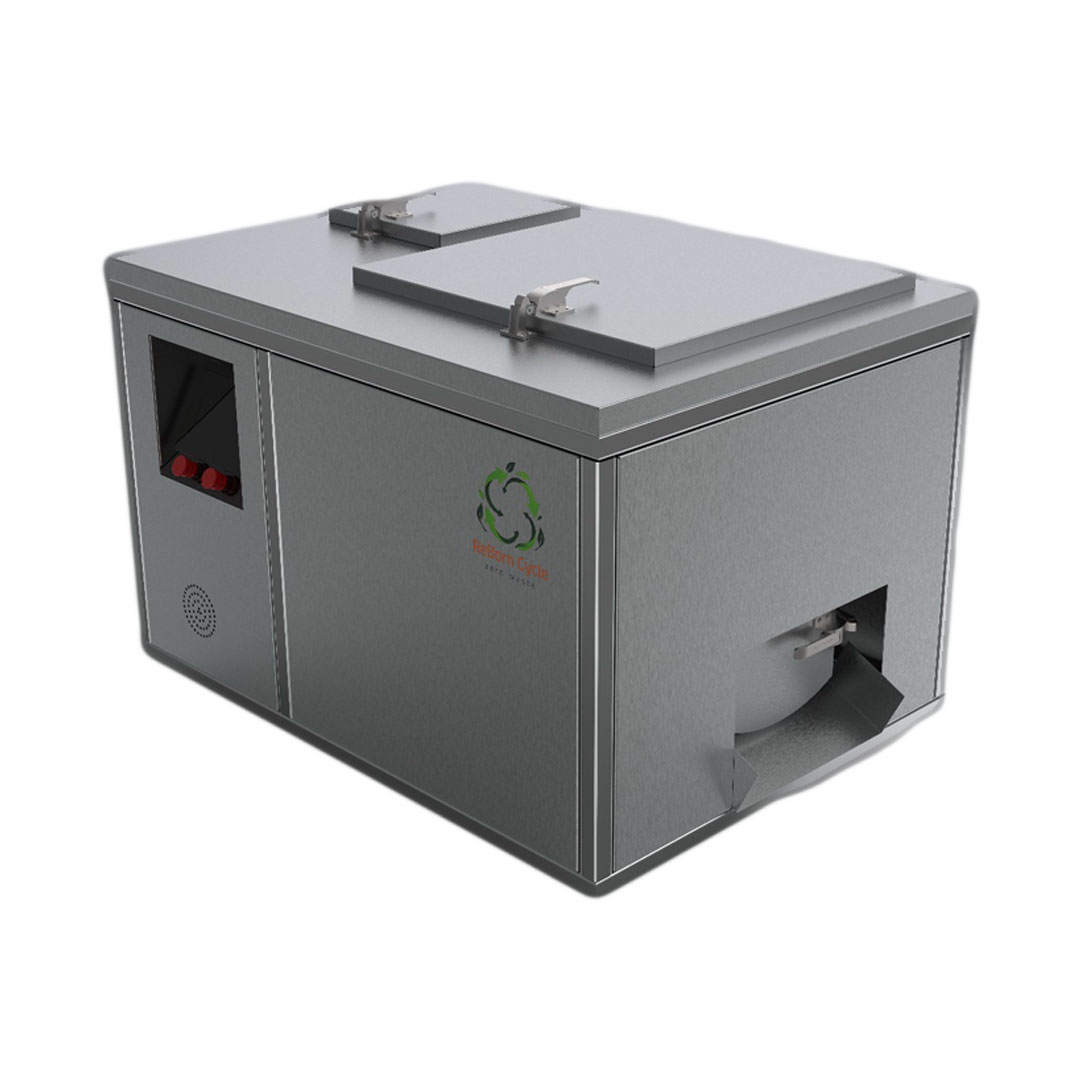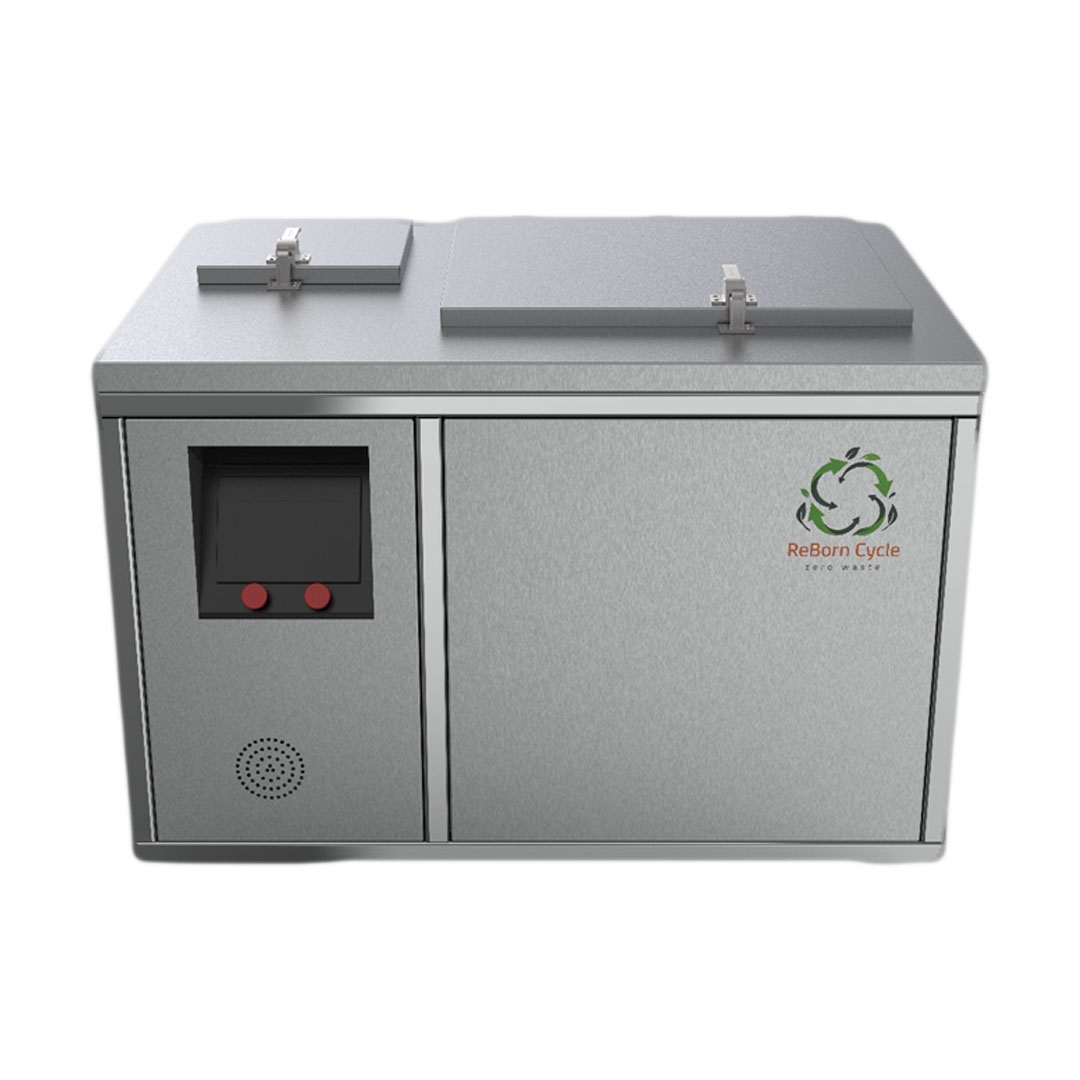

Practical organic-waste management for hotel and kitchen teams: source separation, weighing, temporary storage and on-site processing.
ReBorn Cycle — hotel and foodservice field projects
Organic waste in a hotel kitchen affects guest-area odour, logistics cost and zero-waste targets together. Success starts with routine and records—before the machine.

Source separation
Prep, cooking and plate scrap streams should be collected separately. Plastic, metal and single-use packaging must not enter the organic line. For the broader frame, see the hotel–restaurant organic waste guide.
Weighing and ownership
| Step | Owner | Record |
|---|---|---|
| End-of-shift weighing | Chef / commis | kg + time |
| Reject unsuitable input | Operator | reason + photo |
| Machine feeding | Trained staff | quantity + cycle |
Odour and the guest area
Closed lids, short holding times, regular cleaning and correct ventilation reduce odour complaints. On-site processing cuts external haul frequency. Practical steps: odour control.
Related product models
Related blog articles
- Organic Waste Management for Hotels and Restaurants
- How to control odour from organic waste
- Producing compost from restaurant waste
Frequently asked questions
Must the waste room and the machine share one area?
They may be separated per service access and hygiene rules; keep the transfer distance short.
How long does staff training take?
On standard models, basic operator training is usually completed within 1–2 days alongside installation.
Can buffet leftovers be fed directly?
Bones, plastic and packaging must be removed first; otherwise process and odour degrade.
Next step
Leave a site-survey request for layout and capacity recommendations for your hotel kitchen. Contact us.