A hotel's daily organic waste depends on occupancy and food concept; with a 0.5–1.0 kg per guest-night planning assumption, a 300-room all-inclusive hotel at 80 % occupancy produces roughly 240–480 kg a day.
A hotel's daily organic waste is estimated with the formula rooms × occupancy rate × guests per room × kg of waste per guest-night. For buffet-heavy all-inclusive kitchens, 0.5–1.0 kg per guest-night is a planning assumption; a 300-room hotel at 80 % occupancy, for example, produces roughly 240–480 kg a day. An exact figure requires 7–14 days of weighing.
Whether hotel managers are sizing a compost machine, negotiating a waste collection contract or preparing a zero waste report, they start with the same question: how many kilograms of organic waste do we generate each day? In this article you will apply the estimation formula step by step, see worked examples for 100-, 300- and 600-room hotels, learn where the waste comes from in the kitchen and how to replace the estimate with real measurement. For the bigger picture, see our guide to organic waste management in hotels and restaurants.
How to Calculate Organic Waste in a Hotel
The calculation rests on four variables. First you work out how many guests stay in the hotel on a given night, the guest-nights, and then you multiply that by a waste factor per guest.
Daily organic waste (kg) = rooms × occupancy rate × guests per room × kg per guest-night
Example: a 300-room hotel at 80 % occupancy with an average of 2 guests per room has 300 × 0.80 × 2 = 480 guest-nights. With a factor of 0.7 kg, you can expect 480 × 0.7 = roughly 336 kg of organic waste per day.
The 0.5–1.0 kg per guest-night range is a planning assumption we use for buffet-heavy all-inclusive kitchens, not a measured industry average. City hotels serving only breakfast usually fall below this range, while resorts with several restaurants and busy event periods can exceed it.
Warning: The factor covers kitchen, buffet and plate waste only. Garden waste, paper towels and packaging must be calculated separately. Treat the assumption as a first estimate until you replace it with your own weighing data.
Example Waste Volumes for 100, 300 and 600-Room Hotels
The table below compares three hotel sizes using the same assumptions: 80 % occupancy, 2 guests per room and a range of 0.5–1.0 kg per guest-night, with 0.7 kg as the middle value. The figures are examples and do not replace your own property's data.
| Rooms | Guest-nights per day | At 0.5 kg | At 0.7 kg | At 1.0 kg |
|---|---|---|---|---|
| 100 | 160 | 80 kg/day | 112 kg/day | 160 kg/day |
| 300 | 480 | 240 kg/day | 336 kg/day | 480 kg/day |
| 600 | 960 | 480 kg/day | 672 kg/day | 960 kg/day |
Peak season needs its own calculation. If the same 600-room hotel runs at 95 % occupancy in July and August, guest-nights rise to 600 × 0.95 × 2 = 1,140 and daily waste climbs to about 798 kg at 0.7 kg per guest-night. Capacity planning is based on this peak day, not on the average day.
Where Does Hotel Organic Waste Come From
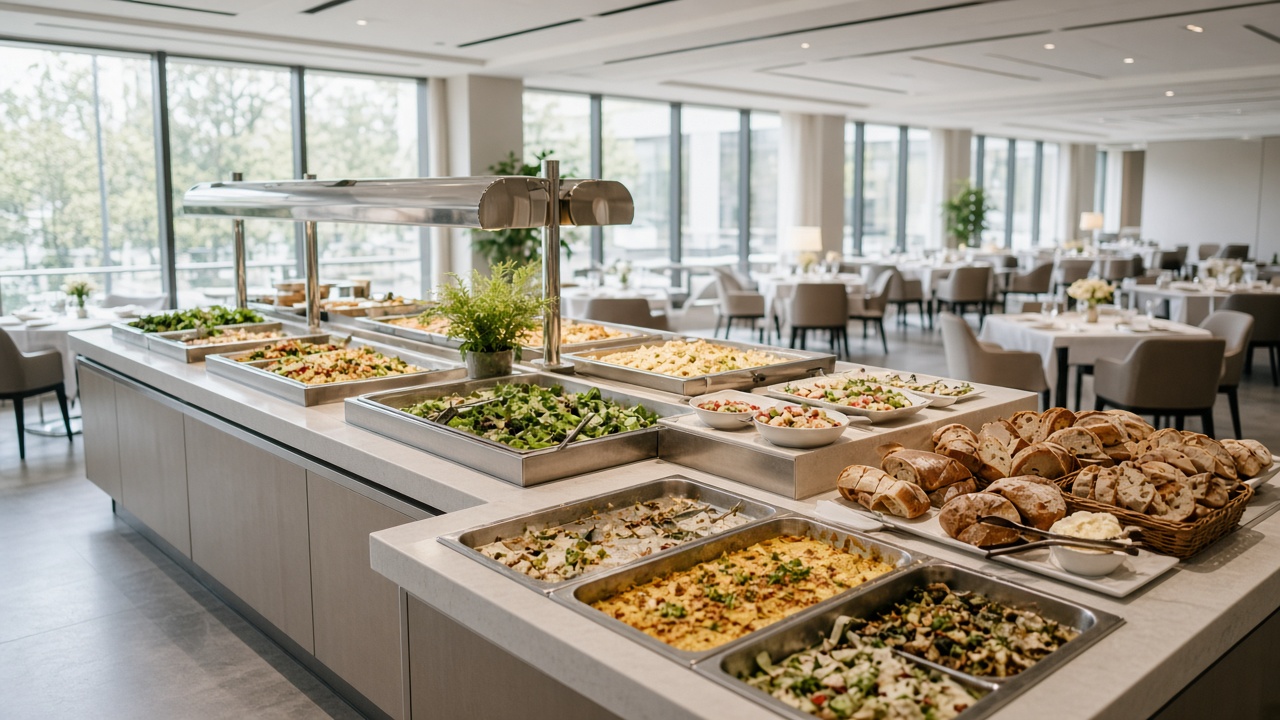
Organic waste does not come from a single point. In our site surveys of all-inclusive hotels we usually see the largest share coming from buffet and plate waste, whereas in à la carte hotels preparation waste tends to dominate.
- Preparation waste: fruit and vegetable peels, trimmings, coffee grounds and tea leaves.
- Buffet leftovers: food whose service time has expired and which cannot go back to the kitchen for food safety reasons.
- Plate waste: food, bread and fruit that guests leave on their plates.
- Spoilage and stock loss: products past their use-by date or stored incorrectly.
- Staff canteen: often forgotten in estimates, yet it adds a significant amount to the daily total.
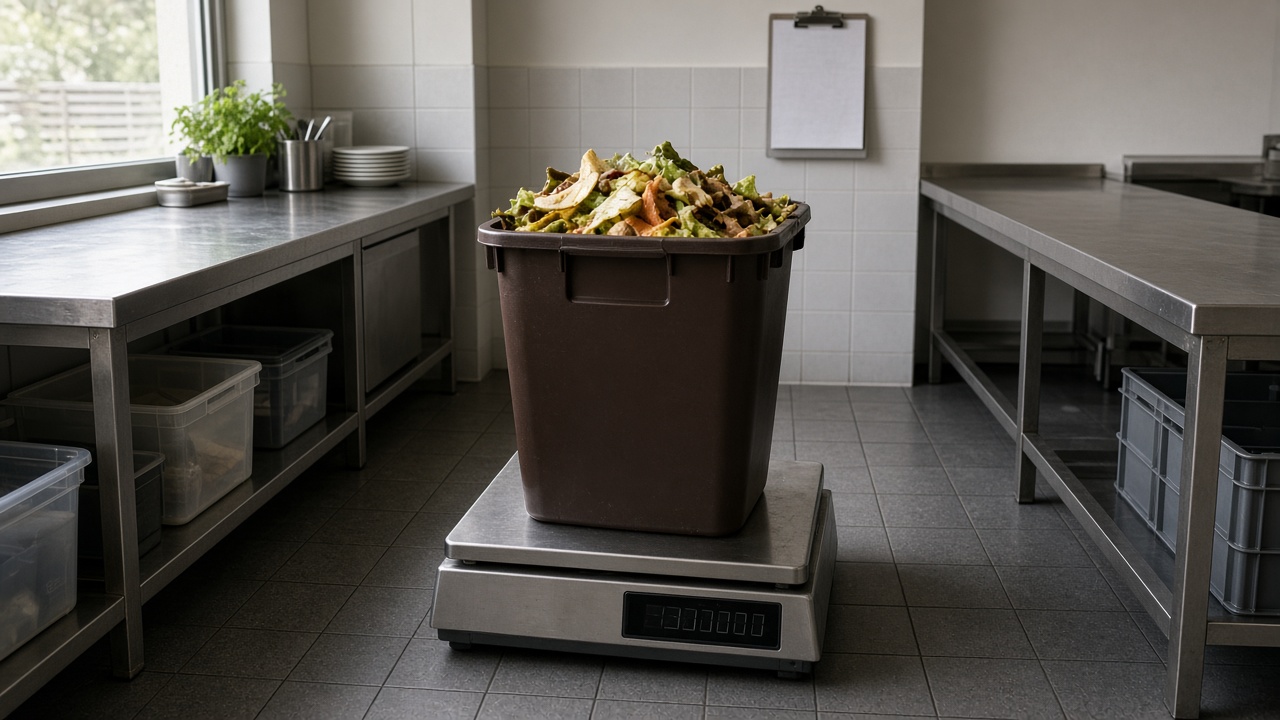
The food concept directly shifts this mix. Open buffets, multiple restaurants, gala dinners and long service hours increase waste, while breakfast-only city hotels generally produce less. Weddings, conferences and group stays also cause one-day spikes, so flag those days separately in your measurement. For a practical set-up of source separation, our article on managing organic waste in a hotel kitchen is a good starting point.
How to Measure Your Hotel's Actual Waste
The formula gives you a starting point, but an investment decision needs measurement. The most reliable way to replace the assumption with your own figure is a short but disciplined weighing period.
- Set up separate bins Use separate, labelled bins for preparation, buffet, plate and staff canteen waste.
- Weigh for 7–14 days Weigh every bin at the end of the day and capture weekdays, weekends and event days.
- Record guest numbers Get occupancy and guest-night data for the same days from the front office.
- Find your own factor Divide total kilograms by total guest-nights and use this value instead of the 0.7 assumption.
- Correct for season If you measured in low season, add peak-month occupancy and any concept changes to the calculation.
Weighing data feeds every later step, from capacity selection to reporting. We explain in detail which data to collect and how in our guide to building a waste profile during site measurement.
Tip: Determine the tare weight of each bin once and write it on the log sheet, so staff only record the gross weight each day and errors drop.
How to Choose Compost Machine Capacity Based on Waste Volume
A machine is sized for the measured peak day, not the average day. In practice we recommend adding a 20–30 % margin on top of the peak; this covers seasonal deviations and a new restaurant that may open later.
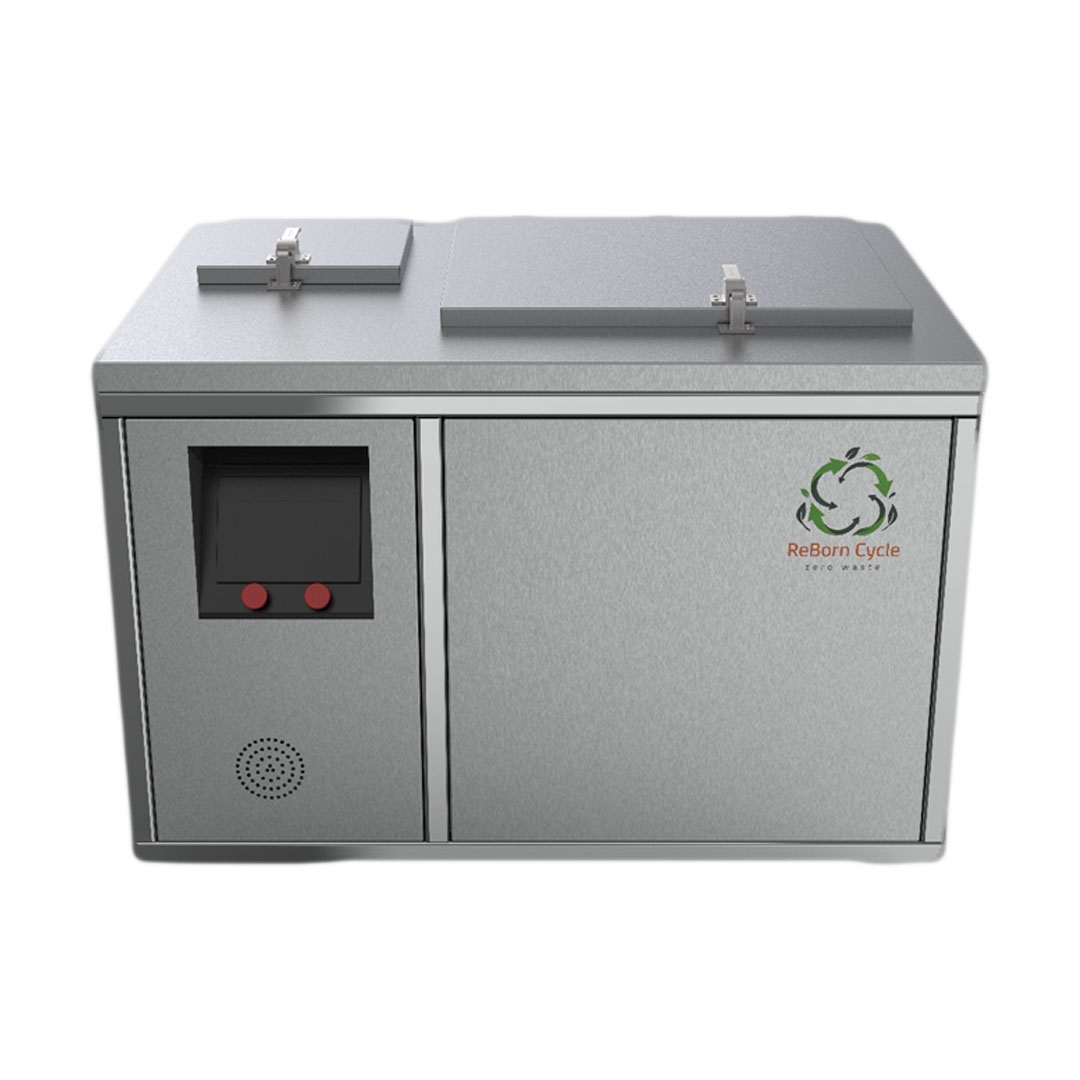
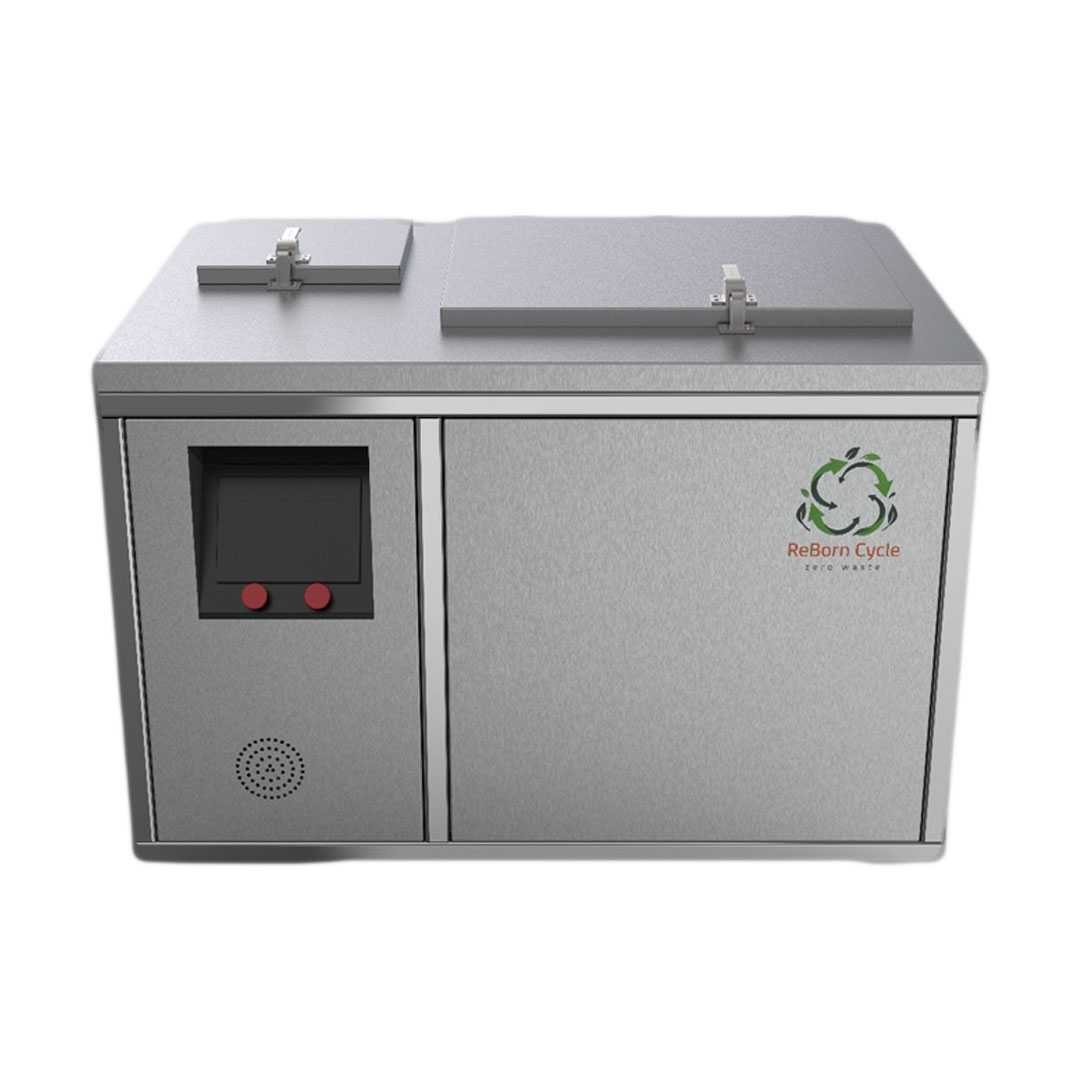
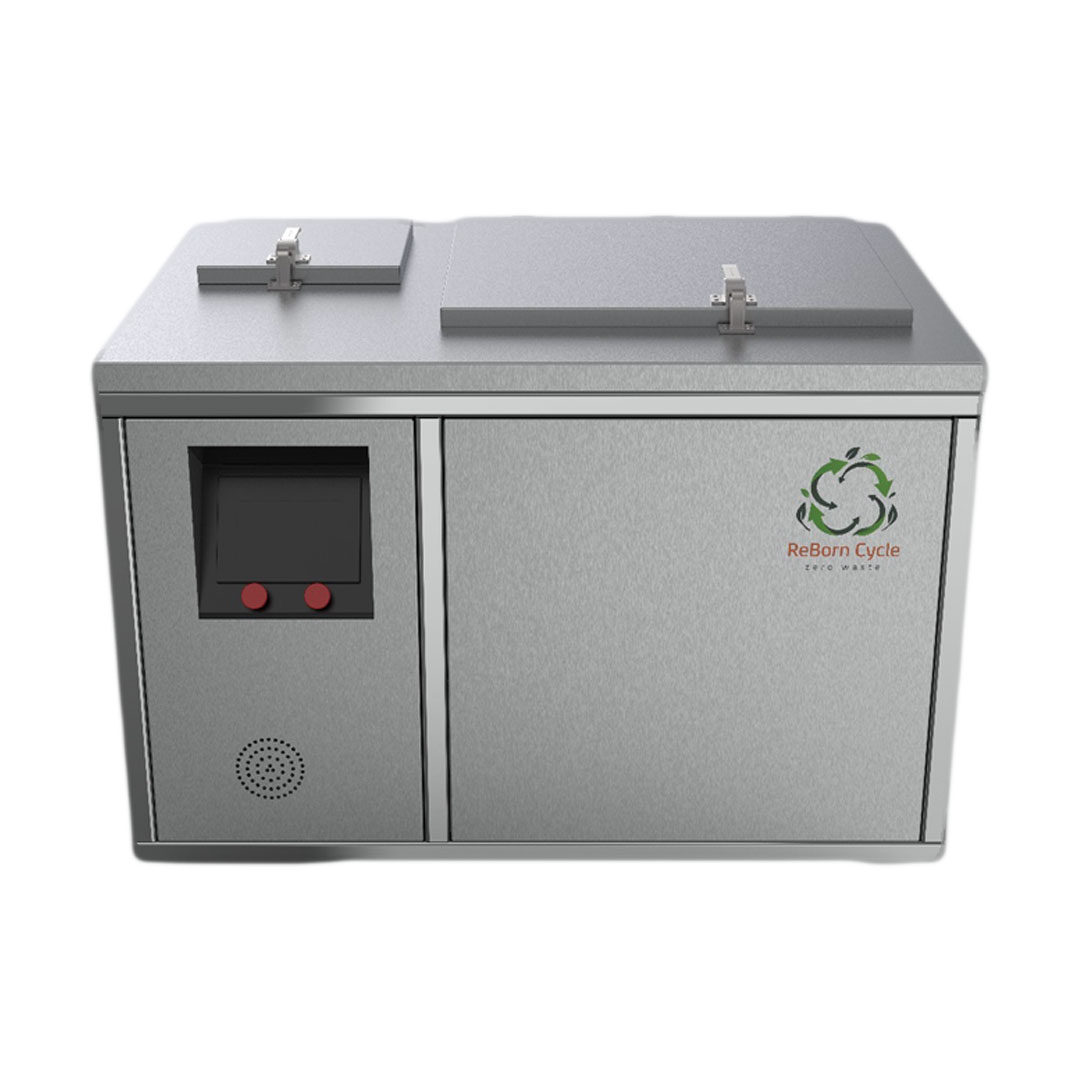
With the example assumptions, a 100-room hotel peaks at about 133 kg/day at 95 % occupancy, or around 165 kg/day with a 25 % margin. In that case the RBN-C100 Compost Machine is only sufficient if your measured peak stays below 80 kg/day; otherwise the RBN-C250 Compost Machine runs more comfortably. A 300-room hotel peaks at around 400 kg/day, about 500 kg/day with margin, which matches the RBN-C500 Compost Machine class. A 600-room resort approaching 800 kg/day at peak is planned in the RBN-C1000 class.
ReBorn Cycle compost machines are closed in-vessel systems with heating, aeration and mixing; kitchen waste with balanced moisture typically becomes a stabilized pre-compost inside the machine within 24–48 hours. During the site survey our team reviews your weighing data, sets the peak day and margin with you, and handles installation and operator training. For a first estimate, try the online capacity selector; for precise sizing, our consulting service can support you.
Frequently asked questions
How much food waste does a hotel produce per guest?
There is no single correct value; it depends on the food concept and service style. For buffet-heavy all-inclusive kitchens we use 0.5–1.0 kg per guest-night as a planning assumption. Breakfast-only city hotels are usually lower. You should find your own factor through 7–14 days of weighing and use it instead of the assumption.
Why do all-inclusive hotels generate more food waste?
All-inclusive concepts combine long buffet hours, wide menus and unlimited service, so more buffet food cannot be reused and plate waste rises. Several restaurants, snack bars and gala dinners push the total up further. Using smaller buffet trays and refilling them more often is one of the most practical ways to reduce waste.
How long should a hotel measure its organic waste?
Measure for at least 7 and preferably 14 days. That period captures weekdays, weekends and event days together. If you measure in low season, scale the results to peak-season occupancy and, if possible, run a short check measurement again during the summer peak.
How is organic waste shown in a hotel ESG report?
Organic waste is reported as weighed kg per day and kg per guest-night, with the amount composted on site shown separately. Regular records provide data both for separate collection obligations under national rules such as Turkey's Zero Waste Regulation and for sustainability reports. For details, read our article on organic waste in hotel ESG reporting.
What compost machine capacity does a hotel need?
We recommend a capacity 20–30 % above the measured peak day. Under the example assumptions, a 100-room hotel falls into the RBN-C100 or RBN-C250 class and a 300-room hotel into the RBN-C500 class. The final choice should rest on weighing data and the seasonal profile, because wrong sizing leads either to waste piling up or to unnecessary investment.
Getting Hotel Waste Estimates Right
To estimate a hotel's daily organic waste, multiply rooms, occupancy, guests per room and a waste factor per guest-night. The 0.5–1.0 kg per guest-night range is only a starting assumption; the real value depends on your kitchen's concept, menu and guest profile.
Our practical recommendation: first derive a rough range with the formula, then weigh for 7–14 days and calculate the peak season separately. Choose machine capacity by adding a 20–30 % margin to the measured peak day. That way waste does not pile up and you do not invest in more capacity than you need.
If you would like to plan the measurement at your property together, you can book a free site survey. Our team reviews your kitchen flow and waste profile on site, designs the weighing period with you and, as part of our consulting service, prepares a capacity, layout and operating proposal backed by concrete figures, so your decision rests on your own hotel's data rather than on estimates.