Garden and park waste is composted by removing contaminants, shredding it and balancing carbon-rich leaves with nitrogen-rich grass or food waste, then controlling moisture and aeration.
To compost garden and park waste, first remove contaminants such as plastic, stones and metal and shred the branches. Then mix carbon-rich dry leaves and wood chips with nitrogen-rich grass clippings or food waste to a C/N ratio of about 25–30:1. Keep moisture at 50–60 %, aerate, and after the 55–65 °C hot phase, cure and screen.
Municipal parks departments, residential estates and hotels collect tonnes of leaves, grass and pruning branches every year. Much of it still ends up in landfill or is burned, yet properly prepared it becomes a valuable soil improver that can go straight back into the parks. This guide explains how to prepare each type of green waste compost feedstock, which mixing ratios work, the on-site steps and how closed machines speed things up. For real-world examples, see our composting field projects in municipalities and hotels.
What Is Green Waste and Why Treat It Separately
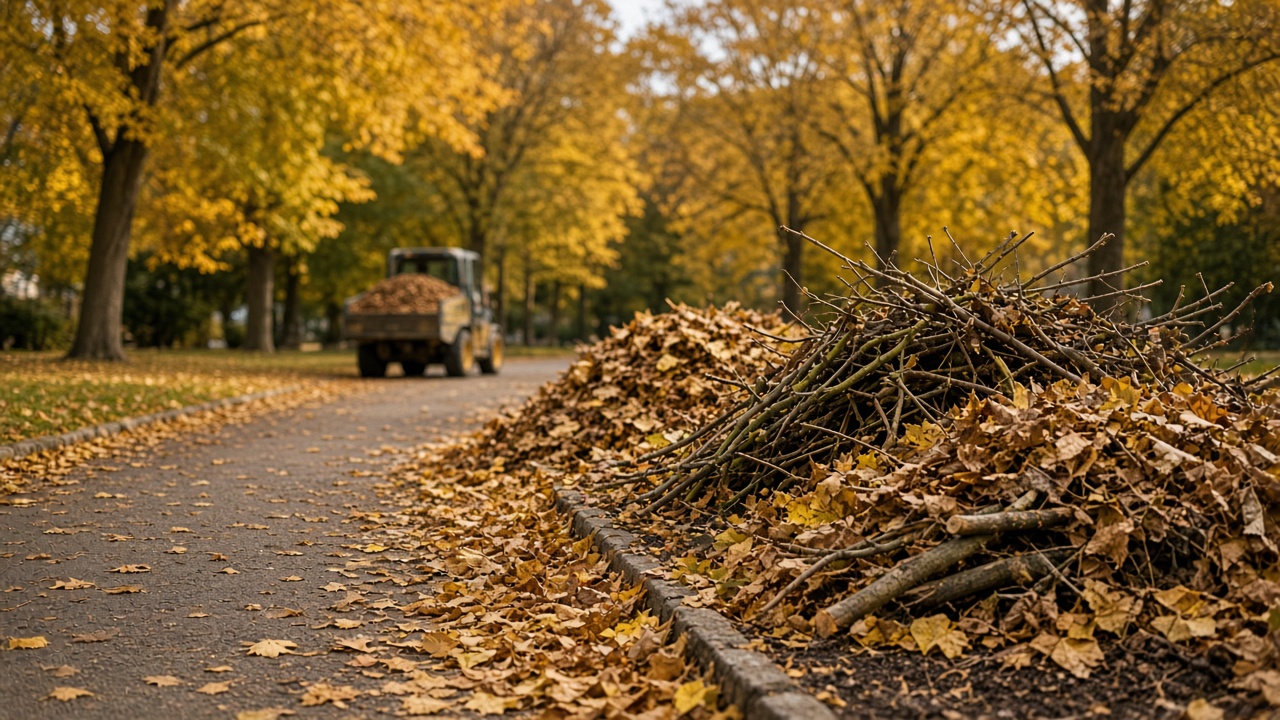
Green waste is the leaves, grass clippings, pruning branches, shrubs and dry vegetation produced by maintaining parks, gardens, road verges and cemeteries. Unlike food waste, its composition changes sharply with the season. In spring and summer, wet grass that heats up quickly dominates; in autumn, dry, tough leaves that break down slowly pile up.
These swings cause two practical problems. First, a single material composts poorly on its own: grass compacts and smells within a day or two, while dry leaves can sit almost unchanged for months. Second, peak-season volumes stretch storage and transport capacity.
In our site surveys we usually see autumn leaves left in open heaps and summer grass rotting in a separate corner. Yet the two materials complement each other well. Since Turkey's Zero Waste Regulation (2019) requires separate collection of biodegradable waste in many facility types, moving green waste into a regular composting stream makes sense for both compliance and cost. For facility and product criteria, the Compost Communique (2015) and current ministry rules apply.
How to Balance Carbon and Nitrogen in Garden Waste
Composting microbes use carbon for energy and nitrogen for growth. For a fast, odour-free process the target is a C/N ratio of about 25–30:1, although 20–40:1 works in most cases. The challenge with garden waste is that its materials sit at both ends of this target.
Dry leaves are carbon-rich at 40–80:1; grass clippings are nitrogen-rich at 15–25:1. In practice, 2 parts dry leaves to 1 part fresh grass by volume is a good starting point. In autumn, when there is no grass, food waste (15–20:1) from park cafés, schools or municipal kitchens can supply the nitrogen. Wood chips and sawdust are added in small amounts as structure; too much slows the process. For detailed settings, read our article on compost machine process parameters.
How to Prepare Leaves, Grass and Branches for Composting
Each type of green waste needs different preparation. The table below summarises the materials most often found on site and how to add them to the mix.
| Material | Typical C/N | Moisture | Preparation tip |
|---|---|---|---|
| Dry leaves | 40–80:1 | Low | Shred, moisten and mix with a nitrogen-rich material |
| Grass clippings | 15–25:1 | High | Mix without delay, in thin layers with dry material |
| Pruning branches, shrubs | Very high | Low | Shred and use in limited amounts as structure |
| Straw, dry grass | 50–150:1 | Low | Chop short and add to support aeration |
| Food waste | 15–20:1 | High | Add to autumn leaves as a nitrogen source |
Particle size is a critical setting. Oversized pieces break down slowly, while material ground to dust compacts and blocks airflow. For branches and leaves, a particle size of about 2–5 cm works well in most systems.
Warning: Never leave fresh grass in a thick heap. Within hours it heats up, runs out of oxygen and gives off a sharp ammonia smell.
Composting Garden and Park Waste Step by Step
Whatever the scale, green waste composting follows the same logic. The sequence below applies to open windrows and closed machines alike.
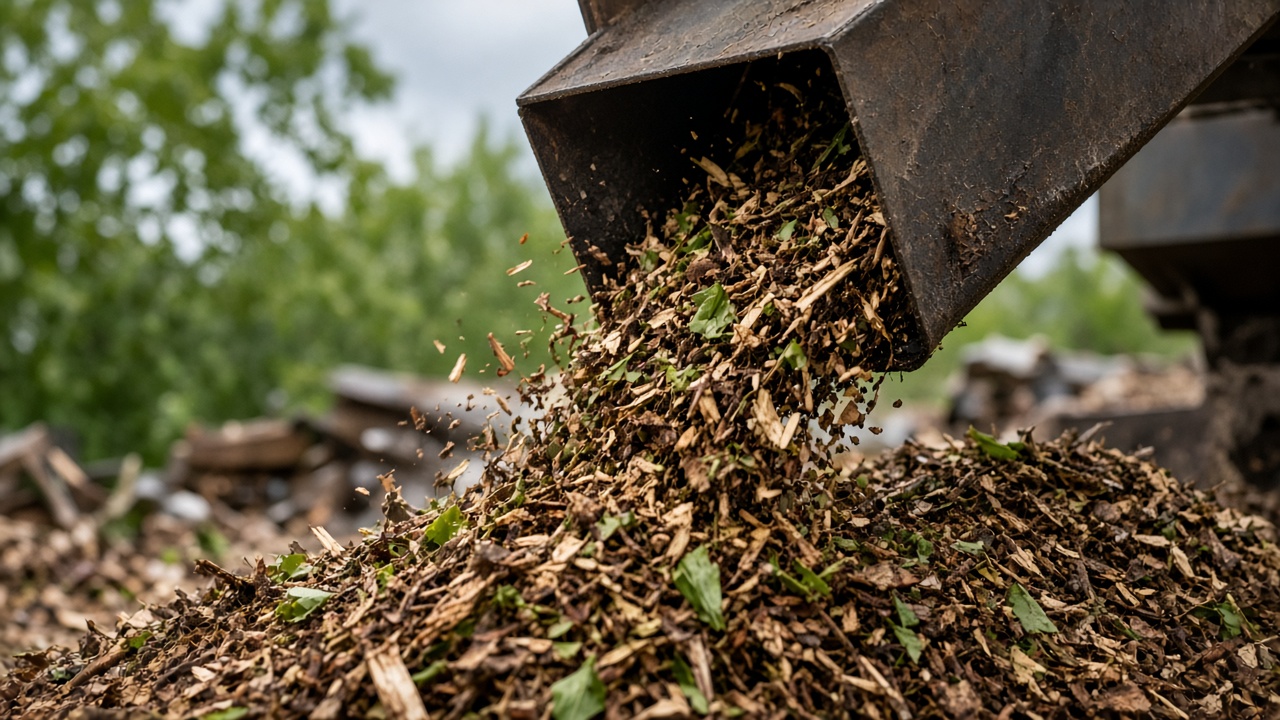
- Collect and separate Collect leaves, grass and branches separately where possible, so you control the mixing ratio.
- Remove contaminants Take out plastic bags, stones, metal, glass and irrigation hose before anything reaches the shredder.
- Shred Run branches and leaves through the shredder to roughly 2–5 cm.
- Mix Bring the C/N ratio to about 25–30:1 and moisture to 50–60 %. A squeezed handful should feel like a wrung-out sponge without dripping.
- Compost Keep oxygen above 5 % and hold 55 °C or more for several days to reduce weed seeds and pathogens.
- Cure and screen Once the temperature drops to ambient, let the material mature, then screen it and return oversize pieces to the next batch as structure.
- Use Apply the screened compost as a soil improver in parks, verges and nurseries.
We explain why removing contaminants takes the most effort in our article on contaminant removal in industrial composting.
How the ReBorn Cycle Line Processes Green Waste
In an open heap, a balanced green waste mix turns into compost in roughly 2–6 months; with dry leaves alone it takes noticeably longer. For municipalities and large sites short on space, a closed system cuts this time considerably.
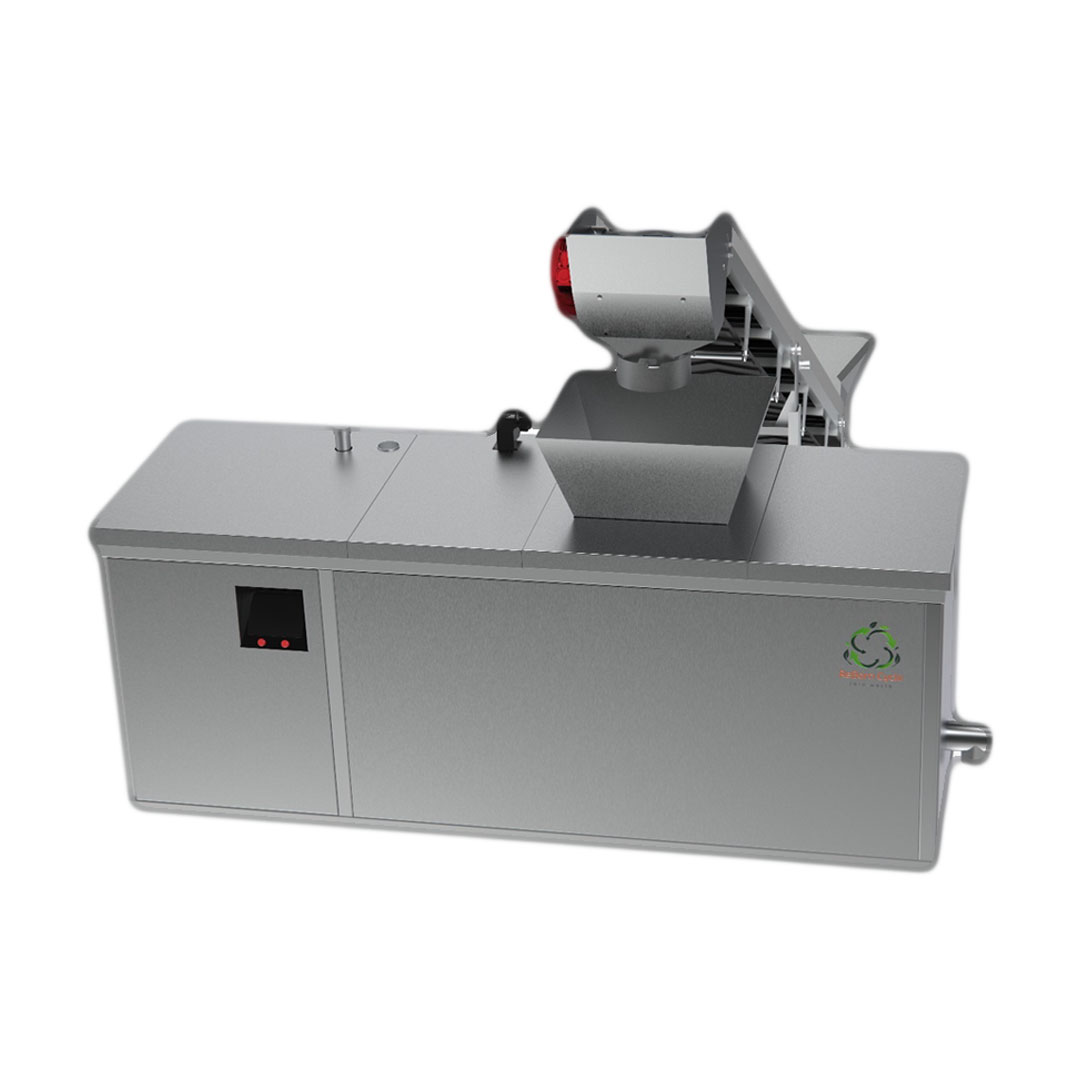
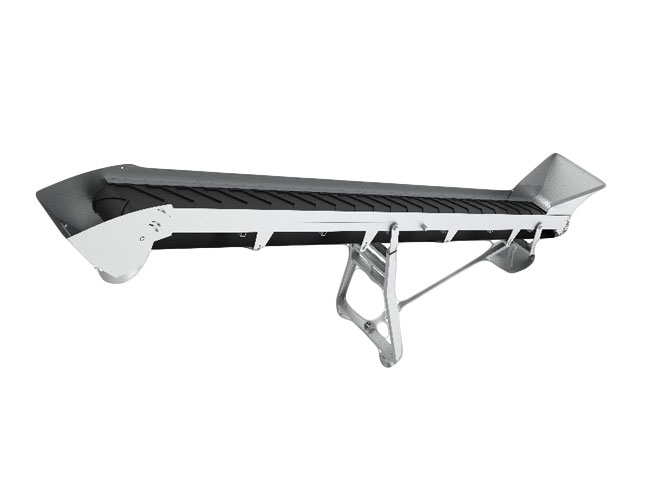
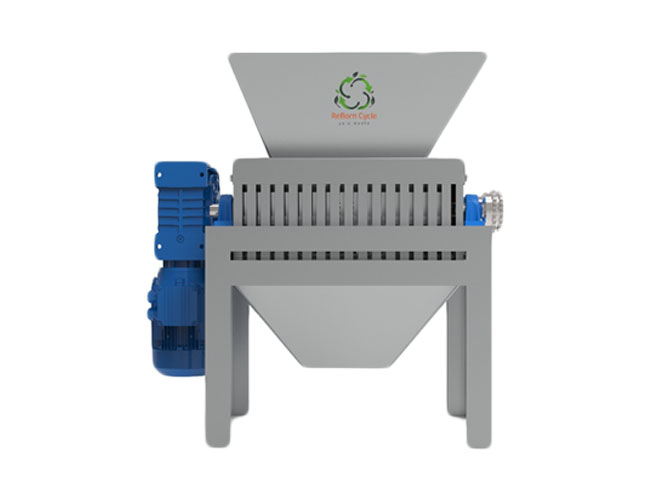
On a typical line, green waste is first reduced by the Shredder and then fed into the machine by the Conveyor Belt. For flows of about one tonne a day, a closed, heated, aerated and mixed machine such as the RBN-C1000 Compost Machine keeps temperature and oxygen under control. With balanced moisture, the in-machine cycle is usually 24–48 hours, extending to 48–72 hours with fatty or irregular feeding. The output is a stabilised, hygienised pre-compost; for fully mature compost, a curing period of a few weeks is recommended.
The best results we see on site come from operators who balance autumn leaves with food waste and summer grass with wood chips and dry leaves. We draw up this mixing plan, together with capacity and layout, as part of our consulting service. Installation, commissioning and pre-season maintenance are handled by our technical support team.
Tip: Store dry leaves in bags or under cover after the autumn peak. They make a handy carbon reserve for mixing with grass all summer.
Frequently asked questions
Can grass clippings be composted on their own?
It is not recommended. Grass clippings are nitrogen-rich and very wet, so in a thick heap they compact quickly, run out of oxygen and smell of ammonia. Mixed with roughly two parts by volume of dry leaves, straw or wood chips, they compost quickly and without problems.
How long do dry leaves take to compost?
Dry leaves left on their own decompose slowly over many months outdoors. Shredded, moistened and mixed with a nitrogen source such as grass or food waste, they become compost in about 2–6 months in an open heap, or after a 24–48 hour machine cycle plus a few weeks of curing in a closed system.
Can pruning branches be composted?
Yes, but they must be shredded first. Branches are very carbon-rich and tough; once chipped and added to the mix in limited amounts, they create air channels that help aeration. Oversize chips left after screening can be reused as structure in the next batch.
Does composting kill diseased plants and weed seeds?
Largely yes, if the temperature is high enough. Keeping the mix at 55 °C or above for several days significantly inactivates pathogens and weed seeds. In open heaps the edges stay cooler, so regular turning is needed; a closed machine keeps the temperature more even throughout the mass.
Where can compost from park waste be used?
The most common uses are improving soil in parks and verges, tree planting pits, nurseries and greenhouses. Mature compost improves soil structure and water retention. For greenhouse use, our guide on using compost in greenhouses gives dosage and mixing advice.
Getting Green Waste Composting Right from the Start
The essence of composting garden and park waste is simple: remove contaminants, shred, balance carbon-rich leaves with nitrogen-rich grass or food waste, and maintain moisture and oxygen. Most problems come from working with a single material and neglecting particle size.
Start by weighing incoming green waste by type and quantity for a few weeks, ideally covering one spring and one autumn period. Once you know the seasonal peaks, you can size the shredder, conveyor and machine correctly and avoid a grass surplus in summer and a leaf surplus in autumn. Setting aside a small covered area for leaf storage keeps the mix balanced all year.
If you would like a mixing plan and capacity calculation for your own site, you can book a free site survey or talk to our consulting team. We review your waste data, your available space and where the compost will be used, and prepare a simple, measurable roadmap your team can put into practice.