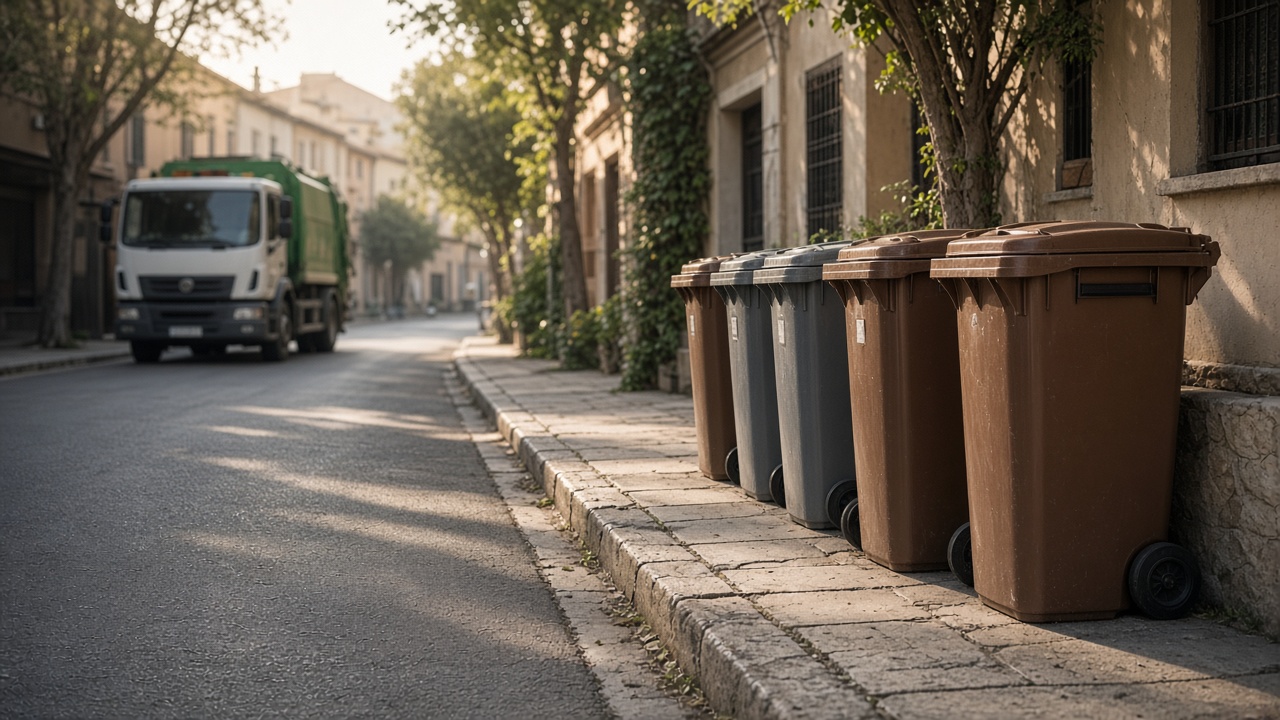
Municipalities collect organic waste separately, starting with large generators, then adding kerbside brown bins and drop-off points; the waste is weighed, recorded and processed at a central in-vessel compost plant.
Municipalities collect organic waste separately at source and in stages. They usually start with large generators such as wholesale markets, hotels, restaurants, schools and hospitals, then add kerbside brown-bin collection and drop-off points for households. The waste is weighed, cleaned of contaminants and processed at a central in-vessel compost plant.
Organic waste is the heaviest and fastest-smelling part of household refuse. Sent to landfill, it takes up space and generates methane. In Turkey, the Zero Waste Regulation (Sifir Atik Yonetmeligi, 2019) requires separate collection of biodegradable waste in many facility types; check the current text for the duties that apply to your municipality. This guide covers collection models, bins and frequency, contamination control and the move from a pilot to the whole city. For field examples, see our article on composting projects in municipalities and hotels.
What Are the Main Organic Waste Collection Models?
Municipalities rely on four basic models, and most cities combine them. Which one leads depends on housing type, population density and the available vehicle fleet.
| Model | Collected from | Advantage | Watch out for |
|---|---|---|---|
| Large generator collection | Markets, hotels, restaurants, schools, hospitals | Lots of clean waste from few stops, quick start | Needs contracts, weighing and fixed routes |
| Kerbside collection (brown bin) | Houses, housing estates, apartment blocks | High participation, lasting habits | Bin distribution and contamination checks take effort |
| Drop-off points | Dense centres, street markets, shopping streets | Low collection cost, flexible start | Participation is voluntary, regular cleaning is essential |
| Park and garden waste | Parks, road verges, cemeteries | Valuable carbon source for composting | Seasonal peaks, branches and stones to remove |
In practice the most efficient order is large generators first, then kerbside collection in a pilot district, and finally city-wide roll-out. Park and garden waste can go to the same plant, because it balances the high moisture of food waste.
Why Start with Large Waste Generators?
A fruit and vegetable wholesale market, a large hotel or a hospital kitchen can deliver hundreds of kilograms of organic waste per day from a single point. Collecting the same amount from homes takes dozens of streets and hundreds of bins. Large generators are therefore the fastest way to fill a plant at low cost and with a predictable flow.
In our site surveys we usually see that waste from large generators is more uniform and carries less packaging than household waste. Contracted collection also tells you the weekly volume in advance. We explain how routes and vehicle fill rates affect cost in our article on how to reduce organic waste logistics costs.
- Markets and bazaars supply wet, seasonal, mostly fruit and vegetable waste.
- Hotels and restaurants produce prep, plate and buffet waste, with a clear rise in summer.
- Schools and hospitals deliver regular canteen waste tied to a calendar; plan for the drop during school holidays.
How to Choose Bins, Bags and Collection Frequency
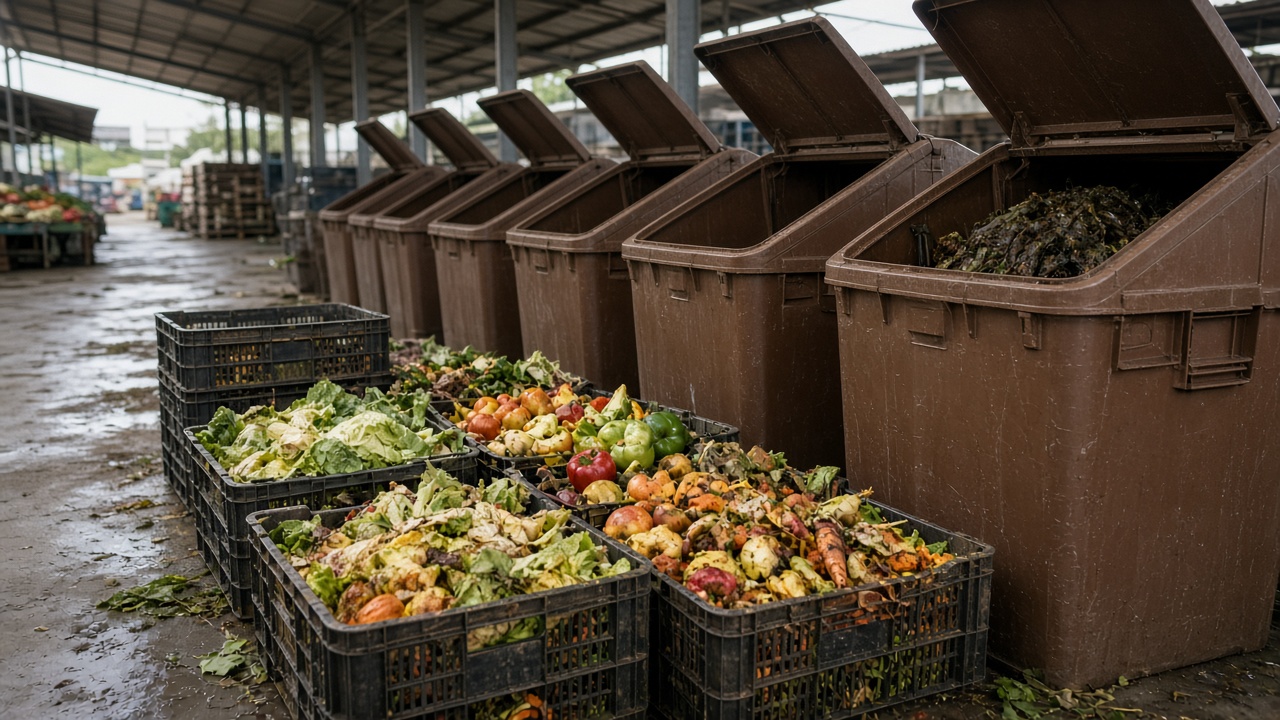
For households, the common setup is a small ventilated kitchen caddy plus a lidded brown container outside the building. Large generators use bigger wheeled containers that are easy to wash. Paper bags or certified compostable bags should be used; ordinary plastic bags come back to the plant as contaminants. Washing containers regularly also prevents many odour complaints.
Odour and flies are what really set the frequency. Organic waste breaks down quickly in the heat, so collection should be more frequent in summer. An example planning approach could look like this:
- Large generators several times a week, daily in summer.
- Kerbside collection once a week in winter, twice a week in summer.
- Drop-off points based on fill level and odour, more often in summer.
Tip: Collecting organic waste more often than mixed residual waste is a simple and effective way to encourage residents to separate.
How to Manage Contamination and Public Awareness
The real measure of separate collection is how clean the incoming waste is. Contaminants such as plastic bags, glass, metal and batteries cause machine faults and lower compost quality. That is why control starts at the bin, not at the plant.
- Visual checks let crews look into a bin before emptying it and tag contaminated bins with a warning sticker.
- Feedback means information visits to addresses with repeated problems.
- Weighing and records track every vehicle at the plant, so volume and contamination rate can be followed per district and per generator.
Short, visual messages work best for awareness: a sticker on the bin showing what goes in and what stays out, neighbourhood notices, school activities and sharing results by district. Collection and plant staff can benefit from our training service. If extra sorting is needed at the plant entrance, our guide to removing contaminants in industrial composting shows the way.
How to Scale from a Pilot District to the Whole City
Moving in stages rather than launching city-wide at once keeps both the budget and public reaction manageable.
- Measure List the large generators and weigh their waste for a few weeks to capture real volumes and seasonality.
- Start with large generators Set up a contracted route to create the plant's base load.
- Choose a pilot district Hand out bins and track participation and contamination for a few months.
- Extend to the whole district Adjust routes, frequency and communication using pilot data.
- Grow capacity Add plant capacity based on measured data.
The values in the chart are only an example; real figures depend on population and participation. For sizing, read our article on choosing capacity for a municipal organic waste plant, and for procurement, see what to check in an organic waste tender.
How Is Collected Organic Waste Processed at a Central Plant?
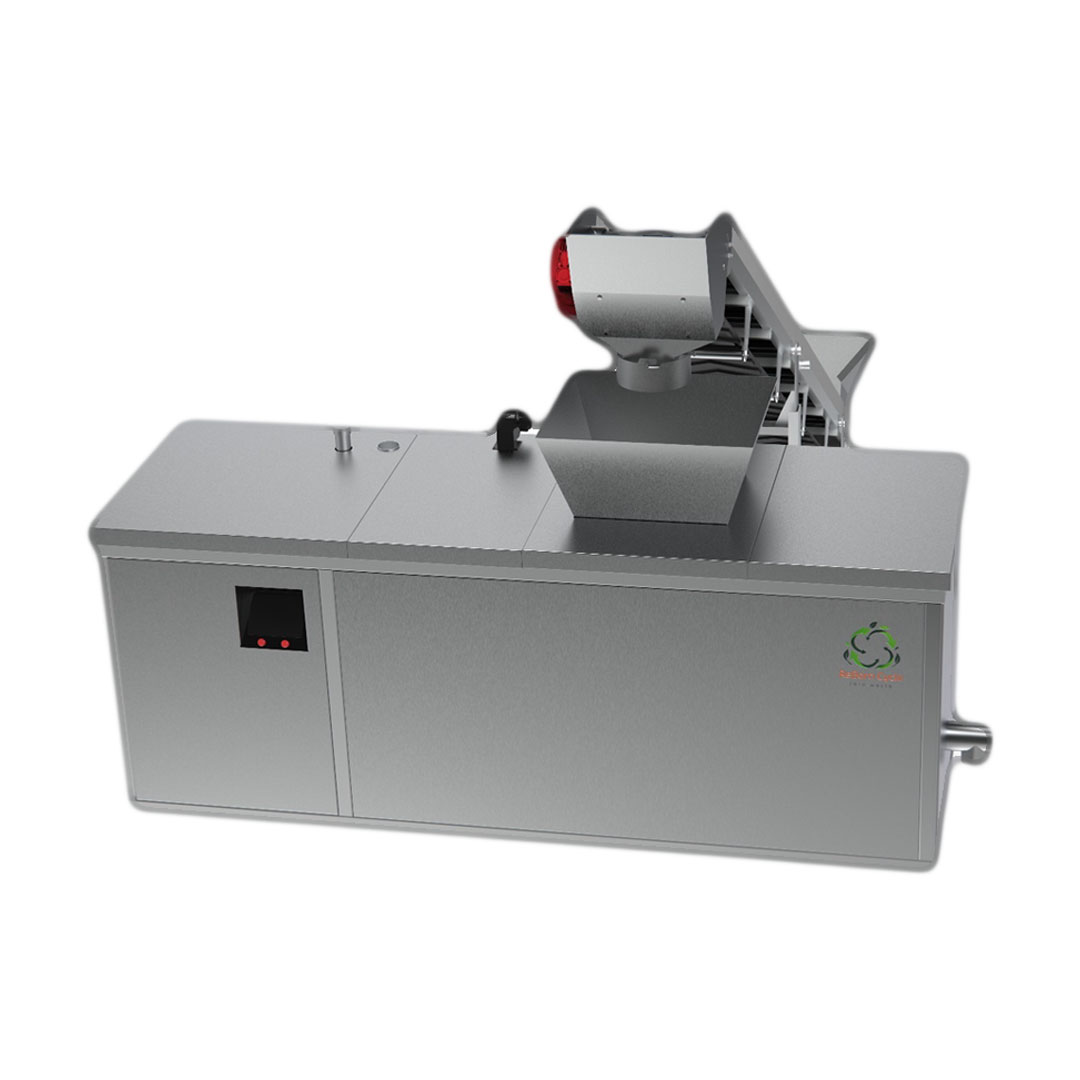
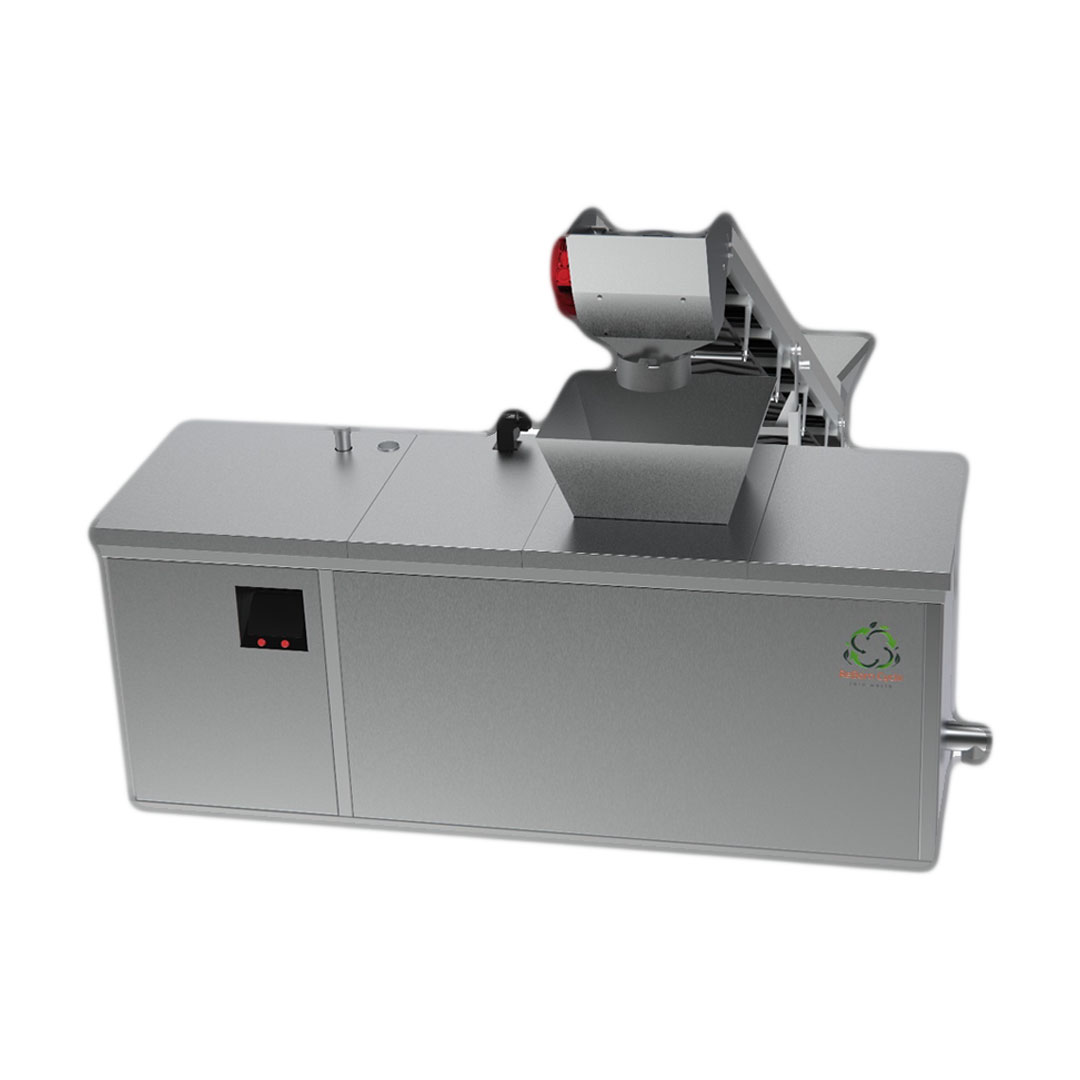
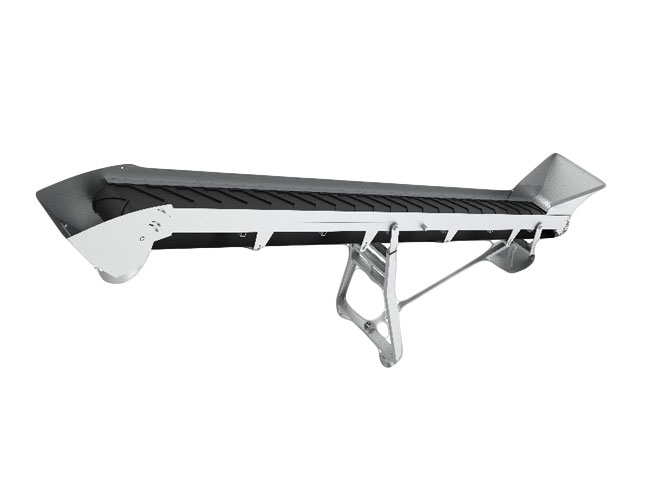
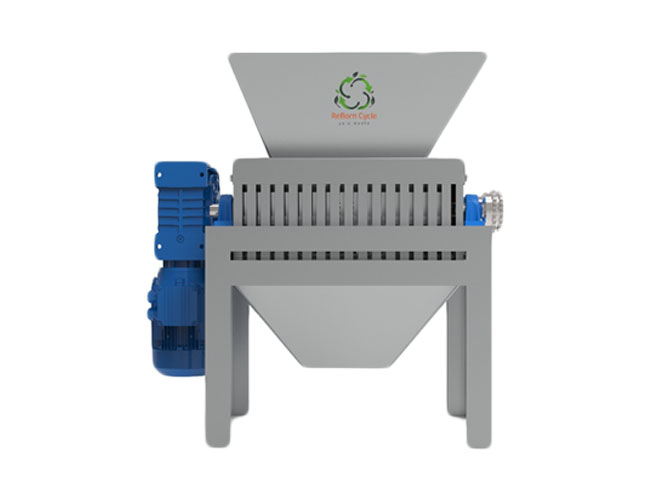
Incoming waste is first weighed, separated from contaminants in the reception area and size-reduced with a Shredder. A Conveyor Belt then carries the material into the closed compost machine, which reduces both odour and staff contact with the waste.
At ReBorn Cycle we build closed, heated, aerated and mixed machines at municipal scale, such as the RBN-C5000 Compost Machine (5,000 kg/day) and the RBN-C10000 Compost Machine (10,000 kg/day). For kitchen waste with balanced moisture, the in-machine cycle is typically 24–48 hours; with fatty or irregular feeding it can reach 48–72 hours. The output is a stabilized, hygienized pre-compost; for fully mature compost, a curing period of a few weeks is recommended depending on the end use.
Our domestic team handles the site survey, installation, operator training and after-sales service. To plan collection and plant capacity together, see our consulting service; for joint project models, visit our partnership page.
Frequently asked questions
Are municipalities required to collect organic waste separately?
In Turkey, the Zero Waste Regulation (2019) requires separate collection of biodegradable waste in many facility types and gives municipalities duties within the zero waste management system. Because scope and timelines can be updated, always check the current text of the regulation and announcements from the Ministry of Environment, Urbanisation and Climate Change.
What goes into the brown bin?
The brown bin takes fruit and vegetable scraps, food leftovers, stale bread, tea leaves, coffee grounds, eggshells and small plant waste. Plastic bags, glass, metal, batteries, nappies, cat litter and cigarette butts must stay out. Always follow the sorting guide published by your own municipality for the exact list.
How often should organic waste be collected?
Organic waste should be collected more often in summer than in winter because of odour and flies. A common approach is once a week in winter and twice a week in summer for households, and several times a week or daily for large generators. The exact frequency depends on climate, bin size and measured volumes.
How can odour be prevented in organic waste collection?
Odour is best prevented with lidded bins, paper or compostable bags, regular bin washing and frequent collection in hot months. At the plant, feeding waste into a closed, aerated compost machine without long storage reduces odour complaints markedly compared with open piles.
What is produced from collected organic waste?
Collected organic waste is turned into a stabilized pre-compost in a closed compost machine and into compost after curing. It can be used as a soil improver in parks, road verges, landscaping and farmland. Before selling or distributing it in Turkey, check the current product criteria of the Compost Communique (Kompost Tebligi, 2015).
Building a Municipal Organic Waste Collection System Step by Step
A successful organic waste collection system is not a large structure built in one go but an arrangement that grows in stages. Starting with large generators feeds the plant quickly, while a pilot district lets you measure resident participation and contamination before scaling up.
The soundest first step is measurement. Weigh the waste of large generators for a few weeks, note seasonal differences and choose capacity based on that data. Then finalise decisions on bins, bags and frequency using the results of your pilot.
If you would like to assess your collection plan and central plant capacity together, you can book a free site survey. Our team reviews the waste profile, reception area and possible plant layout on site. Feasibility, capacity and project planning can then be discussed step by step with our consulting team, in line with your municipality's priorities.