

For a municipal compost machine, fix daily organic waste in kg/day, collection quality, and whether you are running a pilot or a central line first; then match capacity bands to that measured profile.
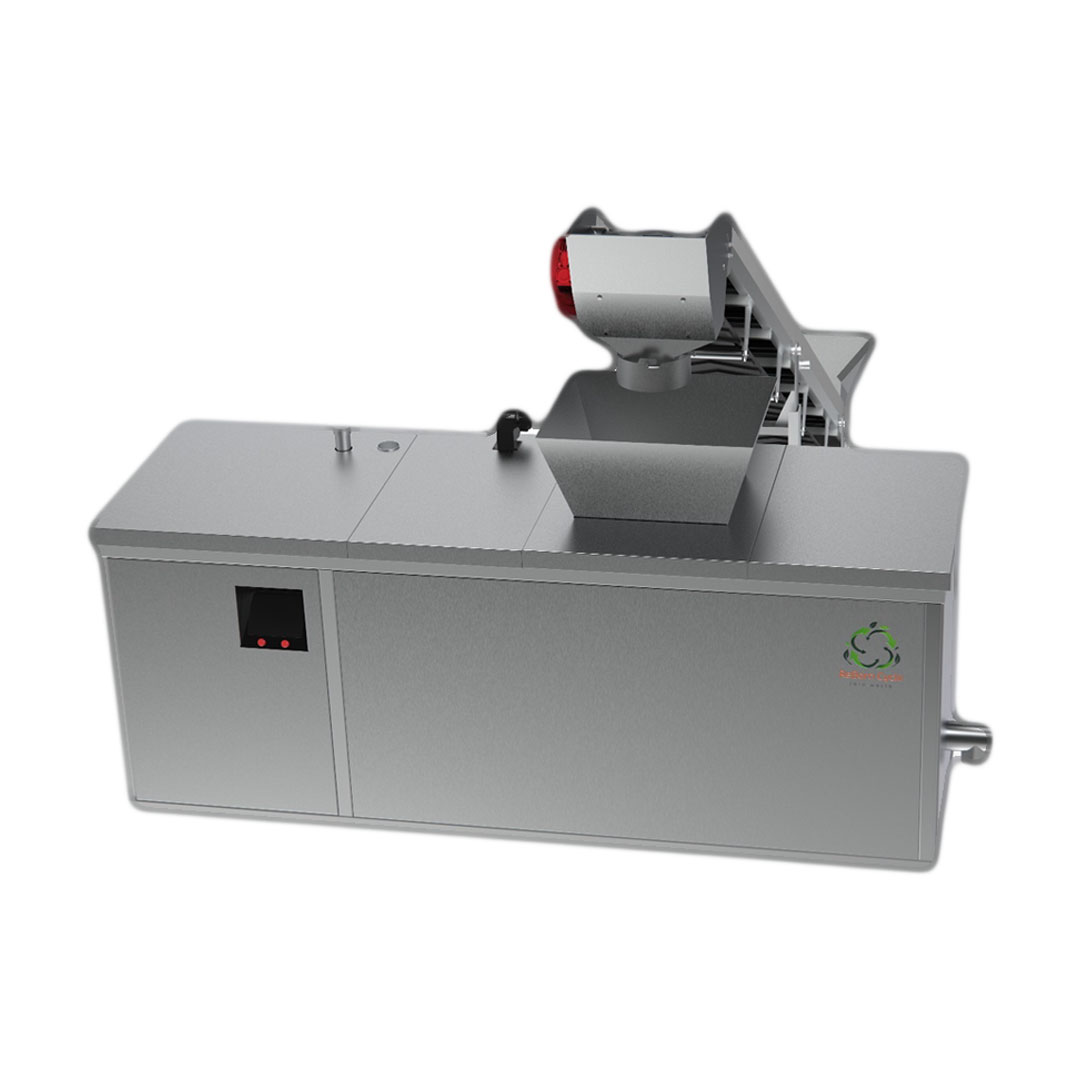
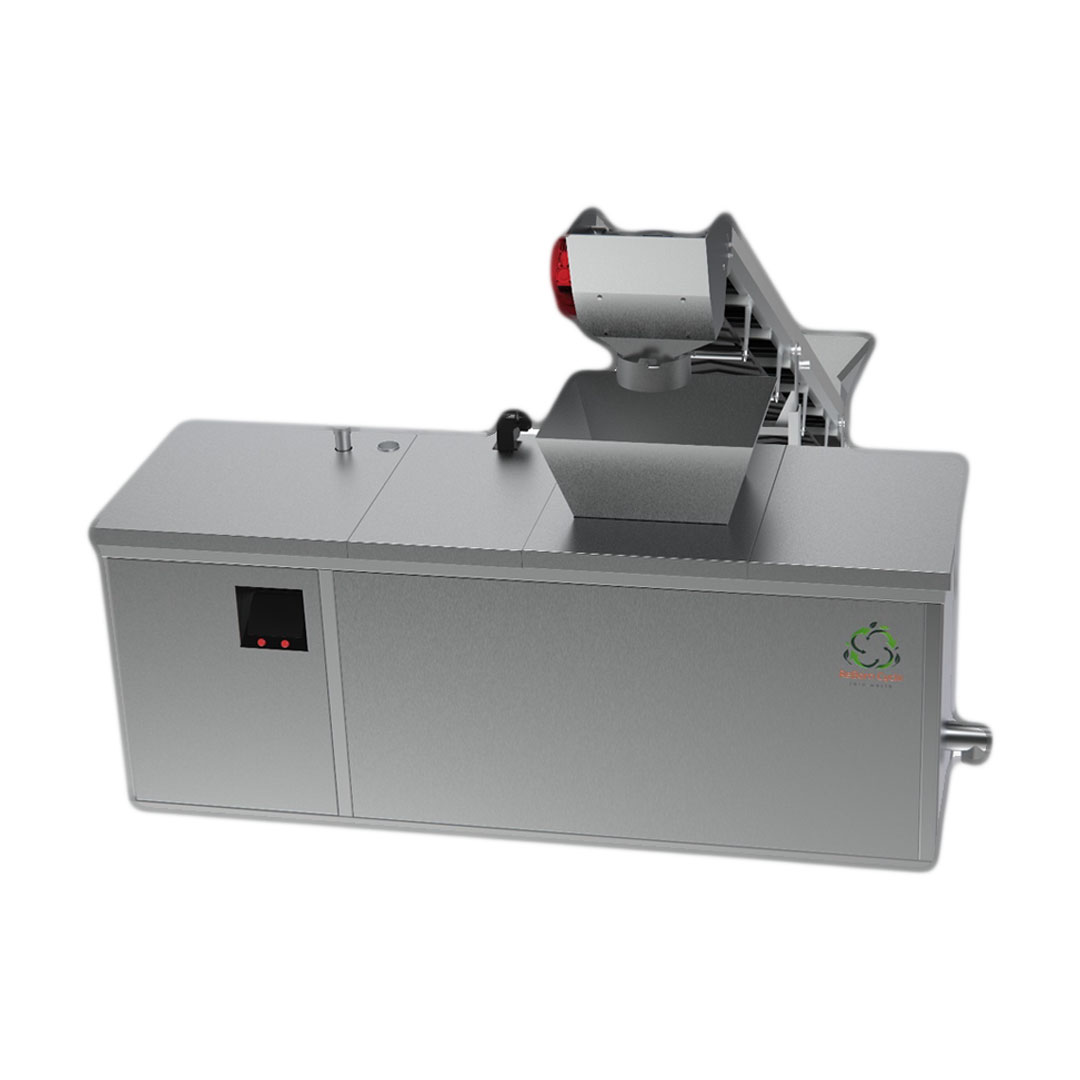
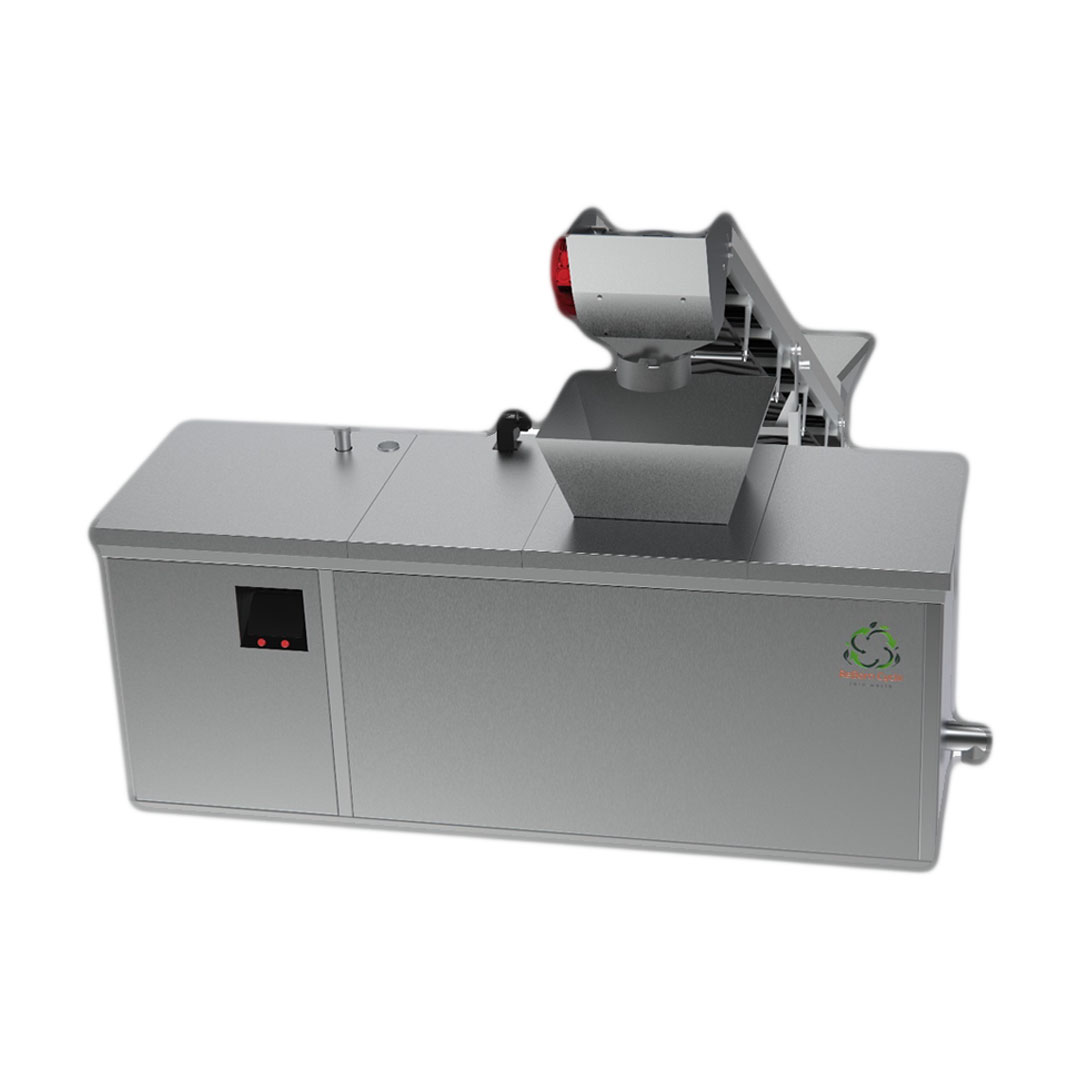
A municipal compost machine is sized from measured kg/day organic waste, sorting quality, and pilot versus central-line scope. Weigh for 2–4 weeks, then add peak-day headroom. Near 1,000 kg/day often fits RBN-C1000; multi-tonne flows move toward C2500 or C5000, confirmed at site survey.
City-scale organic waste management is not only an equipment list: collection routes, contamination, and in-house capacity planning matter just as much. Here we walk through the measurement sequence we use on municipal surveys, the pilot versus central-line decision, and how capacity bands map to real kg/day data. You can align this with capacity planning at a municipal organic waste plant.
How Is Daily Organic Waste Calculated for a Municipality?
The decision rests on measured kg/day, not a default population multiplier. Central kitchens, markets, green waste, and household biodegradable streams are logged separately. On surveys we usually weigh for 14 days and split weekday from weekend; note peak days for holidays and tourism seasons.
When weighing and recording discipline is in place, tender specifications get transparent numbers. Wet kitchen waste looks bulky; dry branch-and-leaf streams may show lower kg/day. Each profile needs a different feeding plan.
- Stream inventory Tag source, route, and season.
- Weighing At least 10–14 days of gross and sorted tonnage.
- Peak day Add 20–30% to the highest day for the design value.
Choosing capacity before the table is ready either undersizes investment or chokes the line. The capacity selector helps compare first models after measurement.
Is a Pilot Plant or a Central Line the Better Start?
In smaller district municipalities a single industrial compost machine as a pilot is often enough: one kitchen, one market, and limited park waste collected at one node. In metropolitan areas district transfer hubs and separate green-waste lines appear; the pilot then teaches process parameters while true capacity sits on the central line.
Field experience shows pilot success depends on collection discipline. Do not scale up without moisture, temperature, and contamination logs during the pilot. Test outlet use in a curing area for a few weeks; machine discharge is not retail-grade compost on day one.
Tip: Write a short capacity recommendation at pilot close-out so the tender team shares one number.
Low-moisture green bulk may suit biogas routes; mixed kitchen waste more often goes to a closed compost line.
How Does Collection and Sorting Quality Affect Machine Choice?
Plastic, glass, and metal are solved before feeding, not inside the compost machine. Poor sorting loads the mixer and drags output quality down. Single-stream collection versus source separation drives pre-shredder needs and operator staffing.
Lock in how organic waste is collected in municipalities before ordering equipment. Turkey's Zero Waste Regulation (2019) expects separate biodegradable collection in many facility types; check the current legal text.
Fatty catering waste plus mixed household feed may stretch cycles to 48–72 hours; park-only streams often sit in a 24–48 hour band. Keep moisture near 50–60%.
Warning: Clinical waste, solvents, and heavy-metal risk streams never enter the compost line; hygiene protocols are written separately.
Hygiene and foreign-matter training modules are mandatory for municipal operators.
Which Municipal Scale Maps to Which Machine Capacity?
The table below is an example mapping; final choice follows measurement. A kitchen-and-market district is not the same row as a multi-district metropolis.
| Plant type | Typical kg/day band | Machine / line approach |
|---|---|---|
| Pilot kitchen + market | 200–800 | Single machine or small line; learning focused |
| District transfer hub | 800–2,500 | RBN-C1000 Compost Machine or RBN-C2500 Compost Machine |
| City-scale compost site | 2,500–8,000+ | RBN-C5000 Compost Machine family with feed and discharge line |
Read capacity against peak day plus maintenance window, not an average Tuesday alone. If output goes to parks or greenhouses, plan weeks of curing; check Turkish Compost Communiqué (2015) product criteria.
Record seasonal peaks for tourism or harvest markets separately; they often set the real design day rather than the annual average.
How Does ReBorn Cycle Support Municipal Projects?
Our domestically built closed in-vessel compost machines manage temperature, aeration, and mixing together; the thermophilic phase targets 55–65 °C. Municipal projects typically bundle site survey, capacity and line layout, installation and commissioning, operator training, and after-sales service.
Consulting covers waste profile, site choice, and tender-ready technical language. Technical support stays on duty for installation and maintenance; floor load, door width, drainage, and power are measured at survey.
Typical kitchen waste cycles in a single unit run 24–48 hours; volume reduction can reach roughly 80–90% depending on input. Those ranges follow feeding discipline on site, not a fixed catalogue claim. Describe closed process and mixing logic as measurable specification lines.
How Long Do Municipal Compost Project Phases Take?
The bar chart shows an example time share; every municipality has different permits, civil works, and tender calendars. Early weighing and pilot data shorten the overall path.
What to check in municipal organic waste tenders lists capacity, odour, service, and spare parts clauses; tie your scoring sheet to measurable criteria and do not invent competitor scores.
How to set up a compost plant aligns with specification wording at this stage. Open local calendars early for construction permits, power connection, and operator training.
Reserve calendar time for operator training before public opening; commissioning without trained staff creates early downtime that looks like a capacity problem.
Frequently asked questions
What Is the Smallest Industrial Compost Machine a Municipality Considers?
If daily flow stays above a few hundred kg/day continuously, household-scale units are not enough; pilot municipal lines usually start around the 1,000 kg/day closed-machine class. Below that, short shared-use agreements may work. The exact model is picked after 14 days of weighing.
How Long Should a Pilot Plant Run?
At least one full season and preferably 3–6 months of pilot operation shows collection quality and outlet use. A shorter pilot tests the machine but not the route. Do not commit to a central line without measurement records.
Which Technical Clauses Belong in a Municipal Compost Machine Tender?
Specify kg/day capacity, closed process, temperature and aeration control, mixing, odour and hygiene measures, installation and training, spare parts, and service response. Ask for measurable energy criteria instead of invented factory figures.
How Does Very Wet Collected Waste Affect Capacity?
High moisture slows feeding rhythm; plan dry carbon supplement and drainage. Kitchen-heavy flow at the same kg/day needs longer cycles and more operator attention than park waste. Hold moisture near 50–60%.
Can a Municipality Use Machine Output in Parks Immediately?
Discharge is hygienised pre-compost; many uses need weeks of curing. For soil improvement and greenhouses, follow Communiqué criteria and lab tests; sensitive planting needs analysis first.
How Many Operators Does a Central Line Need?
A small pilot line often needs one trained operator per shift. Lines at 2,500 kg/day and above usually split feeding, cleaning, and recording across roles. Training modules should cover safety and hygiene together.
Right-Sizing Capacity on a Municipal Organic Waste Line
In short: weighing and sorting discipline first, pilot or central-line decision second, machine capacity last. When that order breaks, tender papers look fine but operations face locking, odour complaints, or weak output quality.
Write peak day, moisture profile, and outlet scenario together instead of a one-line capacity table. The C1000–C5000 band anchors most municipal investments; the exact model is fixed only after survey and process design.
When measurement data is ready, book a free site survey to sketch plant layout and line options. Align specification language beforehand through consulting so capacity assumptions match the same framework.