A compost facility is set up in clear steps: waste analysis, capacity and technology choice, site layout, environmental permits, installation, commissioning and operator training. Each phase should end with a concrete output.
A compost facility is set up by first measuring the quantity, composition and seasonality of the waste. Next, capacity is sized with a margin, the technology is chosen and a layout is drawn with reception, pre-treatment, in-vessel reactor, curing and storage areas. After environmental permits come installation, commissioning, operator training and quality control.
For municipalities, food producers and large campuses, a compost facility is the most controlled way to turn organic waste into a usable product instead of sending it to landfill. Success depends less on the machine than on planning: the wrong capacity, a cramped site or a missing permit can delay the investment for months. This guide covers every phase, from waste analysis to compost sales. For the details of sizing, see our article on choosing capacity for a municipal organic waste plant.
How to Analyse Your Waste Before Building a Compost Facility
Every compost facility project starts with one question: how much organic waste really arrives each day, and where does it come from? Capacity based on guesswork means either an expensive line that sits idle or a plant that chokes in its first summer.
Your waste analysis should pin down three things:
- Quantity: the daily average and the peak day, weighed for at least 7–14 days.
- Composition: food waste, fruit and vegetable or market waste, park and garden waste, food production residues, and the share of contaminants such as plastic, glass and metal.
- Seasonality: tourist season, harvest, autumn leaves and holiday peaks.
Composition defines the process recipe. Food waste usually has a C/N ratio of 15–20:1, dry leaves 40–80:1; at this stage you calculate how much bulking material is needed to reach the target of 25–30:1. The most common mistake we see in site surveys is looking only at the annual average and missing the summer peak. Our article on the data collected during a site survey explains what to measure.
How to Choose Compost Facility Capacity and Technology
Capacity is set by adding the busiest seasonal day and a growth margin to the measured daily average. A modular design keeps the first investment reasonable and makes it easy to add a second line later.
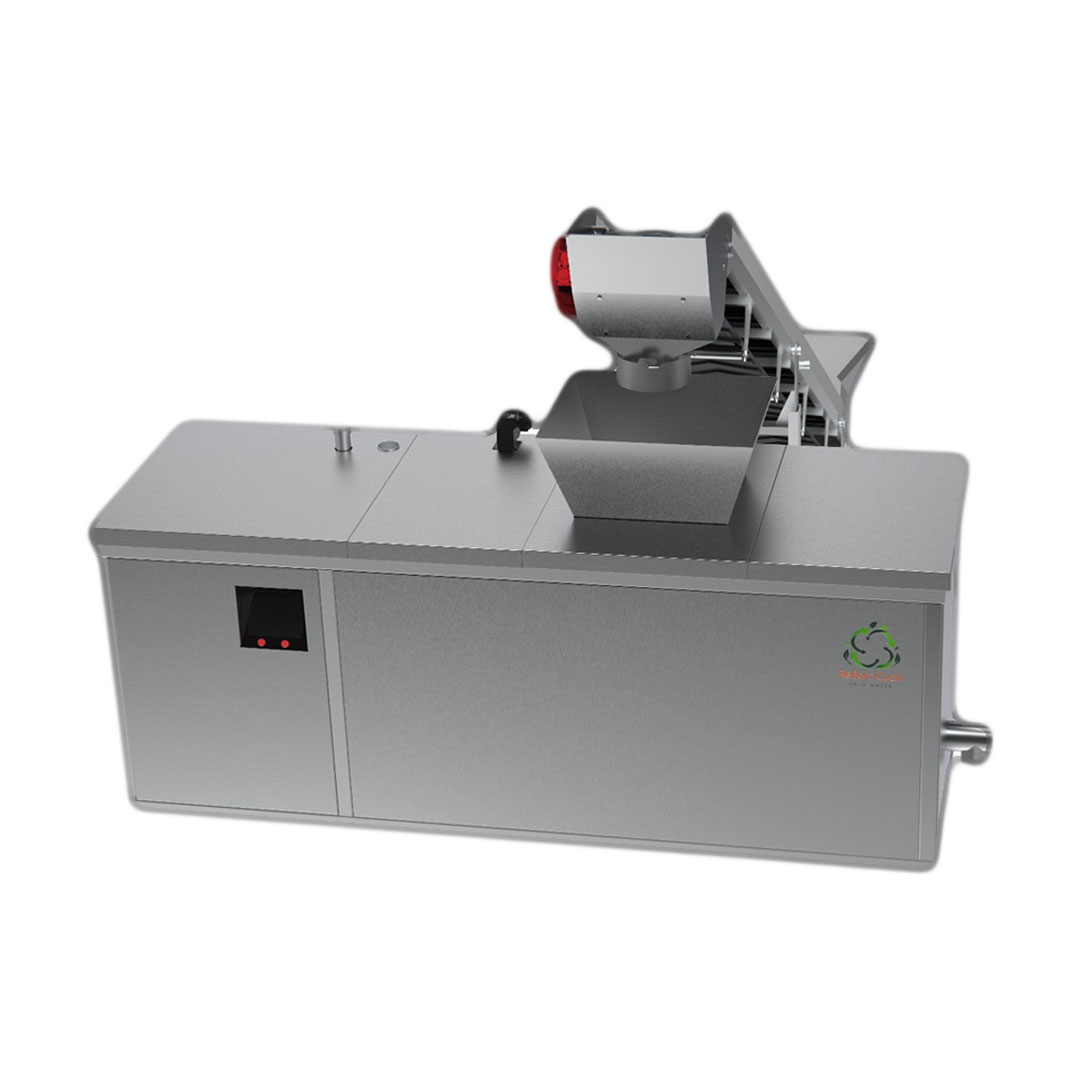
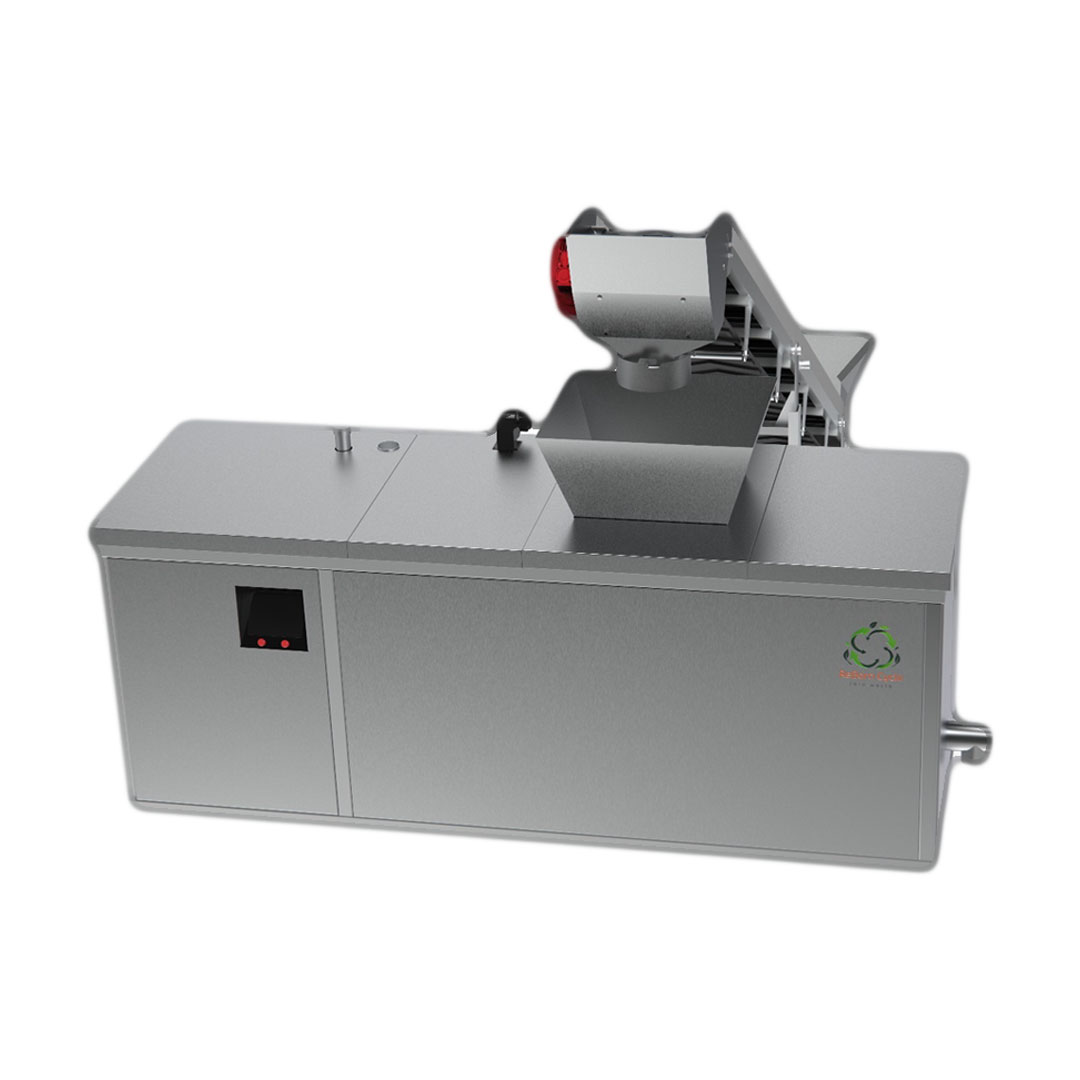
There are two main technology routes. Open windrows need little equipment but require a large area, months of processing and serious odour management. Closed, heated and aerated in-vessel reactors control temperature, air and mixing; for kitchen waste the in-machine cycle is typically 24–48 hours. For 2.5 tonnes a day the RBN-C2500 Compost Machine, and for 5 tonnes the RBN-C5000 Compost Machine, are options used at municipal and food-industry scale.
The chart below shows an example mass balance for a facility receiving 5 tonnes a day. The ratios are assumptions; real values depend on the moisture and composition of your waste.
How to Plan a Compost Facility Layout
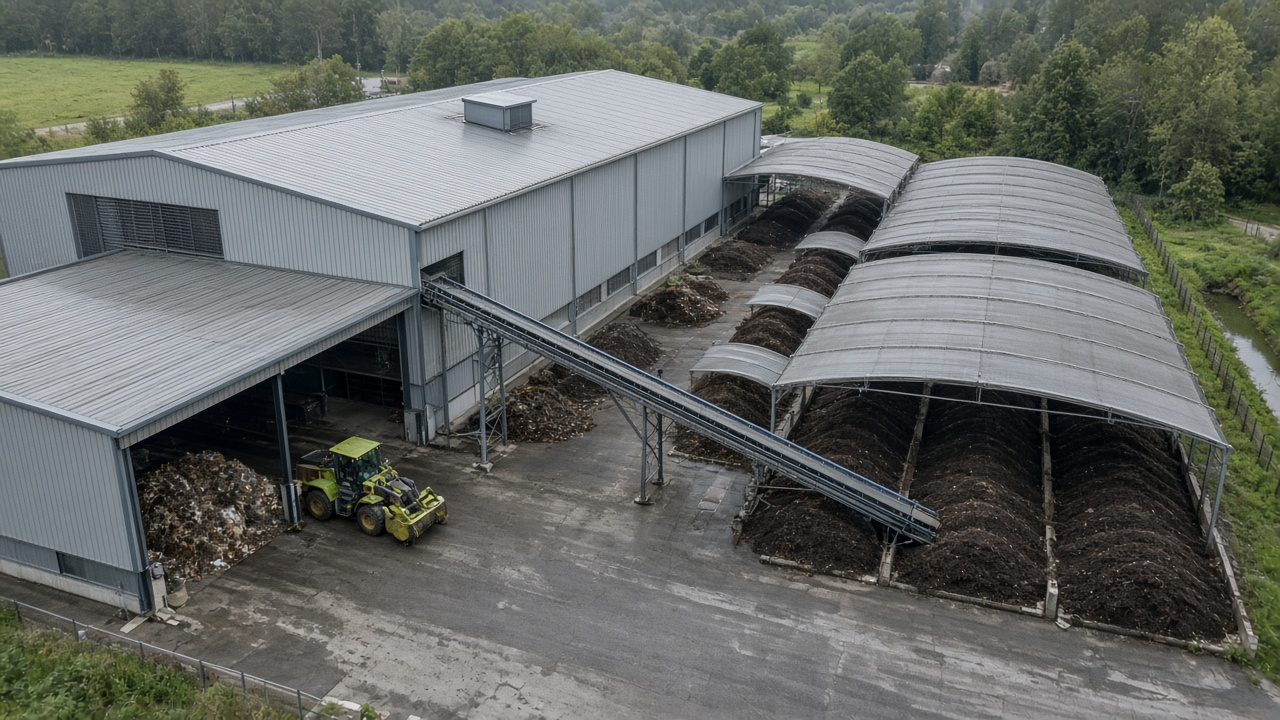
A good layout creates a one-way flow with no crossing paths, from the moment waste enters to the moment product leaves. This separates dirty and clean zones and lowers odour and hygiene risks. A typical line has these zones:
- Reception and weighing: a weighbridge or platform scale and an enclosed, washable tipping area.
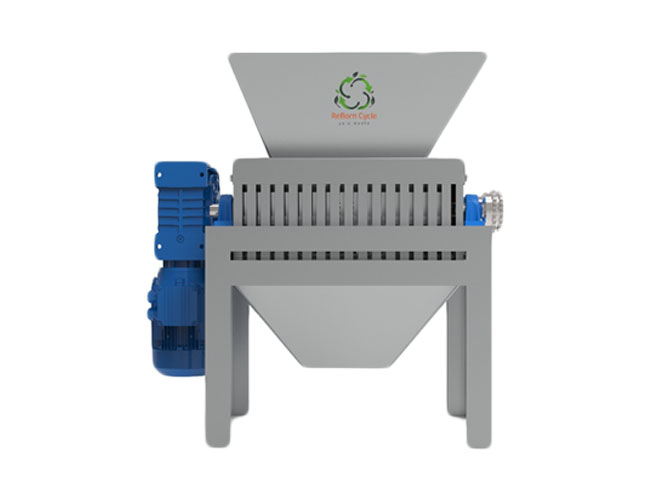
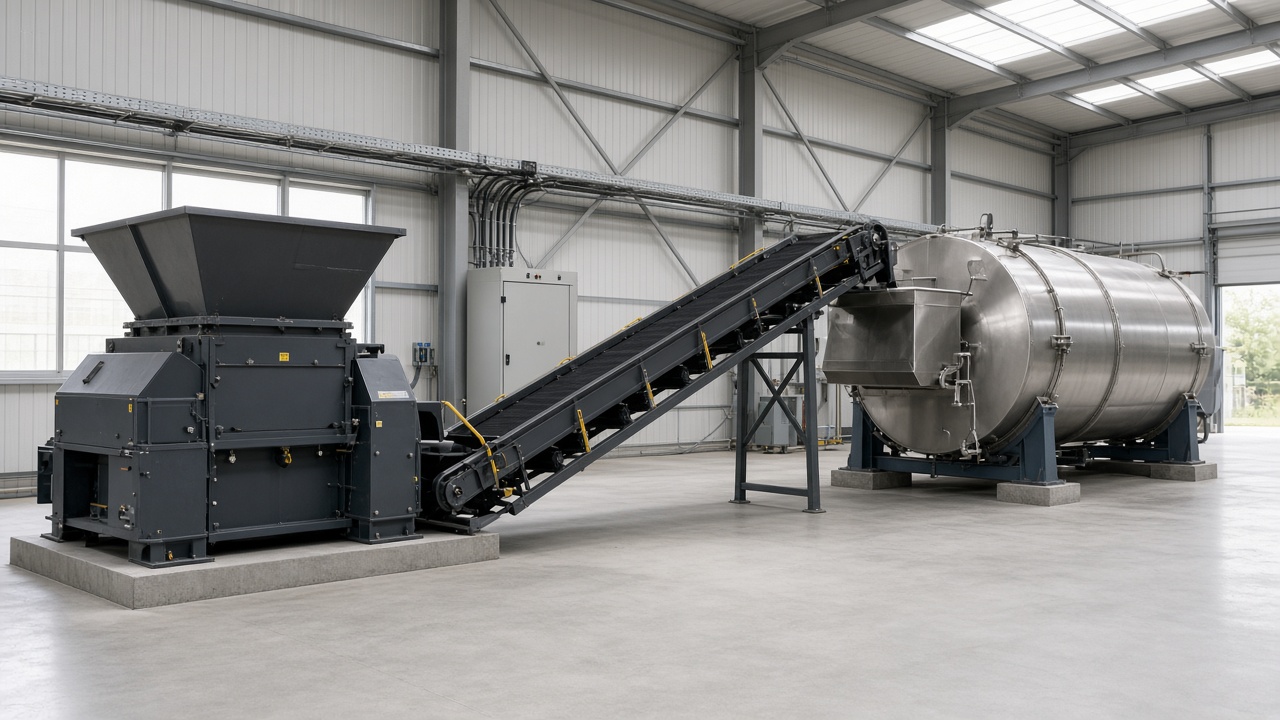
- Pre-treatment: contaminant removal and a Shredder to reduce particle size.
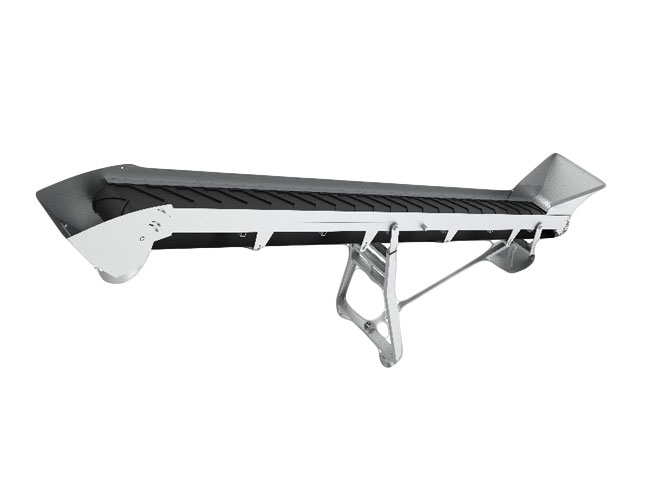
- Feeding: a conveyor belt that carries waste steadily into the reactor.
- In-vessel reactor: the main process, with controlled temperature, aeration and mixing.
- Curing: a covered area with a sealed floor where pre-compost rests for a few weeks.
- Screening and storage: where the product is screened, bagged or stored in bulk.
Power, water, drainage, exhaust air and vehicle turning space belong in the drawing from day one. The curing area usually takes far more space than the reactor. Our guide to installation area requirements for compost machines offers a practical checklist.
Which Permits Does a Compost Facility Need
A compost facility is a waste treatment plant, so it falls under environmental law. In Turkey the process generally runs through the Ministry of Environment, Urbanisation and Climate Change and its provincial directorate. Depending on capacity and waste type, environmental permits and licences, an environmental impact assessment where required, and zoning and business permits may apply.
The Compost Communiqué (Kompost Tebligi, 2015) defines operating conditions for compost facilities and quality criteria for the product. The Zero Waste Regulation (2019) requires separate collection of biodegradable waste in many facility types, which directly affects your feedstock supply. If you process animal by-products or sell the product as a fertiliser, rules of the Ministry of Agriculture and Forestry may also apply.
Warning: Regulations and application steps change. Before starting the project, always confirm current requirements with the relevant ministry and provincial directorate.
Since the permit file overlaps heavily with the machine specification, prepare your compost machine technical specification in parallel to save time.
Compost Facility Project Phases and Outputs
A compost facility project stays on schedule and on budget when it is managed in phases that each end with a concrete output. The table summarises a typical flow.
| Phase | What happens | Output |
|---|---|---|
| Waste analysis | 7–14 days of weighing, composition and seasonal data | Waste profile report |
| Feasibility and capacity | Capacity, margin, technology and cost comparison | Capacity and technology decision |
| Design and layout | Process flow, site plan, utility needs | Layout plan and technical specification |
| Permits | Environmental, zoning and other applications | Required permits and approvals |
| Installation | Site preparation, machine assembly, connections | Completed mechanical and electrical installation |
| Commissioning | Gradual feeding, temperature and moisture tuning | Stable process and first product |
| Training | Operator, hygiene and maintenance training | Trained team and work instructions |
| Quality and sales | Maturity, contaminant and lab checks | Marketable compost |
During commissioning, ramp up the feed over a few days so the temperature settles safely in the thermophilic band of 55–65 °C.
How ReBorn Cycle Works on Compost Facility Projects
We start on site. We look at the waste flow, the available space and the utilities, and then our consulting service prepares the capacity, process recipe and layout proposal. Because our machines are manufactured in Turkey, the line can be adapted to the site with a shredder, conveyors, the in-vessel reactor and, if needed, a tunnel dryer or pellet machine.
During installation and commissioning, our technical support team handles assembly, the first feeds and the process settings. Through operator training, your team then learns daily feeding, temperature and moisture monitoring, cleaning and basic troubleshooting in practice.
Machine output is a stabilised, hygienised pre-compost material; for fully mature product we recommend a few weeks of curing. We suggest building your pre-sale checks on the steps in our guide to compost quality control.
Frequently asked questions
How long does it take to set up a compost facility?
It depends on the scale of the facility, the permit process and site preparation. Waste analysis needs 1–2 weeks of measurement, while machine installation and commissioning are relatively short. Permits are usually the most variable item. Check current procedures with the provincial directorate and plan around them.
How much space does a compost facility need?
The space needed depends on daily capacity, curing time and storage needs. The in-vessel reactor itself is compact, but reception, pre-treatment, several weeks of curing and product stock determine the total footprint. Exact dimensions become clear once the layout and vehicle flow are drawn together.
What waste can a compost facility process?
Food and kitchen waste, fruit, vegetable and market waste, park and garden waste and suitable food production residues can be processed. Plastic, glass, metal and hazardous waste should not be accepted. Special streams such as animal by-products and manure follow the rules of the relevant ministry. The better the source separation, the higher the product quality.
Does a compost facility smell?
A well-designed enclosed compost facility produces far less odour than open windrows. Odour mostly comes from waste that is oxygen-starved, too wet or left standing. An enclosed reception area, same-day processing, 50–60 % moisture, oxygen above 5 % and controlled aeration in the reactor clearly reduce the risk of odour.
Can the compost produced at the facility be sold?
Yes, compost that meets the quality criteria of the Compost Communiqué and holds the required registrations or permits can be placed on the market. Quality must be documented regularly with maturity, contaminant and laboratory tests. Confirm current sales and labelling rules with the relevant ministries.
Does a compost facility investment pay for itself?
In most projects the return comes from avoided disposal and transport costs, lower landfill fees and compost revenue. The result depends on waste volume, local disposal fees and the product market. Make a first estimate with your own data using our ROI calculator, then refine it with a feasibility study.
Getting Your Compost Facility Off to the Right Start
A successful compost facility starts with accurately measured waste. Capacity and layout decisions made without knowing the real quantity, composition and seasonal peaks turn into problems that are expensive to fix later. A closed, controlled reactor lowers odour and hygiene risks and cuts the main process from weeks to days.
Our practical advice: weigh for at least two weeks, record the peak day, talk to the provincial directorate about permit requirements early and plan a generous curing area from the start. Feeding the technical specification and the permit file from the same data set reduces errors and shortens the schedule.
If you would like to work out together where your facility should start, you can book a free site survey. Our team inspects the site, existing utilities and waste flow, then prepares a capacity, technology and layout proposal matched to your waste profile.