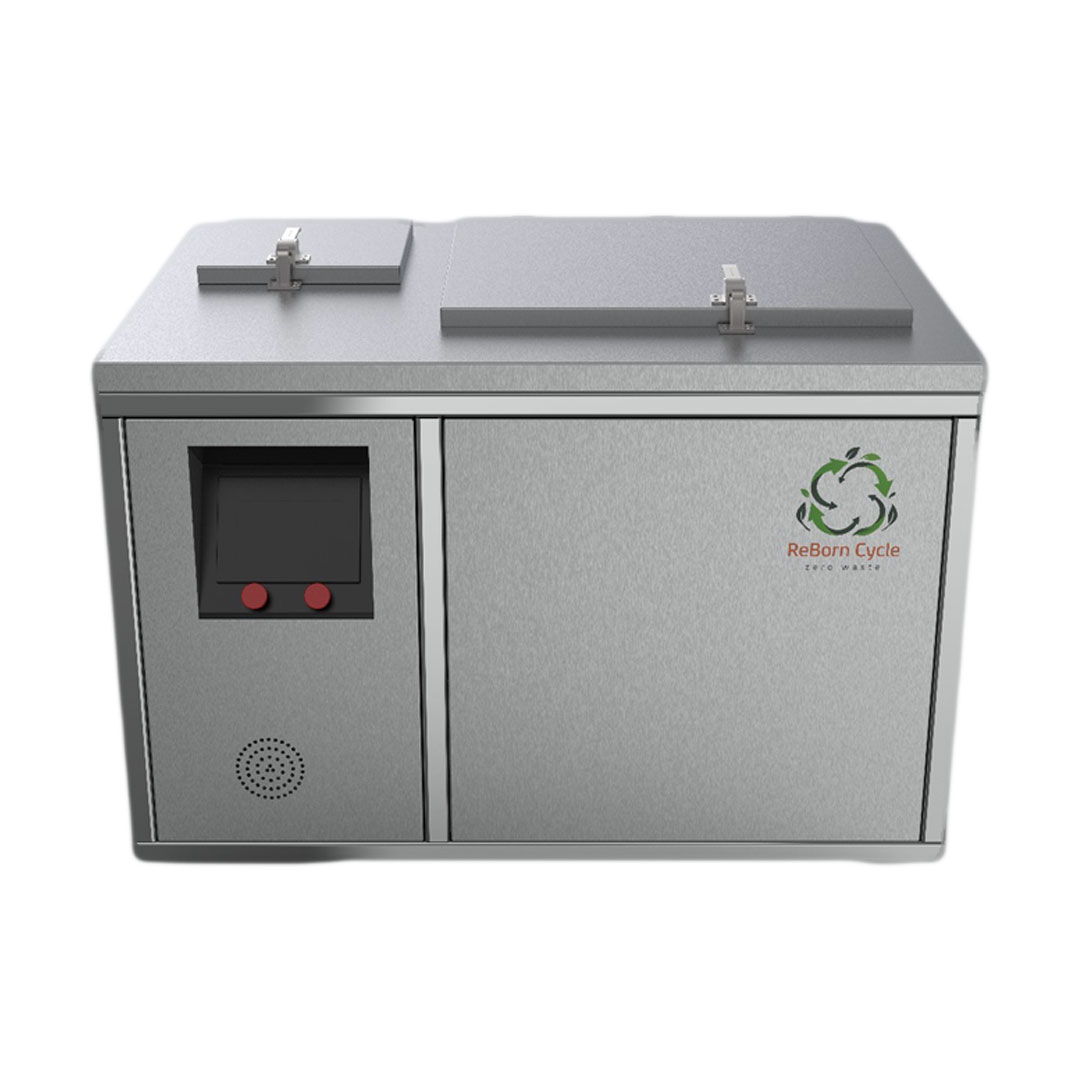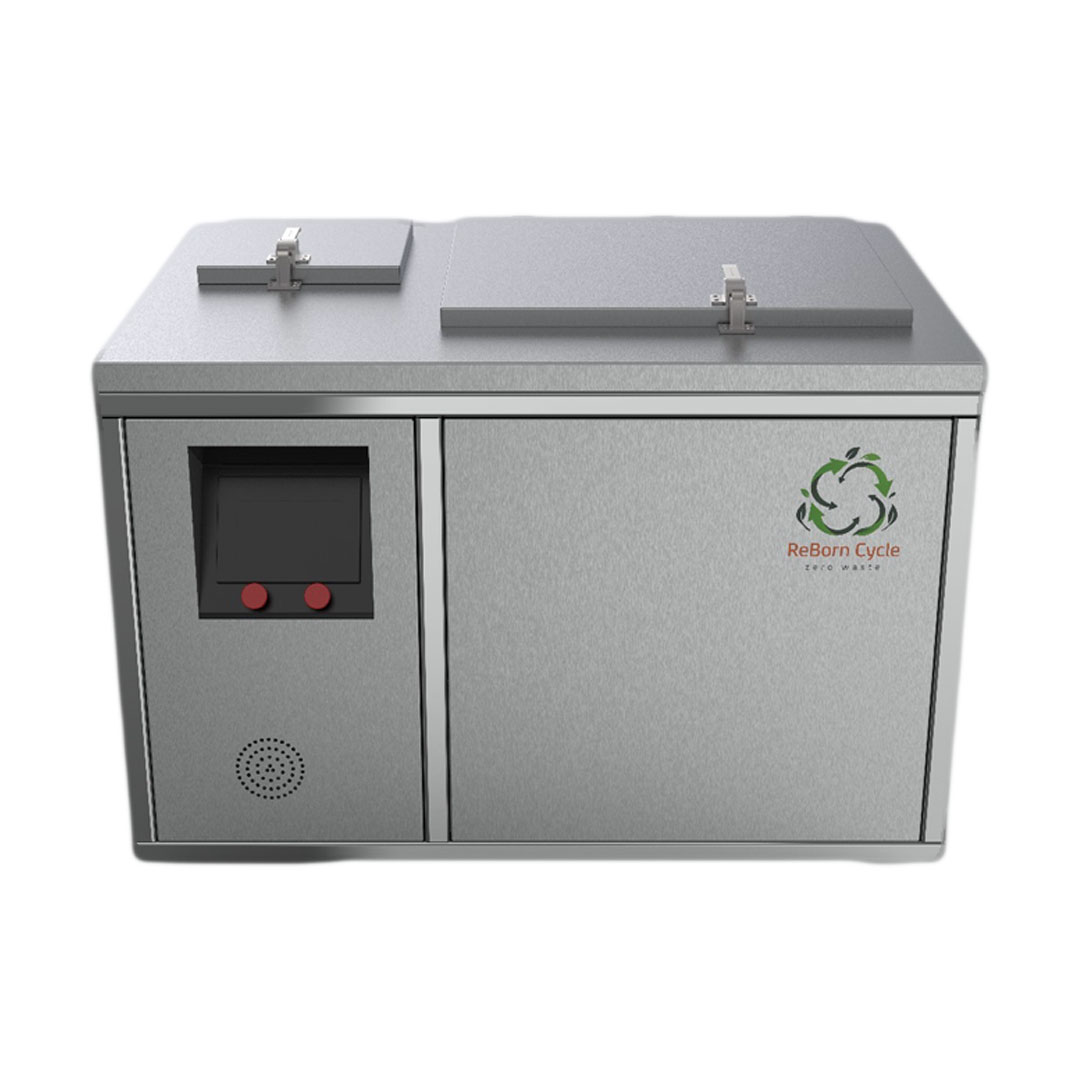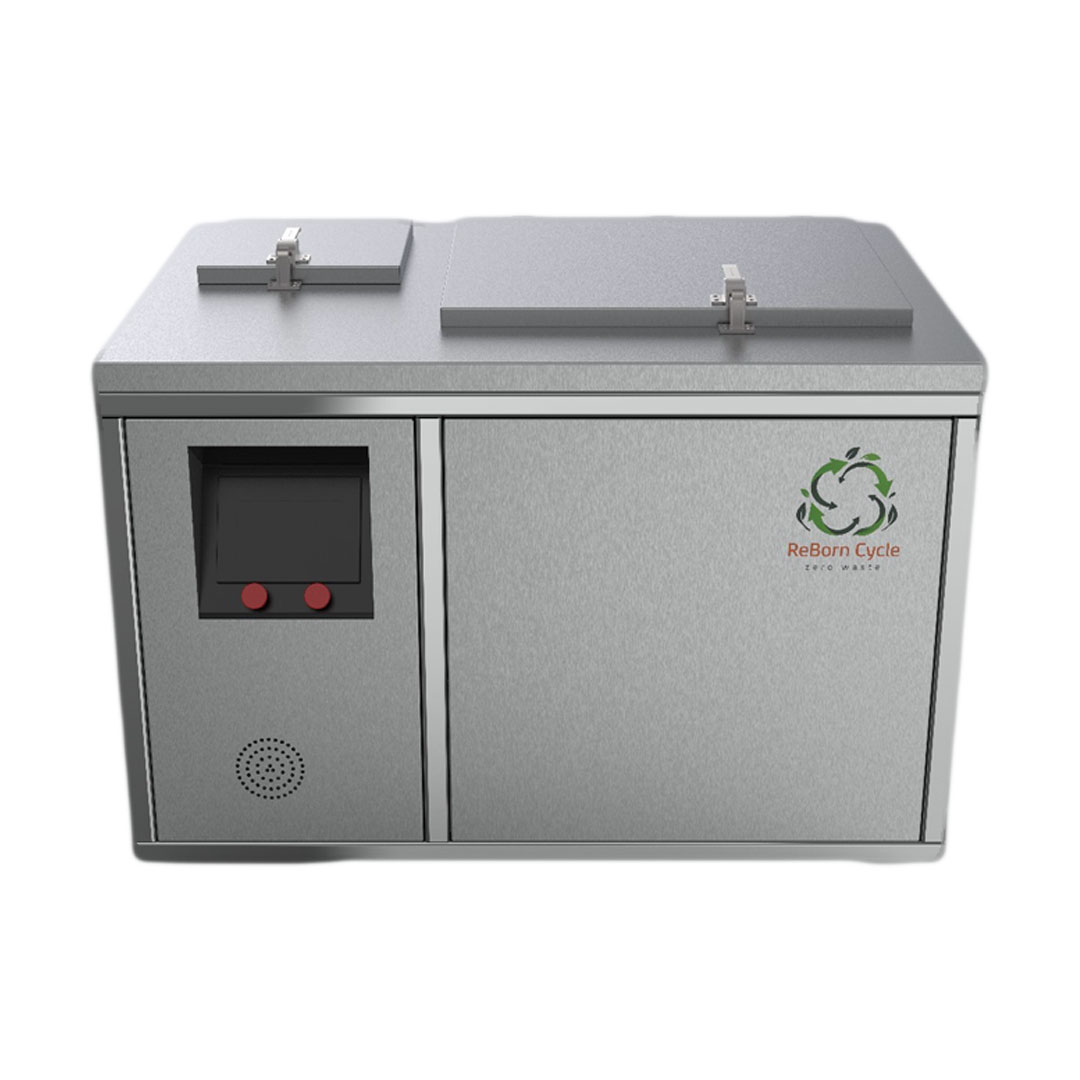



Catering waste is recovered by separating prep, service and plate streams for composting. Feed is an option only when current law clearly allows that stream. Size the machine from the measured peak kg/day plus a margin.
Catering waste is recovered by separating prep waste, service leftovers and plate scrapings and weighing each stream. Mixed catering waste goes to closed composting. EU Regulation 1069/2009 bans feeding it to farmed animals, with a narrow fur-animal exception, and Turkish ministry rules must be checked. Size the machine from measured peak kg/day plus a margin.
The capacity question comes before the haulage contract. Which kilograms can go to compost, and which could legally become feed material. This article covers stream separation, same-day return from many service sites, foreign matter, and the margin you add to a measured peak. Hospital kitchens follow a different layout; see hospital canteen waste processing. The frame here is a catering firm and its central kitchen.
Which Streams Make Up Catering Waste?
If catering waste lands in one bag, neither the compost decision nor the feed decision is sound. A central kitchen produces four organic streams on the same day. Moisture, foreign matter and the legal route differ for each.
| Stream | Typical contents | Recovery route | Separation rule |
|---|---|---|---|
| Prep | Vegetable peel, stalks, coffee grounds, uncooked trim | Compost; feed only if current law allows it | Remove soil and packaging |
| Service and buffet | Trays past service time, leftover rice and salad | Compost first | Keep heavy fat and sauce separate |
| Plate waste | Food and bread left by the guest | Compost | No napkins, picks or plastic |
| Packaged returns | Unopened trays or packed product | Reuse first, then separate | Remove film and labels |
On site surveys we often see these four bins merged into one sack by mid-afternoon. A napkin or a wooden pick from plate waste then contaminates clean morning trim. Separation starts at the service point. A single-room restaurant is a different layout; compost from restaurant waste covers that case.
How Do Prep, Service and Plate Shares Split?
Do not lock a split guessed from the menu. The distribution below is an example assumption for a central kitchen sending out about 2,000 portions a day. A factor of 0.2 kg per portion and a total of 400 kg/day are part of that same assumption. It is not a measured industry average.
In this assumption prep is 180 kg (45%), service and buffet leftovers are 140 kg (35%), and plate waste is 80 kg (20%). On event days the service share grows. If a self-service buffet has weak portion control, the plate share rises. Bar width follows the kilograms in this example only.
Weigh each stream for 7–14 days in your own kitchen and replace these bars with your kilograms. A school contract has its own calendar; school canteen composting covers portion size and holiday gaps.
How Does Multi-Site Waste Return to One Kitchen?
Waste appears in two places. Prep trim stays in the central kitchen. Plate scrapings and tray leftovers arise at the office, on a site or at the event. If one machine serves every site, that waste must return the same day in a closed bin. An open pail in the van smells.
- Separate at service Use three bins for prep, tray leftovers and plate waste. Keep napkins and cutlery out.
- Close and label Mark the site and the date. A tight lid stops spills in the van.
- Haul the same day Do not hold evening service until the next noon. Warm mixed food smells and draws flies.
- Weigh at intake Subtract the tare and log kilograms by stream. That record replaces the example assumption.
- Pick out foreign matter Remove gloves, foil, picks and bags first. A doubtful bin stays off the feed line.
Tip: Put a small sorting tray at each service point. A short check while the bin is emptied keeps metal and plastic out of the mixer.
Bin count, vehicle time and the intake bench are set on the survey. Turkey's Zero Waste Regulation (2019) requires separate collection of biodegradable waste at many sites; check the current text. Stream weighing is the raw data for that record.
The Legal Line Between Compost and Feed
The safe route for mixed catering waste is composting. EU Regulation 1069/2009 bans feeding this waste to farmed animals. A narrow exception exists for fur animals. Plate waste and mixed trays returned from service are the typical case the ban covers.
In Turkey the Ministry of Agriculture and Forestry sets the current rules. Before opening a feed line, ask the provincial directorate whether your stream is actually allowed as feed. Take the answer in writing. We do not invent article numbers or deadlines; the text can change. Do not book plate waste into a feed balance before that confirmation.
A feed machine is relevant only for a confirmed stream that is free of foreign matter and expressly allowed. The split of duties is set out in the difference between a feed machine and a compost machine. What may and may not enter feed is covered in whether animal feed can be made from food waste. Machine output is a stabilized, hygienized pre-compost; plan a few weeks of curing for full maturity.
Warning: Do not load plate waste, buffet returns full of napkins, or doubtful bins into a feed machine. Without permission the whole load stays on the compost line.
How Do You Size a Machine from Measured Kilograms?
Size the machine to the measured peak day, not the average day. Add a 20–30% margin to the highest day in a 7–14 day weigh-in. The margin covers a heavy event week and a new service contract.
The following sum is a separate example assumption, not the 400 kg chart above. Suppose a 14-day weigh-in shows an average of 240 kg/day and a peak of 360 kg/day. A 25% margin gives 450 kg/day. In this example a 250 kg/day RBN-C250 Compost Machine sits below the peak. A 500 kg/day RBN-C500 Compost Machine covers that 450 kg load. A legally confirmed 180 kg/day of clean prep leaves headroom on a 250 kg/day RBN-C250 Feed Machine. Plate waste is not booked on that line.
ReBorn Cycle machines are closed, heated, aerated and mixed, and built in Turkey. At about 50–60% moisture, kitchen waste typically becomes stabilized, hygienized pre-compost in 24–48 hours. Fatty or irregular loads can run past 48–72 hours, with temperature held at 55–65 °C. Do not pour frying oil into the machine. On the survey we read the weigh-in, return hours and intake area together. Installation, operator training and after-sales service stay with the same team. Use the capacity selector for a first range, and settle streams and margin with consulting.
Frequently asked questions
Can catering waste be composted?
Yes. Prep trim, service leftovers and plate waste suit closed composting once foreign matter is removed. At balanced moisture, kitchen waste typically becomes stabilized pre-compost in the machine in 24–48 hours. Plan a few more weeks of curing for a mature product.
Can catering waste be fed to animals?
Mixed catering waste should not be fed to farmed animals. EU Regulation 1069/2009 sets that ban, with a narrow exception for fur animals. In Turkey, Ministry of Agriculture and Forestry rules apply and should be confirmed with the provincial directorate. Without permission, the route is composting.
Why keep prep waste separate from plate waste?
Prep trim is cleaner and easier to predict. Plate waste carries napkins, picks and a hygiene risk. Once the two are mixed, the feed discussion closes and foreign matter in the compost rises. Three bins also make the intake weigh-in meaningful.
Can waste from several sites be processed in one kitchen?
Yes, if it returns the same day in sealed, labelled bins to the central kitchen. It is weighed at intake, foreign matter is removed, and only then does it enter the machine. An open pail held overnight produces both odour and a bad record.
What machine capacity does a catering firm need?
Capacity is the measured peak day plus 20–30%. In one example assumption a 360 kg/day peak and a 25% margin equal 450 kg/day. That load sits closer to the 500 kg/day class than to 250 kg/day. Your own weigh-in replaces this example.
How does foreign matter damage a compost machine?
Gloves, foil, picks and bags catch in the mixer and lower output quality. A bin that was not sorted on site must be opened again at intake. A doubtful load never enters a feed line. Regular sorting cuts unplanned stops and odour complaints.
A Measured Way to Recover Catering Waste
Recovering catering waste is not a matter of picking one recycling rate. You keep prep, service and plate streams apart, weigh multi-site returns the same day, and send mixed waste to compost. A feed route is discussed only when Ministry of Agriculture and Forestry rules clearly allow that stream.
The practical order is short. First weigh by stream for 7–14 days and mark event days. Replace the example assumption of 45%, 35% and 20% with your own figures. Then add a 20–30% margin to the peak day and choose the machine class. Do not book any kilogram onto a feed line unless it is clean and legally allowed.
To settle streams and the intake layout on site, book a free site survey. The team reviews your service points, bin logistics and weighing plan. Consulting sets the capacity class from the measured peak. Training leaves the intake and sorting rhythm with the shift crew. The machine then runs on the day you weighed, not on an example kilogram.