

Mall food-court compost machine selection should follow measured kg/day from multi-tenant kitchens, peak-day margin, and odour constraints near parking; capacity table rows are planning assumptions only.
A compost machine for a mall is chosen after weighing multi-tenant food-court organic waste, screening out contaminants, and matching daily kg/day plus peak load to closed in-vessel units in the C250–C1000 class. Installation usually sits in back-of-house, parking ramp, or plant-room zones; odour and night cleaning must be planned with feeding windows.
Mall food courts generate plate waste, prep trimmings, and event catering from many brands in one day; shared public areas raise pressure on odour and appearance. This guide covers capacity math, tenant collection, and machine placement. For daily flow detail, see organic waste management on mall food floors; here we focus on model choice.
How Does Organic Waste Build Up on a Mall Food Court?
Mall organic waste does not come from one kitchen. It arrives from food courts, fast-food units, coffee chains, and occasional event catering. Tenants serve at the front; waste moves through shared service corridors, lift lobbies, or basement ramps. In site surveys we most often see teams count restaurants only; weekend traffic and menu changes can swing kg/day by 30–60 %.
The organic stream usually includes plate waste, fruit and vegetable trimmings, coffee grounds, and suitable paper ware. Plastic cutlery, aluminium foil, and cleaning chemicals must never enter the compost line. In many commercial buildings, zero-waste rules require separate collection of biodegradable waste; mall management often sets colour-coded bins and reporting in leases. Choosing a model before profiling waste leads to capacity and odour problems.
Start with three to seven days of weighing plus footfall observation. If peak days (Friday–Saturday, holidays, school breaks) stay well above average, size the machine on the feedable upper band, not the mean. Keep tenant-level records to see which brands drive spikes and where training should start.
How Is Compost Machine Capacity Calculated for a Mall?
Capacity selection rests on measurement: net daily kg from each tenant or shared point, wet versus dry share, and single large night drops. On balanced kitchen waste, active in-vessel processing often runs 24–48 hours; the unit is fed through the day, so planners add 15–25 % headroom so peak loads do not stretch cycle time.
| Example court size | Assumed daily organic waste | Typical machine family (example) |
|---|---|---|
| 8–12 tenants, mid-size floor | 150–250 kg/day (assumption) | RBN-C250 Compost Machine with planned reserve |
| 15–25 tenants plus cafes | 400–600 kg/day (assumption) | RBN-C500 Compost Machine range |
| Large or multi-floor mall dining | 800–1,200 kg/day (assumption) | RBN-C1000 Compost Machine plus curing space |
| Peak-day rule (planning) | Average + 20–30 % | Upper band for model choice |

Decisions near 1 ton/day are covered in machine selection for 1 ton of organic waste per day. General capacity logic sits in industrial compost machine capacity selection; tenant count alone is not enough data for a mall.
Tip: Do not weigh only on collection day. Record weekday lunch peaks and weekend totals separately. Entering both into the capacity selector sharpens the model suggestion.
How Can Foreign-Matter Risk Be Reduced on a Food Court?
The main operational risk on mall compost lines is plastic bags, film, and metal lids mixing into organic totes. Even a small film pocket disrupts moisture, raises odour, and can force downtime. Tenant briefings and a visual check point belong upstream of the closed machine.
Sorting steps are detailed in foreign-matter separation in industrial composting. Align hygiene protocol on the compost line with the night cleaning crew before go-live.
Warning: Cleaning chemicals, glass, and cigarette waste do not belong in organic bins. If a load looks wrong, hold it and log the batch before feeding the machine.
How Are Odour and Location Managed for Mall Compost Machines?
Mall compost units usually sit on parking ramps, freight lift landings, or technical basements, away from guest corridors. Closed, heated, aerated in-vessel design lowers odour risk versus open storage; wet, irregular feeding can still produce ammonia. Target moisture for much kitchen waste sits around 50–60 %; higher fat loads need carbon balance and feed spacing.
Odour is not only a machine issue. Wet waste waiting in closed totes through the day becomes a heavy night load. Near ramps, plan door seals, negative pressure where appropriate, and floor wash frequency. Map symptoms to causes using how to control odour in organic waste for your mall scenario.
Power, drain, and door width are measured on survey; ventilation is checked against the building spec. Capture floor load, corridor width, and egress distance on a checklist before the investment meeting.
What Does ReBorn Cycle Provide on Mall Projects?
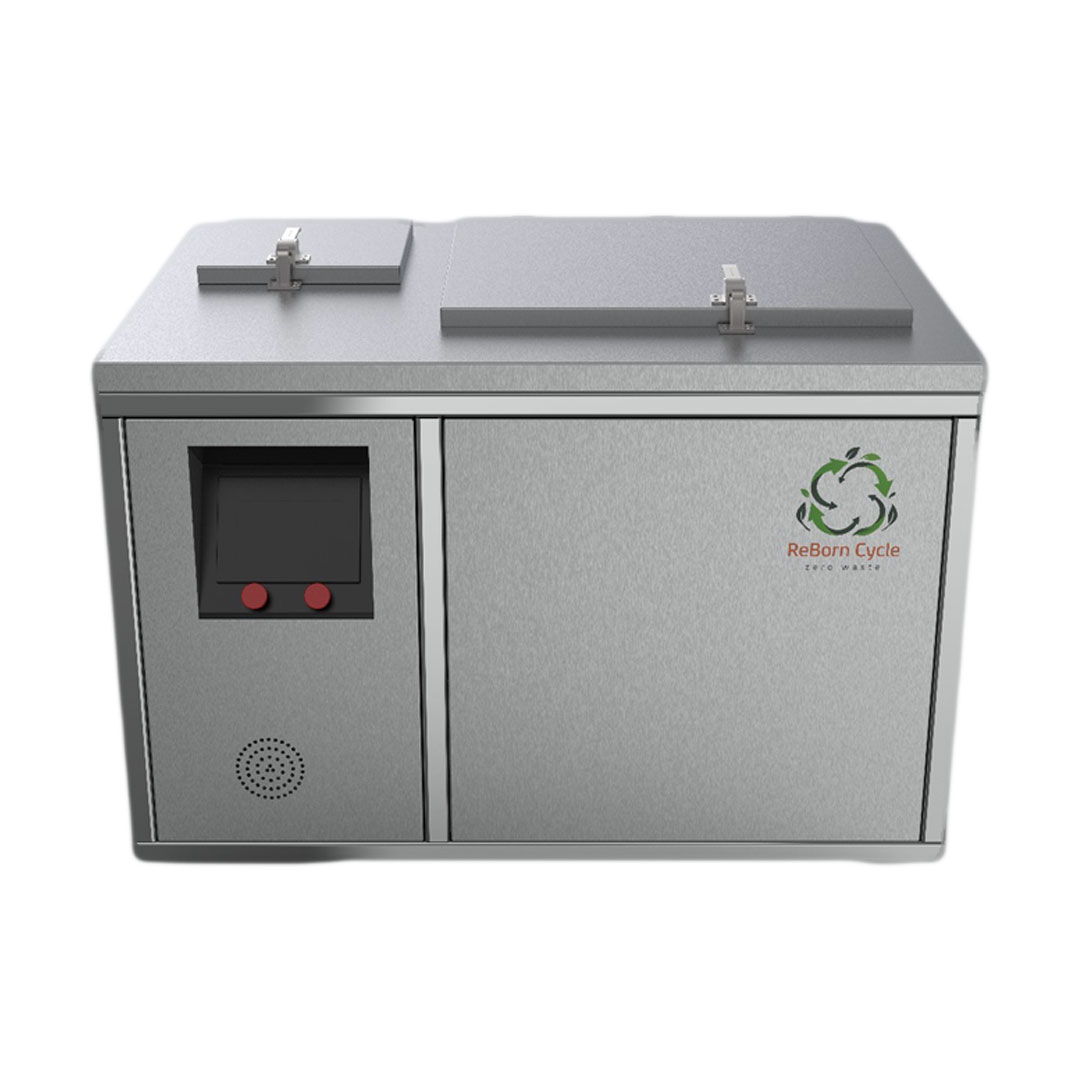
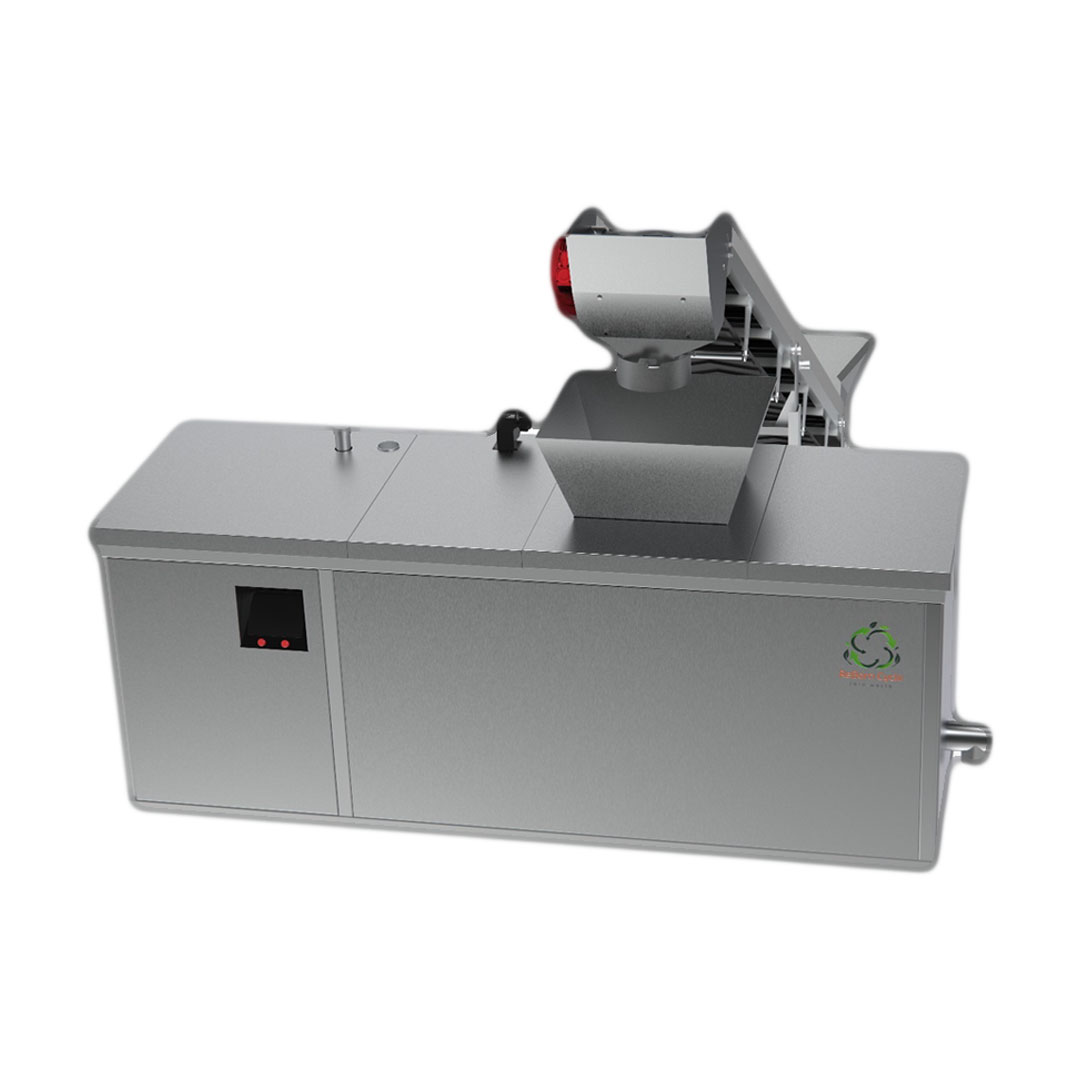
On mall food-court projects, ReBorn Cycle first maps waste flows and tenant collection, then sizes a closed stainless in-vessel unit with installation and commissioning. The engineering team confirms floor load, power, and service access on site; operations receive feeding order, logging, and basic fault signs at handover.
For mid-size courts near 250 kg/day, RBN-C250 Compost Machine is a common starting point; near 500 kg/day assumed average, RBN-C500 Compost Machine; mega malls or extra catering may need RBN-C1000 Compost Machine—final numbers come from weighing. Use consulting for waste analysis and layout notes, and technical support after start-up for maintenance and spare parts.
Output is stabilised pre-compost material; landscape, greenhouse, or municipal off-take needs a curing period of several weeks. Reduced haul frequency shows up directly in operating cost and zero-waste reporting.
How Should Night Cleaning Fit the Mall Compost Line?
Organic waste is often collected after stores close; feeding should not collide with morning kitchen rush. Night crews check contaminants first, then feed in batches; very fatty loads are not dumped alone but balanced with dry carbon support.
- Collection Tenant totes move closed; if delay is long, note time in cold holding.
- Check Remove plastic and metal; flag suspect batches.
- Feeding Spread load overnight toward the daily upper band; keep the 24–48 h cycle steady.
- Record Log kg/day, batch count, and any odour complaints for ESG and mall reports.
Night and day shifts should share one feed log; handover includes remaining batch notes. Train new staff on sorting and basic fault signs at commissioning, not on the first busy weekend.
Frequently asked questions
How much organic waste does a mall food court produce per day?
There is no single formula; tenant mix, menu type, and visitor traffic set the number. Small courts may see 100–200 kg/day; large malls can exceed 800 kg/day. Use at least one week of weighing; table values are planning assumptions only.
Can a compost machine be installed near mall parking?
Yes, most projects use back-of-house or basement plant areas away from guest parking. Ramp-adjacent installs need ventilation, door seals, and wash frequency in the design. Moisture and feed discipline matter as much as hardware for odour control.
Should each tenant have its own compost machine?
No. A central unit with shared collection and one log is the usual economic model. Leases must spell out segregation and bans on contaminants; otherwise one bad stream risks the whole line.
Is C250 or C500 enough for a mall?
Measured averages near 200–280 kg/day may start on C250; steady loads from 400 kg/day upward often move to the C500 band. If peak days sit 25–30 % above average, plan a larger class or more frequent feeding; final choice depends on site data.
Can mall compost output go straight into landscaping?
Machine discharge is hygienised pre-compost. For sensitive landscaping, cure for several weeks before full-rate use. If landscape or greenhouse is the goal, plan curing volume alongside machine capacity.
What data should a mall compost project start with?
Tenant list, daily kg weights, current bins, power and drain points, and intended end use (landscape, municipality, haul reduction) are enough to begin. Survey also needs floor plans and lift dimensions for capacity and layout reports.
Sound Compost Machine Decisions on Mall Food Floors
Mall compost machine choice starts with measured kg/day and peak days, not restaurant count alone. Multi-tenant collection, foreign-matter control, and night feeding rhythm matter as much as nameplate capacity; table tonnages are example bands only. Measuring first, then sizing, usually cuts both odour complaints and service cost.
Draft one week of weights and a tenant training outline before you lock a model, curing space, and odour plan in one project file. If parking or guest corridors are nearby, fix ventilation and feed windows during survey, not after complaints.
When your site data is ready, book a free site survey to review floor and power conditions together, or use the capacity selector for a quick preliminary model suggestion.