

For most hotels, hospitals and central kitchens, one trained operator per active shift is enough for a compost machine; from about 500 kg/day onward, feeding, cleaning and record-keeping need a clearer split.
For most sites, a compost machine needs at least one trained operator on each active shift. In the 100–250 kg/day range the machine usually runs on 30–60 minutes of feeding and cleaning inside the kitchen shift; from 500 kg/day upward you should plan dedicated time or extra staff for feeding rhythm and hygiene.
Headcount affects both payroll and process quality: too many people inflate cost, too few lead to missed feeds and odour risk. Here you will see how many people each capacity band needs, how shift time splits between feeding, cleaning and records, and how training keeps teams small. For roster design, see our guide on compost machine shift planning.
How Many Operators for Small Capacity?
Kitchens producing roughly 25–250 kg/day of organic waste (boutique hotel, school canteen, mid-size restaurant) usually run the compost machine with one operator per shift. That person feeds sorted waste, monitors the panel, schedules discharge and completes the daily check list. The chef or stewarding lead keeps source separation on track; the operator owns the machine and logs.
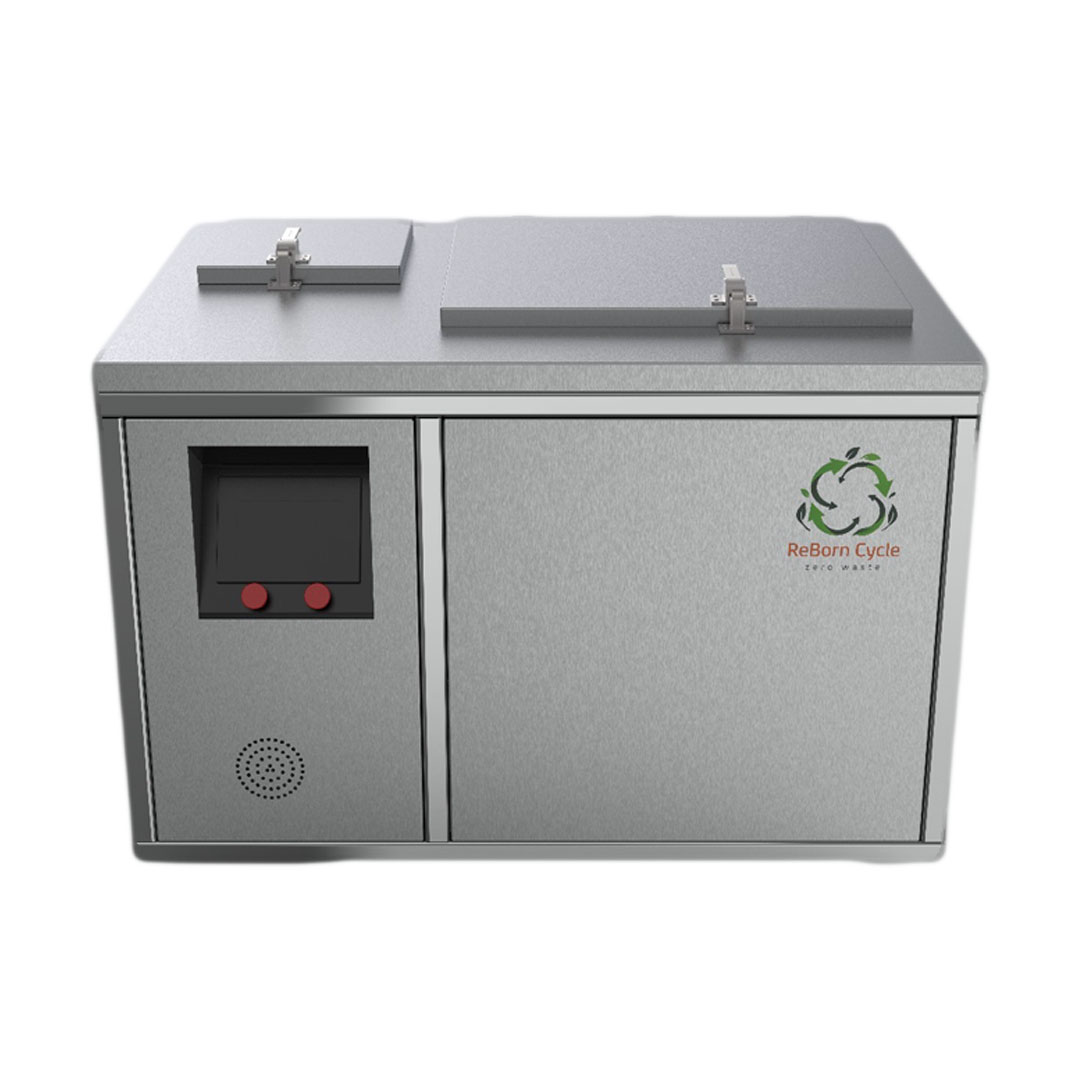
A hospital canteen near 100 kg/day often starts with RBN-C100 Compost Machine. Even when peaks push load 30–50 % above average, a trained operator adjusting moisture and feed intervals rarely needs a second dedicated person. In our site surveys, failures usually trace to unclear rotation and checklists, not bare headcount.
Tip: Name a trained backup before holidays via operator training so the machine does not sit idle.
Which Roles Matter on Mid and Large Lines?
Central kitchens, mall food courts or municipal pilots at 500 kg/day and above rarely let one person cover continuous feeding, floor hygiene and fault response at once. Roles typically split into operator (process and panel), feeding crew (sorting and cart movement) and cleaning / stewarding (drains, floors, surfaces). On RBN-C500 Compost Machine lines, 2–3 full-time-equivalent hours per shift, or two operators with shared feeding, is a common balanced pattern.
High contamination risk at the belt calls for extra eyes at the feed point; see foreign matter separation on industrial compost lines. Block weekly maintenance in the roster and book technical support for 1–2 hour shutdown windows when needed.
How Is Operator Time Split in a Shift?
On active machines in the 100–250 kg/day band, operator touch time often stays within 45–90 minutes per day while other kitchen duties continue. At about 500 kg/day (single shift, continuous production example) hands-on machine work can reach 2.5–4 hours for the same person or team. The table below shows sample roles; your numbers depend on profile and peaks.
| Daily organic waste | Suggested roles | Note |
|---|---|---|
| 25–100 kg | 1 operator + kitchen sorting | Operator often part-time duty |
| 100–250 kg | 1 operator with backup | Second trained person for leave cover |
| 250–500 kg | 1–2 operators + feeding | Heavy feeding after meal peaks |
| 500 kg and above | 2 operators or operator + line aide | Blocked time for records and cleaning |
In a mid-size hotel kitchen (example), an 8-hour shift might split operator time roughly as follows:
Consistent logs matter in zero-waste audits; habits from organic waste weighing and recording can cut labour when weighing is partly automated.
Do Feeding and Cleaning Need Separate Staff?
When waste arrives pre-sorted at the machine door the operator load drops; mixed streams on the same shift often force a second person. If stewarding aligns floor and drain work with the compost line hygiene protocol, the operator can stay focused on process limits.
Double shifts or kitchens open more than 16 hours usually assign one operator per shift; when night production is low the machine may idle and morning staff catch up feeds. On maintenance days the operator runs tasks from the maintenance interval list; heavy clean-downs often need 30–60 minutes of stewarding support.
- Pre-sorting Plastic and metal stay out at kitchen or line infeed; the operator accepts only suitable material.
- Timed feeding Meal gaps and discharge windows are written into the shift plan.
- Hygiene round Drains, door seals and floors are checked at each shift end.
How Does ReBorn Cycle Support Staff Planning?
During survey we review daily kg, meal peaks and existing kitchen roster so the “how many people” question is answered together with capacity choice. After installation, operator training aims for one person to manage temperature, moisture and feed limits confidently, avoiding an extra head by default.
Training covers locked-door procedures, hot surfaces, emergency stop and records. In the first 4–6 weeks the technical team monitors parameters on site or remotely and fine-tunes from shift notes. Once staffing is signed off, the roster is handed to the HACCP or hygiene lead so audit questions on who did what and when are already answered.
We recommend at least one week of weighed data before investment so capacity and crew decisions rely on measurement, not guesswork, and commissioning surprises stay rare.
Warning: Leaving untrained kitchen staff as the only “operator” raises safety and quality risk; backup names must match training records.
Frequently asked questions
Does a compost machine need a full-time operator?
Up to about 250 kg/day, usually no; the role fits in 1–1.5 hours of shared shift blocks. Above 500 kg/day on continuous lines, assigning at least one operator per shift becomes practical necessity.
Does a compost machine need night staff?
If no organic waste is produced on night shift, the machine can idle or run in low-power mode and morning staff handle new loads. Central kitchens producing 24/7 should plan a trained night operator or equivalent backup.
Can the head chef be the compost operator?
Yes, but when production peaks collide with feed windows a dedicated operator is safer. The chef role is usually supervising separation quality and team compliance, not every panel action.
When is a second operator needed?
Add a second operator or line aide when daily load regularly exceeds ~80 % of rated capacity, queues build after meals, or discharge clashes with intensive kitchen cleaning. Base the decision on measured kg, not assumptions.
How does maintenance affect staffing?
Planned maintenance needs 1–2 operator hours weekly plus occasional technical visits. Skipping it increases breakdown risk and unplanned labour. Fixing maintenance slots in the roster usually keeps total headcount lower over time.
Can staffing be outsourced?
External crews are possible only under contracts that match site hygiene rules and panel access. Most hotels and hospitals prefer in-house trained staff; any external operator should follow the same training scope as ReBorn commissioning.
Right-Sizing the Compost Line Crew
In short: for 100–250 kg/day, one trained operator per shift plus a clear backup list covers most cases; from 500 kg/day upward, block time or add roles for feeding and cleaning. Improving sorting and feed timing often removes the need for extra operators.
Before you freeze headcount, log at least one week of weights and peak days; use your own profile instead of generic kg bands. Keep the shift rota in the same document as hygiene protocol and maintenance dates.
Align crew size and capacity with the capacity selector or a consulting session that maps tasks onto your existing kitchen team.