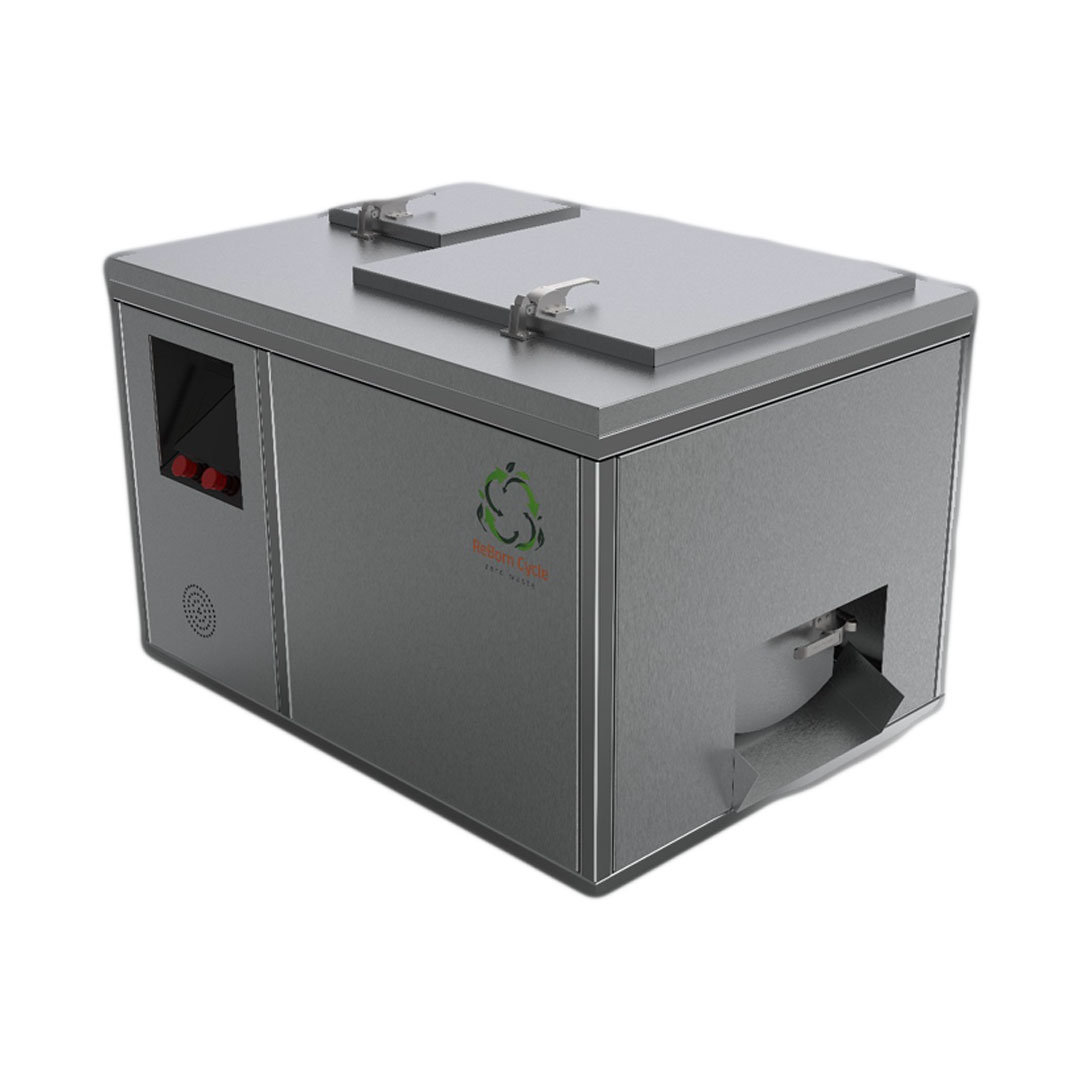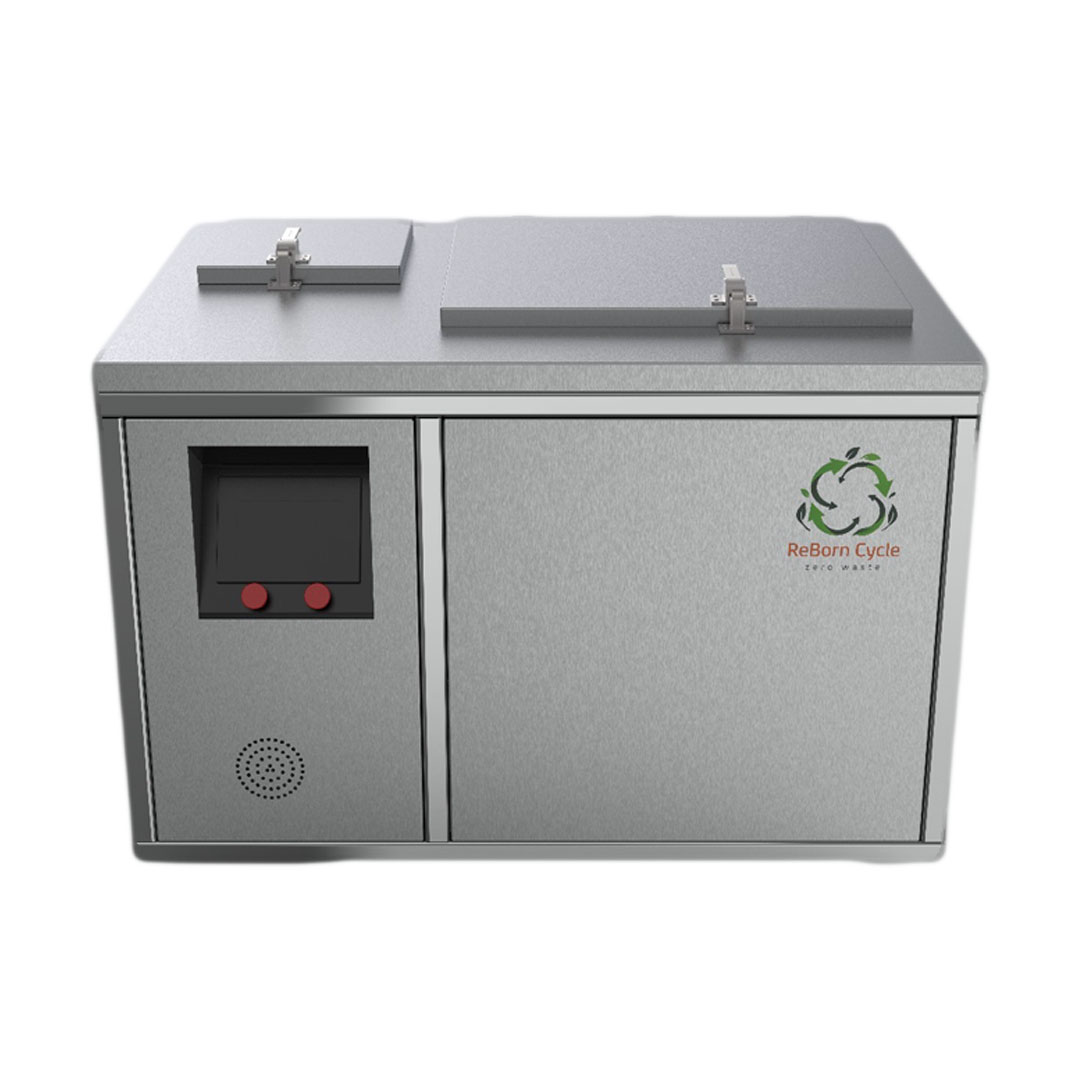


Facilities producing roughly 100 kg per day of kitchen and prep organic waste usually start with the RBN-C100; measured averages and peak days decide between C50 and C250.
For about 100 kg per day of mainly kitchen and prep organic waste, RBN-C100 usually offers enough working margin. If measured averages sit near 70–80 kg, C50 can fit; if peaks often reach 130 kg or events stack load, C250 or a verified C100 plan is safer. Base the choice on weighed daily averages and recorded peak days, not estimates.
Capacity planning follows daily distribution, not a flat annual average. 100 kg/day often matches a small hospital canteen, school kitchen, boutique hotel, or mid-size restaurant prep and plate-waste stream. Here you learn how to measure first, then how industrial compost machine capacity selection separates C50, C100, and C250 for your site.
Which facilities typically see 100 kg per day of organic waste?
On site surveys, 100 kg/day is often the total from one main kitchen or central prep line. We regularly see it at boutique hotels (80–120 rooms), mid-size school canteens, district hospital kitchens, and restaurants with 150–250 seats. A single anchor tenant in a food court may stay below 100 kg; shared malls depend on tenant count.
Waste profile shifts capacity: bulky veg prep raises volume; oily plate waste stretches cycle time and odour control. Seasonal menus can move daily kg by up to ~20%; summer salad prep and winter soup lines load the same machine differently. Matching your profile to where RBN-C100 fits is a quick sanity check. The goal is a sound feeding rhythm and storage time, not oversizing by guesswork.
How should waste be measured before choosing capacity?
Guessing capacity strains the line on weekends or during conferences. Weigh organic waste every shift for at least 10–14 working days; tag Sundays and Mondays separately. Remove plastic, metal, and glass before weighing or your kg figure will be inflated.
- Shift-end weighing Log each shift’s organic kg; subtract bin or trolley tare.
- Mark peak days Flag the three highest days; the gap to average sets headroom.
- Waste profile Note prep, plate, and bread shares; high fat extends in-vessel time.
- Storage time Record maximum cold-room hold before feeding; odour risk grows here.
Use the format in how to build a waste profile from site weighing. Pair results with the online capacity selector to shortlist models.
How do RBN-C50, C100, and C250 compare?
All three share the same closed-vessel process; daily feed limit and footprint differ. Near 100 kg/day, a simple rule applies: if measured average sits around 70–85% of nominal capacity, the model is comfortable; above that, step up or tighten feeding discipline.
| Model | Nominal capacity | Typical site (example) | Note |
|---|---|---|---|
| RBN-C50 Compost Machine | 50 kg/day | Café, small hotel kitchen | Fits 35–40 kg average; tight for a 100 kg target |
| RBN-C100 Compost Machine | 100 kg/day | School, hospital, mid restaurant | Main candidate at 100 kg average |
| RBN-C250 Compost Machine | 250 kg/day | Large campus, event-heavy site | If peaks exceed ~150 kg or growth is planned |
Sites in the 500 kg/day machine selection band sit above this table; at 100 kg/day C100 usually balances investment and margin. High fat can push cycles to 48–72 h, effectively lowering usable capacity.
How much capacity headroom is needed on peak days?
Catalogue capacity and field peak days are not the same. A hotel kitchen averaging 85 kg but hitting 125 kg on Fridays can run C100 if feeding is spread through the day and cold storage time is cut. A common rule: keep at least 15–25% of nominal capacity free for peaks and maintenance. One-off wedding or school gala days without a plan will overload even the right model.
Tip: When the vessel is full on a peak day, split feeding across two shifts instead of holding waste in cold storage for long hours.
If kg will rise mid-term, starting with C250 avoids a costly retrofit. Stable volume usually stays on C100.
How important are space and utilities at 100 kg per day?
Back-of-house layout matters as much as rated kg. C100-class machines usually sit behind the kitchen or on a ground-floor plant room; door width, floor load, drain, and ventilation must be checked early. Keep the feed path short so waste trolleys do not block staff flow. Reserve space for curing or closed bins for discharge material to avoid end-of-shift bottlenecks.
Complete the checklist in compost machine installation area requirements before survey. Power and breaker sizing vary by model; do not cite unmeasured kW on drawings. Water demand is mostly moisture balancing for wet kitchen waste, not a continuous flow line. Motors and mixers drive noise; place away from guest corridors.
How does ReBorn Cycle finalize a 100 kg capacity plan?
ReBorn Cycle field teams review your weigh log, shift plan, and separation points during survey. They align feeding schedule and expected use of stabilized output (landscape, greenhouse, off-site transfer). A shredder or conveyor may be suggested; at 100 kg/day direct C100 feeding is often enough.
After commissioning, operator training and moisture–temperature logs protect usable capacity. One trained operator per shift is typical. Under consulting, weekly kg trends are re-read before hotel season or school holidays. Specs and tenders should state measured kg and peak-day notes to prevent mismatch later.
Warning: Clinical waste, packaged chemicals, or metal streams do not go into the compost machine; size capacity only for permitted organic fractions.
Frequently asked questions
If we truly generate 100 kg per day, is C100 enough?
When the measured average is 95–100 kg and peaks stay near 110–115 kg, RBN-C100 usually runs with acceptable margin if feeding is spread and maintenance windows are planned. If peaks often pass 130 kg, consider C250 or a second line.
What happens if we run C50 against a 100 kg/day target?
C50 is nominally built for about 50 kg/day; forcing 100 kg continuously lengthens cycles, raises odour risk, and stresses components. Short pilots may trial it; it is not a permanent fix at that load.
Weekends are quiet—can we choose a smaller machine?
Base sizing on the peak working day, not the weekend average. If Friday–Saturday hits 120 kg, C50 is undersized; C100 absorbs the peak while light weekend load is harmless.
How many operators are needed for 100 kg per day?
On closed-vessel mid-scale units, one trained operator per shift usually handles feeding, cleaning, and logs. A second person is only needed where separate collection and wash-down lines run long each day.
Does skipping feeding for one day break capacity planning?
The maths do not break, but cold-stored backlog increases volume and odour. If you skip a day, split the catch-up kg across two shifts; do not feed above nominal in a single push.
Which numbers should be ready before a site survey?
Bring daily kg for the last two weeks, your top three peak days, waste-profile percentages, and maximum storage time. Sharing that table before a site survey appointment speeds model selection.
Right-sizing compost capacity at 100 kg per day
With sound weighing, most institutional kitchens near 100 kg/day land on RBN-C100; lower averages point to C50, high peaks and growth plans to C250. Let weighed data and peak days drive the decision instead of catalogue rows alone; a guess today often becomes a retrofit quote next season.
Feeding rhythm, separation discipline, and plant-room layout protect real kg capacity as much as the nameplate. Track process parameters; when oily waste rises, recalculate cycle time because longer runs reduce effective throughput.
When your weigh log is ready, run the capacity selector for a first cut, then lock C50–C100–C250 with consulting or a free site survey for your project.